

In 2026, online reviews are no longer just a supporting factor in the customer journey — they are the foundation of trust, visibility, and decision-making. Whether someone is choosing a local restaurant, hiring a service provider, or comparing products, reviews act as a digital form of word-of-mouth that shapes nearly every buying decision.
Modern consumers are more informed, skeptical, and research-driven than ever before. Instead of relying on traditional advertising, they turn to real customer experiences to evaluate credibility, quality, and reliability. In fact, studies show that over 90% of consumers read reviews before making a purchase decision, highlighting just how deeply reviews influence behavior.
This shift has fundamentally changed how businesses must approach online reputation management (ORM). It’s no longer enough to simply collect reviews — brands must actively manage, respond to, and continuously generate fresh, authentic feedback to stay competitive.
The following statistics reveal how consumers interact with reviews today — and more importantly, what businesses must do to adapt their ORM strategies for 2026 and beyond.
1. 97% of Consumers Read Online Reviews When Researching Local Businesses
One of the most powerful indicators of the importance of reviews is this: 97% of consumers read online reviews before choosing a local business.
This statistic shows that reading reviews is no longer optional behavior — it’s the default starting point for almost every customer journey.
What This Means for Businesses
When a potential customer searches for a local service, they are not just looking at your website or pricing. They are evaluating:
- Your overall rating
- The tone of customer feedback
- How you respond to complaints
- The consistency of your reviews across platforms
In many cases, reviews form a first impression before your brand even gets a chance to speak.
Why Reviews Have Become So Influential
There are several reasons behind this shift:
- Trust in peer feedback over advertising
Consumers increasingly distrust traditional ads and instead rely on real experiences shared by others. - Instant access to information
With platforms like Google, review data is immediately visible during search, making it a core part of local SEO visibility. - Decision-making efficiency
Reviews help consumers quickly shortlist options without needing to visit multiple websites.
ORM Strategy Insight
If nearly every customer reads reviews, then your ORM strategy should focus on:
- Actively generating new reviews from satisfied customers
- Monitoring all major review platforms regularly
- Responding quickly and professionally to both positive and negative feedback
Ignoring reviews today doesn’t just hurt your reputation — it can completely remove you from consideration.
2. Consumers Read an Average of 10 Reviews Before Trusting a Business
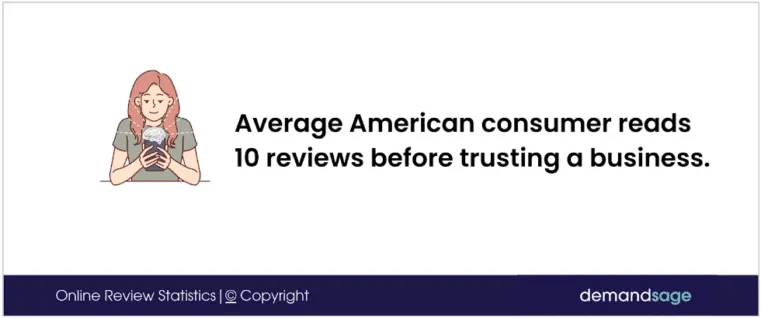
It’s not just about whether people read reviews — it’s about how many they need before they feel confident. Research shows that consumers read an average of 10 reviews before trusting a business.
This highlights an important shift: trust is built through volume and consistency, not just a few positive comments.
What This Means for Trust Building
A single glowing review is no longer enough. Consumers look for patterns, such as:
- Repeated mentions of good service
- Consistency in product quality
- Recurring complaints or issues
They are essentially trying to answer one question:
“Is this experience reliable, or just a one-off?”
The Psychology Behind Multiple Reviews
Reading multiple reviews helps consumers:
- Reduce risk and uncertainty
- Validate claims made by the business
- Identify both strengths and weaknesses
In fact, many users will scan several reviews across different dates and perspectives before making a final decision.
ORM Strategy Insight
To align with this behavior, businesses should:
- Focus on review volume growth, not just ratings
- Create systems to consistently collect feedback (email, SMS, post-purchase prompts)
- Avoid long gaps without new reviews
A business with 50+ recent, consistent reviews will almost always outperform one with only a handful — even if both have similar ratings.
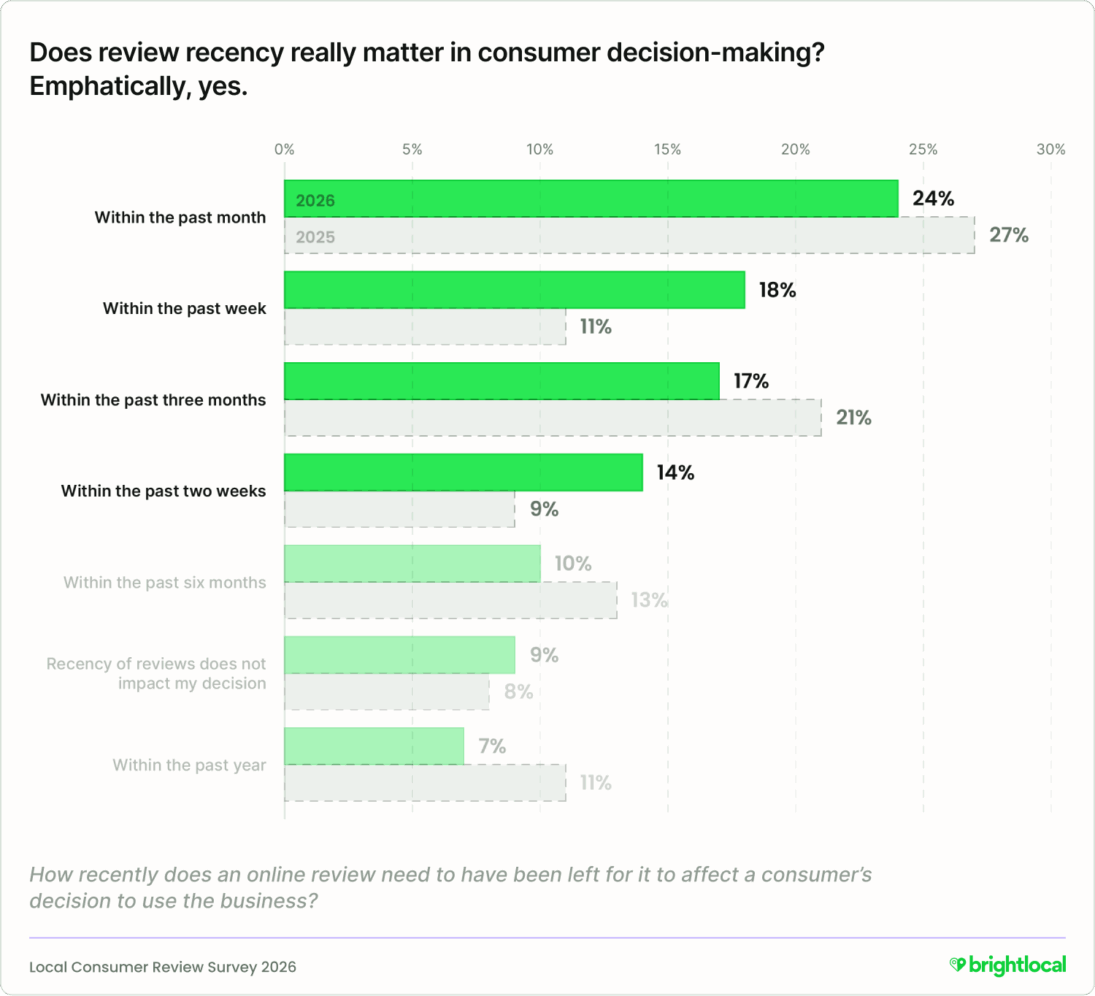
3. 83% of Consumers Say Reviews Must Be Recent To Be Relevant
Freshness matters just as much as quantity. Around 83% of consumers say reviews must be recent to be considered relevant.
This means outdated reviews can quickly lose their impact, no matter how positive they are.
Why Recency Is Critical
Consumer expectations and business performance can change rapidly. Recent reviews help answer:
- Is the business still delivering the same quality today?
- Has customer service improved or declined?
- Are there any new issues or improvements?
Old reviews — even great ones — may no longer reflect the current experience.
How Recency Affects Conversions
When users see:
- Recent positive reviews → Confidence increases
- No recent activity → Doubt and hesitation
- Recent negative reviews → Immediate concern
In many cases, customers will choose a competitor simply because their reviews are more up to date.
ORM Strategy Insight
To stay competitive, businesses should:
- Continuously generate fresh reviews (weekly or monthly)
- Automate review requests after every customer interaction
- Respond to recent reviews quickly to show active engagement
Recency also plays a key role in local search rankings, meaning fresh reviews don’t just influence trust — they also impact visibility.
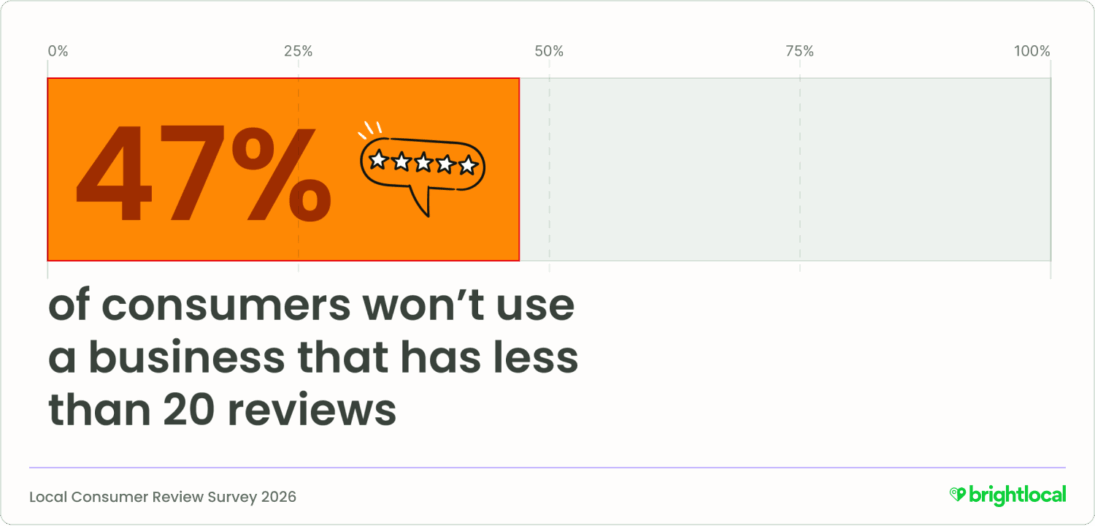
4. 60% of Consumers Trust Businesses With a Large Number of Reviews
In today’s review-driven economy, volume equals credibility. Around 60% of consumers are more likely to trust businesses that have a large number of reviews, reinforcing the idea that quantity plays a major role in perceived reliability.
Why Review Volume Builds Trust
Consumers don’t just look at star ratings — they evaluate how many people have shared their experiences. A business with hundreds of reviews signals:
- Consistent customer engagement
- A proven track record over time
- Lower risk compared to less-reviewed competitors
In contrast, even a 5-star rating can feel suspicious if it’s based on only a handful of reviews.
The “Social Proof” Effect
This behavior is rooted in social proof psychology. When people see that many others have interacted with a business, it creates a sense of:
- Popularity
- Reliability
- Community validation
In fact, many consumers won’t trust a high rating unless it’s backed by a substantial number of reviews, showing that volume and rating must work together.
ORM Strategy Insight
To leverage this behavior, businesses should:
- Focus on scaling review generation consistently
- Encourage feedback from a wide range of customers (not just a few loyal ones)
- Avoid relying on “perfect ratings” with low volume
A strong ORM strategy isn’t about chasing a flawless score — it’s about building a large, credible body of feedback that reflects real customer experiences.
5. 58% of Consumers Are Willing To Pay More for Businesses With Positive Reviews
Online reviews don’t just influence decisions — they directly impact pricing power. About 58% of consumers are willing to pay more for businesses that have positive reviews, proving that reputation can justify higher prices.
Why Positive Reviews Increase Willingness to Pay
Consumers associate positive reviews with:
- Higher quality products or services
- Better customer experience
- Reduced risk of disappointment
When people feel confident in a business, they are less price-sensitive. Instead of searching for the cheapest option, they prioritize value and reliability.
Reviews as a Competitive Advantage
This shift changes how businesses compete. Instead of competing solely on price, companies with strong reputations can:
- Charge premium rates
- Attract higher-quality customers
- Increase customer lifetime value
Positive reviews essentially act as trust-based marketing, reducing the need for heavy discounts or aggressive promotions.
ORM Strategy Insight
To capitalize on this:
- Focus on delivering experiences that naturally generate positive, detailed reviews
- Highlight top reviews across your website and marketing channels
- Respond to feedback to reinforce trust and transparency
A strong review profile doesn’t just bring in customers — it allows you to increase margins while maintaining demand.
6. 41.7% of Consumers Prefer Third-Party Review Sites When Researching Businesses
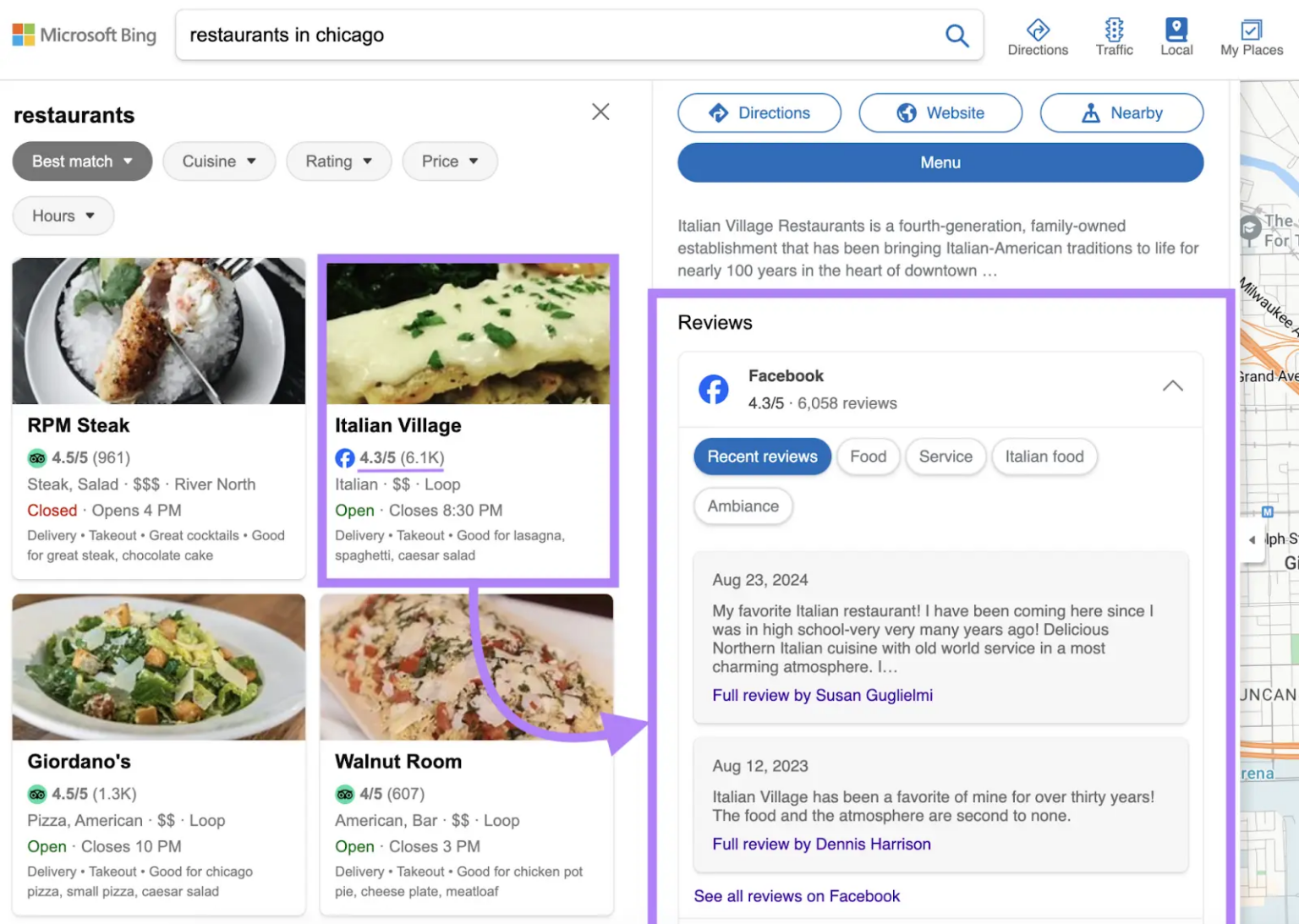
Consumers are increasingly turning to independent platforms for unbiased information. Around 41.7% of consumers prefer third-party review sites when researching businesses.
Why Third-Party Platforms Matter
Customers often trust third-party platforms more than brand-owned channels because they are perceived as:
- More transparent
- Less controlled by businesses
- More likely to include both positive and negative feedback
Additionally, many consumers check multiple review sources before making a decision, rather than relying on a single platform.
The Multi-Platform Research Behavior
Modern consumers don’t just read reviews in one place. They often:
- Start with search engines
- Compare ratings across different platforms
- Look for consistency in feedback
This cross-checking behavior helps them validate authenticity and avoid misleading information.
ORM Strategy Insight
To stay competitive, businesses must:
- Maintain a strong presence across multiple review platforms
- Monitor and respond to reviews wherever they appear
- Ensure consistent brand perception across all channels
Focusing on just one platform is no longer enough. Your reputation must be visible and trustworthy everywhere customers are looking.
7. 75% of Consumers Leave Reviews To Share Feedback and Help Businesses Improve
Reviews are not just about customers evaluating businesses — they are also about customers wanting to be heard. Around 75% of consumers leave reviews to share feedback and help businesses improve, highlighting the participatory nature of modern consumers.
Why Customers Leave Reviews
People write reviews for several key reasons:
- To share their experience (good or bad)
- To help other consumers make better decisions
- To influence businesses to improve their services
This shows that reviews are not just transactional — they are emotional and community-driven.
The Opportunity for Businesses
Every review is a direct line of communication between a business and its customers. It provides:
- Real insights into customer satisfaction
- Opportunities to fix issues quickly
- Signals of what customers value most
Businesses that actively listen to feedback can continuously refine their offerings and stay ahead of competitors.
ORM Strategy Insight
To take full advantage of this:
- Make it easy for customers to leave reviews
- Acknowledge and respond to feedback consistently
- Use reviews as a source of business intelligence, not just marketing
When customers feel heard, they are more likely to:
- Become loyal advocates
- Update negative reviews after resolution
- Recommend your business to others
In 2026, reviews are no longer just feedback — they are a two-way relationship-building tool that drives long-term growth.
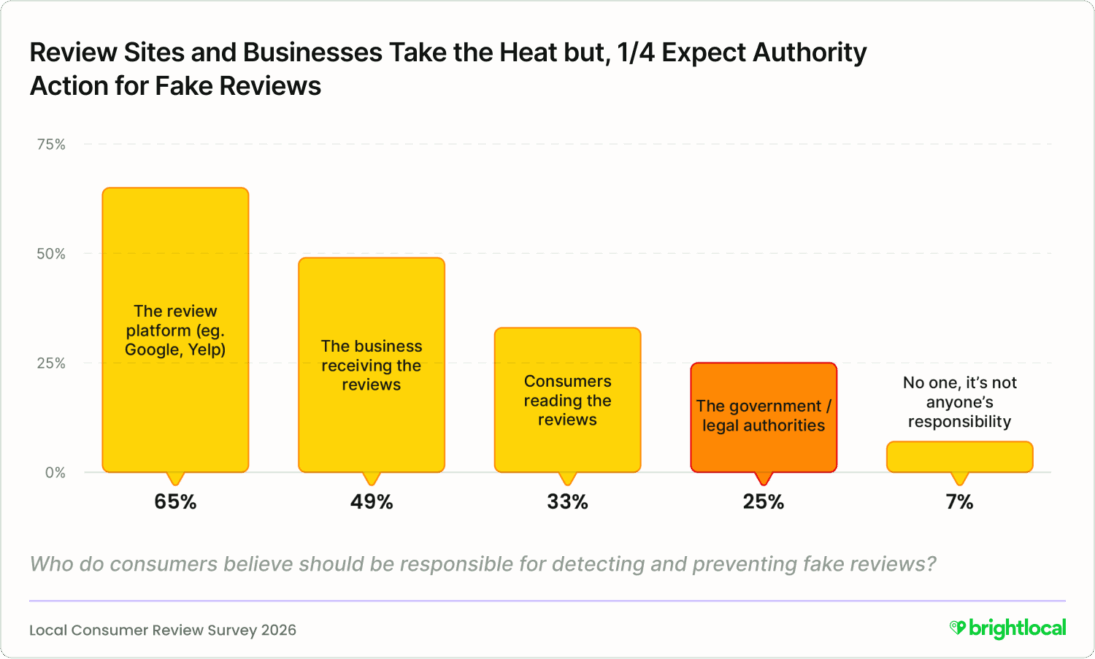
8. 67% of Consumers Believe Fake Reviews Are a Serious Problem
As online reviews become more influential, trust in their authenticity is declining. Around 67% of consumers believe fake reviews are a serious and growing problem, highlighting a major challenge for both businesses and customers.
The Growing Scale of Fake Reviews
Fake reviews are no longer rare — they are widespread and increasingly sophisticated. Recent data suggests:
- Up to 30% of online reviews may be fake or misleading
- 85% of consumers suspect reviews are fake at least sometimes
- AI-generated reviews are making detection even harder
This has created a paradox: consumers rely heavily on reviews, yet trust them less than ever before.
How Fake Reviews Impact Consumer Behavior
Because of this growing concern, consumers are becoming more cautious:
- They cross-check reviews across multiple platforms
- They look for detailed, authentic experiences rather than generic praise
- They often read negative reviews first to assess credibility
In fact, many consumers will avoid a business entirely if they suspect review manipulation, even if the rating is high.
The Business Risk of Fake Reviews
Fake reviews don’t just mislead customers — they can:
- Damage brand credibility
- Create unfair competition
- Reduce overall trust in review platforms
Even worse, once trust is broken, it is extremely difficult to rebuild.
ORM Strategy Insight
To navigate this challenge, businesses should:
- Focus on authentic, verifiable customer feedback
- Avoid any form of incentivized or manipulated reviews
- Encourage detailed, honest reviews rather than short generic ones
- Monitor and report suspicious activity
In 2026, transparency is the new competitive advantage. Businesses that prove their authenticity will stand out in a landscape filled with skepticism.
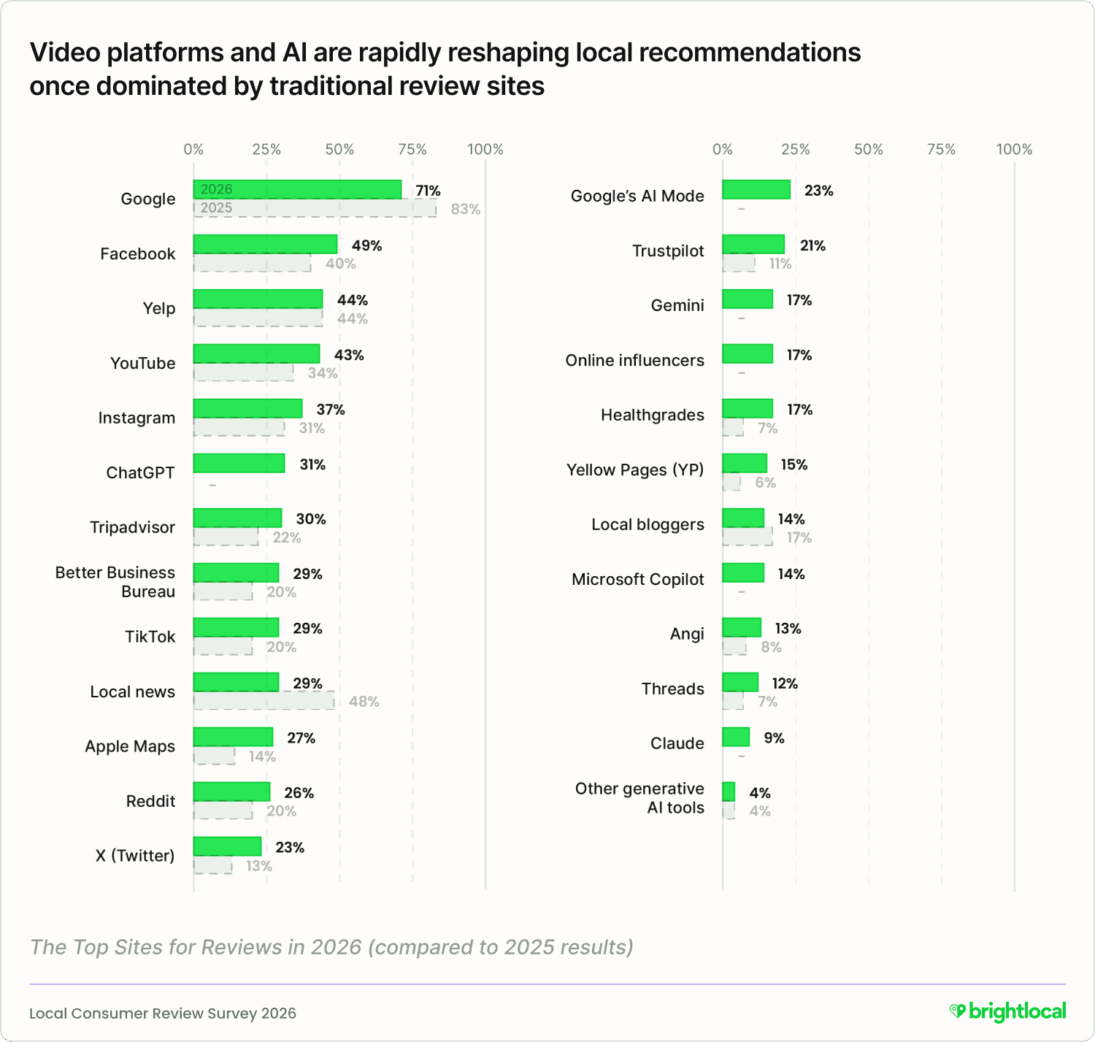
9. AI Tools and Video Platforms Are Changing How Consumers Find Reviews
The way consumers discover and evaluate reviews is evolving rapidly. Traditional text-based reviews are no longer the only source of trust — AI tools and video platforms are reshaping how people research businesses.
The Rise of AI-Powered Search
AI-driven search experiences are transforming review discovery:
- Users now ask AI tools for recommendations instead of browsing manually
- AI aggregates reviews from multiple sources into summarized insights
- Search results increasingly prioritize context, sentiment, and authority over simple star ratings
This means businesses must ensure their reviews are consistent and visible across the entire digital ecosystem, not just one platform.
Video Reviews Are Becoming More Influential
Short-form video platforms and visual content are playing a bigger role in decision-making:
- Consumers trust real, unscripted video experiences more than written reviews
- Product demos, testimonials, and walkthroughs provide deeper context
- Video content reduces skepticism because it feels more authentic and harder to fake
This shift is especially strong among younger audiences who prefer visual proof over written claims.
The Impact of AI-Generated Content
At the same time, AI is also contributing to the problem:
- Fake reviews can now be generated at scale
- AI-written content can closely mimic real customer feedback
- Even humans struggle to distinguish between real and fake reviews
This makes authenticity and transparency even more critical in ORM strategies.
ORM Strategy Insight
To adapt to this shift, businesses should:
- Optimize for AI-driven search visibility (structured data, consistent reviews, strong reputation signals)
- Encourage video testimonials and user-generated content
- Maintain a presence across multiple platforms where AI tools pull data
- Focus on real customer experiences rather than polished marketing language
In 2026, reputation is no longer just about text reviews — it’s about multi-format, multi-platform trust signals.
What These Online Review Statistics Mean for Your Business
These online review insights point to one clear reality: customer feedback now shapes nearly every step of the buying journey. From the moment a potential customer discovers your business to the final purchase decision, reviews play a critical role in determining whether you’re trusted or overlooked.
The data highlighted throughout this article reveals several key patterns. Consumers don’t rely on a single opinion — they read multiple reviews, look for recent and relevant feedback, and gravitate toward businesses that demonstrate consistency and transparency. At the same time, rising concerns about fake or misleading reviews mean that credibility is no longer assumed — it must be earned.
For businesses, this reinforces the need for a proactive approach to online reputation management. It’s not enough to simply collect reviews. You need to consistently encourage genuine feedback, respond professionally to both positive and negative experiences, and maintain a steady flow of fresh reviews that reflect your current performance.
Ultimately, these statistics offer more than just numbers — they provide a roadmap into how modern consumers think and decide. Businesses that understand and act on these behaviors can strengthen trust, improve visibility, and convert more high-intent customers.
By turning customer feedback into actionable insights, you can build a stronger reputation, deliver better experiences, and position your brand as a reliable choice in an increasingly competitive digital landscape.
At Pro Real Tech, we help businesses transform customer reviews into measurable growth through strategic local SEO and online reputation management solutions designed to improve visibility, credibility, and conversions. Contact us today!
Frequently Asked Questions (FAQs) About Online Review Statistics
WHAT ARE THE MOST IMPORTANT ONLINE REVIEW STATISTICS BUSINESSES SHOULD KNOW?
The most important statistics highlight how deeply reviews influence consumer behavior:
- Nearly all consumers read reviews before choosing a business
- Most people read multiple reviews before trusting a brand
- Recency, volume, and authenticity are key trust factors
- A majority of consumers are concerned about fake reviews
These insights show that reviews are not optional — they are a core part of modern marketing and decision-making.
HOW DO CUSTOMER REVIEWS INFLUENCE PURCHASING DECISIONS?
Customer reviews act as social proof, helping consumers evaluate risk and trust. They influence decisions by:
- Providing real-world experiences from other buyers
- Highlighting strengths and weaknesses of a product or service
- Reducing uncertainty before making a purchase
In many cases, reviews have more influence than advertising because they are perceived as unbiased and experience-based.
WHY ARE ONLINE REVIEWS IMPORTANT FOR LOCAL BUSINESSES?
For local businesses, reviews are essential because they:
- Directly impact local search visibility
- Shape first impressions before customers visit or contact the business
- Influence foot traffic, calls, and conversions
A strong review profile can be the difference between being chosen — or completely ignored.
HOW ARE ONLINE REVIEWS EVOLVING IN 2026?
Online reviews in 2026 are evolving in several key ways:
- AI-driven discovery is changing how reviews are found and summarized
- Video and visual content are becoming more trusted than text
- Authenticity is more important than perfection
- Consumers are more skeptical and actively look for real, detailed experiences
As a result, businesses must move beyond simply collecting reviews and focus on building a transparent, multi-channel reputation strategy.
Read More: Topics Not Keywords: The Future of SEO Content Strategy


