

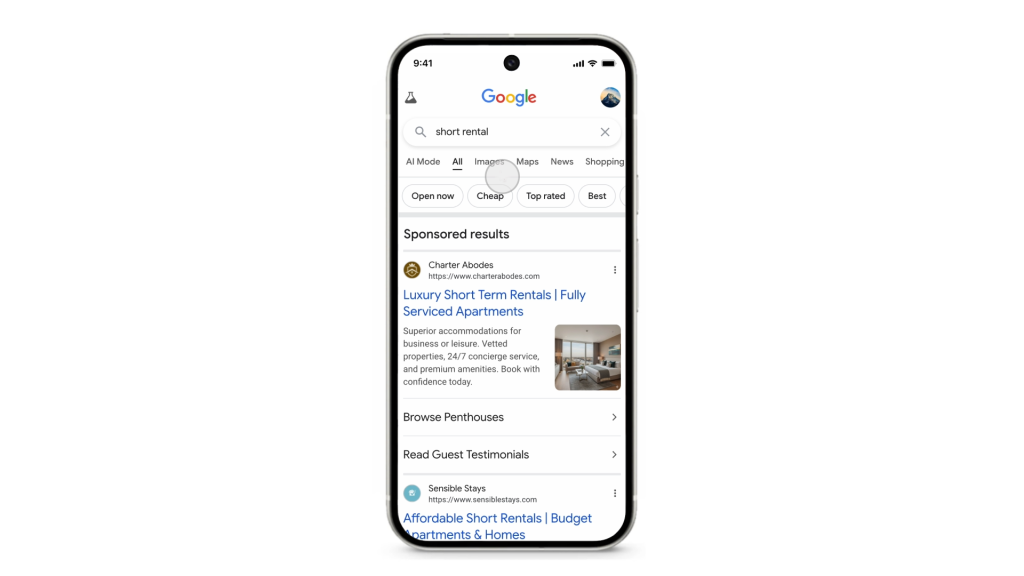
Google has introduced a major update to how sponsored ads appear in search results, and this change has sparked a lot of discussion among advertisers, marketers, and business owners. The new format replaces the old individual “Ad” or “Sponsored” tags with a single, grouped label that covers an entire block of paid results. This change makes ads easier to identify, but it also affects how users interact with them. Google has also added a “Hide sponsored results” button, giving users more control over what they see on the page. While the update may look simple at first, it has deeper effects on visibility, click-through behavior, and overall advertising strategy.
For businesses that rely on Google Ads, this shift means it is more important than ever to stay informed and understand how the new layout works. The updated design may influence how often people view or click on ads, which can impact campaign performance. It also places more pressure on advertisers to use clear, helpful messages that connect with what users want. In this blog, we will break down every part of the update, explain why Google made the change, and explore what this means for the future of online advertising.
What’s the New Change — in Full Detail
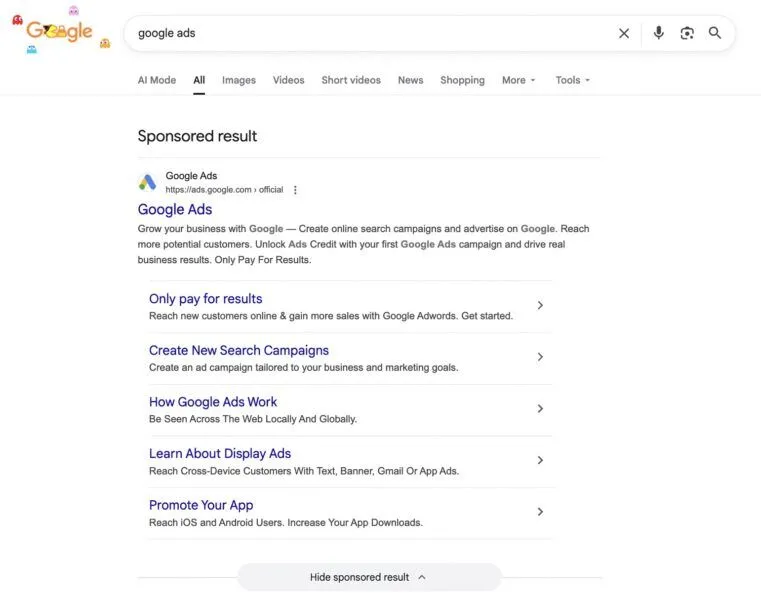
In October 2025, Google rolled out a major change in how it displays paid ads in search results. Instead of tagging each advertisement with an “Ad” or “Sponsored” label individually, the new format groups all paid results together under one unified header: “Sponsored results.”
-
This “Sponsored results” header stays visible (sticky) as you scroll down the page.
-
The new label doesn’t only apply to text ads. It also covers other ad units, such as product or shopping ads — albeit sometimes with adjusted wording (e.g. “Sponsored products”).
-
Below the block of ads, Google has added a new control: a “Hide sponsored results” button. With a single click, a user can collapse the entire section of paid ads — temporarily removing them from view so only organic (unpaid) results remain visible.
Crucially: while the presentation changed, the ad mechanics behind the scenes remain the same. Google still runs its ad auctions, ranks ads based on bids and quality, and limits the number of text ads per block (never more than four).
Also, the rollout spans globally and covers both desktop and mobile Search users.
Why Google Did This — Their Stated Goals & Possible Motivations
From Google’s public explanation, the update aims to improve clarity, navigation, and user experience
Main reasons:
-
Clearer separation between paid and organic content. Having a distinct, persistent label (“Sponsored results”) helps users easily see where ads end and organic results begin.
-
Improved user control. The “Hide sponsored results” button gives users the choice to collapse ads if they prefer only organic results.
-
Consistency across ad formats. The label applies to multiple ad types (text, Shopping, products), offering a uniform user experience.
Beyond the official explanation, some analysts suggest broader motivations:
-
Regulatory / transparency pressure. Over the years, there has been growing scrutiny of how ads blend into organic content. By making a more obvious, unified label, Google may aim to satisfy regulators or user-trust expectations.
-
Adapting to an evolving search ecosystem. As search results now often include AI-driven summaries (AI Overviews), product carousels, local business results, etc., consolidating ads under a single format helps simplify the page layout and make ads distinct in the mixing content.
What This Means for Users — Pros and Cons
✅ Pros: More clarity and control
-
Users can now very clearly see which block of results are paid ads — the single “Sponsored results” header is hard to miss. This helps avoid confusion between ads and organic results.
-
The ability to hide ads gives users more control: if they prefer purely organic results (for unbiased information, shopping, research, privacy, etc.), they can collapse ads with one click.
-
Cleaner search results: by collapsing ad blocks, users can focus on organic results or AI-generated summaries without distractions from paid content.
⚠️ Cons / Possible Drawbacks
-
Ads blend in more — after you collapse the ad block (or even before), the remaining results may appear similar. Some users might forget they saw ads, or ads might feel more like “regular” search results.
-
Because the “Hide” button only appears after the ad block — users still see ads initially before they can choose to hide them. So for some quick searches, paid ads still get initial visibility.
-
From a broader perspective, some might argue this makes it easier for ads to masquerade as organic content — even with the label. This raises ethical or regulatory concerns about ad disclosure.
What It Means for Advertisers & Businesses (Paid Search)

The update changes how ads are seen — and that can shift how effective they are.
🔎 Potential Risks
-
Lower visibility if users hide the ad block. If many users click “Hide sponsored results,” fewer people will see ads — meaning lower impressions and possibly lower click-through rates (CTR).
-
Ads may feel less distinct / paid. Because ads are grouped and don’t each carry their own tag, some users may treat them like organic results — which might lower trust or lead to higher bounce rates if the ad doesn’t match expectations.
-
More competition for attention. With ads being visually more subtle, the quality of ad copy, relevance, and landing page becomes even more important to capture user interest.
✅ Opportunities and Benefits
-
Ad content that fits user intent will stand out more. If your ad is closely aligned with what a user searches for — e.g. relevant keywords, clear value proposition — it’s more likely to get noticed and clicked.
-
Greater reward for high-quality, user-centric ads. Because visual clutter is reduced and irrelevant ads are easier to ignore, those that are helpful, clear, and trustworthy may perform better.
-
Flexibility for blended strategies. Since ad visibility may fluctuate (depending on user hide/show choices), combining paid ads with strong organic SEO and good content makes sense — diversify your approach.
What Advertisers Should Do — Best Practices to Adapt
Given the change, advertisers should adjust tactics to stay effective:
-
Write clear, relevant ad copy. Make ads directly answer user intent. Use benefit-oriented, specific language rather than vague marketing slogans.
-
Use targeted keywords and audience segmentation. Match ads to what users are searching for. Broad, unfocused ads are more likely to be skipped or hidden.
-
Ensure landing pages deliver value and match the ad promise. If a user clicks and the landing page doesn’t match what the ad promised, bounce rates may increase — hurting performance. Pay attention to page load time, clarity, mobile optimization, and user experience.
-
Combine paid ads with organic presence / SEO / content marketing. Since visibility of ads may shift, it’s safer not to rely solely on paid placements. Solid SEO and helpful content build long-term presence and trust.
-
Monitor performance closely. Keep track of metrics like impressions, CTR, conversions, CPC (cost per click), and return on ad spend (ROAS). Compare across campaigns before and after the update to detect trends.
-
Test and adapt. Try different ad variants (copy, images, calls to action), different keywords, and monitor which perform best under the new layout. Adjust budgets and strategies based on data.
Strategic Implications — What This Update Reflects about Digital Advertising
This change is not just cosmetic. It signals a shift in how search advertisers and platforms think about ads.
-
It reflects growing demand — from users, regulators, or the public — for transparency: clear labels and easy control over sponsored content.
-
It shows an evolution toward user-centric design: giving users control over what they see, balancing commercial and organic content, and making search results cleaner.
-
It indicates that ads are becoming more integrated into search structure — not flashy banners, but subtle, blended results. This means advertisers must lean more on relevance, quality, and user experience rather than click-bait or flashy design.
-
For small businesses and local advertisers, an integrated strategy combining ads, SEO, and strong business presence (reviews, website, local listings) becomes even more important.
What to Watch Out For — Questions Still Unanswered / What May Come Next
-
How many users will actually use “Hide sponsored results”? The effectiveness of this update depends on how many users take advantage of the hide option. If most ignore it, ads may retain similar visibility.
-
Will Google collect and use data from hide/show behavior? There’s speculation that Google may analyze which ads users hide or engage with — feeding data into ad-ranking algorithms. If so, relevance and performance may matter more than ever.
-
Could regulators or watchdogs raise concerns about subtle ads? Even with the label, if ads start to look almost identical to organic results (especially in mixed pages with AI summaries, local listings, shopping, content), some may argue this blurs the line between paid and organic content.
-
How will this affect small businesses vs large advertisers? Large advertisers with budgets may adapt more quickly — but smaller businesses will need to optimize copy, budget, and strategy carefully to compete.
Preparing for What Comes Next With Pro Real Tech
The new ads label marks another move toward a more user-centered search experience. As people pay closer attention to content that matches their needs, advertisers must focus on search intent, strong ad copy, and better landing pages to stay competitive.
Companies that want to adjust to these changes can work with a skilled Google Ads agency for support. Pro Real Tech helps brands improve paid visibility and boost return on ad spend through expert PPC management, search marketing, social advertising, and content services.
These updates to paid and organic search results highlight the importance of relevance and clear communication. Advertisers who meet these standards are more likely to maintain strong visibility. Pro Real Tech offers the guidance businesses need to stay ahead in a changing search landscape.
Contact us today.
Conclusion — What This Means for You
The new “Sponsored results” update from Google is a big change — subtle in appearance, but powerful in impact. By grouping ads under one header and giving users control to hide them, Google is trying to make search cleaner and more transparent. For users, this means more control and clarity. For advertisers and businesses, it means adapting: better ad quality, more precise targeting, and a balanced strategy combining paid ads with organic presence.
This update shifts the balance from “loud ads” to “useful, relevant ads.” If you run ad campaigns, treat this as a chance — focus on what genuinely helps users, match ads to real intent, and prioritize quality over volume. If you run a website or business, invest not just in ads but in content, trust, and long-term visibility.
Read More: Beyond Likes and Shares: The KPIs That Truly Matter in Social Media Marketing


