

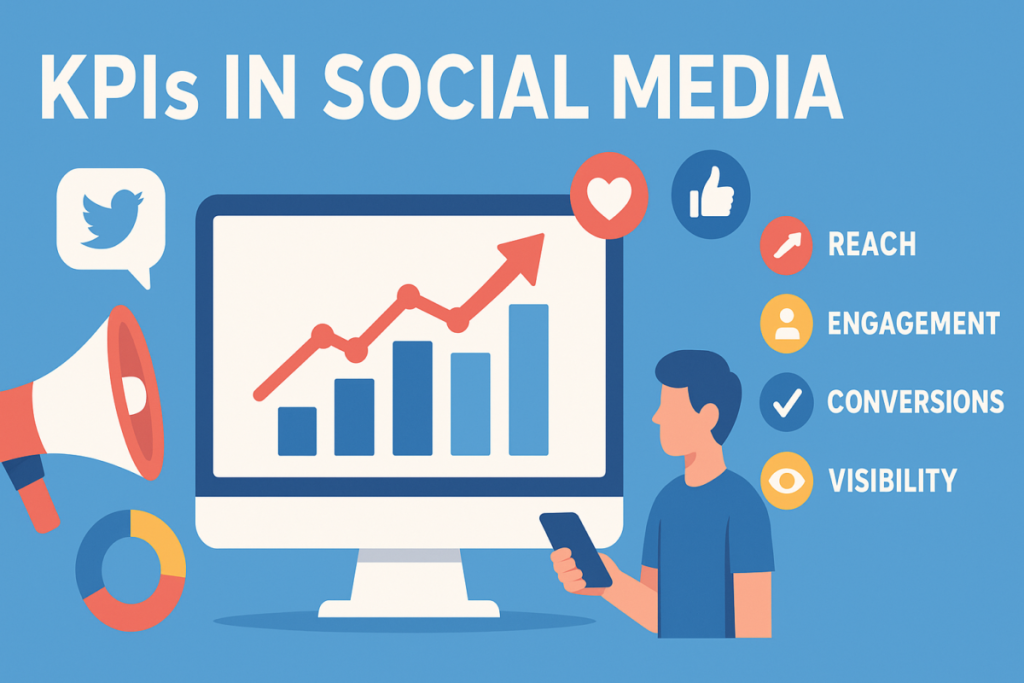
When you post something on social media and see that it gets hundreds or thousands of likes, shares, or comments — it can feel like a big win. After all, engagement seems to confirm that people saw your content and enjoyed it. But here’s the problem: high engagement doesn’t always translate into real business results. A post might look popular, yet it may not be driving any website traffic, leads, signups, or sales.
These common metrics — likes, shares, comments, follower counts — are often referred to as “vanity metrics.” They give you a sense of visibility, but they don’t necessarily reflect deeper outcomes like conversions, ROI (return on investment), or brand growth.
Vanity metrics aren’t useless. They do provide value in certain contexts:
-
They show whether content resonates with your audience at all.
-
They can help amplify your reach (especially when people share or reshare), potentially attracting new followers or exposures.
-
They signal “social proof” — making your brand appear credible to new visitors.
-
On many platforms, high engagement influences the algorithm, which may lead to greater exposure.
But if you want to grow your brand, generate leads, or increase sales, you need to look beyond the surface. That’s where more meaningful, outcome-driven KPIs come into play.
What KPIs Should You Track Instead: A Framework
Rather than focusing only on likes and shares, you should build a comprehensive KPI framework structured around several core business objectives: brand awareness, engagement quality, conversions, and customer value/loyalty. Here’s a breakdown of the most important KPIs for each area.
1. Brand Awareness
These metrics help you understand how widely your content and brand are being seen by potential audiences.
-
Reach: The number of unique users who saw your content. This lets you know how far your message is spreading.
-
Impressions: The total number of times your content was displayed — whether clicked or not. High impressions suggest strong visibility.
-
Share of Voice (SOV): Measures how often your brand is mentioned relative to competitors in your industry — a useful benchmark for relative brand presence and visibility.
-
Branded Search Volume: Tracks whether more people are searching for your brand name over time — a signal that brand awareness is growing outside just direct social interactions.
When these metrics trend upward, it suggests your brand visibility is increasing — which is often the first step toward long-term growth and recognition.
2. Engagement (Beyond Likes and Shares)
Engagement remains important, but you want to focus on deeper or more meaningful forms of engagement — not just passive likes.
Important metrics in this bucket:
-
Engagement Rate: The percentage of people interacting with your content (likes, comments, shares, clicks) divided by the total audience reached. This gives a sense of how compelling your content is relative to visibility.
-
Click-Through Rate (CTR): Measures how many users clicked a link in your post relative to how many saw it — a strong signal of real interest and intent.
-
Amplification Rate: How often your audience shares your content, extending reach beyond your immediate followers.
-
Comments & Mentions: Qualitative signals: they show conversation, sentiment, feedback, and brand perception. These help understand what resonates and why.
-
Engagement per Post / Applause Rate: Metrics that help you understand average engagement per content piece (not only the viral or very popular ones).
-
Video Completion Rate (for video content): The percentage of viewers who watch the full video — a vital measure of content effectiveness.
-
Response Rate: How quickly and effectively your brand responds to comments/messages — important for community building and customer care.
-
Saves / Bookmarks: Especially relevant on platforms where “save for later” is possible (like Pinterest, Instagram, TikTok). When users save content, it shows they found it valuable and intend to revisit — a strong signal of future interest.
Tracking these provides a more nuanced view of how your audience interacts — beyond surface-level reactions.
3. Conversion & Business Performance
Ultimately, social media marketing should contribute to real business goals: leads, signups, sales, or other valuable actions. These KPIs link social media activity to actual business results.
Key metrics here include:
-
Conversion Rate: Of the users who click through (or visit your site), how many complete a desired action — such as signing up, purchasing, or submitting a form.
-
Cost per Acquisition (CPA): How much you spend to acquire a customer (especially relevant for paid campaigns).
-
Sales Revenue from Social Media: What is the direct revenue attributed to social media campaigns.
-
Customer Lifetime Value (CLV): The long-term value generated by a customer acquired through social media, not just their first purchase.
-
Return on Ad Spend (ROAS): Especially for paid campaigns — measures effectiveness by comparing money earned versus money spent.
-
Organic Traffic from Social: How many visitors come to your site from social media (not paid ads) — and whether those visitors convert or engage further.
These metrics help you understand whether your social media efforts are genuinely driving growth and revenue — not just surface-level popularity.
Tools & Strategies for Measuring and Acting on KPIs
Knowing what to track is one thing — but measuring correctly and turning data into action is another. Here are some effective tools and strategies to implement KPI-based social media measurement.
-
Analytics Tools (e.g. Web Analytics Tools): Use tools that can track website behavior (traffic, conversions, referral sources). For instance, by using tracking parameters (like UTM tags), you can trace which social posts, campaigns or platforms are driving traffic and conversions. This helps you understand ROI from social media.
-
Social Listening & Monitoring Tools: Platforms that allow tracking of brand mentions, industry trends, and sentiment across social media. These are useful for measuring Share of Voice, brand sentiment, brand mentions — especially when compared with competitors.
-
Custom Dashboards & Reporting Tools: Consolidate data from multiple social platforms, website analytics, ad tools, etc., into one unified dashboard. This holistic view helps you monitor performance across all channels at once and compare metrics over time.
-
SMART Goal Setting & Clear Strategy Alignment: Before you begin tracking, define what success means for your brand. Are you aiming for brand awareness? Lead generation? Sales? Once your objectives are clear, select KPIs aligned to those goals (e.g., if you want sales — focus on conversion rate, CPA, ROAS; if you want reach — focus on reach, SOV, impressions). Goals should be Specific, Measurable, Achievable, Relevant, and Time-bound (SMART).
-
Regular Reporting & Iterative Optimization: Data is only useful if you review it regularly and act on it. Set a reporting cadence (weekly, monthly, quarterly), analyze trends, identify what is working or failing — then iterate: adjust content, targeting, platform mix, call-to-actions (CTAs) to improve results.
-
A/B Testing & Experimentation: Test different content types, messaging, timing, formats to see what resonates best. Compare performance across KPIs. Use insights to double down on what works, discard what doesn’t.
How to Translate KPI Data Into Actions — A Practical Checklist
Measuring KPIs is helpful — but the real value lies in acting on the insights. Here’s a checklist to help you transform raw data into strategic decisions:
-
Analyze Content Performance
-
Which types of content (video, image, text, carousel) yield the highest engagement rate, CTR, saves or shares?
-
Are certain topics or formats driving more meaningful engagement or conversions?
-
-
Focus on Engagement Depth, Not Just Volume
-
Prioritize metrics like comments, shares, saves, and link clicks over just likes.
-
Encourage user interaction: ask questions, invite comments, create content that prompts saves or shares (e.g., valuable tips, resources).
-
-
Align Content to Business Goals
-
If your aim is brand awareness: push for reach, impressions, brand mentions, growth in branded search volume.
-
If you want conversions (sales, sign-ups): create clear calls-to-action, track CTR, conversion rates, CPA, ROAS.
-
-
Optimize Audience & Targeting
-
Use analytics to understand which segments of your audience are converting or showing interest.
-
Re-allocate resources or ad spend toward high-value audiences rather than chasing broad engagement.
-
-
Use Data to Guide Content Strategy & Scheduling
-
Identify when your audience is most active, what content formats they prefer, what drives conversions.
-
Adjust posting frequency, content mix, ad targeting accordingly.
-
-
Continuously Review & Refine KPIs
-
As your business grows or shifts, your KPI priorities may change (e.g., from awareness to conversions).
-
Reassess which KPIs matter at each stage and update your dashboard accordingly.
-
Why This KPI-Driven Approach Is Critical Today
Social media platforms have evolved far beyond “post and pray.” Algorithms are more sophisticated, competition for attention is intense, and audiences are more selective. Simply accumulating likes, followers, or “vanity engagement” may feel good, but it doesn’t guarantee that your marketing efforts contribute to real business growth.
A KPI-driven social media strategy ensures that your efforts are methodical, measurable, and aligned with your core business objectives. It helps you:
-
Avoid wasting time, money, and resources on content or campaigns that look popular but don’t perform.
-
Clearly see what is working — and what isn’t — so you can double down on effective tactics.
-
Demonstrate real value and return on social media investment (to stakeholders, clients, management).
-
Build long-term growth: brand awareness, customer loyalty, recurring purchases, higher customer lifetime value.
With the right KPIs and tools, social media becomes more than just a popularity contest — it becomes a strategic channel for growth.
Common Mistakes When Tracking Social Media — And How to Avoid Them
Many brands make errors that lead to misleading conclusions. Here are common pitfalls — and how to avoid them:
-
Focusing only on vanity metrics. Mistake: thinking a post is successful based on likes and shares alone. Solution: Always pair engagement metrics with conversion and performance metrics (e.g., CTR, conversion rate, CPA).
-
Tracking too many metrics without purpose. Mistake: collecting every available metric but not connecting them to goals. Solution: Define clear business objectives first; then choose KPIs accordingly (i.e., quality over quantity).
-
Ignoring audience quality. Mistake: Chasing high follower count even if followers are irrelevant or unengaged. Solution: Focus on follower growth rate, but more importantly — track actions (clicks, conversions) from followers. Quality > Quantity.
-
Not using proper attribution. Mistake: Attributing website sales or conversions to social media without using tracking parameters, referral sources, or analytics tools. Solution: Use tools like web analytics, UTM parameters, referral tracking to connect social media to actual results.
-
Failing to iterate. Mistake: Posting randomly or sporadically without analyzing results. Solution: Establish a regular reporting schedule, run A/B tests, and refine strategy based on data.
Enhance Your Social Media Strategy With a Data-Driven Approach
Prioritizing meaningful social media marketing KPIs—beyond vanity metrics—can significantly strengthen your overall strategy. Pro Real Tech provides expert guidance to help you interpret performance data, optimize campaigns, and build approaches that generate measurable business outcomes.
Ready to transform your social media metrics into real growth? Contact our team today to learn how our specialists can elevate your entire social media marketing strategy.
Frequently Asked Questions (FAQs) About Social Media KPIs and Measuring Success
1. WHAT ARE THE MOST IMPORTANT SOCIAL MEDIA KPIs TO TRACK?
The most important social media KPIs depend on your goals, but generally include:
-
Reach & Impressions (brand awareness)
-
Engagement Rate (audience interaction quality)
-
Click-Through Rate (CTR)
-
Website Traffic from Social Media
-
Conversion Rate
-
Cost per Acquisition (CPA)
-
Customer Lifetime Value (CLV)
-
Return on Ad Spend (ROAS) for paid campaigns
These KPIs provide a balanced view of visibility, engagement depth, and actual business outcomes.
2. WHY ARE VANITY METRICS NOT ENOUGH FOR MEASURING SOCIAL MEDIA SUCCESS?
Vanity metrics—such as likes, views, shares, or follower count—show surface-level popularity but do not reflect business impact. They do not measure:
-
Conversions
-
Website visits
-
Lead quality
-
Revenue generated
-
Customer behavior
While they indicate early engagement, they must be paired with deeper performance KPIs to understand whether your social media strategy is actually driving meaningful results.
3. HOW DO YOU MEASURE SUCCESS OF SOCIAL MEDIA CAMPAIGNS ACCURATELY?
The most accurate way to measure success is by:
-
Setting clear goals (awareness, engagement, leads, sales).
-
Choosing KPIs aligned to those goals.
-
Using tracking tools like analytics platforms, UTM parameters, and platform insights.
-
Comparing performance against benchmarks (industry averages or past campaigns).
-
Evaluating both qualitative and quantitative data such as sentiment, conversions, and revenue.
Accuracy comes from combining data sources and measuring full-funnel performance.
4. WHICH SOCIAL MEDIA KPIS SHOW CONVERSIONS AND ROI?
Conversion and ROI-focused KPIs include:
-
Conversion Rate
-
Sales from Social Media
-
Leads Generated
-
Return on Investment (ROI)
-
Return on Ad Spend (ROAS)
-
Cost per Acquisition (CPA)
-
Customer Lifetime Value (CLV)
These KPIs reveal how effectively your social strategy turns engagement into measurable business outcomes.
5. WHAT’S THE DIFFERENCE BETWEEN ENGAGEMENT METRICS AND SOCIAL MEDIA SUCCESS METRICS?
Engagement metrics measure how users interact with your content (likes, comments, shares, saves, clicks).
Success metrics measure whether your campaign meets business goals (leads, sales, traffic, ROI).
Engagement shows interest, success metrics show impact.
6. HOW CAN BRANDS IMPROVE THEIR SOCIAL MEDIA MARKETING KPIS?
Brands can improve KPIs by:
-
Posting more relevant, high-value content
-
Using strong call-to-actions (CTAs)
-
Optimizing posting times and formats
-
Testing different content styles (A/B testing)
-
Using targeted ads
-
Engaging consistently with followers
-
Refining audience targeting
-
Analyzing data and adjusting strategy regularly
Consistent data-driven optimization leads to long-term KPI improvement.
7. WHAT TOOLS HELP IN TRACKING SOCIAL MEDIA SUCCESS METRICS?
Effective tools for measuring KPIs include:
-
Google Analytics
-
Facebook Business Manager
-
TikTok Analytics
-
LinkedIn Campaign Manager
-
Instagram Insights
-
Hootsuite, Buffer, Sprout Social
-
SEMrush & Ahrefs (for SOV and keyword metrics)
-
UTM Link Builders (for tracking campaign sources)
These tools help gather data across platforms for accurate reporting.
8. HOW DO YOU CONNECT SOCIAL MEDIA MARKETING TO SALES RESULTS?
You can connect social media efforts to sales by:
-
Using UTM parameters to track traffic sources
-
Monitoring conversion paths in analytics tools
-
Setting up goal tracking (form fills, purchases, sign-ups)
-
Running retargeting campaigns to follow users through the funnel
-
Comparing campaign revenue vs. campaign cost
-
Tracking attribution models (first-click, last-click, multi-touch)
This helps identify exactly which posts or ads influence purchase decisions.
9. WHAT DOES A HEALTHY SOCIAL MEDIA KPI DASHBOARD LOOK LIKE?
A strong KPI dashboard includes:
-
Awareness metrics: Reach, impressions, SOV
-
Engagement metrics: Engagement rate, CTR, shares, saves
-
Website performance: Social traffic, bounce rate, session duration
-
Conversion metrics: Leads, purchases, conversion rate
-
Financial metrics: CPA, ROAS, revenue from social
-
Audience insights: Demographics, growth rate
A healthy dashboard combines all stages of the funnel for a complete performance overview.
10. HOW CAN PRO REAL TECH HELP YOU TRACK AND IMPROVE YOUR SOCIAL MEDIA KPIS?
Pro Real Tech helps businesses strengthen their social media performance by:
-
Developing KPI-driven strategies
-
Setting up advanced tracking and analytics
-
Building custom dashboards for performance monitoring
-
Optimizing paid and organic campaigns
-
Running A/B tests to identify winning content
-
Improving conversions with targeted messaging
-
Providing monthly reports and data insights
With data-backed guidance, Pro Real Tech ensures your social media delivers real, measurable results—not just engagement.


