

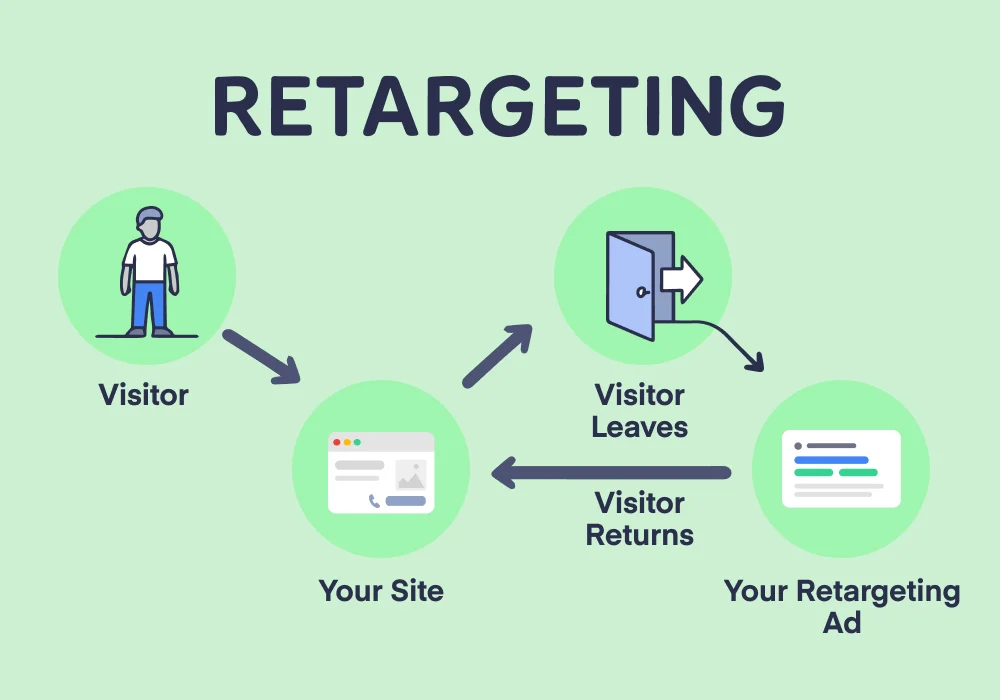
Retargeting has long been one of digital marketing’s most reliable tools, expertly designed to re-engage visitors who have already shown interest in your brand. However, the landscape is shifting dramatically. New privacy regulations and fundamental changes in browser technology are dismantling the traditional tracking methods that made retargeting so powerful. Marketers now face a critical challenge: adapting their strategies to this new privacy-first world or risk non-compliance and ineffective campaigns.
This guide provides a clear path forward. You will learn how to leverage compliant data strategies and modern technical solutions to run effective retargeting campaigns that respect user privacy and adhere to global regulations like the GDPR, CCPA, and emerging state laws in the U.S. The shift from third-party cookies to first-party data and contextual targeting is not just a hurdle—it’s an opportunity to build deeper, more trusting relationships with your audience.
What Is Retargeting Marketing?

Retargeting marketing is a focused digital advertising strategy that allows businesses to re-engage users who have previously interacted with their website, app, or content but did not complete a conversion goal. By placing a small, unobtrusive code snippet (a pixel or tag) on your site, you can anonymously “follow” these interested prospects as they browse other parts of the web, serving them tailored ads that encourage a return visit.
The process is highly effective because it focuses your advertising budget on a warm, pre-qualified audience that has already demonstrated intent. Common applications include:
-
Displaying ads for products a user viewed but didn’t purchase.
-
Reminding users who abandoned a shopping cart to complete their checkout.
-
Re-engaging visitors who downloaded a guide but did not sign up for a demo.
The data underscores its power: retargeted ads can achieve a click-through rate (CTR) of 0.7%, significantly outperforming the average 0.07% CTR for standard display ads. Furthermore, retargeting can boost ad engagement by up to 400%, making it a cornerstone tactic for driving conversions and maximizing marketing ROI.
The Shift in Online Advertising Privacy Regulations

The landscape of digital advertising is undergoing a fundamental transformation, driven by a global shift toward stricter user privacy. For marketers, this means the traditional methods of tracking users across the web to power retargeting campaigns are becoming less viable and, in many cases, non-compliant with new laws. This shift presents a significant challenge: how to maintain effective advertising reach while fully respecting user privacy and adhering to a complex web of regulations.
The core of this change is the move away from pervasive, third-party data collection toward a model that requires greater transparency, user control, and first-party data relationships. Platforms like Google are actively deprecating third-party cookies, which have been the backbone of cross-site tracking for decades. Simultaneously, major advertising platforms including Meta, Google, TikTok, and Pinterest are implementing privacy-preserving technologies like server-side conversion APIs and aggregated reporting. This dual pressure from both regulators and technology providers necessitates a proactive adaptation of retargeting strategies.
New Privacy Laws on the Horizon
In the United States, the absence of a single federal privacy standard has led to a complex patchwork of state-level regulations. Proposed laws like the American Data Privacy and Protection Act (ADPPA) and the American Privacy Rights Act (APRA) failed to pass, leaving states to create their own rules. This means businesses must navigate different compliance requirements depending on where their customers are located.
Several key state laws are now in effect, each with implications for data collection and retargeting:
-
Texas Data Privacy and Security Act (TDPSA): Requires businesses to obtain explicit user consent before collecting sensitive personal data.
-
Oregon Consumer Privacy Act (OCPA): Grants consumers broad rights to opt out of targeted advertising and the sale of their data.
-
Florida’s Digital Bill of Rights: Imposes strict rules, particularly on larger companies, regarding data collection and user consent.
Non-compliance with these laws can result in substantial fines and legal consequences, making it essential for businesses to rethink their data practices.
4 Key Changes Impacting Retargeting Ads
The expansion of privacy laws has led to concrete restrictions in four critical areas that directly impact how retargeting advertising functions:
-
Data Collection: Businesses can no longer assume consent. They must obtain explicit user permission before gathering personal data, moving from an opt-out to an opt-in model in many jurisdictions.
-
User Tracking: The traditional tool for tracking, the third-party cookie, is being eliminated. Google’s ongoing deprecation of third-party cookies in Chrome is forcing the industry to adopt new, privacy-focused tracking methods.
-
Personalized Advertising: Transparency is paramount. Retargeting efforts must be clear to users, who must be provided with straightforward mechanisms to opt out of personalized advertising if they choose.
-
Platform Restrictions: Advertising platforms are changing their infrastructure. They are increasingly relying on server-side conversion APIs, aggregated reporting, and limited-data-use frameworks to help advertisers measure campaign performance without accessing individual personal identifiers.
This new environment makes it clear that the “set it and forget it” approach to retargeting is obsolete. Success now depends on implementing compliant strategies and technical measures that align with both the letter and the spirit of modern privacy regulations.
6 Strategies for Compliant Ad Retargeting

Navigating the new privacy landscape requires a fundamental shift in approach. The goal is no longer to track users covertly but to engage them transparently with value. The following six strategies form a comprehensive framework for building retargeting campaigns that are both effective and respectful of evolving regulations.
1. Prioritize First-Party Data
First-party data—information collected directly from your audience with their knowledge—is the new cornerstone of compliant marketing. It is inherently more accurate, trustworthy, and insulated from regulatory changes affecting third-party sources.
Building Your First-Party Data Strategy:
-
Direct Collection Points: Create valuable exchanges to gather data. This includes email sign-ups for newsletters, account registrations, purchase histories, and customer feedback surveys.
-
Enhanced On-Site Engagement: Use tools like quizzes, product finders, or lifestyle assessments that provide personalized results in return for an email address. For example, a skincare brand can offer a “Skin Care Routine Quiz” that recommends products based on user answers.
-
Incentivized Sharing: Offer clear value to encourage data sharing. This could be an exclusive discount for subscribers, early access to sales, members-only content, or a points-based loyalty program.
This direct relationship, built on transparency and exchange, not only ensures compliance but also fosters stronger customer loyalty.
2. Implement Contextual Ad Retargeting
Contextual targeting is a powerful, privacy-safe alternative to behavioral tracking. Instead of chasing users across the web based on their past behavior, it places your ads on websites and within content that is relevant to your product or service theme.
How to Leverage Contextual Targeting:
-
Keyword & Topic Alignment: An outdoor apparel company can place ads on hiking blog articles, camping gear review sites, or travel vlogs about national parks. The ad relevance comes from the page content, not the user’s personal data.
-
Platform Capabilities: Utilize in-platform tools like Google’s Display Network topics or Pinterest’s context targeting. Emerging technologies like Google’s Privacy Sandbox Topics API represent the future, where browsers themselves assign users broad interest categories (like “fitness” or “travel”) without revealing individual browsing histories.
-
Proven Impact: As noted in industry results, a focused approach using contextual and segmented campaigns can drive significant performance. For instance, one supplier achieved a 279% increase in conversions and over 10x Return on Ad Spend (ROAS) by moving to sophisticated, privacy-compliant segmentation.
3. Leverage Consent Management Platforms (CMPs)
A Consent Management Platform (CMP) is a non-negotiable technical tool for modern compliance. It standardizes how you obtain, record, and manage user consent for data collection and cookies, ensuring adherence to laws like GDPR, CCPA, and state regulations.
Key Functions and Selection:
A CMP provides a customizable consent banner that clearly explains data use, allows users to accept or reject different types of tracking (granular consent), and securely stores proof of consent. It also integrates with your marketing tags to ensure they fire only when permitted.
Leading CMPs to Consider:
-
OneTrust: Best for large enterprises needing a scalable, comprehensive suite for privacy, governance, and risk management.
-
TrustArc: Offers a flexible and user-friendly platform with strong integration capabilities and automated compliance updates.
-
Cookiebot: A robust solution ideal for small to mid-sized businesses, known for its strong compliance automation and simple implementation.
Furthermore, a CMP enables Google Consent Mode v2 (now mandatory in many regions). This feature allows your Google tags to adapt dynamically: if a user denies analytics cookies, Consent Mode can use modeled conversion data (based on aggregated, anonymized trends) to fill reporting gaps while respecting the user’s choice.
4. Maintain Transparent Privacy Policies
Transparency builds trust. A clear, accessible privacy policy is a legal requirement and a competitive advantage. Over 50% of consumers are willing to share data for value, but distrust surges when practices are opaque.
Principles for an Effective Policy:
-
Clarity Over Legalese: Write in plain language. Explain what data you collect, why you collect it (e.g., “to personalize your shopping experience”), and who you share it with.
-
Easy Access and Control: Link your privacy policy prominently (e.g., in your website footer). Include a direct link to a preference center where users can easily update their consent choices or opt out of data sales at any time.
-
Proactive Communication: Don’t just bury the policy. Use onboarding emails or website tooltips to briefly highlight your commitment to privacy and direct users to learn more.
5. Focus on Value-Driven Data Collection
Shift the paradigm from “taking data” to “exchanging value.” This approach aligns business goals with user incentives, encouraging voluntary and enthusiastic data sharing.
Tactics for Creating Value Exchange:
-
Gated Premium Content: Offer high-value resources like in-depth industry reports, expert webinars, or detailed white papers in exchange for an email address.
-
Personalized Experiences: Implement tools that use provided data to give immediate value. A financial services firm could offer a “Retirement Savings Calculator” that requires basic input (age, income) and provides a personalized report.
-
Loyalty Programs: Develop programs that reward not just purchases but engagement—points for watching a tutorial, completing a profile, or writing a review. This builds a rich first-party data profile through positive reinforcement.
6. Implement Server-Side Tracking and Conversion APIs
The technical backbone of compliant retargeting is shifting from the browser to the server. Browser-based tracking (client-side) is fragile and restricted by new privacy rules. Server-side tracking moves data collection directly from your server to the ad platform’s server, enhancing data accuracy, security, and privacy.
The Role of Conversion APIs:
Major platforms provide Conversion APIs (CAPI) to facilitate this:
-
Meta CAPI: Sends web events (e.g., purchases, leads) directly from your server to Meta, improving attribution amid iOS restrictions.
-
Google Enhanced Conversions: Hashes first-party customer data (like email addresses) and sends it securely to Google to match with Google accounts in a privacy-safe manner, making conversion measurement more accurate.
-
Platform APIs: Similarly, TikTok Events API and Pinterest Conversion API ensure you can track campaign performance on those platforms without relying on vulnerable browser pixels.
Implementing these APIs, often via a Server-Side Tag Manager, protects your data from browser blockers, recovers potentially lost conversion events, and ensures you are building your retargeting audiences on the most reliable data available.
2 Technical Measures to Ensure Compliance
Effective compliance in today’s privacy environment requires more than policy changes—it demands technical implementation. These backend measures ensure your data processing respects user privacy while maintaining marketing functionality.
1. Invest in Anonymized Data Processing Tools
The core principle of modern privacy compliance is data minimization and anonymization. Instead of collecting personally identifiable information (PII) like names and email addresses for tracking, the focus shifts to using anonymized, aggregated, or modeled data that cannot be traced back to individual users.
Key Technologies Enabling Privacy-Safe Processing:
| Technology | Primary Function | Key Benefit for Retargeting |
|---|---|---|
| Server-Side Tagging | Moves data collection from the user’s browser to your controlled server. | Reduces reliance on browser cookies, prevents data loss from ad blockers, and provides more control over what data is sent to third parties. |
| Conversion APIs (Meta CAPI, Google Enhanced Conversions, TikTok Events API) | Establishes a direct, server-to-server connection between your data and ad platforms. | Recovers conversion events lost due to browser restrictions (like iOS opt-outs) and improves attribution accuracy without using cookies. |
| Google Consent Mode v2 | Adjusts how your Google tags behave based on user consent choices. | When users decline analytics cookies, it uses modeling to fill reporting gaps while respecting their choice, preserving campaign insights. |
| Chrome Privacy Sandbox | Provides a suite of browser-based, privacy-preserving APIs to replace third-party cookies. | Enables interest-based (Topics API) and retargeting (Protected Audience API) advertising without cross-site tracking. |
Implementation Strategy:
Begin by implementing server-side tagging through Google Tag Manager (Server-side) or equivalent solutions. This creates a foundational layer where you control data flows. Next, configure and deploy the Conversion APIs for your primary ad platforms (Meta, Google, etc.). Ensure your Consent Management Platform (CMP) is integrated to feed user choices into Google Consent Mode v2. Finally, begin testing Privacy Sandbox APIs in controlled environments, as they represent the future standard for web-based advertising.
2. Regularly Update Tracking Methods
Privacy regulations and platform policies are moving targets. A “set and forget” approach to tracking technology is a significant compliance risk. Establishing a proactive maintenance protocol is essential.
Essential Maintenance Checklist:
-
Quarterly Audit of Tags & Scripts:
-
Catalog all tracking pixels, tags, and scripts on your website and app.
-
Verify each one’s purpose and confirm it’s still necessary.
-
Ensure each tool is configured for data minimization (e.g., not collecting unnecessary URL parameters or user fields).
-
-
Monitor and Adapt to Platform Changes:
-
Subscribe to official developer and policy blogs from Google (Chromium blog), Meta for Business, Apple, and major platforms you use.
-
Proactively test new APIs (like the latest Privacy Sandbox proposals) in development environments before they become mandatory.
-
-
Review and Test Consent Configurations:
-
Test your CMP banner and preference center across different regions using geolocation tools to ensure correct regulations are applied (e.g., GDPR in the EU vs. CCPA in California).
-
Validate that all tracking scripts correctly respect the “reject all” consent state. Use browser developer tools to confirm no data is sent without consent.
-
-
Validate Data Anonymization Processes:
-
Regularly sample the data being sent to analytics and ad platforms. Use hash/encryption verification tools to ensure PII (like email addresses) is properly hashed before transmission via tools like Google Enhanced Conversions.
-
Check that internal data pipelines aggregate or pseudonymize data for reporting purposes.
-
Recommended Update Cadence:
-
Monthly: Quick check of major platform announcements.
-
Quarterly: Full audit of tags and consent configurations.
-
Bi-Annually: Deep-dive review of data flows and anonymization practices, plus testing of emerging APIs.
By treating your tracking infrastructure as a living system that requires regular review and updates, you ensure ongoing compliance, maximize data quality, and future-proof your retargeting capabilities against the next wave of privacy changes.
Leverage Retargeting with Proven, Compliant Solutions
The digital marketing landscape is transforming. With Google Chrome eliminating third-party cookies and new state privacy laws taking effect, the old rules of retargeting no longer apply. Success now depends on adopting privacy-first strategies that respect user consent while maintaining campaign performance.
Our approach harnesses the power of first-party data, server-side tracking, intelligent consent management, and cookieless audience targeting. This modern framework ensures your advertising remains effective and fully compliant across every channel—from Meta and Google ads to email marketing, content syndication, and PPC.
At Pro Real Tech, we specialize in guiding businesses through this transition. We implement future-proof strategies that are both highly effective and built for compliance. Our team continuously monitors evolving regulations and platform updates, ensuring your retargeting campaigns drive maximum ROI without legal risk.
Ready to transform your retargeting strategy? Contact our team today to discover how our proven solutions can protect your business and boost your results.
Frequently Asked Questions (FAQs) About Retargeting
WHAT IS RETARGETING AND HOW DOES IT WORK TODAY?
Retargeting is a digital advertising strategy that allows businesses to show ads to users who have previously interacted with their website, app, or content. Today, how it works has fundamentally shifted. Previously, it relied heavily on third-party cookies—small files that tracked users across different websites to enable behavioral ad targeting.
In the current privacy-focused environment, this method is becoming obsolete. Modern retargeting now works through:
-
First-Party Data: Using information (like email addresses or on-site behavior) that customers voluntarily share directly with your business.
-
Contextual Signals: Placing ads based on the content of the webpage a user is currently viewing, rather than their past browsing history.
-
Privacy-First APIs: Using new technologies like platform conversion APIs and the Chrome Privacy Sandbox, which allow for interest-based advertising without cross-site tracking of individuals.
WHO IS PROTECTED BY PRIVACY REGULATIONS UNDER TODAY’S LAWS?
Protection depends on the specific law and the user’s location. There is no single global standard.
-
Geographically: Regulations like the GDPR protect individuals in the European Union and European Economic Area. In the U.S., a growing patchwork of state laws, such as the CCPA/CPRA in California and the TDPSA in Texas, protect residents of those states. Similar laws exist in Virginia, Colorado, Utah, Connecticut, and others.
-
Scope: These laws generally protect consumers (individuals acting in a personal context) and grant them rights over their personal data. They typically apply to businesses that meet certain thresholds, such as processing the data of a minimum number of residents or generating revenue above a specific amount.
HOW DO ONLINE ADVERTISING PRIVACY RULES AFFECT RETARGETING ADS?
Privacy rules introduce significant limitations and requirements:
-
Restricted Tracking: The phase-out of third-party cookies and mobile ad IDs (like Apple’s ATT framework) makes traditional user tracking across websites and apps much harder.
-
Explicit Consent Required: Laws like GDPR mandate that businesses must obtain clear, affirmative consent before collecting or using personal data for advertising, moving from an implied “opt-out” to an active “opt-in” model in many cases.
-
Transparency and Control: Businesses must clearly disclose what data they collect and how it’s used for retargeting. They must also provide easy-to-use mechanisms for users to access their data, correct it, or opt out entirely.
-
Limited Data Use: Platforms like Meta and Google now operate with more restrictions, often providing aggregated or modeled conversion data instead of detailed individual reporting.
WHAT ARE THE MOST COMPLIANT STRATEGIES FOR AD RETARGETING?
The most compliant strategies are built on transparency, user consent, and data minimization:
-
First-Party Data Foundation: Building direct customer relationships to collect data voluntarily through accounts, subscriptions, and purchases.
-
Contextual Targeting: Serving ads based on webpage content or broad, inferred interests (via APIs like Topics) instead of individual browsing history.
-
Consent-Centric Infrastructure: Implementing a Consent Management Platform (CMP) to lawfully capture and manage user permissions.
-
Value Exchange: Encouraging data sharing by offering clear benefits like exclusive content, discounts, or personalized experiences.
-
Server-Side Technology: Using conversion APIs and server-side tagging to measure performance in a privacy-safe manner.
HOW CAN BUSINESSES RUN RETARGETING ADVERTISING WITHOUT VIOLATING PRIVACY REGULATIONS?
Businesses can run compliant campaigns by adopting a structured, privacy-by-design approach:
-
Audit & Map Data: Start by identifying all data collection points and mapping data flows to understand what you collect and where it goes.
-
Implement a CMP: Deploy a robust Consent Management Platform to handle legal consent capture for all users, especially in regulated regions.
-
Shift to First-Party Data: Develop strategies (loyalty programs, gated content) to grow your owned data assets.
-
Adopt Privacy Tech: Integrate server-side tracking, conversion APIs, and test new privacy-preserving technologies like the Privacy Sandbox.
-
Document Everything: Maintain clear records of consent, data processing activities, and privacy policies to demonstrate compliance.
WHAT IS THE FUTURE OF RETARGETING UNDER GROWING ONLINE ADVERTISING PRIVACY LAWS?
The future points toward a more integrated, intelligent, and consent-driven model:
-
The End of Widespread Tracking: Cross-site tracking using third-party identifiers will continue to diminish, making anonymous, cohort-based (e.g., Privacy Sandbox’s FLEDGE) and contextual targeting the norm.
-
Rise of First-Party Data Ecosystems: Businesses will compete on the quality of their direct customer relationships and their ability to ethically leverage that data for personalization.
-
Advanced AI and Modeling: Machine learning will play a larger role in predictive targeting and modeled conversion attribution, helping to fill gaps where direct measurement is lost.
-
Unified Privacy Platforms: Tools that manage consent, data governance, and activation across all channels will become essential infrastructure.
-
Value-Based Engagement: Successful retargeting will be inseparable from overall customer experience, relying on genuine value exchange rather than passive tracking.
Read More: What Is LLMs.txt? & Do You Need One?


