

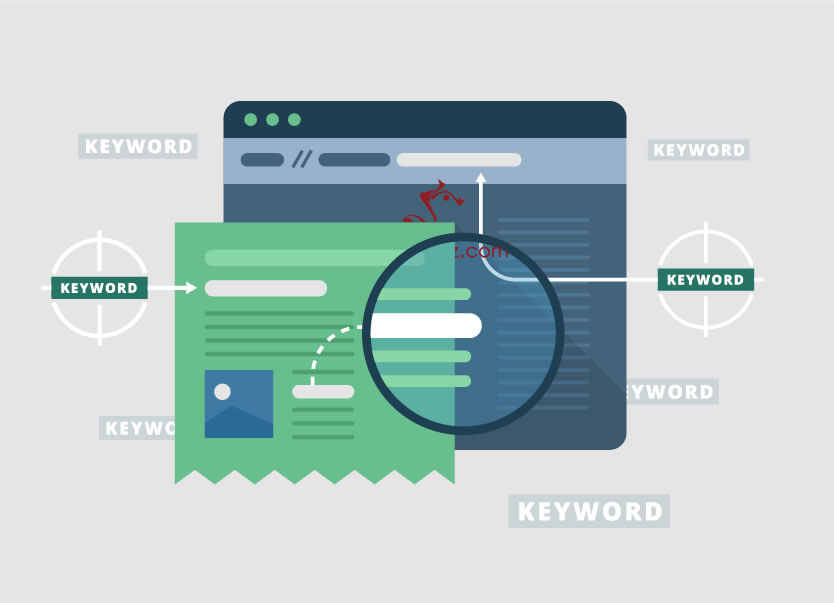
For years, the foundation of SEO was built on a simple premise: find the right keywords, insert them into your content, and wait for rankings to follow. This tactical, keyword-first playbook delivered results in an era where search engines matched queries to pages based primarily on lexical matches. But if your strategy still revolves around this outdated manual, you’re likely finding it harder to generate traffic and meaningful engagement.
The digital landscape has undergone a fundamental transformation. Today’s search engines, led by sophisticated AI like Google’s Gemini, no longer just read words—they strive to understand concepts, context, and the nuanced intent behind a search. They map relationships between entities, interpret the broader conversation around a topic, and reward content that serves as a comprehensive, authoritative resource.
This evolution demands a parallel shift in your approach. Rewriting your SEO playbook isn’t about discarding everything you know; it’s about evolving from a narrow focus on keywords to a broader, more effective strategy centered on context. This guide will walk you through why this shift is critical, what contextual SEO truly means, and how to practically overhaul your strategy to build sustainable visibility and success in the modern search ecosystem.
Why the Keyword-Only Approach No Longer Works

Relying solely on keyword targeting is like navigating a modern city with a decade-old map. The major landmarks might still be there, but you’ll miss new roads, neighborhoods, and the dynamic flow of life. This approach is breaking down for several key reasons:
1. The Rise of Conversational & Voice Search
People are no longer just typing short, fragmented phrases. With voice assistants and natural language processing, searches are becoming full questions or conversational statements (“best way to clean a stainless steel grill grates” vs. “clean grill grates”). A keyword-only approach fails to address these long-tail, natural language queries that are rich with intent but may not contain your exact target keyword.
2. Semantic Search and AI Understanding
Search engines now use sophisticated models to grasp the semantic meaning of content. They understand synonyms, related concepts, and the thematic depth of a subject. A page optimized only for the exact term “beginner running shoes” might be overlooked for the query “good sneakers for starting to jog” because the engine understands the contextual equivalence of “sneakers” and “running shoes,” and “beginning” and “beginner.”
3. The Pursuit of Search Satisfaction (E-E-A-T)
Google’s focus on Experience, Expertise, Authoritativeness, and Trustworthiness (E-E-A-T) underscores that satisfying a user requires more than keyword matching. A page stuffed with keywords but lacking depth, accuracy, and helpful context will not be seen as high-quality. The engine’s goal is to measure how well content fulfills the user’s intent, not how many times it repeats a phrase.
4. The Entity-Oriented Future
Modern search is moving towards an understanding of “entities”—real-world things like people, places, products, and concepts—and how they connect. A search for “Paris” could relate to the city, the celebrity, the myth, or a product. The old keyword model sees one word; the contextual model understands the network of entities and topics surrounding it to deliver the right result.
The keyword-only approach creates isolated, “one-and-done” pages that compete for a single, often high-difficulty term. It ignores the interconnected nature of information and the user’s journey. To truly compete and provide value, your strategy must expand to encompass the entire topic, the user’s journey, and the underlying concepts that give a simple keyword its meaning. This is the core of the shift from keywords to context.
What Contextual SEO Really Means

Moving beyond keywords is not about ignoring them; it’s about placing them within a larger, more meaningful framework. Contextual SEO is the practice of optimizing your content to align with the full spectrum of meaning, intent, and relationships surrounding a topic. It ensures your pages are understood by search engines as comprehensive, authoritative parts of a broader conversation. This approach rests on three foundational pillars.
1. User Intent and Behavior
At its core, contextual SEO is about satisfying the why behind the search. User intent—typically categorized as Informational (seeking knowledge), Navigational (looking for a specific site), Commercial (researching before a purchase), or Transactional (ready to buy)—is the ultimate compass. Context involves understanding not just the explicit query but the implied needs.
For example, a user searching for “best blender” is likely in the commercial investigation phase. A contextually optimized piece won’t just list models; it will compare features for different use cases (smoothies vs. soup), discuss durability, and address common post-purchase questions (cleaning, warranty). It anticipates the user’s next steps and behaviors, creating a holistic resource that fulfills their entire journey, not just the first step.
2. How Topics Relate to One Another
Keywords exist in isolation; topics exist in a network. Contextual SEO maps and leverages these relationships through topic clusters. This model replaces the old “silo” structure with a hub-and-spoke system:
-
A core pillar page provides a comprehensive overview of a broad topic (e.g., “Complete Guide to Sustainable Gardening”).
-
Related cluster content (blog posts, articles) delve into specific subtopics (e.g., “Composting for Beginners,” “Drought-Resistant Native Plants,” “Organic Pest Control Methods”).
These pieces are hyperlinked together, creating a semantic network that clearly signals to search engines the depth and breadth of your authority on the overarching subject. This structure mirrors how people learn—exploring a central idea from multiple angles—and is how modern algorithms understand and rank topical expertise.
3. Entities and Real-World Concepts
The most advanced layer of contextual understanding moves from words to concepts, or entities. An entity is any uniquely identifiable thing: a person, place, product, organization, or even an abstract concept like “digital marketing.”
Search engines are building vast “knowledge graphs” that map how these entities connect. When you write about “Apple,” the context determines whether the entity is associated with “iPhone,” “Tim Cook,” and “Cupertino” (the tech company) or “Fuji,” “orchard,” and “pie” (the fruit). By naturally incorporating related entities and their attributes into your content, you provide explicit contextual clues. This helps algorithms precisely understand your content’s subject matter and its relevance to a much wider array of semantically linked queries, boosting visibility for related searches you may not have directly targeted.
Contextual SEO weaves together intent (the user’s goal), topical breadth (the surrounding subject network), and entity awareness (the real-world concepts involved) to create content that is perfectly aligned with both human understanding and algorithmic comprehension.
How Google Web Guide Reinforces This Shift

The guidance provided by search engines themselves offers the most compelling evidence for this strategic pivot. While not a formal rulebook, the public documentation and principles emphasize the very factors that make contextual SEO essential.
Central to this is the unwavering focus on people-first content created for humans, not just search engines. The guidelines explicitly prioritize content that demonstrates expertise, experience, authoritativeness, and trustworthiness (E-E-A-T). This framework is inherently contextual. You cannot prove E-E-A-T by simply mentioning a keyword; you demonstrate it by comprehensively covering a topic, citing trustworthy sources, showing first-hand experience, and effectively addressing the searcher’s needs. The emphasis on “helpful content” that leaves users feeling satisfied directly rewards the depth and completeness that a contextual strategy delivers.
Furthermore, the guidance on ranking systems highlights the use of understanding language models. These AI models are designed to assess how well content aligns with the interests and intent behind a query, moving far beyond literal keyword matching. They evaluate the relevance of content in a broader, more conceptual sense.
The prevailing guidance from major search engines is a clear directive: move away from creating content for specific queries in isolation and toward building a library of expert, interconnected content that serves a real human audience. The systems are built to reward those who follow this contextual, user-centric path.
How to Rewrite Your SEO Playbook

Transitioning to a contextual SEO strategy requires a fundamental rewrite of your content creation and optimization processes. Follow these four actionable steps to modernize your approach.
1. Build Semantic Clusters
Abandon the model of creating standalone articles targeting single keywords. Instead, architect your content around topic clusters.
-
Identify a Core Pillar Topic: Choose a broad, authoritative subject central to your business (e.g., “Project Management Software”).
-
Map Subtopics (Cluster Content): Brainstorm all related questions, facets, and sub-themes your audience cares about (e.g., ” agile project management,” “Gantt chart tools,” “team collaboration features,” “project management methodologies”).
-
Create a Hub-and-Spoke Structure: Develop a comprehensive pillar page that provides a high-level overview of the main topic. Then, create detailed cluster content (blog posts, guides) for each subtopic, and interlink them all.
-
The Result: This structure creates a semantic web that clearly signals to search engines your deep authority on the entire topic, boosting the ranking potential for all pages within the cluster.
2. Write Content That Answers Connected Questions
Content should be designed to serve the user’s entire journey, not just their first query.
-
Utilize “People Also Ask” and Related Searches: These features are a direct window into the connected questions users have. Don’t just answer the primary question; integrate the answers to these related queries into your content naturally.
-
Employ Question-Based Headings: Structure your content with H2/H3 headers that pose complete questions (e.g., “How Does Contextual SEO Improve User Engagement?”). This aligns directly with conversational search and organizes information for both readability and algorithmic understanding.
-
Practice “Topic Exhaustion”: Within a single piece, aim to cover the subject so thoroughly that a user would not need to immediately click back to search results for more basic information. This increases dwell time and establishes your page as a definitive resource.
3. Optimize for Entities
Shift your focus from keyword density to entity awareness.
-
Identify Core Entities: Determine the main people, places, things, or concepts that define your topic. Use tools like knowledge graph databases or semantic analysis features in SEO platforms.
-
Incorporate Related Attributes: For each core entity, naturally include its defining attributes. An article about “Mount Everest” (entity) should discuss its “height,” “location,” “climbing routes” (all related entities/attributes).
-
Use Schema Markup: Implement structured data (like FAQSchema, HowToSchema, or ArticleSchema) to explicitly label entities and content types for search engines, providing unambiguous context and enhancing the potential for rich results.
4. Refresh Old Content Based on Intent and Context
Your existing content library is a prime asset for this shift. Conduct a content audit with a contextual lens.
-
Evaluate for Intent Match: Is the page fully satisfying the user’s intent behind its target queries? A page ranking for “buy running shoes” should have clear pathways to purchase, not just informational reviews.
-
Expand for Topic Completeness: Can you add sections that answer related questions, update it with new entities, or deepen its expertise?
-
Integrate into New Clusters: Relaunch updated content by interlinking it with your new pillar pages and topic clusters. This breathes new life into old posts and strengthens your entire semantic network.
-
Update for E-E-A-T: Add case studies, expert credentials, recent data, or testimonials to boost the perceived experience and authoritativeness of the content.
By implementing these four steps, you systematically rebuild your SEO foundation from one of isolated keyword targeting to one of interconnected contextual authority.
Tools and Tactics to Support the Shift
Implementing a contextual SEO strategy requires moving beyond traditional keyword tools. The new playbook is supported by a suite of platforms and tactics designed to analyze intent, map topic relationships, and optimize for semantic understanding. Here’s how to leverage key tools to execute your shift effectively.
Google Search Console: The Intent & Performance Compass
This free tool is your direct line to understanding what your audience is actually searching for and how Google perceives your content.
-
Tactic: Uncover True Search Intent. Move beyond tracking keyword rankings. Analyze the actual search query reports to see the full range of phrases that trigger impressions and clicks for your pages. This reveals the contextual intent users have when they find you. A page targeting “kitchen renovation ideas” might be attracting queries like “small kitchen layout 2024” or “eco-friendly cabinet materials,” signaling subtopics to expand upon.
-
Tactic: Identify Contextual Gaps. Use the Performance data to find pages with high impressions but low click-through rates (CTR). This often indicates your content is relevant enough to be shown for a query but doesn’t fully satisfy the user’s intent or contextual expectations. It’s a direct signal to refine your content’s angle and comprehensiveness.
Semrush Topic Research: Mapping the Semantic Network
This tool excels at visualizing the ecosystem of questions and subtopics around a core theme, which is fundamental for building topic clusters.
-
Tactic: Discover Cluster Content Ideas. Input your pillar topic (e.g., “mindfulness meditation”) to generate “cards” for dozens of related questions, subtopics, and headlines. This provides a direct blueprint for your cluster content, ensuring you cover the topic from every relevant angle a user might explore.
-
Tactic: Analyze Competitor Topic Depth. See which subtopics and questions your competitors are addressing in their top-performing content. This helps you identify opportunities to create more comprehensive, detailed, and interconnected content that fills gaps or provides superior depth.
Surfer SEO: The Contextual Optimization Engine
While traditional tools suggest keyword usage, Surfer uses live SERP data to guide optimization for topical relevance and semantic density.
-
Tactic: Optimize for Thematic Completeness. Surfer’s content editor analyzes top-ranking pages for your target to generate a list of related terms, entities, and topics that should be included. This moves your optimization focus from keyword count to thematic coverage, ensuring your content aligns with the contextual patterns search engines reward.
-
Tactic: Structure for Readability and Depth. The tool provides recommendations on structure, heading use, and content length based on what works for existing high-authority content. This helps you build content that is not only semantically rich but also user-friendly and comprehensive.
AI Models (e.g., Gemini, ChatGPT): Accelerating Contextual Creation
Generative AI acts as a powerful force multiplier for research, ideation, and drafting within a contextual framework.
-
Tactic: Brainstorm Intent-Based Content Angles. Prompt an AI to: “Generate 10 content angles for a pillar page about ‘sustainable hiking,’ focusing on different user intents: informational, commercial, and beginner vs. expert.” This quickly expands your perspective beyond simple keywords.
-
Tactic: Draft Comprehensive Section Expansions. Use AI to help flesh out sections of your content. Provide a specific prompt like: “Based on the entity ‘merino wool’ in the context of sustainable hiking gear, write a detailed paragraph explaining its attributes (temperature regulation, odor resistance) and why it’s an eco-friendly choice.” This ensures entities are explained with useful context.
-
Critical Reminder: AI is an assistant for ideation and drafting, not a replacement for human expertise and editing. Always infuse the output with first-hand experience, verify all facts, and add unique value to ensure your content meets E-E-A-T standards.
Integrating the Toolkit: Start with Google Search Console for foundational intent data. Use Semrush Topic Research to plan your cluster strategy. Employ Surfer SEO to guide the optimization of individual pieces. Leverage AI models to efficiently overcome creative blocks and expand on semantic concepts. Together, these tools provide a complete workflow for researching, planning, creating, and optimizing content for the context-driven search era.
What This Means for Your Long-Term SEO Success

Adopting a context-driven SEO strategy is not merely a tactical update; it is a fundamental investment in the future-proofing and authority of your digital presence. The long-term implications create a powerful competitive moat that a keyword-centric approach cannot match.
Sustainable Resilience Against Algorithm Updates: Search engines consistently refine their systems to better understand user intent and reward quality. By focusing on context—deeply understanding topics, entities, and user journeys—you align your content with the core, enduring principles of these algorithms (helpfulness, expertise, satisfaction). This makes your strategy inherently more resilient to surface-level updates that often penalize shortcuts and manipulation.
Establishing Topical Authority: Search engines reward recognized authorities. A contextual approach, executed through topic clusters and exhaustive content, systematically signals your expertise on a subject. Over time, this builds your site’s reputation as a go-to resource within its niche, increasing the likelihood of ranking for new, related queries and earning valuable backlinks naturally.
Improved User Experience & Conversion Metrics: Content designed around context and intent keeps users engaged. They find comprehensive answers, discover related information easily through internal links, and spend more time on your site. This improves critical behavioral metrics (dwell time, pages per session, lower bounce rates), which are positive ranking signals. Furthermore, by addressing the full user journey, you naturally guide visitors from information to consideration to conversion, improving ROI.
Efficiency and Scalability: While the initial audit and restructuring require effort, a contextual framework makes content planning more strategic and scalable. The topic cluster model provides a clear, organized roadmap for content creation. Refreshing old content becomes a systematic process of enhancing its contextual depth. This strategic clarity prevents wasted effort on one-off pieces that don’t contribute to a larger goal.
In essence, rewriting your playbook for context shifts your SEO from a technical, reactive game into a strategic, user-centric discipline. It builds a foundation not just for higher rankings, but for deeper trust, greater engagement, and sustained organic growth that adapts to the future of search.
The Future of Your SEO Strategy
The era of SEO as a simple keyword-matching game is over. Today, search algorithms interpret nuanced context, understand real-world entities, and prioritize genuine user intent. Clinging to a strategy built solely on keywords now severely limits your potential reach and relevance.
This isn’t about discarding keywords—it’s about elevating them. Effective modern SEO treats keywords as vital clues, integrating them into a broader, more connected strategy. By embracing topic clusters, optimizing for entities, and creating content that satisfies deep intent, you build the topical authority and credibility that both users and search engines reward.
This is the path to sustainable visibility. Ready to rewrite your playbook? Contact our team today to build a content strategy that thrives in the era of contextual search.
Frequently Asked Questions (FAQs) About Context-Based SEO
HOW DO YOU TRANSITION FROM KEYWORD-FIRST SEO TO CONTEXTUAL SEO?
Begin with an audit of your existing content to identify top-performing pages and key topic areas. Group related content into potential topic clusters. Choose one core pillar topic to start with, map out its related subtopics and user questions, and begin creating or rewriting content to form a connected cluster. Update internal linking to reflect these relationships. Prioritize understanding and addressing user intent in every new piece you create, using tools to analyze semantic relationships and entities.
WHY IS KEYWORD RESEARCH STILL IMPORTANT IN A CONTEXT-DRIVEN STRATEGY?
Keyword research remains the critical starting point for uncovering user intent and language. It reveals the questions people are asking. In a contextual strategy, keywords are not used as blunt targets for repetition but as clues to the underlying topics, entities, and searcher needs you must address. They inform the scope of your topic clusters and help you understand the semantic field you need to cover comprehensively.
WHAT ROLE DOES GOOGLE WEB GUIDE PLAY IN MODERN SEO?
The public guidance from major search engines underscores the necessity of a people-first approach. It emphasizes principles like E-E-A-T (Expertise, Experience, Authoritativeness, Trustworthiness) and creating helpful, reliable content. This is a direct reinforcement of contextual SEO, which aims to satisfy these very principles by building topical authority and fully addressing user intent, rather than optimizing for keywords alone.
HOW CAN ENTITY-BASED SEO IMPROVE MY SEARCH VISIBILITY?
Optimizing for entities helps search engines precisely understand what and who your content is about, and its relation to other concepts. This clarity allows your content to be confidently matched to a wider variety of relevant queries, including semantic and long-tail variations. It can also increase your chances of appearing in knowledge panels and rich results, as you provide clear, structured information about key concepts.
HOW DO TOPIC CLUSTERS SUPPORT USER INTENT OPTIMIZATION?
Topic clusters are the structural embodiment of intent optimization. A pillar page addresses broad, high-level intent, while the connected cluster content captures the specific, nuanced intents behind follow-up questions. By interlinking this content, you actively guide users through a seamless journey of discovery, satisfying their intent at multiple stages. This architecture signals to search engines that your site is a comprehensive destination for the entire topic, fulfilling a range of user needs.
Read More: Semantic Clustering: The Key to Staying Visible in Google’s Web Guide


