


Imagine the internet not as a disorganized library, but as a carefully structured database where information is grouped by subject, detail, and user goal. This is the reality of modern search. For years, SEO focused on finding specific keywords and inserting them into pages. Today, Google’s systems have advanced from spotting keywords to genuinely understanding ideas, contexts, and how they connect.
The publication of Google’s Web Guide marked a major shift. It moved the focus from indexing single pages to charting the entire web based on topics and what users aim to accomplish. In this environment, old methods of creating content around isolated keywords are losing effectiveness. Visibility now depends on showing deep expertise across a whole subject area, not just on single terms.
This is why Semantic Clustering is the critical modern strategy. It is the plan for aligning your website with how search engines now organize and suggest information. By structuring your content to cover every related question and subtopic within a main theme, you demonstrate authority. This article will explore how Google’s Web Guide changes the rules of search and why semantic clustering is the essential method for maintaining visibility and relevance.
What Google’s Web Guide Means for Brands
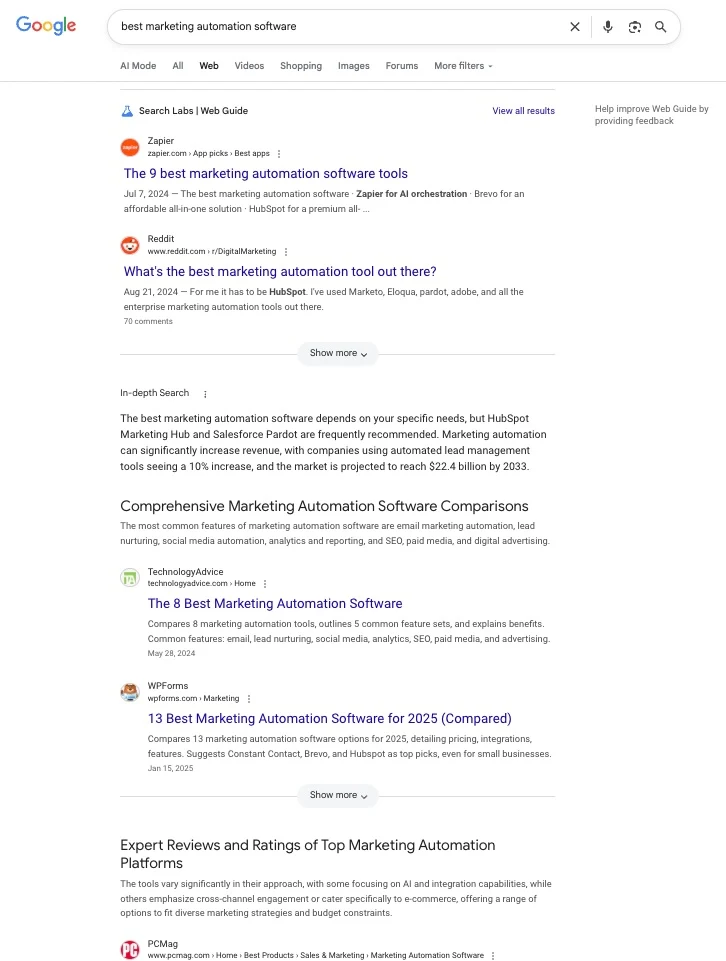
Google’s Web Guide is more than a technical manual; it is a clear signal about the future direction of search. It describes a system built to organize the web as a network of reliable, task-based resources. For brands, this change has significant consequences, redefining what it means to have a successful online presence.
From Overall Domain Authority to Specific Topic Authority
In the past, authority was often measured at the website level. The Web Guide era prioritizes topic authority. Google’s systems now identify which sources are most expert on specific, detailed subjects. A brand can be the leading authority on “ergonomic home office chairs” without having the same broad domain power as a massive general retailer. This creates opportunities for specialized businesses and niche experts.
Content Must Complete a Specific Task
The web is being organized around user tasks—like learning, comparing, or buying. The Web Guide favors content that clearly completes one of these tasks as part of a larger topic. For a brand, this requires clarity: “What specific goal does the user have when landing on this page?” Is it to understand a process, evaluate options, or make a purchase? Content that is vague or tries to serve multiple purposes at once is harder for this system to classify and recommend effectively.
Building a “Helpful Content” Network
The Web Guide highlights Google’s goal to promote “helpful content” by understanding how pieces of information relate. Your content is no longer judged alone. A single article is evaluated alongside the rest of your content on that subject. Do you have the introductory guide, the detailed tutorial, the product details, and the support FAQ? Together, they form a helpful network that search systems can trust and direct users to, boosting your visibility for a wide range of related searches.
The Web Guide means brands must think less about “ranking for keywords” and more about comprehensively owning topics and serving user goals. It is a shift from pure marketing to becoming a publisher of valuable expertise. The brands that will thrive are those who build their part of the web as a clear, authoritative, and user-centered resource.
What Is Semantic Clustering? (And How It Differs from Keywords)
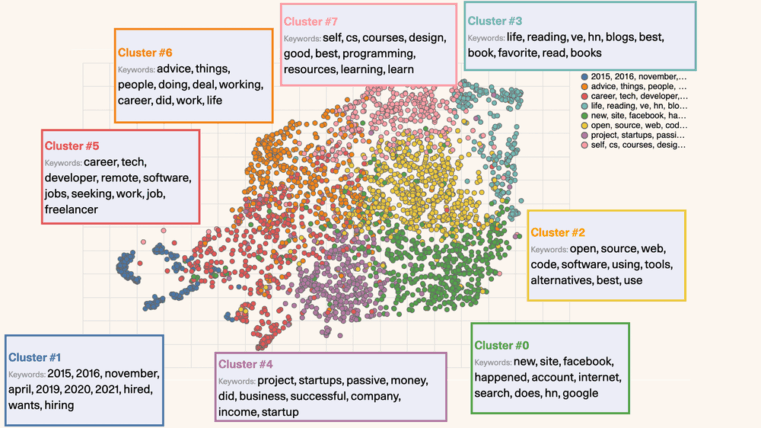
To understand semantic clustering, it’s helpful to first look at the traditional approach it replaces.
The Old Way: Keyword-Focused Content
For decades, the foundation of SEO was the individual keyword. The process was linear: identify a high-search-volume term like “best running shoes,” create a page targeting that exact phrase, and repeat for the next keyword. Content was often built in silos, with each article or page competing against itself for a single ranking. This led to websites with broad, shallow coverage—dozens of pages all targeting slight variations of the same core terms, without deep exploration of the topic.
The New Way: Semantic Clustering
Semantic clustering is a strategic framework for organizing website content around topics and concepts rather than isolated keywords. It involves creating a network of interlinked content that comprehensively covers a core subject (the “pillar”) and all its related subtopics (the “clusters”).
Think of it as building a detailed subject encyclopedia on your website instead of a glossary of separate terms.
-
The Pillar Page: This is a comprehensive, high-level piece of content that broadly defines the core topic (e.g., “A Complete Guide to Sustainable Running”).
-
The Cluster Content: These are more specific, detailed pieces that explore subtopics, questions, and entities related to the pillar. Examples include “What is recycled polyester in running gear?”, “How to choose eco-friendly trail running shoes,” and “Benefits of merino wool for runners.”
-
The Semantic Link: All these pieces are logically connected through internal links and contextual content, signaling to search engines that they form a complete knowledge base on the singular, broader topic.
How It Differs Fundamentally from Keywords
The difference is a shift from syntax (the words themselves) to semantics (their meaning and relationships).
| Aspect | Keyword-Centric Approach | Semantic Clustering Approach |
|---|---|---|
| Unit of Focus | Individual keywords or keyphrases. | Topics, entities, and user intent. |
| Content Structure | Isolated pages, often competing. | A unified hub (pillar) with supporting spokes (clusters). |
| Goal | To rank for a specific search query. | To establish authority on an entire subject area. |
| Search Engine Signal | “This page is about this keyword.” | “This website is a leading resource on this topic.” |
| Internal Linking | Often arbitrary or for page equity flow. | Purposeful, contextual, and based on conceptual relationship. |
The Role of Entities and Context
This strategy works because modern search engines like Google use sophisticated models to understand entities (real-world things like people, places, concepts) and the contextual relationships between them.
When you create a semantic cluster around “Sustainable Running,” you are naturally including and connecting entities like:
-
Materials: Recycled polyester, merino wool, natural rubber.
-
Practices: Carbon-neutral shipping, ethical manufacturing.
-
Benefits: Durability, performance, environmental impact.
By densely and naturally connecting these related entities within your content network, you provide the clear context search engines need to understand your depth of knowledge. This moves you beyond matching query text to satisfying user intent and demonstrating topic authority—the true drivers of visibility in the Web Guide era.
Why Semantic Clustering Matters in the Web Guide Era
Google’s Web Guide fundamentally changes how websites are evaluated by prioritizing the structure and comprehensiveness of information over isolated relevance. In this new framework, semantic clustering is not just a best practice—it’s a critical requirement for visibility. Here’s why this structured approach aligns perfectly with the current era of search.
1. Task Flows Need Structured Content
The Web Guide conceptualizes the web as a series of user journeys, or “task flows.” A user doesn’t have a single query; they have a problem to solve, which involves multiple steps and questions. A fragmented website with disjointed pages cannot support this journey effectively.
Semantic clustering directly builds these task flows into your site’s architecture. A pillar page provides the foundational overview, while the cluster content addresses each subsequent step, question, or decision point in the process. For example, a cluster around “Home Solar Installation” naturally guides a user from basic understanding (pillar) to cost analysis, equipment choices, installer selection, and maintenance (clusters). By organizing your content this way, you create a logical pathway that both users and search engines can follow, making your site an ideal candidate to be served as a comprehensive resource within these guided journeys.
2. Relationships Outrank Individual Keywords
Modern ranking algorithms have moved far beyond simple keyword matching. Their core function is now to assess the strength of relationships between entities and concepts. A page that merely repeats a target keyword lacks the contextual signals that demonstrate true expertise.
A semantic cluster is a masterclass in showcasing relationships. By creating content that deeply interlinks subtopics, you explicitly map out how concepts like “keyword research,” “search intent,” and “long-tail phrases” are all related under the pillar of “SEO Fundamentals.” This dense network of related terms, entities, and ideas provides the powerful contextual signals search engines use to validate topic authority. In the Web Guide era, a website that clearly illustrates these relationships through its content structure will consistently outrank a site with stronger backlinks but weaker topical connectivity.
3. Thin Content Gets Filtered Out
The Web Guide and systems like the Helpful Content Update are engineered to filter out content that provides a poor user experience—specifically, thin, superficial, or duplicate material. Pages created to target a single keyword in isolation are highly susceptible to being classified as “thin” because they lack depth and context.
Semantic clustering is the antidote to thin content. Its very purpose is to cover a topic with depth and breadth. Instead of one shallow page on “Python Programming,” you build a robust cluster that includes pillars for beginners and advanced users, with clusters on syntax, libraries, frameworks, projects, and troubleshooting. This creates a body of work where each piece adds unique value and, when combined, forms an authoritative resource. This depth makes it virtually impossible for algorithms to classify your content as thin, thereby protecting and enhancing your visibility across your entire topic domain.
Semantic clustering matters because it is the structural language the Web Guide is built to understand. It allows you to directly communicate your expertise, satisfy complete user tasks, and build content with the depth required to thrive in today’s search ecosystem.
How Semantic Clustering Works in Practice
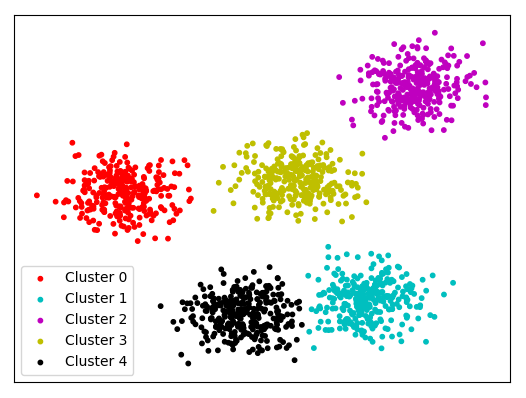
Moving from theory to implementation, semantic clustering involves a deliberate, four-step process. It transforms a website from a scattered collection of articles into a logically organized knowledge hub. Let’s walk through how to build a cluster, using the example of a brand in the home gardening space.
Step 1: Define Your Core Pillar Topic
This is the broad, foundational subject you want to be known as an authority for. It should align with your business expertise and address a primary user need. The pillar topic is not a keyword; it’s a conceptual umbrella.
-
Example Pillar Topic:
Indoor Herb Gardening -
What it is NOT: A single page trying to rank for “how to grow herbs.”
-
What it IS: The central hub for anyone interested in cultivating herbs indoors.
Step 2: Research and Map Subtopics (Clusters)
Here, you identify all the questions, tasks, and concepts a user exploring the pillar topic would need. This moves beyond keyword lists to map user intent and semantic relationships.
-
Methods:
-
Analyze “People also ask” and “Related searches” in SERPs.
-
Use topic research tools to find related questions and subtopics.
-
Consider the different stages of the user journey: beginner basics, problem-solving, product selection, advanced techniques.
-
-
Example Clusters for “Indoor Herb Gardening”:
-
Beginner Guides: “Best herbs for beginner indoor gardeners,” “Basic supplies needed.”
-
How-To & Care: “How to propagate basil from cuttings,” “Correct watering schedule for indoor herbs,” “Identifying and treating common herb pests.”
-
Product & Environment: “Choosing the right grow lights for herbs,” “Best soil mix for indoor herb pots.”
-
Usage & Harvest: “When and how to harvest cilantro,” “Preserving fresh herbs.”
-
Step 3: Create and Structure the Content
This is where you build the actual pages, following a specific hierarchy.
-
Create the Pillar Page: This is a comprehensive, long-form guide (often 2,000+ words) that provides a high-level overview of the entire topic. It should introduce all the key subtopics (your clusters) without going into deep detail on any single one. Its role is to be the definitive introduction and central navigational hub.
-
Create the Cluster Content: Each subtopic becomes a dedicated, in-depth piece of content (blog post, guide, video page) that exhaustively answers that specific question or covers that task.
-
Cluster Content Goal: To be the best possible resource for that specific subtopic.
-
Pillar Page Goal: To be the best possible overview and gateway to all these specific resources.
-
Step 4: Interlink with Semantic Intent
The physical and contextual linking is what turns separate pages into a cohesive cluster. This is a critical signal to both users and search engines.
-
From Pillar to Clusters: The pillar page should contain clear, contextual links to each of its cluster articles. For example, in the section of the pillar page about “Essential Equipment,” you would link naturally to your in-depth cluster post on “Choosing the right grow lights.”
-
From Clusters to Pillar: Every cluster article should link back to the main pillar page (using relevant anchor text like “our complete guide to indoor herb gardening”) to reinforce the hub-and-spoke structure and provide users with pathways to more information.
-
Between Related Clusters: Where relevant, link between cluster posts. Your post on “common herb pests” should link to your post on “organic pest solutions for herbs.” This creates a dense, helpful network.
The Outcome: A Topic Authority Hub
In practice, once completed, your website section on “Indoor Herb Gardening” will consist of:
-
1 Pillar Page: “The Ultimate Guide to Indoor Herb Gardening”
-
15-20+ Cluster Articles covering every facet of the topic.
-
A dense mesh of contextual internal links connecting them all.
This structure clearly signals to search systems that your site is a definitive resource on the topic. When a user searches for anything within this cluster—from a broad query to a specific troubleshooting question—your interconnected web of content increases the likelihood that a page from your authoritative hub will be deemed the most helpful and visible result.
SEO Implications: Why Keyword Stuffing Is Obsolete
The rise of semantic search and frameworks like Google’s Web Guide hasn’t just made keyword stuffing ineffective; it has rendered it actively harmful to a site’s visibility. This once-common tactic is now a direct path to being filtered out of modern search results. Here’s a breakdown of the technical and strategic reasons why.
The Technical Death of Keyword Density
Historically, “keyword density” was a primary metric. The belief was that repeating a target phrase a specific percentage of times would signal relevance. Modern search algorithms, powered by BERT, MUM, and natural language processing (NLP), operate entirely differently.
-
They Understand Context, Not Just Counts: These models analyze the semantic meaning of entire sentences and paragraphs. They can detect synonyms, related concepts, and user intent without relying on the exact keyword being present multiple times.
-
Keyword Stuffing Creates Poor Context: Forcing unnatural repetitions breaks the flow of language. To advanced NLP models, this content reads as awkward, spammy, and low-quality—the opposite of the helpful, natural language they are trained to reward.
It Directly Violates Core Ranking Principles
Google’s core updates (like the Helpful Content Update) and the principles outlined in the Web Guide explicitly target manipulative tactics. Keyword stuffing is a textbook example.
-
It Undermines E-A-T (Expertise, Authoritativeness, Trustworthiness): Content created for search engines first, and people second, fails the core test of helpfulness. Stuffing keywords is a clear signal that the content’s primary purpose is manipulation, not sharing expertise or helping users. This erodes trust with both users and algorithms.
-
It Creates a Terrible User Experience: Readers are immediately turned off by awkward, repetitive text. High bounce rates, low time-on-page, and a lack of engagement are strong negative ranking signals. Google interprets this user behavior as a sign that the page did not fulfill its promise.
Semantic Clustering vs. Keyword Stuffing: A Direct Comparison
| Tactic | Goal | Method | Signal to Search Engines | User Experience | Likely Outcome |
|---|---|---|---|---|---|
| Keyword Stuffing | Trick the algorithm for a single ranking. | Force exact keyword repetitions into content, meta tags, and alt text. | “This page is trying to manipulate ranking for this term.” | Awkward, spammy, difficult to read. | Filtering out. Classified as spam; loss of rankings; potential manual action. |
| Semantic Clustering | Demonstrate topic authority for a range of queries. | Create a network of content covering a topic and all its related concepts naturally. | “This website is a comprehensive, authoritative resource on this topic.” | Logical, comprehensive, easy to navigate. | Visibility. Increased rankings across a topic cluster; seen as a trusted resource. |
The Strategic Risk: You Cede the Field to Competitors
In the Web Guide era, search engines seek to fulfill user tasks. A single page stuffed with keywords is, by definition, thin and incapable of satisfying a complex task flow. Even if it temporarily ranks, it will lose to a competitor’s semantic cluster that provides a complete solution.
By obsessing over keyword density, you:
-
Ignore user intent and related questions.
-
Fail to build topical authority.
-
Leave countless long-tail and related queries uncontested for competitors who build proper topic hubs.
The Bottom Line: Keyword stuffing is obsolete because it fights the last war. It attempts to game a system that no longer exists. Today’s SEO is about semantic understanding and topic completeness. The investment of effort that once went into forcing keywords into text is now exponentially better spent on researching user intent and building a coherent, interlinked content ecosystem that genuinely owns a subject.
3 Practical Strategies for Building Semantic Clusters
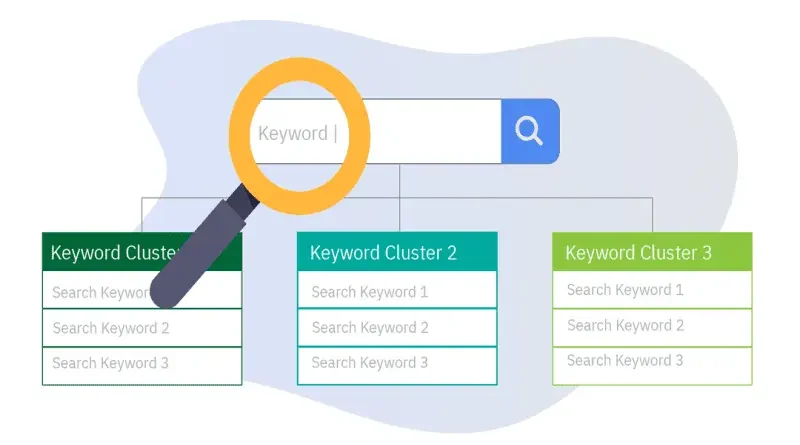
Transitioning to a semantic clustering model requires a shift in mindset and process. These three actionable strategies provide a clear roadmap for building, organizing, and refining your content to align with modern search expectations.
1. Use the Hub-and-Spoke Method
This is the foundational architecture for any semantic cluster. It provides a clear, user-friendly structure that search engines can easily crawl and understand.
-
How it Works: You create a single, comprehensive “Hub” page (the pillar) that covers a core topic at a high level. Then, you create a series of “Spoke” pages (the clusters) that delve deeply into specific subtopics, questions, or aspects introduced in the hub.
-
Practical Execution:
-
Identify Your Hub: Choose a broad, valuable topic central to your business (e.g., “Zero-Waste Living”).
-
Build the Hub Page: This page should be a definitive guide. It introduces all key concepts (e.g., reducing plastic, composting, sustainable shopping) but does not give exhaustive detail on any single one. Its primary functions are to educate at an overview level and to direct traffic to the relevant spokes.
-
Develop the Spokes: Create detailed content for each subtopic mentioned. For “Zero-Waste Living,” spokes could include “A Beginner’s Guide to Home Composting,” “How to Find a Bulk Refill Store Near You,” and “Plastic-Free Alternatives for Your Kitchen.”
-
Interlink Relentlessly: Every spoke links back to the main hub using contextual anchor text (e.g., “part of our guide on zero-waste living”). The hub page links forward to each relevant spoke. This creates a closed, intelligible circuit of information.
-
2. Organize Content by Intent, Not Just by Term
A semantic cluster must satisfy the complete user journey, which consists of different stages of intent. Organizing your cluster this way ensures you meet the user where they are in their decision-making process.
-
How it Works: Map your cluster content against the four core types of search intent: Informational (I want to learn), Commercial (I want to research/compare), Navigational (I want to find a specific site), and Transactional (I want to buy or complete an action).
-
Practical Execution for a Cluster on “Ergonomic Office Chairs”:
-
Informational Spokes: “What is ergonomic seating?”, “Symptoms of poor desk posture.”
-
Commercial Spokes: “Ergonomic chair vs. gaming chair: Key differences,” “Top 5 features to look for in 2024,” “Brand A vs. Brand B comparison.”
-
Transactional Spoke: The main product page for a specific chair model, with clear calls-to-action.
-
By structuring your cluster this way, you naturally create a task flow. A user can move from learning about the problem (informational) to evaluating solutions (commercial) and finally to making a purchase (transactional), all within your authoritative ecosystem.
-
3. Conduct a Semantic Content Audit
Most websites have a foundation of existing content that can be repurposed and organized into powerful clusters. A semantic audit is the process of reverse-engineering this potential.
-
How it Works: You analyze your existing content library not by looking at page views or keywords, but by assessing the topics and concepts each piece covers. Then, you group them into potential clusters and identify critical gaps.
-
Practical Execution:
-
Inventory & Tag: List your key content pieces. Tag each one with the core topic and subtopics it covers (e.g., an old blog post might be tagged with “SEO” and “Internal Linking”).
-
Identify Theme Groups: Group pieces that share a common core topic. You may find you already have 3-4 spokes on a subject without a hub, or a strong hub with only one or two spokes.
-
Map the Gaps: For each emerging cluster, ask: “What essential questions or subtopics are missing from this group?” Use keyword/topic research tools to find these gaps. This becomes your content creation roadmap.
-
Restructure & Relink: Physically update your content. Create the missing hub or spoke pages. Then, go through every page in the cluster and add the strategic contextual internal links that bind them into a single, coherent unit. Update old posts to link to your new, authoritative hub.
-
By implementing these three strategies—structuring with hub-and-spoke, organizing for user intent, and auditing to fill gaps—you move from publishing isolated pieces to architecting authoritative topic domains. This structured approach is what allows you to systematically build the visibility and trust required to succeed in the Web Guide era.
Future-Proof Your SEO Strategy
Semantic clustering isn’t a temporary tactic—it’s the backbone of modern search. As Google increasingly embraces conversational queries and AI-generated guides, structured content will always outperform scattered keywords.
To stay visible, your website needs to operate like a well-organized knowledge system. This means building around topic clusters, leveraging strategic semantic keyword research, and applying semantic SEO practices that adapt to evolving search behaviors.
For over two decades, Pro Real Tech has helped businesses navigate SEO shifts. The brands that succeed in the Web Guide era are those investing now in optimized site architecture. With expert guidance on Google ranking factors, advanced visibility strategies, and scalable keyword clusters, Pro Real Tech prepares your site for the future of search.
Contact us today to stay ahead.
Frequently Asked Questions (FAQs) About Semantic Clustering
WHAT IS THE DIFFERENCE BETWEEN SEMANTIC CLUSTERING AND TRADITIONAL KEYWORD CLUSTERING?
Traditional keyword clustering groups content based on lexical similarity—how often the same exact words or phrases appear. It’s a mechanical grouping of pages targeting “best running shoes,” “top running shoes,” and “running shoe reviews.” Semantic clustering groups content based on conceptual similarity and user intent. It connects a page on “best running shoes” with pages about “pronation,” “shoe durability,” “trail vs. road shoes,” and “proper running gait,” because these are all semantically related concepts to the core topic of running footwear, even if they don’t share the same keywords.
WHAT IS “QUERY FAN-OUT” AND WHY SHOULD I CARE?
Query fan-out is the measurable benefit of semantic clustering. It refers to a single pillar page (or the cluster as a whole) generating organic traffic from a wide “fan” of hundreds or thousands of related long-tail queries, not just one primary keyword. You should care because it represents efficient, resilient, and user-centric SEO. Instead of fighting for a single high-volume term, your authoritative cluster attracts consistent traffic from countless specific questions, making your traffic portfolio more diverse and less vulnerable to algorithm shifts.
WILL SEMANTIC CLUSTERING REPLACE MY NEED FOR KEYWORD RESEARCH?
No, it transforms it. Keyword research remains essential, but its purpose evolves. You are no longer just collecting single-keyword targets. Instead, you use keyword research tools to discover:
-
The core topic (your pillar).
-
All related questions, subtopics, and entities (your clusters).
-
The user intent behind groups of queries.
Keyword research becomes the fuel for your semantic mapping, helping you understand the full breadth of a topic your audience cares about.
WHY IS MY EXISTING CONTENT NOT SHOWING UP IN GOOGLE WEB GUIDE?
If your content is absent from the curated pathways in Google’s Web Guide, it’s likely due to one or more of these reasons:
-
Lack of Structure: Your content exists in isolated silos without a clear, interconnected hub-and-spoke architecture.
-
Insufficient Depth: You haven’t covered the topic comprehensively enough to be seen as a definitive, top-tier resource.
-
Weak Semantic Signals: Your content doesn’t sufficiently define and connect related entities and concepts for algorithms to confidently map its relationships.
-
Poor User Experience: High bounce rates or low engagement signal to Google that your content doesn’t satisfactorily complete user tasks.
HOW DOES SEMANTIC CLUSTERING IMPROVE E-E-A-T SCORES?
Semantic clustering directly demonstrates Experience, Expertise, Authoritativeness, and Trustworthiness:
-
Expertise & Authoritativeness: By covering a topic exhaustively from all angles, you showcase deep knowledge. A well-structured hub with authoritative spokes is the digital equivalent of a textbook written by a subject matter expert.
-
Trustworthiness: Clear, logical site architecture and comprehensive coverage build user trust. Providing complete answers and logical next steps reduces misinformation and creates a reliable experience.
-
Experience: While often related to firsthand product/use experience, a well-organized cluster that guides users through a complete process mimics a helpful, experienced guide.
WHAT IS A “CONTENT HUB” AND HOW DO I BUILD ONE?
A content hub is the physical implementation of a semantic cluster. It is a dedicated section of your website (often with its own navigation) built around a single pillar topic. To build one:
-
Choose a core, high-value topic aligned with your business.
-
Create the central pillar page as the hub’s homepage.
-
Produce and organize all cluster content (spokes) into logical categories (e.g., Guides, How-Tos, Comparisons).
-
Use a clear, visual site architecture and navigation that keeps users within the hub, encouraging deep exploration of the topic.
CAN I USE AI TOOLS TO AUTOMATE SEMANTIC CLUSTERING?
Yes, as powerful assistants, but not as autonomous replacements. AI can dramatically speed up:
-
Topic Discovery: Analyzing search data to suggest related subtopics and questions.
-
Entity & Concept Mapping: Identifying key terms and their relationships within a text.
-
Content Gap Analysis: Auditing your site against competitors.
However, human strategy is irreplaceable for defining the core business-aligned topics, judging content quality, understanding nuanced intent, and making final editorial decisions on structure and interlinking. Use AI for the heavy lifting of research and ideation, not for the final strategic architecture.
IS SEMANTIC CLUSTERING ONLY FOR LARGE WEBSITES?
Absolutely not. It is a scalable strategy. A small website can start with one definitive cluster on its most important niche topic. This is often more effective than trying to broadly cover many topics shallowly. Owning a single topic deeply with 1 pillar and 8-10 excellent cluster pages can establish a small site as a niche authority and drive meaningful traffic. It’s about depth over breadth, making it perfectly suited for smaller, focused businesses.
HOW LONG DOES IT TAKE TO SEE RESULTS AFTER IMPLEMENTING THIS STRATEGY?
Semantic clustering is a long-term, foundational SEO strategy, not a quick fix. Timelines depend on your existing authority and competition. You may see early indicators (like improved crawl efficiency and indexing of cluster pages) within 4-8 weeks. However, significant gains in topical authority, “query fan-out” traffic, and visibility in enhanced search features like Web Guide can take 6 to 12 months or more. The investment compounds over time, as each new cluster page strengthens the entire topic ecosystem.
Read More: The Importance of Testing Form Usability in Lead Generation Pages


