

B2B content marketing has become a critical growth channel for companies selling products and services to other businesses. Unlike a short consumer purchase journey, B2B buying decisions often involve multiple stakeholders, longer evaluation periods, higher financial risk, and extensive independent research. Buyers may consume articles, compare solutions, review case studies, watch webinars, and consult peers before they ever speak with a salesperson.
That makes content more than a publishing activity. A well-planned B2B content marketing program can educate potential buyers, establish authority, answer objections, support sales conversations, generate qualified leads, and contribute to pipeline and revenue. The key is creating content around actual buyer needs and connecting each asset to a specific stage of the buying journey rather than simply publishing as often as possible.
In 2026, this is even more important because buyers increasingly research through search engines, professional networks, communities, and AI-powered discovery tools before contacting vendors. Content therefore needs to be useful, credible, easy to understand, and relevant to the questions buyers are asking at each stage of their decision.
What Is B2B Content Marketing

B2B content marketing is the strategic creation and distribution of useful content designed to educate business buyers, build trust, influence purchasing decisions, and ultimately support business growth. It can include blog posts, research reports, white papers, case studies, webinars, videos, comparison guides, templates, newsletters, and other educational resources.
The defining characteristic is intent. B2B content should not exist simply to fill a publishing calendar. It should address a specific business problem, question, objection, or decision that matters to the company’s ideal customers.
For example, a cybersecurity company could publish:
- A blog explaining common ransomware risks for awareness-stage buyers
- A checklist for evaluating cybersecurity vendors
- A case study showing how a customer reduced security incidents
- A comparison guide covering different security solutions
- An ROI calculator for estimating the financial impact of improved security
These assets serve different purposes, but together they help a prospect move from recognizing a problem to evaluating solutions and eventually making a purchasing decision.
Effective B2B content also needs to account for the buying committee. The person researching a solution may not be the person who approves the budget. A marketing manager, IT leader, finance executive, procurement specialist, and company executive can all have different questions and priorities. Strong content addresses these different perspectives rather than treating the entire organization as one audience.
Why Content Marketing Matters for B2B Growth
B2B content marketing matters because the modern buyer often becomes informed before becoming sales-ready. B2B customers typically have longer buying cycles and conduct substantial research during the process. Content gives a company an opportunity to influence that research before a formal sales conversation begins.
It builds trust before the sales conversation
A buyer is more likely to consider a company that consistently demonstrates expertise. Educational articles, original research, practical guides, and credible case studies allow a business to demonstrate that it understands the customer’s challenges.
This is particularly valuable for complex products where buyers need confidence that a vendor understands their industry, requirements, risks, and desired outcomes.
It attracts buyers with relevant search intent
Search-focused content can bring qualified prospects to a website when they are actively looking for answers. Instead of relying exclusively on outbound outreach, businesses can create resources around the problems and questions their target customers already search for.
The opportunity extends beyond traditional search in 2026. Buyers increasingly encounter information through AI-powered search and conversational discovery, making clear, authoritative, well-structured content valuable across multiple discovery environments.
It supports demand generation throughout the buying journey
Not every visitor is ready to request a demo. Some are still trying to understand a problem, while others are comparing vendors or building an internal business case.
Content allows marketers to support these different levels of intent. Awareness content can attract new audiences, consideration content can help prospects evaluate options, and decision-stage content can remove the final barriers to purchase.
It helps sales teams have better conversations
Content can also function as a sales enablement resource. A salesperson can share a relevant case study, comparison guide, technical explanation, or ROI resource based on a prospect’s specific concern.
This means content doesn’t stop working when a lead enters the CRM. It can continue supporting the prospect throughout evaluation and help sales address common questions more efficiently.
It creates compounding value
Unlike many short-lived campaigns, useful evergreen content can continue attracting search traffic, generating engagement, supporting sales conversations, and producing leads long after publication. When a company consistently improves and distributes its strongest assets, content can become an increasingly valuable business asset rather than a series of isolated campaigns.
B2B Content Marketing vs. B2C Content Marketing
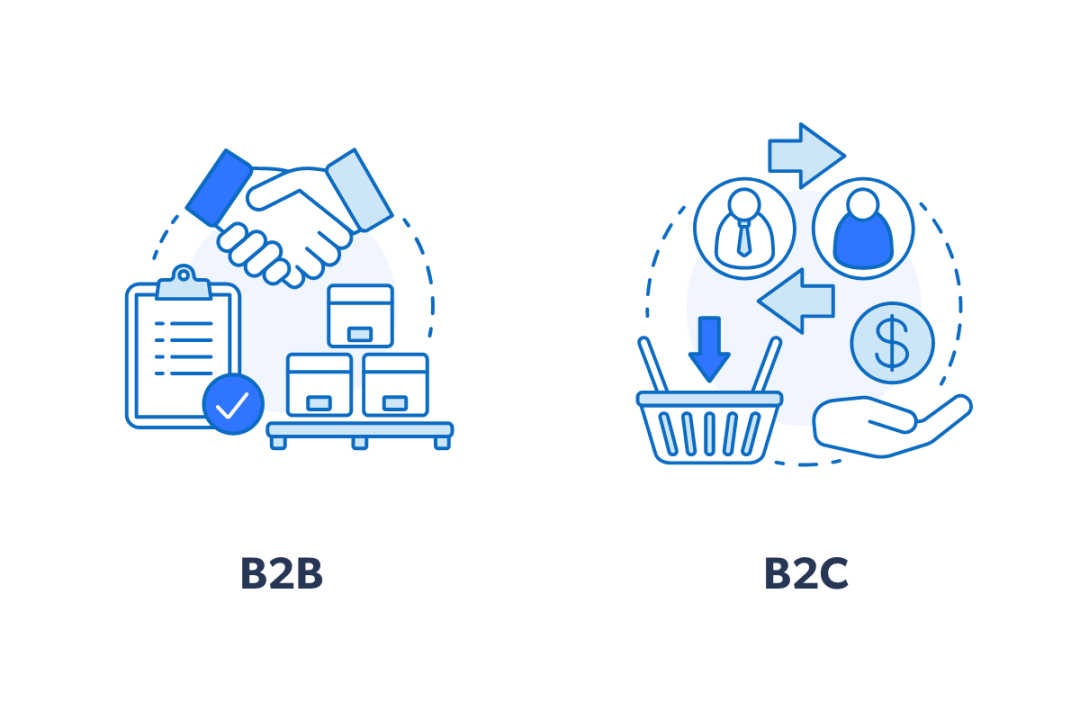
B2B and B2C content marketing use many of the same fundamental principles, but the buying environment is different. B2C purchases can often involve a single consumer and a relatively short decision process, while B2B purchases frequently involve multiple stakeholders, greater financial risk, and longer evaluation cycles.
| Factor | B2B Content Marketing | B2C Content Marketing |
|---|---|---|
| Audience | Buying committees and professional decision-makers | Individual consumers or households |
| Buying cycle | Usually longer and more complex | Often shorter, depending on the product |
| Primary concerns | ROI, risk, efficiency, functionality, business impact | Price, convenience, emotion, lifestyle, experience |
| Content focus | Education, expertise, proof, use cases, evaluation | Inspiration, entertainment, benefits, product appeal |
| Decision-making | Often consensus-based | Often individual or household-based |
| Common formats | Case studies, white papers, webinars, guides, research | Videos, social posts, product content, reviews |
| Key metrics | Qualified leads, opportunities, pipeline, revenue, deal velocity | Conversions, engagement, sales, customer acquisition |
The distinction does not mean B2B content needs to be dry or overly formal. Business buyers are still people, and compelling storytelling can make complex information easier to understand. The difference is that B2B content generally needs to connect the story to a business problem, decision, or measurable outcome.
For example, a B2C software company might emphasize how a product makes someone’s daily life easier. A B2B software company may need to demonstrate how the product saves employees time, reduces operating costs, integrates with existing systems, and delivers an acceptable return on investment.
The best B2B content therefore combines clarity and persuasion with evidence. Buyers need a reason to care, but they also need enough information to justify the decision internally.
The B2B Content Marketing Funnel Explained
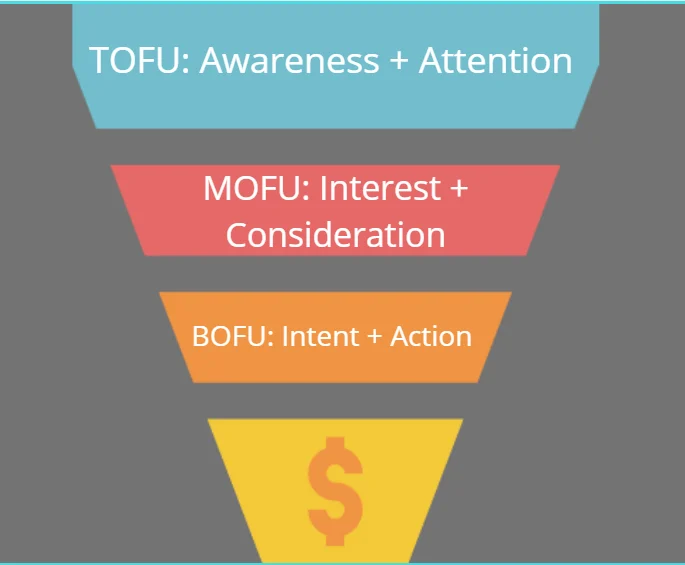
The B2B content marketing funnel organizes content according to the prospect’s level of awareness and purchase intent. A useful framework divides it into top of funnel (ToFu), middle of funnel (MoFu), and bottom of funnel (BoFu). Each stage has a different objective, audience need, content format, and measurement approach.
Top of Funnel
The goal: Build awareness, attract relevant prospects, and help buyers understand a problem or opportunity.
At the top of the funnel, prospects may not know your company or may not yet be actively evaluating a particular vendor. They are often researching symptoms, challenges, trends, or potential solutions.
Effective ToFu content includes:
- Educational blog posts
- Industry research
- Original insights
- Thought leadership
- Beginner-friendly guides
- Trend reports
- Educational videos
- Infographics
- Podcasts
The content should focus primarily on the buyer’s problem, not on aggressively promoting the company’s product.
For example, an HR software company might publish content about reducing employee turnover rather than immediately promoting its software. Someone researching employee retention may discover the content, recognize a problem, and begin associating the company with useful expertise.
At this stage, keeping high-value educational content accessible can maximize discoverability and reach. Relevant KPIs include qualified organic traffic, engagement, returning visitors, and progression into deeper content.
Mid Funnel
The goal: Help prospects evaluate approaches and establish why your solution deserves consideration.
Middle-funnel prospects have usually identified a problem and are exploring ways to solve it. They need more practical information than a basic educational article provides.
Useful MoFu formats include:
- How-to guides
- Webinars
- Case studies
- Comparison guides
- Detailed playbooks
- Templates
- Checklists
- White papers
- Product education
This is also an appropriate stage for selective lead generation. A valuable playbook or toolkit may justify a short form if the resource provides enough value and the information requested is genuinely useful for qualification or follow-up.
The important point is not to gate everything. If a company places every useful article behind a form, it can restrict discovery and reduce the amount of content buyers can evaluate before providing their information.
MoFu performance can be assessed through content-assisted conversions, lead quality, repeat engagement, demo interest, and opportunity creation.
Bottom Funnel
The goal: Remove final objections and help qualified buyers make a purchasing decision.
At the bottom of the funnel, prospects are no longer simply learning about the problem. They are evaluating specific solutions, vendors, costs, risks, implementation requirements, and expected outcomes.
Effective BoFu content includes:
- Product comparison pages
- Customer testimonials
- Detailed case studies
- ROI calculators
- Pricing information
- Product-specific guides
- Implementation resources
- Technical documentation
- Sales one-pagers
- Consultation or demo resources
At this stage, proof becomes particularly important. A prospect may already understand the product category but still need evidence that your solution can deliver the promised outcome.
For example, an enterprise software buyer may want to know how quickly implementation can happen, whether the platform integrates with existing systems, what measurable results other customers achieved, and what the expected financial return looks like.
BoFu content should therefore make the final decision easier—not create another research project. Relevant measures include opportunity conversion, win rate, sales usage, deal velocity, and time to close.
The most effective B2B content strategy connects all three stages. ToFu attracts the right audience, MoFu develops consideration and captures qualified interest, and BoFu provides the proof and information needed to convert opportunities into customers. Treating the funnel as one connected system helps content contribute to pipeline rather than simply generating traffic.
How to Build a B2B Content Marketing Strategy
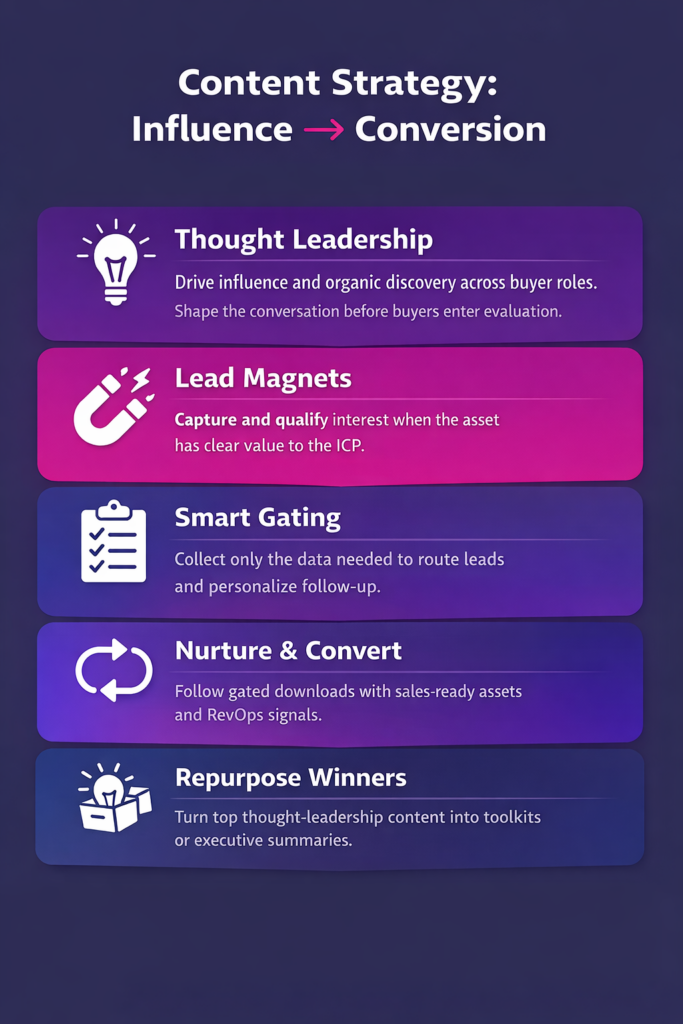
A successful B2B content marketing strategy starts with business objectives rather than a list of blog topics. The goal is to create a repeatable system that connects audience needs, content, distribution, sales activity, and measurable business outcomes. This matters because many B2B marketers have a documented strategy but still struggle with effectiveness; common problems include unclear goals, weak alignment with the customer journey, insufficient audience research, and limited use of data.
1. Define the business objective
Start by determining what the content program needs to accomplish. Your objective could be increasing qualified pipeline, generating demand in a new market, improving organic visibility, shortening sales cycles, supporting enterprise deals, or increasing customer retention.
The objective determines the content strategy. For example, a company trying to enter a new category may prioritize educational and thought-leadership content, while a company with strong awareness but weak conversion rates may need more comparison content, case studies, and decision-stage resources.
2. Define your ideal customer profile
Identify the companies that are most likely to become valuable customers. Consider factors such as:
- Industry
- Company size
- Revenue range
- Geographic market
- Technology environment
- Business challenges
- Purchasing capacity
- Typical use cases
Then identify the buying committee within those organizations. A CFO, technical decision-maker, department head, end user, and procurement manager may all evaluate the same solution differently.
Your content should reflect those differences rather than assuming there is one generic B2B buyer.
3. Research audience problems and search intent
Use customer interviews, sales calls, CRM data, search queries, support conversations, competitor analysis, and industry communities to discover what your audience actually needs.
Look for questions such as:
- What problem is the buyer trying to solve?
- What prevents them from solving it?
- What alternatives are they considering?
- Which objections delay the purchase?
- What information does procurement need?
- What evidence would make the decision easier?
This research should determine your editorial priorities. Audience understanding is one of the strongest characteristics of high-performing B2B content programs.
4. Map content to the buying journey
Organize topics around the funnel rather than publishing disconnected articles.
Top of funnel: Create educational content that helps buyers understand problems, trends, and opportunities.
Middle of funnel: Provide practical resources that help prospects evaluate approaches, such as webinars, guides, comparisons, and case studies.
Bottom of funnel: Address purchase-specific questions through product comparisons, ROI resources, implementation guides, testimonials, and detailed customer evidence.
This approach ensures that content supports buyers from initial discovery through evaluation and decision-making.
5. Choose the right content formats and channels
Do not assume every topic should become a blog post. Match the format to the information and the audience.
Useful formats include:
- Short and long-form articles
- Videos
- Case studies
- Research reports
- Webinars
- E-books and white papers
- Templates and checklists
- Interactive tools
- Thought-leadership content
Recent B2B research shows that short articles, videos, and case studies are among the most commonly used formats, while marketers report particularly strong effectiveness from video and customer stories.
Distribution matters just as much. Search, email, LinkedIn, webinars, industry publications, communities, partnerships, and paid promotion can all play different roles. The best channel mix depends on where your target buyers actually spend time.
6. Build a sustainable content workflow
A strategy also needs an operating system. Establish who researches, writes, reviews, approves, publishes, distributes, and updates each asset.
Include subject-matter experts where technical or industry expertise matters. Create editorial standards for accuracy, brand voice, claims, citations, and review processes.
AI can accelerate research, ideation, outlining, repurposing, and production workflows, but human experts should remain responsible for accuracy, differentiation, strategic judgment, and final messaging. Current B2B research shows that organizations are increasingly using generative AI to improve workflow efficiency and content optimization.
7. Set benchmarks before publishing
Finally, establish the metrics that will determine whether the strategy is working. Track baseline organic traffic, qualified leads, conversion rates, pipeline contribution, sales engagement, and other relevant business outcomes.
Without predefined goals and benchmarks, it becomes difficult to distinguish content that generates attention from content that actually contributes to growth.
B2B Content Marketing Tactics That Generate Leads

Lead generation works best when content is connected to buyer intent and a logical next step. Instead of trying to turn every visitor into a lead immediately, create a progression from useful information to deeper engagement.
SEO-driven thought leadership
Create authoritative content around the questions, problems, and commercial topics your target customers search for. Go beyond generic keyword targeting by incorporating original insights, expert perspectives, proprietary data, and practical recommendations.
This can attract prospects who are already researching a problem while building your company’s authority within the category.
Long-form educational content
Detailed guides, frameworks, tutorials, and industry resources can capture prospects who need more information before evaluating vendors.
The strongest long-form content doesn’t simply become longer. It becomes more useful by answering related questions, providing examples, explaining processes, and helping the reader take action.
Case studies and customer stories
Case studies provide evidence that educational content cannot. They show how a real organization approached a problem, implemented a solution, and achieved measurable results.
A strong case study should explain:
- The customer’s original problem
- Why the problem mattered
- The solution or approach
- Implementation challenges
- Measurable outcomes
- Lessons that other buyers can apply
Customer stories are particularly valuable for prospects who are evaluating vendors and need proof before moving forward. Case studies were among the most widely used B2B content formats in recent industry research.
Lead magnets
Offer a genuinely valuable resource in exchange for appropriate contact information. Examples include:
- Industry reports
- Playbooks
- Templates
- Checklists
- Benchmark reports
- Calculators
- Short toolkits
- Detailed guides
However, not every asset should be gated. Gating high-value resources can support lead capture, while keeping thought leadership and discovery-oriented content accessible can maximize reach.
Webinars and educational events
Webinars allow B2B companies to combine education, expertise, interaction, and lead generation. A strong webinar should address a specific problem rather than functioning as a lengthy product presentation.
Follow-up content can then extend the value of the event through recordings, summaries, clips, email sequences, and sales resources.
Paid content amplification
Organic distribution can take time. Paid social promotion, search advertising, sponsorships, and content syndication can help put valuable content in front of a highly targeted audience.
The important principle is to amplify content that already has a clear audience and business purpose rather than paying to distribute weak content.
Content repurposing
One strong research project can become multiple assets:
Research report → blog posts → LinkedIn content → webinar → email sequence → sales presentation → short videos.
Repurposing increases the return on content production while allowing buyers to consume the same core insight in different formats.
Sales enablement content
Content should not stop at marketing. Create resources salespeople can use during real conversations, including objection-handling guides, competitor comparisons, case studies, product explainers, ROI resources, and industry-specific one-pagers.
This creates a stronger connection between content activity and revenue.
B2B Content Marketing Examples That Drive Results
The strongest B2B content examples are not necessarily the ones with the most traffic. They are the ones that influence meaningful business outcomes.
Example 1: High-intent SEO content
A project management software company could create a content cluster around project management software for agencies.
The cluster could include:
- How agencies manage multiple client projects
- Agency project management challenges
- Project management software comparison
- Agency project management checklist
- Case study showing improved project delivery
The educational pages attract researchers, while comparison and solution-focused pages capture prospects closer to a purchase decision.
Example 2: Original research
A cybersecurity company could survey hundreds of IT leaders and publish an annual report on enterprise security priorities.
The research can generate:
- Organic search visibility
- Industry backlinks
- Media coverage
- Social discussions
- Webinar topics
- Sales enablement material
- Lead-generation opportunities
Original data can also differentiate a brand from competitors publishing the same generic advice.
Example 3: Outcome-focused case studies
Instead of writing a case study that simply describes product features, a SaaS company could document how a customer reduced manual reporting time by 40%.
The story should explain the original workflow, the problems it created, the implementation process, and the measurable result.
This gives prospects evidence they can use when evaluating whether the solution could produce a similar outcome.
Example 4: Interactive ROI content
A B2B software company could create an ROI calculator that lets prospects enter variables such as employee count, current operating costs, and hours spent on manual processes.
The tool provides immediate value while helping the buyer quantify the business case. It can also create a natural transition to a consultation or product demonstration.
Example 5: Thought leadership for enterprise sales
A consulting firm could publish executive-level analysis about an emerging industry challenge rather than creating another generic “10 tips” article.
Sales representatives can then use that research during conversations with senior decision-makers. In this situation, content success may be reflected not only in traffic but also in sales engagement, opportunities influenced, and enterprise deal progression.
B2B Content Marketing Trends Shaping 2026
B2B content marketing is becoming less about publishing volume and more about audience intelligence, distribution, consistency, and business impact.
Audience-first content planning
In 2026, effective content planning increasingly starts with real audience signals. Search behavior, CRM information, sales conversations, customer feedback, and engagement data can reveal what prospects actually care about.
Instead of asking, “What should we publish this week?” marketers should ask, “What information does our highest-value audience need next?”
Selective content gating
Gating everything can restrict discovery, while leaving every high-value resource ungated may limit opportunities for lead capture.
A more strategic approach is to keep discovery-focused thought leadership accessible while selectively gating resources such as detailed playbooks, templates, toolkits, and proprietary research when the value and buyer intent justify the exchange.
Targeted distribution
Publishing content is only the beginning. B2B marketers increasingly need to distribute content where their target audiences already spend time.
Depending on the audience, that may include:
- Organic search
- Industry newsletters
- Webinars
- Professional communities
- Partner ecosystems
- Paid search
- Sponsored content
Recent B2B research shows that organic social media, company blogs, email, events, and webinars remain important distribution channels, while paid channels continue to support content amplification.
Consistent messaging across channels
Buyers may encounter a company through search, social media, email, advertising, sales outreach, or a customer referral. If every channel communicates a different value proposition, the overall brand becomes harder to understand.
Align the core pain points, positioning, proof points, terminology, and calls to action across marketing and sales.
Strategic use of AI
AI is becoming part of the B2B content workflow, but using it effectively requires more than generating articles at scale.
AI can help with:
- Topic ideation
- Research organization
- Content briefs
- Outlining
- Repurposing
- Content optimization
- Personalization
- Workflow automation
Human expertise remains essential for original insights, factual validation, brand differentiation, customer understanding, and strategic judgment. Recent research indicates that many B2B marketers using generative AI are seeing workflow efficiencies, but confidence in AI-generated content quality remains mixed.
The winning approach is therefore AI-assisted, not AI-dependent.
Measuring B2B Content Marketing Performance
B2B content performance should be measured according to its role in the revenue journey. Traffic and engagement matter, but they should not be the final definition of success.
Track metrics by funnel stage
Top of funnel:
- Qualified organic traffic
- Impressions
- Brand visibility
- New relevant visitors
- Engagement
- Returning visitors
Middle of funnel:
- Content downloads
- Webinar registrations
- Email subscriptions
- Marketing-qualified leads
- Content-assisted conversions
- Lead quality
Bottom of funnel:
- Demo requests
- Sales-qualified opportunities
- Pipeline generated
- Pipeline influenced
- Opportunity-to-customer conversion
- Deal velocity
- Revenue influenced by content
This prevents a common mistake: judging every piece of content using the same KPI.
Measure lead quality, not just lead volume
Generating 1,000 leads is not necessarily better than generating 100 leads. If those 100 leads closely match the ICP and regularly progress into sales opportunities, they may be significantly more valuable.
Track characteristics such as:
- ICP fit
- Job role
- Company size
- Industry
- Engagement depth
- Opportunity creation
- Conversion to customer
Connect content to pipeline
The most valuable measurement layer connects content engagement with CRM and revenue data.
For example, determine:
Content interaction → lead → opportunity → customer → revenue
This helps identify which topics, formats, and channels are associated with actual business outcomes.
Attribution will rarely be perfectly linear in B2B. Buyers can interact with many assets across a long journey, and some influential interactions may be difficult to track. Current B2B research identifies ROI attribution and customer-journey tracking as major measurement challenges.
Therefore, use multiple signals rather than relying on a single attribution model.
Measure content’s impact on sales efficiency
Content can create value even when it doesn’t directly generate the original lead.
For example, a case study may help a salesperson overcome an objection, while an implementation guide may help an opportunity progress faster. Track whether content is being used by sales teams and whether opportunities that engage with relevant content move through the pipeline more efficiently.
Continuously improve the content portfolio
Use performance data to decide what to:
- Create because an important topic is missing
- Update because an existing asset is losing relevance
- Repurpose because a strong asset can reach a wider audience
- Consolidate because several pages compete for the same intent
- Retire because content no longer serves the audience or business
The goal isn’t to produce more content indefinitely. It is to build a portfolio of useful assets that increasingly contributes to visibility, qualified demand, sales enablement, pipeline, and revenue.
A mature B2B content marketing program therefore looks less like a publishing calendar and more like a revenue system: understand the audience, create content around genuine needs, distribute it strategically, connect it to the buyer journey, measure business impact, and continuously improve what works.
Turning B2B Content Into a Revenue Engine
B2B content delivers real business value when it is built around a clear strategy, measurable objectives, and revenue-focused goals. Instead of treating content as a series of isolated campaigns, businesses should view it as part of their long-term growth infrastructure. Align content with the sales process, measure how it influences buyer decisions and pipeline, and prioritize channels and content assets that continue generating value over time. The organizations that get the most from B2B content connect marketing and sales, track meaningful outcomes, and scale the strategies that consistently contribute to qualified opportunities and revenue.
As a trusted B2B marketing agency, Pro Real Tech helps businesses develop content systems designed for sustainable growth. By bringing strategy, execution, and performance analytics together, we turn content from a collection of one-time campaigns into a scalable system for generating qualified demand and building a stronger, more predictable pipeline.
Read More: Why Content Agility Is How You Can Stay Discoverable


