


Content marketing used to operate on a relatively predictable cycle: identify a keyword, create a page, optimize it for search, publish it, promote it, and measure organic traffic. That model still has value, but discoverability has become much more fragmented. People now find information through traditional search results, AI-generated answers, social platforms, recommendation feeds, video, online communities, news surfaces, and conversational interfaces.
Google itself has continued moving Search toward more conversational and AI-assisted experiences. AI Overviews and AI Mode are designed to help users explore complex questions, ask follow-ups, and discover relevant information from across the web.
That shift changes what brands need from their content.
A useful article cannot simply be published and forgotten. It may need to be updated when the underlying information changes, broken into smaller assets for different channels, referenced in social discussions, expanded into supporting content, or reformatted so its most important information is easier for both people and AI systems to understand.
This is where content agility becomes a competitive advantage.
Content agility is the ability to create, adapt, update, repurpose, and distribute useful content without rebuilding the entire process every time something changes. An agile content operation can respond to emerging questions and changing audience behavior while maintaining a consistent brand voice and reliable information.
The objective isn’t to publish more content simply for the sake of volume. In fact, Google explicitly warns against producing large amounts of content primarily to attract search traffic and emphasizes original, helpful, people-first information instead.
The real goal is to build a content system that can move quickly without becoming careless.
When your content is structured, authoritative, current, and adaptable, the same underlying expertise can support traditional SEO, AI search visibility, social discovery, recommendation feeds, and other emerging discovery channels. That makes content agility less of a production tactic and more of a long-term discoverability strategy.
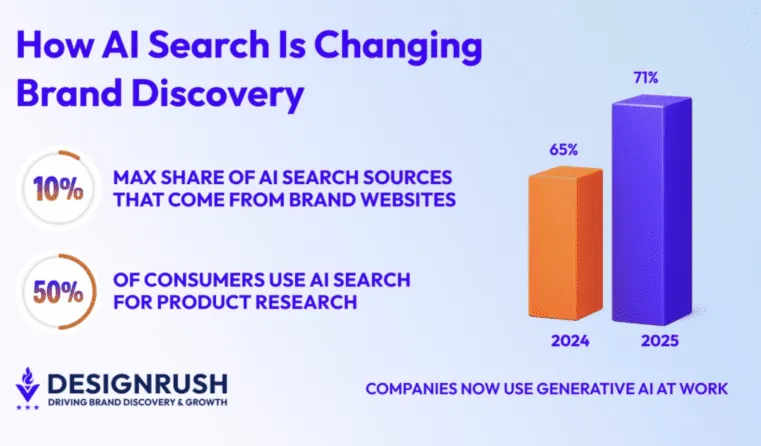
Image Source: Designrush
What Does “Discoverability” Actually Mean Today?
Discoverability is the ability of your brand, expertise, products, and content to be found when people are looking for information, recommendations, solutions, or answers.
Historically, discoverability was closely associated with search engine rankings. If someone searched for a relevant keyword and your page appeared near the top of Google, you were considered discoverable.
Today, that definition is too narrow.
A potential customer may discover your business after:
- Searching Google with a traditional keyword.
- Asking Google AI Mode a detailed question.
- Seeing your content recommended in an AI-generated answer.
- Finding an article through Google Discover.
- Watching a YouTube video related to a problem they are researching.
- Encountering a LinkedIn post in their feed.
- Reading a discussion in an online community.
- Seeing your brand mentioned by another trusted source.
- Asking an AI assistant for companies, products, experts, or solutions.
- Finding a specific piece of original research that gets referenced by other publishers.
Google’s current AI Search experience illustrates this transition. AI Overviews can provide synthesized information with links for users who want to explore further, while AI Mode allows deeper conversational exploration and follow-up questions.
This means discoverability increasingly happens before a traditional website click.
Discoverability Is About More Than Rankings
Traditional SEO asks questions such as:
What keyword should this page rank for?
Modern discoverability requires broader questions:
Where does our audience look for answers?
What information would make our brand worth mentioning?
Can our expertise be understood and reused across different formats?
Is our information clear enough for both people and AI systems to interpret correctly?
Are we present in the places where recommendations and conversations happen?
This doesn’t mean traditional SEO is no longer important. Search remains a major discovery mechanism, and SEO can help search engines understand and surface useful content. Google continues to recommend combining SEO practices with a people-first approach rather than creating content primarily for search engines.
Instead, SEO is becoming one part of a broader discoverability ecosystem.
AI Is Changing the Path Between a Question and a Brand
AI-assisted search can change the traditional journey from:
Query → Search results → Website → Evaluation
to something closer to:
Question → AI-generated synthesis → Sources/recommendations → Evaluation → Action
For brands, that creates a new challenge. It isn’t enough for a webpage to exist. The information within it needs to be sufficiently clear, useful, trustworthy, and specific to contribute to the answers or recommendations people receive.
Google’s 2026 Search updates emphasize helping users find relevant websites, original content, and deeper insights through AI-powered experiences.
This is one reason originality and authority matter more than content volume. A page that simply repeats information already available across dozens of websites gives users—and AI systems—little reason to prefer it. Original research, firsthand experience, expert commentary, proprietary data, practical frameworks, case studies, and genuinely useful analysis provide stronger reasons for content to be discovered and referenced.
Discoverability Is Also Becoming More Passive
Not every discovery begins with a search.
Recommendation-driven environments can put content in front of people based on their interests, behavior, previous interactions, and predicted relevance. Google Discover is one example of this model, and its current evolution increasingly incorporates AI-driven personalization.
That means brands need content that can succeed in both active discovery and passive discovery.
Active discovery happens when someone intentionally searches for something.
Passive discovery happens when a platform decides that a piece of content may be relevant enough to recommend.
An agile content strategy needs to account for both.
What Is Content Agility?
Content agility is the ability to rapidly adapt content to changing audience needs, search behavior, platforms, formats, business priorities, and market conditions while maintaining quality and brand consistency.
Think of it as an operating model rather than a single content tactic.
A traditional content workflow may look like this:
Idea → Brief → Draft → Review → Approval → Publish → Move on
An agile workflow is more continuous:
Research → Create → Publish → Learn → Adapt → Repurpose → Update → Redistribute
The difference is important.
In an agile system, publishing isn’t the end of a content asset’s lifecycle. It is the beginning of an ongoing process.
For example, imagine a company publishes an in-depth guide about a major problem faced by its customers. Instead of treating that guide as a finished article, the company can use its core insights to create:
- Short-form social posts
- Expert commentary
- Video scripts
- Email content
- FAQs
- Supporting blog posts
- Data visualizations
- Case studies
- Sales enablement materials
- Updated sections as new information becomes available
The underlying expertise remains consistent, but the delivery adapts to the environment.
Content Agility Does Not Mean Publishing Without a Plan
There is an important distinction between agility and chaos.
Agility does not mean asking writers to produce content faster, skipping editorial review, or publishing every trend that appears on social media. It means building a system that allows teams to respond quickly because the underlying processes, information, assets, and brand standards are already organized.
A strong agile content operation typically has:
- Clear content priorities
- Defined audiences and use cases
- Reusable content components
- Centralized source information
- Established editorial standards
- Efficient approval workflows
- Flexible distribution processes
- Regular performance reviews
- A structured content refresh cycle
This allows teams to move quickly without sacrificing accuracy or consistency.
Agile Content Should Be Useful to People First
Speed alone doesn’t create discoverability.
Google’s guidance continues to emphasize content created primarily to help people, with original information, demonstrated expertise, and a satisfying experience. It specifically cautions against producing large quantities of content simply because a topic appears likely to generate search traffic.
Therefore, the best definition of content agility isn’t “how quickly can we publish?”
It is:
“How quickly can we turn useful expertise into accurate, relevant content—and adapt that content when audience needs or discovery environments change?”
That distinction becomes especially important as AI systems increasingly mediate how people discover information.
AI-generated answers can summarize information from multiple sources, meaning brands have to compete not only for clicks but also for inclusion in the information ecosystem that informs those answers. Google’s AI Search experiences are explicitly designed to synthesize information and connect users with relevant web sources.
Why Content Agility Matters for Discoverability
A rigid content operation can struggle when discovery patterns change.
Suppose a topic suddenly becomes important because of a new technology, customer concern, industry development, or search behavior. A company with a slow process may need weeks to research, create, approve, and distribute a response.
An agile organization can identify the opportunity, use its existing knowledge base and content components, produce a useful response, and distribute it through the channels where its audience is already active.
The same principle applies to existing content.
If statistics become outdated, regulations change, a product evolves, or customer questions shift, an agile team can update the relevant content rather than allowing an increasingly inaccurate page to remain untouched.
That creates a living content ecosystem instead of a static archive.
Ultimately, content agility gives brands something increasingly valuable: the ability to remain relevant as the way people discover information continues to change. And when content can be continuously adapted without losing its accuracy, expertise, or brand identity, the organization is better positioned to remain discoverable across both today’s search landscape and the AI-driven discovery environments that are rapidly developing.
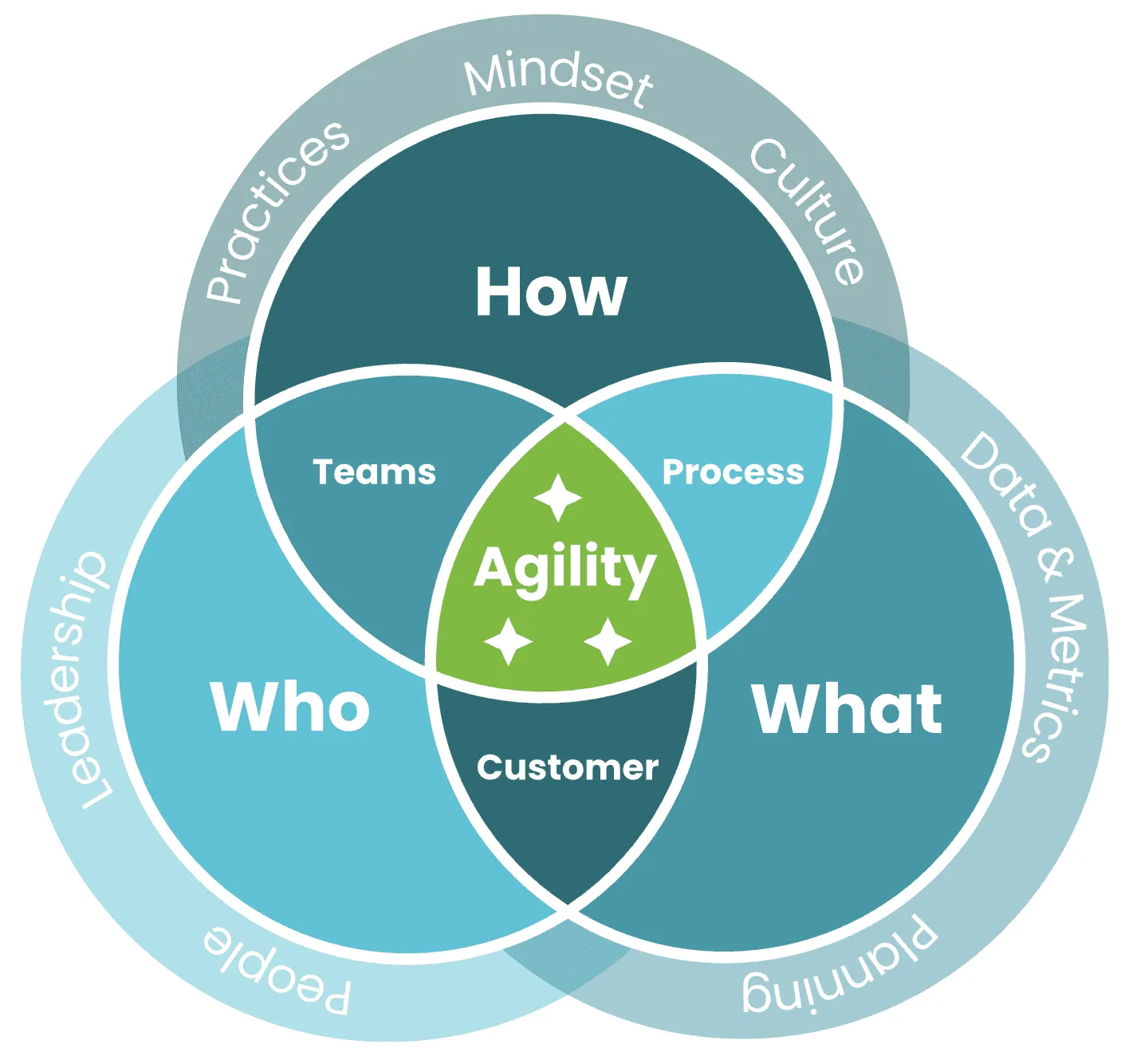
Image Source: Scaled Agile
How to Build an Agile Content Framework
An agile content framework gives a marketing team the structure to respond quickly without sacrificing accuracy, quality, or brand consistency. The goal is not simply to produce content faster. It is to create a system in which useful ideas can be created once, adapted efficiently, updated when necessary, and distributed across multiple discovery environments.
This matters because modern search is increasingly dynamic. Google’s current guidance for generative AI features emphasizes the importance of valuable, unique, non-commodity content while also making clear that traditional SEO fundamentals remain relevant for AI-powered search experiences.
A practical agile framework can be built around four principles.
1. Create Modular Assets From Day One
One of the biggest obstacles to content agility is treating every piece of content as a completely separate project.
Instead, build modular content assets that can be reused and adapted without losing their original context.
For example, a company conducting original research could begin with one comprehensive research report. That report might then provide the foundation for:
- A long-form blog article
- Several supporting articles
- LinkedIn posts
- Short-form videos
- Email content
- Infographics
- Expert commentary
- Sales materials
- FAQ content
- Webinar topics
- Customer-facing resources
The important point is that repurposing should not mean copying the same paragraph everywhere. Each format should be adapted to its audience and purpose while retaining the underlying facts and insight.
A modular approach also makes it easier to respond when a particular platform or content format becomes more important. Instead of starting from zero, the team can take an existing insight and package it appropriately.
This approach aligns with Google’s current emphasis on creating content that offers unique value rather than simply producing large quantities of pages. Its generative AI guidance specifically recommends unique perspectives, firsthand experience, original research, and information that goes beyond what is already easily available elsewhere.
The key is to build content around ideas, evidence, and expertise—not just URLs.
A useful modular workflow might look like:
Original insight → Core asset → Supporting assets → Channel-specific adaptations → Continuous updates
That structure allows one strong idea to create a much larger discoverability footprint without requiring the team to reinvent the research every time.
2. Keep One Single Source of Truth
Content agility becomes risky when different teams work from different versions of the same information.
Imagine a company changes a product feature, pricing model, statistic, service description, or industry claim. If the information exists across dozens of documents, spreadsheets, presentations, articles, and social posts, updating everything manually becomes difficult. Eventually, different channels may communicate conflicting information.
A single source of truth helps prevent this.
This can be a centralized content management system, knowledge base, editorial database, product documentation system, or another controlled repository containing the information that content teams repeatedly need.
It should ideally include:
- Approved product and service information
- Current statistics and research
- Brand terminology
- Messaging guidelines
- Expert information
- Customer insights
- Sources and citations
- Key claims and supporting evidence
- Frequently asked questions
- Important dates and updates
- Content ownership
- Revision history
The purpose isn’t to force every piece of content to look identical. It is to make sure the facts underneath the content remain consistent.
This becomes particularly valuable for AI search visibility. AI-powered systems need accessible, understandable information to determine what a business or source is about. Google’s guidance says that content intended for generative AI features should remain crawlable and recommends following established SEO fundamentals rather than pursuing a separate set of technical “AI ranking” tricks.
A centralized information system also makes updating much faster.
If a core statistic changes, the team should be able to identify every important content asset that uses it and update those assets systematically rather than discovering inconsistencies months later.
3. Set Guardrails Rather Than Bottlenecks
Agility doesn’t mean eliminating editorial control. It means designing control so it doesn’t unnecessarily slow production.
A traditional approval process can become a bottleneck when every small piece of content requires multiple rounds of review from multiple people. By the time a post is approved, the trend or conversation it was designed to address may already be over.
Instead, establish clear content guardrails.
Guardrails can define:
- Approved brand voice and terminology
- Topics that require specialist review
- Claims that need evidence
- Legal or compliance requirements
- Visual identity standards
- AI-use policies
- Attribution and citation expectations
- Publication responsibilities
- Escalation procedures
- Content types that require senior approval
Once these rules are clear, teams can make routine decisions independently.
For example, a social media manager shouldn’t need executive approval to make every minor formatting decision if the brand has already established clear guidelines. However, a post making a significant medical, financial, legal, technical, or product-performance claim may require specialist review.
This creates a better balance:
High-risk decisions receive more scrutiny. Low-risk decisions move quickly.
The same principle applies to AI-assisted content production. AI can help with research, organization, outlining, summarization, and other parts of a workflow, but the final content still needs human judgment. Google states that AI or automation itself isn’t the issue; the concern is using automation primarily to manipulate search rankings or producing content without sufficient value and originality.
An agile framework therefore uses technology to accelerate production while keeping humans responsible for accuracy, expertise, originality, and editorial judgment.
4. Republish and Update on a Loop
Publishing should not be treated as the final stage of content marketing.
An agile framework treats content as a continuous lifecycle:
Create → Publish → Measure → Learn → Update → Repurpose → Redistribute
This is especially important for topics that change frequently.
Industry statistics can become outdated. Products evolve. Search behavior changes. Regulations are revised. New research becomes available. Competitors introduce new solutions. Customer questions shift.
A page that was highly useful two years ago may still have a strong foundation but require significant updates to remain useful today.
However, updating content should not mean changing the publication date without making meaningful improvements. Google specifically warns against changing dates simply to make pages appear fresh when the underlying content has not substantially changed.
Instead, refresh content when there is a genuine reason to do so.
A content refresh can involve:
- Replacing outdated statistics
- Adding new research
- Updating examples
- Removing obsolete recommendations
- Improving explanations
- Adding firsthand insights
- Updating screenshots or visuals
- Revising internal links
- Improving structure and readability
- Addressing newly emerging questions
- Expanding sections where user needs have changed
You can also use performance data to determine what deserves attention. Pages that already attract significant impressions, rankings, conversions, backlinks, or engagement may offer particularly valuable opportunities for improvement.
The goal is not to constantly rewrite everything. It is to continuously improve the content that matters most.
This is increasingly relevant beyond conventional search. Google’s February 2026 Discover core update, for example, placed greater emphasis on in-depth, original, timely content and topic-level expertise while reducing sensational and clickbait content.
That reinforces an important principle: content needs to remain useful after publication, not simply meet the requirements of the moment it was created.
How Agility Earns AI Search Visibility
Content agility can contribute to AI search visibility because it helps brands maintain the qualities that modern search systems increasingly value: usefulness, originality, clarity, expertise, consistency, and relevance.
But there is an important distinction.
There is no special “agile content” switch that makes a website appear in AI-generated answers. Google currently states that the same foundational SEO practices remain relevant to AI features such as AI Overviews and AI Mode, and there are no additional technical requirements specifically required for inclusion.
Agility matters because it helps organizations consistently produce and maintain the type of content those systems are designed to surface.
Agility Helps Brands Produce More Original Information
AI systems can synthesize information from many sources. That makes generic content increasingly easy to reproduce.
If ten websites say essentially the same thing, publishing an eleventh version doesn’t necessarily give an AI system—or a human reader—a compelling reason to pay attention.
Agile teams can instead turn proprietary knowledge into content:
- Original research
- Customer data
- Expert interviews
- Firsthand observations
- Proprietary frameworks
- Case studies
- Product testing
- Industry analysis
- Unique methodologies
- Lessons from real-world experience
Google’s current generative AI guidance explicitly recommends unique points of view and non-commodity content, including firsthand perspectives and original research.
Agility makes this easier because research can be transformed into multiple useful formats while the underlying insight remains fresh.
Agility Keeps Information Current
AI-generated answers depend on information that is available and relevant to the questions being asked.
If a brand’s website contains outdated product information, obsolete statistics, inconsistent terminology, or old recommendations, that information may be less useful to both users and search systems.
An update loop gives the organization a mechanism for identifying and correcting outdated information.
This doesn’t mean chasing every algorithm change. Google’s systems themselves evolve continuously, and its guidance emphasizes improving content based on whether it is genuinely helpful and reliable rather than making reactive changes solely because of an update.
The better approach is to maintain content quality as an ongoing operating process.
Agility Creates Consistent Brand Signals
AI search doesn’t exist in isolation from the rest of the web.
A company’s website, author pages, product documentation, social profiles, industry publications, customer resources, and other publicly available information can collectively contribute to how people—and systems—understand the organization.
When those sources consistently communicate the same core facts and expertise, the brand presents a clearer information footprint.
This is another reason a single source of truth matters.
If one page says a company specializes in one area while another describes a completely different focus, or if important claims conflict across different assets, the overall content ecosystem becomes harder to interpret.
Agility helps solve this by making it easier to update related assets when important information changes.
Agility Makes Content Easier to Discover Across Multiple Surfaces
AI search is only one part of modern discoverability.
Content can also surface through traditional web results, image and video search, Google Discover, social feeds, communities, newsletters, and other recommendation environments.
Google’s Discover guidance recommends timely content, unique insights, strong headlines, and useful storytelling while discouraging clickbait and sensationalism.
An agile framework allows a single insight to be adapted for several of these environments.
For example:
Original research
→ Detailed report
→ Search-optimized article
→ Expert LinkedIn analysis
→ Short video
→ Infographic
→ Email newsletter
→ FAQ
→ Follow-up article responding to audience questions
Each asset serves a different discovery context, but they are connected by the same underlying expertise.
That is the real advantage of agility.
Agility Turns Content Into a Compounding Asset
A rigid content strategy often treats every publication as a new expense:
Create → Publish → Promote → Move on.
An agile strategy treats strong content as an asset that can continue generating value:
Create → Publish → Learn → Improve → Repurpose → Update → Redistribute.
Over time, this creates a deeper and more interconnected body of expertise.
The objective isn’t to flood the web with more pages. Google’s current guidance explicitly warns that producing large amounts of content—including generating separate pages for every possible query variation—does not inherently improve quality or AI visibility and can become problematic when done primarily to manipulate search or generative responses.
Instead, the objective is to get more useful value from genuinely valuable ideas.
That is why content agility is increasingly important for AI search visibility. It gives brands the operational ability to keep producing original insights, maintain accurate information, adapt content to new discovery environments, and respond to changing audience needs—all while preserving the quality and consistency that make content worth discovering in the first place.
How Brands Can Win the Discoverability Game
Winning discoverability today requires more than publishing frequently or trying to predict every search algorithm update. Brands need to build a content ecosystem that is useful, distinctive, trustworthy, adaptable, and present across the places where audiences actually discover information.
That includes conventional search, AI-powered search experiences, social platforms, recommendation feeds, video platforms, industry publications, and other digital environments. The strongest strategy is not to create a completely different content operation for every channel. Instead, brands should develop valuable ideas at the source and then adapt those ideas to the contexts in which people encounter them.
1. Publish Original Insights
Originality is one of the clearest ways for a brand to differentiate its content.
A basic article that repeats information already available across hundreds of websites may be technically optimized, but it gives audiences little reason to remember the brand. AI systems can also synthesize widely available information, making generic summaries easier to reproduce.
Brands should therefore invest in information they can contribute rather than simply information they can repeat.
That could include:
- Original research and surveys
- Proprietary data
- Customer insights
- Expert interviews
- Firsthand experiences
- Case studies
- Product testing
- Industry observations
- Unique frameworks
- Original examples
- Expert opinions on emerging developments
Google’s current guidance for AI features emphasizes creating unique, non-commodity content and adding value beyond what users can readily find elsewhere. It also recommends demonstrating firsthand experience and original research where appropriate.
This makes originality valuable for both human audiences and AI-mediated discovery.
For example, instead of publishing another generic article about customer retention, a company could analyze its own customer data, identify the most common reasons customers leave, and publish those findings. The resulting content has something that generic competitors cannot easily reproduce: proprietary evidence.
The same insight can then become a report, article, presentation, video, social discussion, newsletter, or expert commentary.
The objective is not simply to publish something “different.” It is to create information that is useful enough to be referenced, discussed, shared, or remembered.
2. Put Real People Front and Center
As content becomes easier to produce with AI, human expertise becomes an increasingly important differentiator.
People want to know who is behind an opinion, recommendation, analysis, or claim. Showing the people who actually have experience with a subject can make content more credible and more useful.
This can include:
- Named authors
- Subject-matter experts
- Executive perspectives
- Customer interviews
- Practitioner commentary
- Original quotes
- Expert reviews
- Firsthand case studies
- Author biographies and credentials
Google’s people-first content guidance encourages publishers to demonstrate expertise and make it clear when content reflects firsthand experience.
The goal isn’t to add an author’s name simply because an article needs an author box. The person should genuinely contribute expertise.
For instance, an HVAC company could publish a generic article explaining common air-conditioning problems. A stronger piece could feature an experienced technician explaining the failure patterns they repeatedly see, the symptoms homeowners often misinterpret, and what diagnostic steps should happen before a repair is recommended.
That creates a more distinctive form of content because it comes from experience rather than compilation.
This is particularly valuable as AI-generated summaries become more common. Brands that contribute genuine expertise give both audiences and search ecosystems something more substantive than another machine-generated explanation.
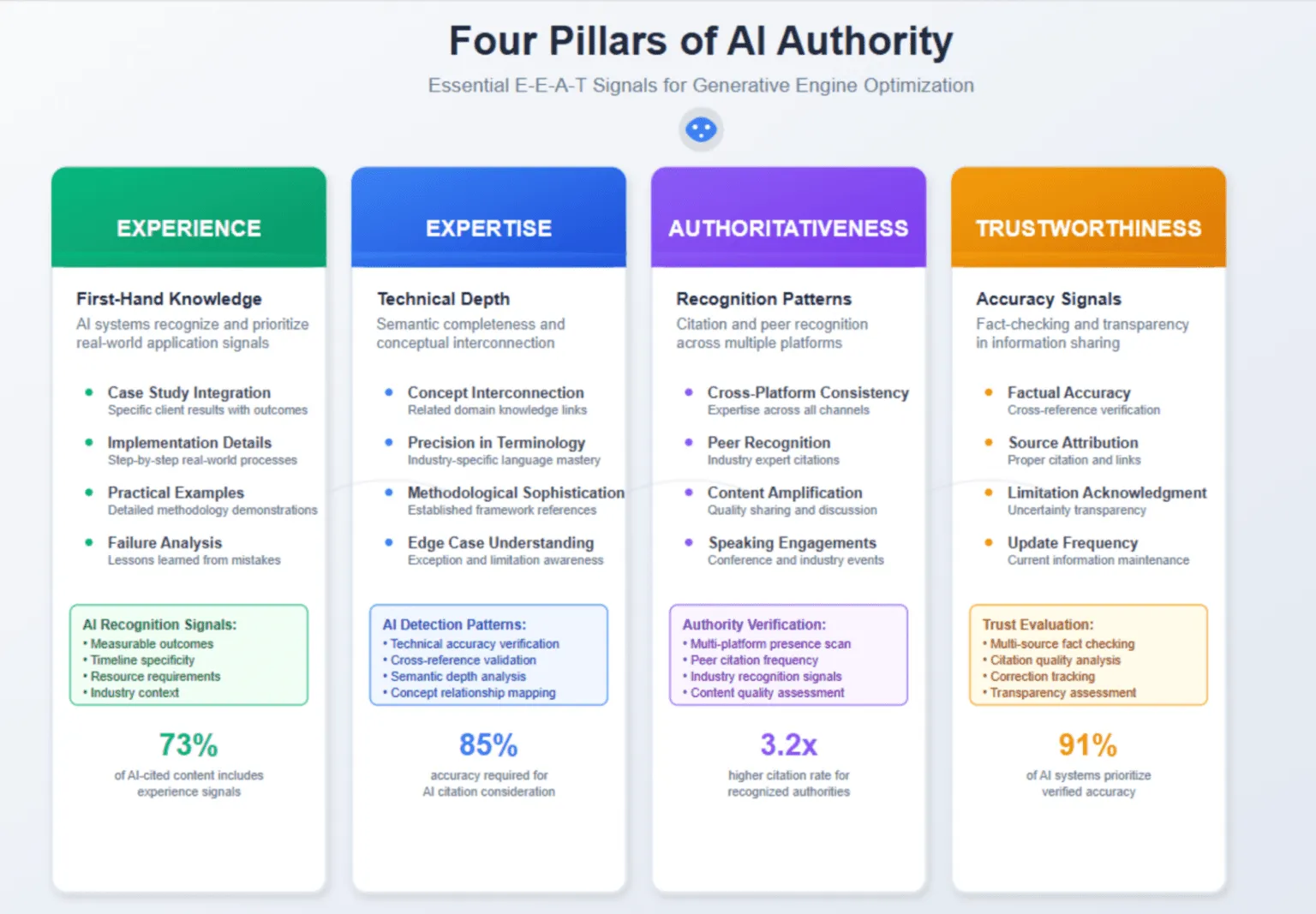
Image Source: Medium
3. Balance Speed and Brand Consistency
Discoverability often rewards relevance and timeliness, but moving quickly can create another problem: inconsistent content.
A brand that publishes quickly but uses different terminology, contradictory claims, inconsistent positioning, or an unfamiliar tone across channels can weaken its overall identity.
The answer isn’t to slow everything down.
Instead, brands should create clear guardrails that make fast publishing safer.
Those guardrails might define:
- Brand voice
- Approved terminology
- Core positioning
- Visual standards
- Editorial principles
- Fact-checking requirements
- Citation standards
- Legal and compliance requirements
- AI-use rules
- Approval thresholds
With these standards established, teams don’t need to start from scratch whenever they create something new.
A timely social post can use the same core message as an article. A video can expand on the same research. An email can highlight the same insight. The format changes, but the underlying facts and positioning remain consistent.
This is the practical value of content agility: speed comes from having a better system, not from removing quality controls.
It is also important not to confuse speed with content volume. Google’s guidance continues to emphasize helpful, original, people-first content rather than publishing large quantities of content primarily to attract search traffic.
The strongest brands therefore aim for fast enough to stay relevant and disciplined enough to stay trustworthy.
4. Show Up in Passive Feeds
Not every customer begins their journey by typing a question into a search engine.
People also discover content while scrolling through recommendation-driven environments such as Google Discover, social feeds, video recommendations, and personalized content streams.
This is passive discovery: the audience isn’t necessarily looking specifically for your brand, but a platform determines that your content may be relevant to them.
Google describes Discover as a personalized feed that surfaces content based on a user’s interests, activity, and interactions. Its guidance recommends focusing on content that is timely, unique, useful, and compelling rather than relying on sensational or clickbait approaches.
That changes how brands should think about content.
A page can be valuable for a narrow keyword and still be poorly suited to passive discovery. Recommendation environments often require stronger topical relevance, compelling presentation, timely subject matter, and content that creates a reason to explore.
Brands can improve their chances by creating:
- Timely analysis
- Original research
- Strong visual storytelling
- Expert commentary
- Useful explainers
- Compelling case studies
- Industry news analysis
- Data-driven content
- Distinctive perspectives
The key is not to manufacture clickbait. Instead, create content that deserves attention even when the user wasn’t actively searching for it.
That makes passive feeds an important complement to traditional search.
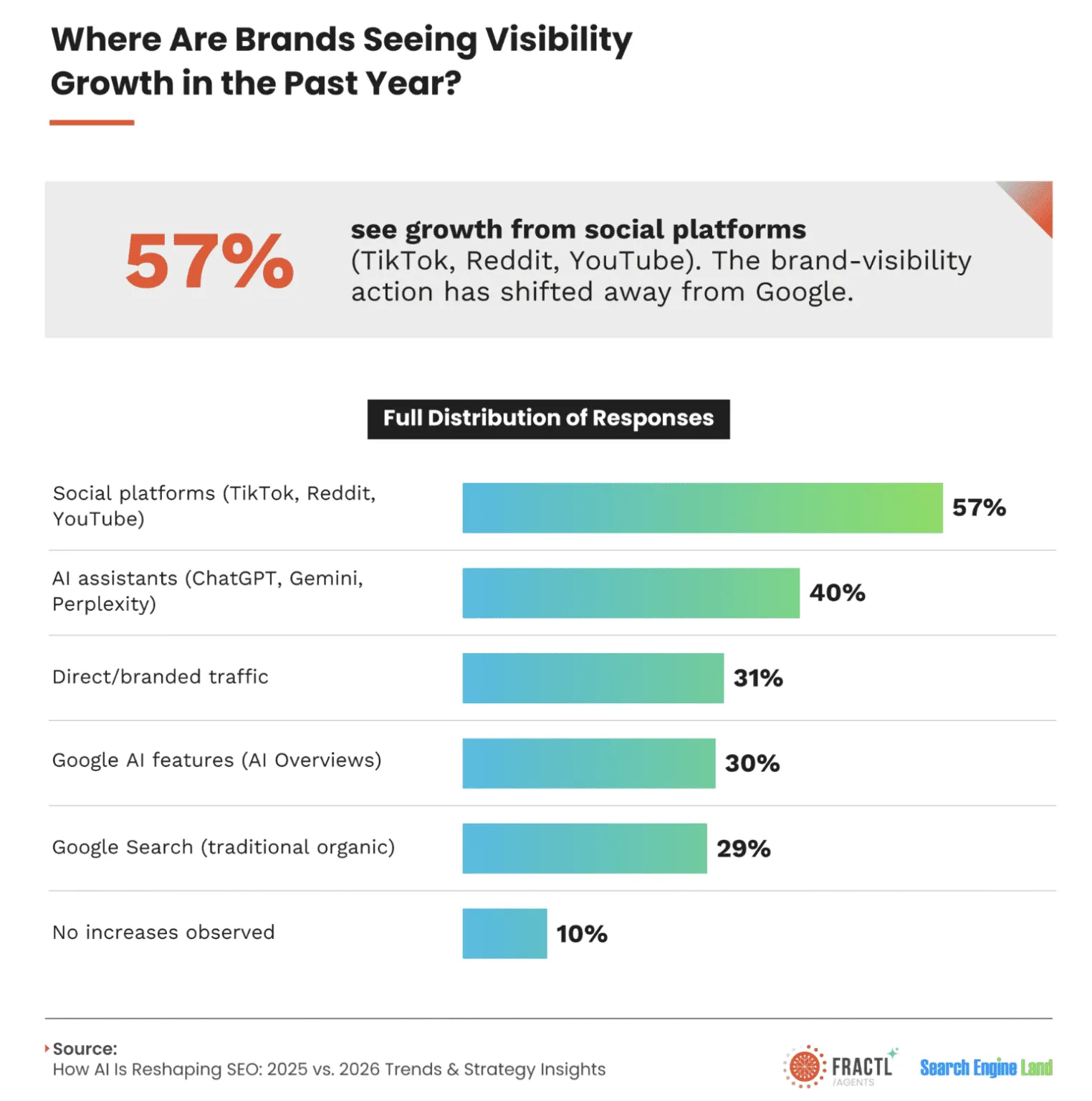
Image Source: Search Engine Land
Build Your Growth Engine With Pro Real Tech
The modern digital landscape demands speed, flexibility, and a smarter approach to content optimization for AI search. Keeping content fresh across search engines, AI-powered platforms, social channels, and other discovery environments requires more than frequent publishing. It takes a strategic process that protects your brand voice while continuously adapting to changing audience behavior and search trends.
Partner with Pro Real Tech to build a more agile content engine and strengthen your digital visibility. Our team combines specialized content writing, strategic SEO, and data-driven content marketing to create useful, authoritative content that helps your business become a trusted resource in your industry.
Ready to strengthen your brand discoverability and compete more effectively in AI-powered search? Contact Pro Real Tech today. Let’s turn your expertise into adaptable content that expands your reach, builds authority, and keeps your brand ready for what comes next.
Frequently Asked Questions About Content Strategy for AI Discoverability
WHAT IS THE MAIN BENEFIT OF CONTENT AGILITY FOR MODERN BRANDS?
The main benefit is the ability to adapt useful content quickly as audience behavior, platforms, search experiences, and business priorities change.
An agile content operation can update existing information, respond to emerging topics, repurpose strong ideas, and distribute content across multiple channels without rebuilding its entire workflow every time.
It also allows brands to maintain consistency while increasing responsiveness. Instead of creating every asset from scratch, teams can work from reusable research, data, expert insights, and content components.
Ultimately, content agility helps brands stay relevant without sacrificing quality.
HOW DOES SEARCH DISCOVERABILITY DIFFER FROM TRADITIONAL SEO?
Traditional SEO primarily focuses on improving a website’s ability to appear in search engine results for relevant queries.
Search discoverability is broader.
It considers where and how people encounter a brand across the entire digital discovery journey, including traditional search results, AI-generated answers, social platforms, recommendation feeds, video, communities, and other environments.
SEO remains an important part of discoverability. Google states that many established SEO practices continue to apply to AI-powered search features, including ensuring that pages are crawlable and that content is useful and accessible.
The difference is that modern discoverability asks brands to think beyond rankings and clicks.
WHY ARE AI RECOMMENDATIONS BECOMING SO IMPORTANT FOR REACHING AUDIENCES?
AI systems increasingly help people discover information by summarizing topics, answering questions, comparing options, and recommending relevant sources or next steps.
Google’s AI search experiences, for example, are designed to help users explore complex questions and discover information from across the web.
As these experiences become part of the customer journey, brands need content that provides genuine value and clear evidence of expertise.
The important point is that brands cannot simply optimize for being “recommended.” They need to become useful sources of information that systems and people have reasons to trust.
HOW CAN A BRAND IMPROVE ITS AI SEARCH VISIBILITY ON CONVERSATIONAL PLATFORMS?
Start with the fundamentals rather than looking for a secret AI-specific ranking tactic.
Brands should:
- Create original, useful content.
- Demonstrate real expertise and firsthand experience.
- Keep important information accurate and current.
- Make content easy for search engines to crawl and understand.
- Organize information clearly.
- Use descriptive titles and headings.
- Support important claims with appropriate evidence.
- Maintain consistent information across important brand properties.
- Develop original research and proprietary insights.
- Continue improving content based on user needs.
Google’s guidance states that there are no special technical requirements specifically required for appearing in AI Overviews or AI Mode beyond meeting Search’s existing technical and content fundamentals.
In other words, better content and strong technical foundations remain more important than chasing an invented “AI SEO trick.”
WHAT GOES INTO A SUCCESSFUL CONTENT DISCOVERABILITY STRATEGY?
A successful strategy combines several elements:
- Audience research
- Search intent analysis
- Original expertise
- Strong editorial standards
- Technical SEO
- AI-search readiness
- Content repurposing
- Social distribution
- Recommendation-focused content
- Content updating
- Performance measurement
The strategy should also identify where the audience actually discovers information.
For one audience, Google may remain the primary channel. Another may rely heavily on YouTube, LinkedIn, Reddit, industry publications, newsletters, or AI assistants.
Discoverability therefore begins with understanding the audience’s information journey, not simply choosing a list of keywords.
WHAT DOES CONTENT OPTIMIZATION FOR AI SEARCH ACTUALLY REQUIRE?
AI-search optimization does not require abandoning traditional SEO.
It requires creating content that is useful, understandable, original, technically accessible, and supported by genuine expertise.
Google’s current guidance specifically recommends maintaining foundational SEO practices and focusing on unique, valuable content for AI-powered search experiences.
In practical terms, brands should focus on:
- Clear organization
- Direct answers to important questions
- Strong topical depth
- Original information
- Firsthand expertise
- Accurate facts
- Relevant supporting evidence
- Crawlable pages
- Descriptive metadata
- Logical internal linking
- Updated information
The most important principle is simple: optimize the content for the user first, then make it easy for search systems to understand.
WHY IS BRAND DISCOVERABILITY FRAGMENTING ACROSS SO MANY DIFFERENT PLATFORMS?
Because audiences no longer rely on a single information gateway.
People search on traditional search engines, watch videos for explanations, ask AI assistants for recommendations, use social networks to discover trends, participate in communities, and encounter personalized recommendations without performing a search at all.
Each environment has different discovery mechanics.
A person might first discover a brand through a video, validate it through Google, read customer discussions on a community platform, and then ask an AI assistant to compare it with alternatives.
This makes the customer journey increasingly distributed rather than linear.
Brands therefore need a connected content ecosystem rather than a strategy built around a single platform.
HOW DO SEARCH AND AI VISIBILITY WORK TOGETHER IN A MODERN MARKETING FUNNEL?
Search and AI visibility increasingly overlap rather than operating as separate channels.
A potential customer might use traditional search to identify possible solutions, use an AI assistant to understand the differences, visit a company’s website for detailed information, and later encounter the same brand through social content or a recommendation feed.
This creates multiple opportunities for discovery throughout the funnel.
Top of funnel: Educational content, videos, social posts, research, and industry insights.
Middle of funnel: Comparisons, case studies, expert explanations, product/service guides, and detailed resources.
Bottom of funnel: Product information, pricing, demonstrations, reviews, testimonials, and conversion-focused pages.
A strong content strategy ensures that the brand can be discovered and evaluated at multiple stages rather than relying on one search result to generate the entire customer journey.
WHAT MAKES AN ADAPTIVE CONTENT STRATEGY NECESSARY FOR TODAY’S EDITORIAL TEAMS?
The digital environment changes too quickly for a completely rigid publishing process.
Search features evolve. Social platforms change their recommendation systems. New content formats emerge. Audience preferences shift. New competitors enter markets. Industry developments create new questions.
An adaptive strategy allows editorial teams to respond without abandoning their standards.
This means creating reusable assets, maintaining centralized information, establishing clear approval rules, monitoring performance, and regularly updating important content.
The objective isn’t to chase every trend. It is to build enough flexibility to respond when a change genuinely matters to the audience or business.
HOW DOES CONTENT FRESHNESS FOR SEO IMPACT CROSS-PLATFORM PERFORMANCE?
Freshness matters when the information itself needs to remain current.
For topics involving changing statistics, products, regulations, technology, market conditions, or industry developments, outdated information can reduce usefulness across multiple channels.
An accurate update can improve the usefulness of an existing search page while also providing material for renewed social distribution, email promotion, video updates, or new discussions.
However, freshness should not be confused with repeatedly changing publication dates. Google’s guidance cautions against artificially making content appear fresh without substantially changing it.
The better approach is to refresh content when there is something meaningful to improve.
That could mean adding new research, correcting outdated information, expanding an important section, replacing obsolete examples, or incorporating new expert insights.
In an agile content system, freshness is therefore not a one-time SEO tactic. It becomes part of an ongoing process of maintaining, improving, and redistributing valuable information across the discovery ecosystem.
Read More: Choosing the Best Restoration SEO Company for Small Business


