

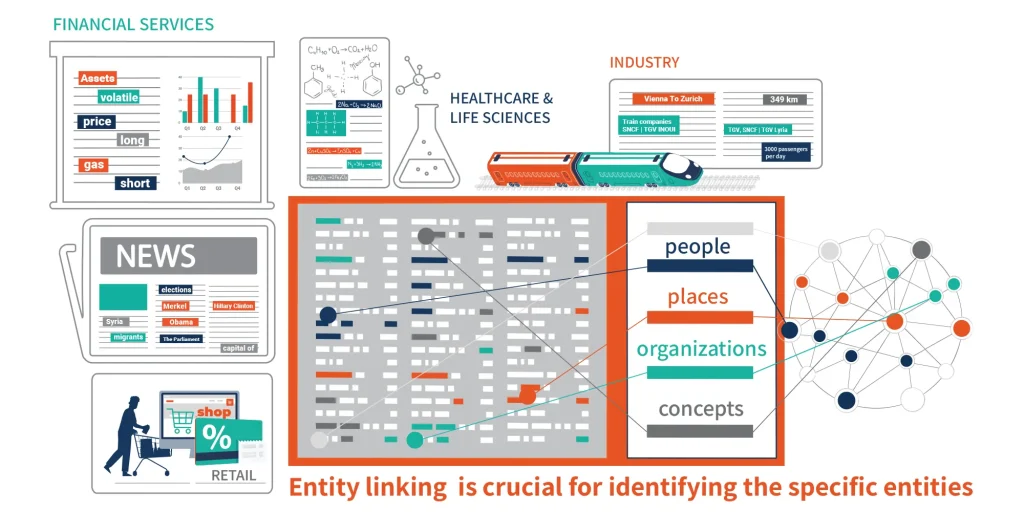
In the world of modern search optimization, simply targeting a list of keywords isn’t enough anymore. Search engines have evolved significantly — they now focus on understanding meaning, context, and relationships between concepts rather than just matching text strings. This shift has made entity linking a powerful component in search, especially for local SEO.
Entity linking refers to the process where systems recognize mentions of real‑world things — such as businesses, places, products, services, people, and concepts — and connect them to their clear, unique representations in structured data or knowledge sources. When search engines can accurately identify these entities in your content and relate them to one another, they gain a much deeper understanding of what your content is really about. In local SEO, this semantic clarity helps your business show up more prominently in relevant searches, improves relevance signals, and enhances how search engines serve your pages to users looking for specific local services or locations.
What Is a Linking Entity?
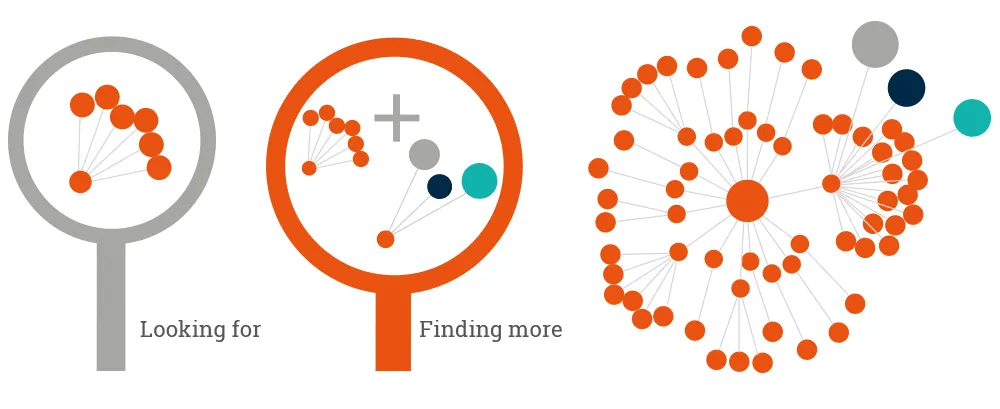
A linking entity is simply an identifiable thing or concept in the real world that search engines can recognize and understand. These entities extend far beyond individual keywords — they are unique, distinguishable concepts with meaning to both users and search systems.
For example:
- A business name
- A specific location
- A product or service
- A person or professional
- A topic of expertise
Each of these is considered an entity when it is something that can be uniquely identified and linked to a structured reference. When you include these entities in your content and connect them correctly — internally within your site or externally to authoritative sources — it reduces ambiguity and tells search engines exactly what your content is referring to.
This process is crucial because search engines don’t just want to count words anymore — they want to understand which real‑world things your pages are about and how those things relate to each other. Entity linking helps bridge that gap, improving how search engines interpret your content.
Entities vs. Keywords: A Core Distinction
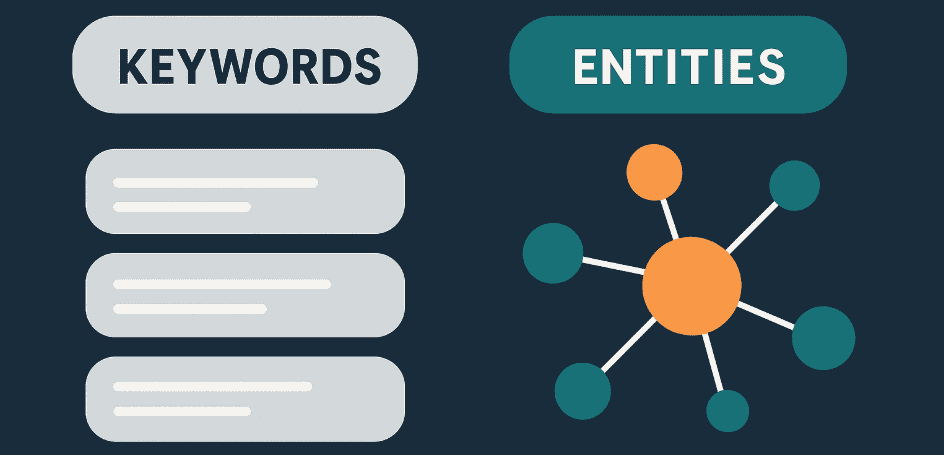
Understanding the difference between entities and keywords is essential to modern SEO strategy — and especially for local SEO where context matters.
🔹 What Keywords Are
Traditionally, SEO has focused on keywords — specific phrases that users type into search engines. For decades, the common SEO playbooks revolved around optimizing content to include these exact phrases in titles, headings, and body text so that your page could signal relevance for those terms. While still useful, this approach has limitations because keywords are just text strings. They don’t inherently carry meaning.
🔹 What Entities Are
Entities, in contrast, are the actual things or concepts that keywords might refer to. They are unique, well‑defined, and distinguishable — such as a business name, a city, a specific product, or a professional service offering. Entities are tied to context, relationships, and attributes that search engines can interpret.
For example:
- The keyword “best pizza in Mymensingh” is just a string of words.
- The entity could be something like “Joe’s Pizza Mymensingh” — a specific place with attributes (location, type of food, service hours, ratings).
The key distinction here is that keywords tell search engines what words are present, while entities tell them what those words actually mean. Entities represent concepts; keywords represent phrasing.
🔹 Why This Matters
Because entities capture meaning and context, search engines can make smarter decisions about relevance. Instead of simply looking for text that matches, they evaluate the relationships between entities — for example, which services a business offers in a given city, or how a topic relates to others in your niche. This semantic understanding improves the accuracy of search results and enables richer responses like knowledge panels, AI answers, and local search features.
In short:
- Keywords = surface level signals
- Entities = deep meaning and context
Modern SEO strategies that integrate entities — including linking them correctly within content — are more aligned with how search engines understand and rank content today.
Why Entity‑Driven SEO Matters
Search engines have dramatically evolved beyond simple keyword matching — they now seek to understand meaning, context, and real‑world concepts within content. This transformation is fundamentally why entity‑driven SEO has become a critical strategy for long‑term search visibility and relevance.
1. Search Engines Interpret Meaning, Not Just Words
Modern search algorithms treat content not as a sequence of words, but as a network of connected ideas and concepts. Entities represent these unique, well‑defined concepts — like a business, place, service, or topic — that search systems can recognize and organize into a structured knowledge model.
Unlike keywords, which are simply text strings that may lack context, entities carry clarity and distinct identity. This means search engines can determine exactly what your content is about and how it relates to other topics.
2. Entities Improve Semantic Understanding
Entity‑driven SEO helps search engines disambiguate meaning, reducing confusion between similar terms (for example, determining whether “Jaguar” refers to the car brand or the animal). When systems recognize entities and their attributes, they process content more accurately and deliver more useful results.
This semantic clarity is especially important in an era where Large Language Models (LLMs) and AI assistants — such as Bard, Bing Search, and generative search features — are increasingly part of how users find information. These models leverage entity relationships to produce direct answers and recommendations, making entity optimization a key driver of visibility beyond traditional ranking positions.
3. Entities Foster Topical Authority
When your content includes relevant entities and connects them thoughtfully, it demonstrates to search engines that your site has deep topical expertise. This can improve visibility not just for specific phrases, but across related searches that share common entities.
For example, a local dental clinic that consistently ties its services (like “orthodontics” and “teeth whitening”) to its specific location and brand entity signals greater authority on those topics compared to content that simply repeats generic keywords.
4. Entity‑Driven SEO Enhances Rich Search Features
Entity signals also help surface rich results — such as knowledge panels, featured snippets, and AI summary answers — because structured entity data gives search systems confidence they’re interpreting your content correctly.
Rich features often occupy prime real estate in search results, leading to higher visibility and more user engagement than traditional blue‑link listings alone.
The Role of Entity Linking in Local SEO
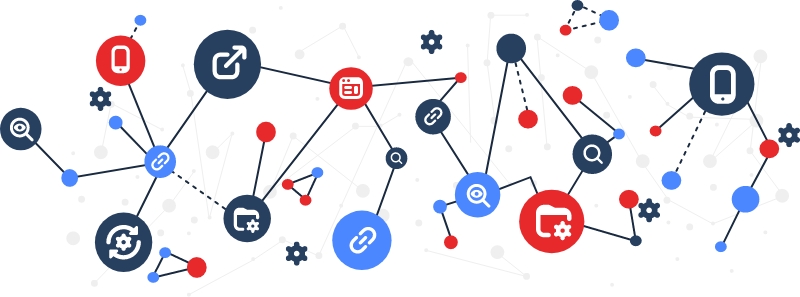
While entities help search engines understand what your content is about, entity linking shows them how those concepts are connected — both internally on your site and externally in the wider web of knowledge. This plays a pivotal role in local SEO performance.
1. Clarifies Geographic and Context Signals
Local SEO depends heavily on location relevance. When search engines can clearly identify the specific location entity associated with your business — such as a town, region, or service area — they’re more likely to serve your content for geo‑targeted searches.
Entity linking ensures that mentions of your business’s city, neighborhood, or service area are explicitly associated with the correct real‑world entities. This helps avoid confusion caused by similar place names and strengthens your visibility in “near me” and city‑specific queries.
2. Connects Services and Offerings to Recognized Concepts
Local businesses often offer specific services or specialties. By linking these service concepts as entities — then connecting them through content and structured data — you help search engines understand not just what you offer, but how it relates to your locality and user search intent.
For instance, entity linking can clarify that “emergency plumbing” offered by your business is connected to the broader concept of plumbing services and tied to your exact service location, strengthening relevance for related search queries.
3. Reduces Ambiguity Across Pages and Locations
If your site has multiple location pages or offers a variety of services, entity linking helps disambiguate each piece of content. Rather than search engines guessing which page best matches a query, entity links — both internal and external — clarify the context for each individual page.
This organized web of linked entities improves indexing accuracy, enhances relevance signals, and supports more precise matching to user search intent.
4. Signals Authority to AI and Search Systems
As AI‑driven search features rely on entity relationships to summarize and present information, a well‑structured entity network across your content makes it more likely that your business will be recognized as an authoritative source.
Entity linking boosts your chance of appearing in AI‑generated local answers, map packs, and rich results — all of which are increasingly important entry points for search traffic.
How to Do Entity Linking Strategically
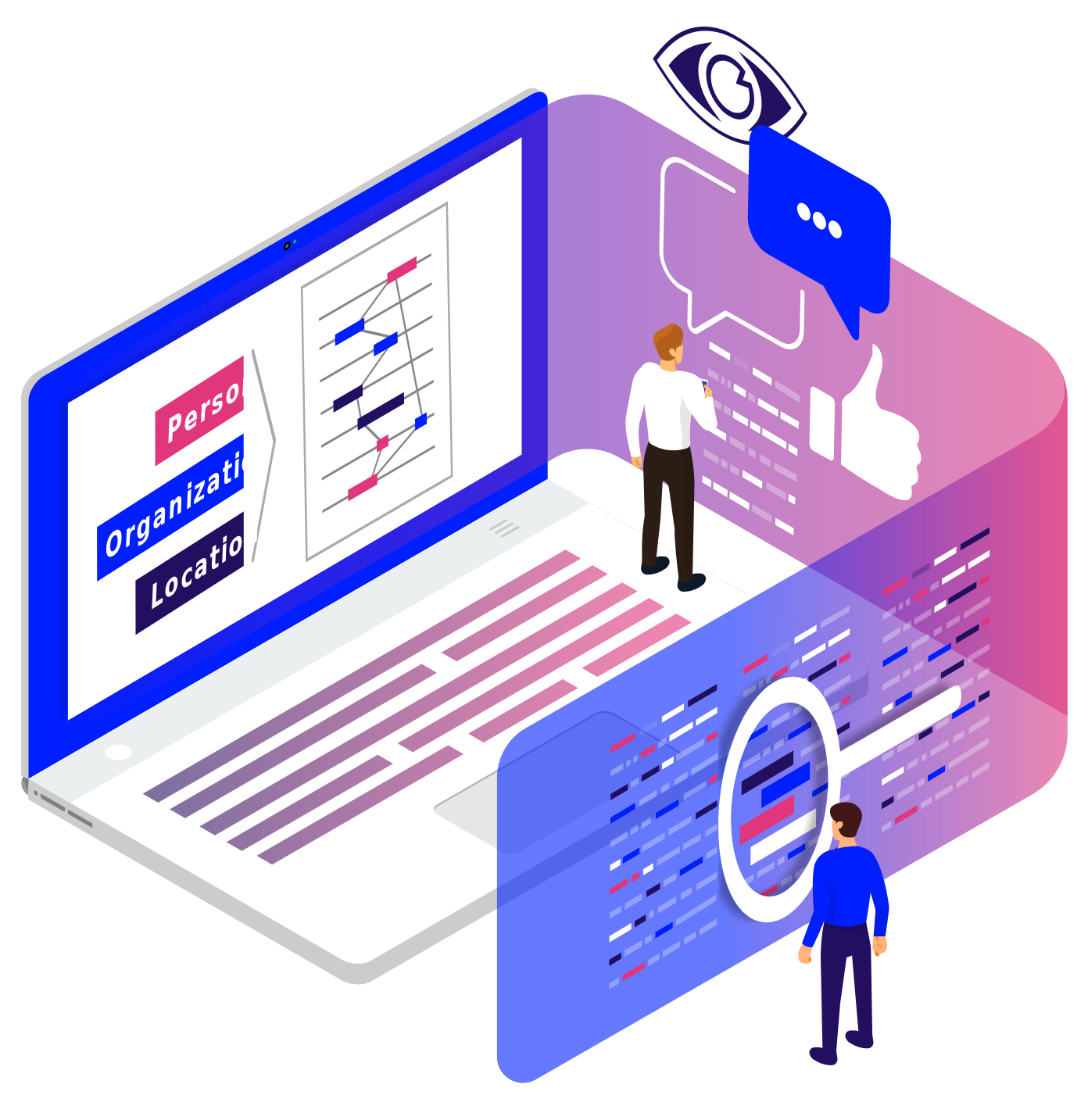
Entity linking isn’t a one‑off task — it’s a strategic layer you build into your SEO efforts to help search engines and AI systems understand not just what your content says, but what it means and how different concepts relate to one another. In local SEO, this distinction is even more important because relevance to location, services, and intent directly influences visibility in maps, local packs, and intent‑driven results.
Below are the most effective and up‑to‑date strategies you can implement to elevate how entities are linked across your site and beyond:
1. Identify Your Core Entities
Strategic entity linking starts with knowing which entities matter most to your business and your audience. Not every recognizable term or concept needs to be linked — focus on entities that define your authority, relevance, and competitive edge.
Key steps:
- Map primary entities: These include your business, key services, product categories, and core locations you want to rank for.
- Identify supporting entities: This could be related services, sub‑locations, industry terminology, or related concepts your audience cares about.
- Prioritize entity relevance: Not all entities are equal — concentrate on those most aligned with your business goals and what users are searching for in your niche.
For local search, locations and service types are often the most critical entities because they directly align with geo‑modified queries and intent‑based local searches.
2. Connect Content to Recognized Locations and Services
Once you’ve identified your core entities, the next step is to explicitly connect them within your content so that search engines understand what your content relates to. This is especially powerful in local SEO where geographical context matters.
Best practices include:
- Mention your physical location clearly in page titles, headings, and descriptive content so that search systems associate the business entity with a recognizable place.
- Link service entities — like “emergency plumbing,” “dental implants,” or “vegan bakery” — to detailed pages that explain what they mean and how your business provides them.
- Disambiguate similar locations by pairing place names with contextual clues like landmarks, regions, or service area descriptions.
This reduces ambiguity and increases the likelihood that your pages are correctly matched to local intent queries — for example “near me” or city‑specific searches.
3. Use Structured Data to Reinforce Business Identity
Structured data — specifically Schema.org markup — gives search engines machine‑readable signals about the entities your page represents and the relationships between them. While structured data alone doesn’t guarantee rankings, it clarifies who you are and what you offer.
How to apply it:
- Add a LocalBusiness schema (or specific subtype, like Restaurant, Dentist, Plumber, etc.) to your homepage and location pages.
- Use properties such as
name,address,telephone, andopeningHoursto establish your core business entity. - Incorporate relationships like
areaServed,service, andsameAsto connect your entity to authoritative sources (e.g., Knowledge Graph entries or your verified listings). - Use JSON‑LD format because it’s the most flexible and widely supported by search engines.
Structured data acts like a translator that interprets your content for AI and search engine systems, reducing uncertainty about what your business does and where it operates.
4. Build Clear Internal Connections Between Pages
Internal entity linking is just as important as external associations. When pages on your site link to each other using entity‑focused anchor text, you’re effectively building a content knowledge graph — a semantic structure that helps machines see how topics relate within your domain.
Practical approaches:
- Create hub pages for major entities (like your main service offerings or location pages) and link from those to supporting content.
- Use anchor text that matches the entity name or concept rather than generic phrases like “click here”. This reinforces the subject of the link and clarifies context.
- Ensure that related pages link back to each other where appropriate — bidirectional linking strengthens the perceived semantic relationship.
This practice not only improves user navigation but also signals to search systems that your content is cohesive and ontology‑aware, which helps with topical authority.
5. Keep Entity Information Consistent Everywhere
Consistency across all digital touchpoints is crucial if you want search engines to reliably recognize and connect your entities. Conflicting or mismatched information can create ambiguity and weaken the semantic signals you’re trying to build.
Consistency checklist:
- NAP uniformity: Make sure your business’s Name, Address, and Phone number is consistent across your website, directory listings, review sites, and social profiles.
- Terminology alignment: Use the same phrasing for key service offerings across pages, metadata, and structured data.
- Structured data coherence: Ensure your schema markup doesn’t contradict the visible content on the page — when markup and text align, structured data reinforces entity signals.
Search engines cross‑reference your entity information from many sources — the more consistently you present it, the stronger and clearer your entity footprint becomes.
Build Search Clarity That Drives Growth With Pro Real Tech
Entity linking determines how search engines interpret and rank businesses. Establishing clear relationships between your brand, services, and relevant concepts helps search systems understand context across both traditional search results and AI-powered platforms. Achieving this clarity requires a deliberate, structured strategy.
At Pro Real Tech, we specialize in entity-driven SEO strategies that align your website with how search engines process meaning. By creating precise connections between your business information and recognized entities, we ensure your brand is accurately interpreted across evolving search environments, including AI systems influenced by entity linking LLM models.
Our solutions include:
- Local SEO
- Search Engine Optimization (SEO)
- AI SEO
- Content Writing
Businesses that prioritize entity clarity gain stronger visibility, enhanced authority, and long-term relevance in search results. Pro Real Tech provides the expertise to implement entity linking consistently, helping your brand stand out in competitive digital landscapes.
Contact Pro Real Tech today to elevate your search presence and drive growth through intelligent entity strategies.
Frequently Asked Questions About Entity Linking
HOW TO DO ENTITY LINKING?
Entity linking involves connecting mentions of real-world concepts (entities) in your content to unambiguous references that search engines or AI systems recognize. Steps include:
- Identify key entities — businesses, locations, services, products, people, or topics relevant to your content.
- Link entities internally — connect pages that expand on a particular entity using anchor text that matches the entity.
- Use structured data — apply Schema.org markup to your pages to reinforce entity identity and attributes.
- Maintain consistency — ensure NAP (Name, Address, Phone) and terminology are uniform across web pages and directories.
- Leverage authoritative external references — link or cite recognized sources when appropriate to strengthen entity recognition.
Correct implementation ensures search engines and AI models understand what your content represents, improving relevance and visibility.
WHAT IS A LINKING ENTITY?
A linking entity is a unique, identifiable concept or thing in the real world that can be recognized and referenced by search engines. This could be:
- A business or organization
- A location or geographic region
- A product or service
- A person or professional
- A topic or concept
Linking entities means connecting mentions of these entities in your content to structured references (like Schema.org or Knowledge Graph entries), clarifying meaning for search engines and AI systems.
WHAT ROLE DOES ENTITY LINKING LLM PLAY IN MODERN SEARCH?
Large Language Models (LLMs) like GPT, Bard, and AI-powered search assistants use entity linking to:
- Understand context and relationships between concepts
- Disambiguate ambiguous terms (e.g., distinguishing “Jaguar” the car from the animal)
- Provide accurate and relevant answers in AI-powered search results
- Generate summaries or knowledge panel-style results
Entity linking ensures that LLMs can map text mentions to the right real-world entities, improving the precision of search results.
WHY IS EXTERNAL ENTITY LINKING IMPORTANT?
External entity linking connects your content to recognized authoritative sources, which:
- Signals credibility and relevance to search engines
- Strengthens semantic understanding of your content
- Helps build trust and topical authority
- Assists in disambiguation, showing your content relates to the same entity recognized elsewhere
For local SEO, this could mean linking your business entity to Google Maps, social profiles, or recognized directories.
HOW DOES LLM ENTITY LINKING AFFECT VISIBILITY?
LLM-based search systems analyze entity relationships to deliver rich answers, snippets, and AI-generated summaries. If your content is well-linked at the entity level:
- It’s more likely to appear in AI answers for relevant queries
- It can influence rankings indirectly by improving semantic relevance
- Users can find your business through richer search experiences like local packs or knowledge panels
This enhances both direct visibility in search results and presence in AI-driven responses.
WHY DO SEARCH ENGINES NEED A STRUCTURED UNDERSTANDING OF CONTENT?
Search engines need structure because plain text is ambiguous. Structured understanding allows them to:
- Identify which concepts are being discussed
- Recognize relationships between entities (e.g., your clinic offers orthodontics in a specific city)
- Avoid confusion between similar terms
- Deliver more accurate results, rich snippets, and knowledge panel data
Without structured signals, search engines rely on heuristic guesses, which reduces accuracy and discoverability.
HOW DOES ENTITY-BASED UNDERSTANDING AFFECT SEARCH RESULTS?
Entity-based understanding allows search engines to:
- Show highly relevant content rather than merely keyword-matched pages
- Support rich results, like maps, AI snippets, and knowledge panels
- Improve local search accuracy, ensuring location-specific queries show the right businesses
- Rank content according to topical authority and semantic relevance rather than just keyword frequency
This results in better engagement and higher quality traffic.
IS ENTITY LINKING ONLY USEFUL FOR LARGE BRANDS?
No. While large brands benefit from extensive entity networks, small and local businesses can gain significant advantages from entity linking:
- Clarifying location and services improves local visibility
- Structured entity linking can help your business appear in maps, knowledge panels, and AI responses
- Entities help level the playing field by emphasizing relevance and authority over sheer size
Even a small clinic or local store can leverage entity linking to outrank competitors in local search results.
DOES ENTITY LINKING REPLACE TRADITIONAL SEO PRACTICES?
No. Entity linking complements traditional SEO, including:
- Keyword optimization
- On-page SEO (titles, headings, meta tags)
- Link building
- Content quality and relevance
It enhances the semantic and contextual layer of SEO, allowing search engines to understand your content more deeply. Traditional SEO is still required to signal relevance and competitiveness.
HOW LONG DOES IT TAKE FOR ENTITY SIGNALS TO BE RECOGNIZED?
The timeline varies depending on factors like:
- Frequency of search engine crawling
- Number of internal and external entity connections
- Use of structured data and consistency of information
Typical observations:
- Structured data updates: Often recognized within a few days to weeks
- Internal linking improvements: May influence semantic signals in a few weeks
- External signals (citations, authoritative links): Can take several weeks to months
Entity recognition is cumulative — consistent and comprehensive linking over time strengthens visibility and authority.
Read More: The Visibility Illusion: Why Posting More Won’t Make You Findable


