


The landscape of Google Search is undergoing its most significant transformation in decades. Gone are the days of simply typing a query and getting a list of ten blue links to sift through. Enter the era of Search Generative Experience (SGE) and its most public-facing feature: AI Overviews. This new technology promises to answer users’ questions directly on the search results page, synthesizing information from a multitude of web sources. For businesses, content creators, and SEO professionals, this shift presents both a monumental challenge and a incredible opportunity.
Visibility is no longer just about ranking on the first page; it’s about being selected by an AI as a trusted source worthy of citation. In this blog, we will demystify Google’s AI Overviews, explore what factors into gaining that coveted visibility, and provide actionable strategies to future-proof your SEO efforts in this new AI-driven search ecosystem.
What Are AI Overviews?
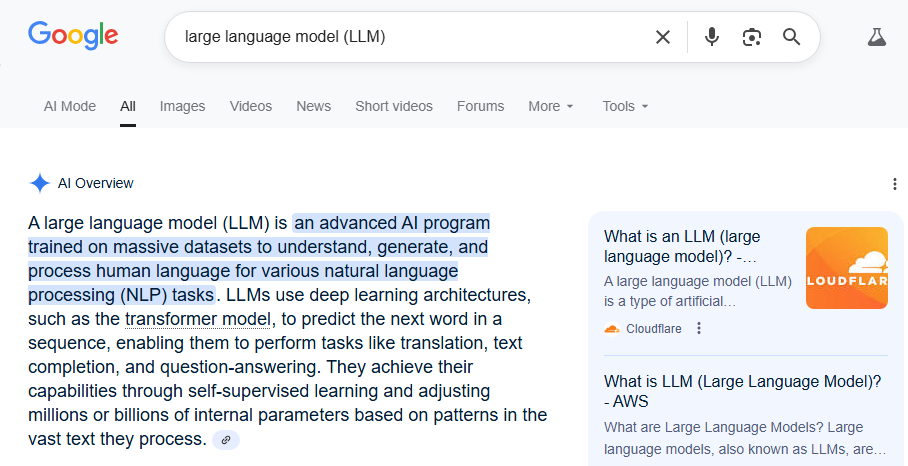
AI Overviews are a core component of Google’s Search Generative Experience (SGE). They are AI-generated summaries that appear at the top of specific search results pages, designed to provide users with a direct, comprehensive answer to their query without them having to click through to a website.
Instead of displaying a single “featured snippet” from one source, AI Overviews use a sophisticated large language model (LLM) to compile and synthesize information from multiple websites across the web. The result is a cohesive paragraph or list that distills the key points, opinions, and data related to the user’s question. These overviews are clearly labeled as “AI-generated” and include links to the websites that were used as sources, which Google calls “cited sources.”
Key Characteristics of AI Overviews:
-
Generative: They create a new, unique summary of information that doesn’t exist verbatim on any single website.
-
Multi-source: They pull and cite information from several top-ranking and authoritative pages.
-
Direct: Their primary goal is to satisfy the user’s informational intent immediately on the SERP.
-
Contextual: They often include follow-up questions or “next steps” that allow users to dive deeper into specific sub-topics.
AI Overviews are Google’s ambitious attempt to make search more efficient and intuitive, acting as an intelligent research assistant that does the legwork of scanning multiple sources for the user.
How AI Overviews Are Generated
The generation of an AI Overview is not a simple copy-paste job. It’s a complex, multi-stage process powered by Google’s most advanced AI technologies, including its Gemini model and the foundational Search systems. Understanding this pipeline is crucial to optimizing for visibility within them.
The process can be broken down into a few key stages:
-
Query Understanding & Triggering: First, Google’s systems analyze the user’s search query to determine its intent and complexity. AI Overviews are not generated for every search. They are typically triggered for more complex, informational queries where a synthesized answer would be helpful, such as “how to clean suede shoes at home” or “compare benefits of yoga vs swimming.” Simple navigational queries (“youtube”) or transactional queries (“buy nike air force 1”) are less likely to trigger them.
-
Information Retrieval & Source Selection: Once triggered, Google’s core search systems spring into action. They scour the index to identify a set of high-quality, relevant web pages that are potential candidates for providing information. This selection isn’t just about keyword matching; it heavily weighs factors like E-E-A-T (Experience, Expertise, Authoritativeness, Trustworthiness), content freshness, and the overall user experience of the page.
-
Synthesis & Generation: This is where the AI magic happens. The large language model (LLM) ingests the information from the selected pool of high-quality sources. It doesn’t just summarize one page; it cross-references, compiles, and synthesizes the key points from multiple sources to form a single, coherent, and original answer. The model is designed to distill facts, reconcile differing viewpoints, and present a balanced overview.
-
Citation & Attribution: A non-negotiable part of the generation process is attribution. The AI model is trained to identify which specific pieces of information came from which source. It then generates links to those specific pages, placing them beneath the overview as “cited sources.” This provides credibility to the answer and allows users to visit the original sources for more detail.
-
Presentation: The final AI Overview is presented at the top of the search results page, clearly marked as generative AI. It often includes multimedia elements like images or videos and may feature “next steps” or suggested follow-up questions to help users refine their search.
Can You Hide Google AI Overviews?
A common question from searchers is whether they can turn off or hide AI Overviews if they prefer the traditional list of blue links. The short answer is: No, there is no user setting to universally disable AI Overviews.
As a user, you cannot hide them because they are an integral part of Google’s search results presentation for queries where Google deems them helpful. Your experience is determined by Google’s algorithm, not a personal toggle switch.
However, there are two important nuances to this answer:
1. The “Web” Filter is a Temporary Workaround:
While you can’t disable AI Overviews, you can filter your results to show only text-based links. After performing a search that generates an AI Overview, you can click the “Web” filter filter in the top menu (often next to “Images,” “Maps,” “News,” etc.). This will refresh the page and show a classic list of organic results without the AI Overview, Featured Snippets, or other rich results. It’s important to note that this is not a permanent setting; you must select it for each individual search.
2. Publishers Cannot “Opt-Out” or Hide Their Content:
For website owners and publishers, there is currently no meta tag or mechanism to prevent your content from being considered for or used in an AI Overview. Google’s terms of service, specifically its licensing clause, grant Google the permission to use publicly available content from the open web to train its AI models and generate features like AI Overviews.
You cannot make your site “invisible” to SGE while remaining in the main search index. Your only option to avoid being used as a source is to remove your site from Google’s index entirely using noindex tags or password protection, which is an extreme measure that would also make you invisible in traditional organic search, effectively eliminating your search traffic.
Therefore, the strategy is not to hide but to adapt and optimize for this new reality.
4 AI SEO Optimization Tips to Boost Your Chances of Being Featured

While you can’t guarantee a spot in an AI Overview, you can significantly increase your chances by optimizing your content for the AI’s criteria: clarity, authority, and direct value. Here are four essential AI SEO optimization tips.
1. Structure Content for Direct Answers
AI Overviews are designed to provide clear, immediate answers. Your content must be structured to facilitate this.
-
Anticipate Questions: Use tools like AnswerThePublic, AlsoAsked.com, and Google’s “People also ask” section to identify common questions related to your topic. Structure your content (especially blog posts and guides) to answer these questions directly.
-
Employ Clear Hierarchies: Use proper heading tags (H2, H3, H4) to create a logical content hierarchy. This helps both users and AI understand the structure of your information and quickly locate specific answers.
-
Use Concise Language: Front-load your paragraphs with the key takeaway. Avoid burying the lead in fluffy introductions. Use bulleted and numbered lists to break down complex information, as AI models frequently extract list-based answers for overviews.
-
Create Comprehensive Content: Instead of writing thin content on a broad topic, create a single, in-depth “pillar page” that thoroughly covers a subject. This increases the likelihood of your page being seen as a definitive source, making it a prime candidate for the AI to draw from.
2. Implement Schema Markup
Schema markup (structured data) is a powerful code language you add to your site to help search engines understand the context and content of your pages with greater precision. It acts as a direct translator between you and the AI.
-
How it Helps: Schema doesn’t directly influence rankings, but it dramatically improves how Google categorizes and uses your information. By explicitly telling Google that your content is a “Recipe,” a “HowTo,” a “QAPage,” or an “Article,” you make it infinitely easier for the AI to identify, extract, and present your data accurately within an overview.
-
Actionable Step: Use the appropriate schema types for your content. Implement the markup using JSON-LD format (Google’s preferred method) and test it thoroughly using Google’s Rich Results Test tool. This is one of the most direct technical steps you can take to “speak the AI’s language.”
3. Strengthen E-E-A-T Signals
E-E-A-T (Experience, Expertise, Authoritativeness, Trustworthiness) has always been important for SEO, but for AI Overviews, it is absolutely critical. The AI is programmed to prioritize sources that demonstrate high E-E-A-T.
-
Demonstrate Expertise: Clearly state the author’s credentials and experience on the page. Use bylines and author bios that highlight why the writer is qualified to speak on the topic.
-
Build Authoritativeness: This is earned off-page through strong backlink profiles from other reputable sites in your industry. Pursue high-quality, relevant links that signal to Google that your site is a trusted authority.
-
Ensure Trustworthiness: Be transparent. Provide clear publication and last-updated dates. Cite your own sources with external links to authoritative studies or institutions. Have a clear “About Us” and “Contact” page. Ensure your site has a secure HTTPS connection.
-
Showcase Experience: For certain topics, first-hand experience is invaluable. Use original data, case studies, customer testimonials, and original imagery to prove you have real-world experience with the subject matter.
4. Track and Respond to Search Behavior
The queries that trigger AI Overviews are constantly evolving. Your optimization strategy must be dynamic and data-driven.
-
Monitor “Generative Queries”: Use your analytics and SEO platforms (e.g., Google Search Console, Ahrefs, Semrush) to identify which of your keywords are now triggering AI Overviews. Analyze the overview itself to see what sources are being cited and understand what content format and angle the AI prefers for that query.
-
Optimize for Conversational Language: With the rise of voice search and natural language queries, people are searching more conversationally. Incorporate long-tail keywords and natural phrases into your content that mirror how people actually ask questions.
-
Iterate and Update: If you see a competitor featured in an overview for a target keyword, reverse-engineer their success. Is their content more comprehensive? Is it structured more clearly? Use these insights to update and improve your own content to better meet the AI’s and the user’s needs.
Should Businesses Still Focus on Keywords?
The rise of AI Overviews, which synthesize answers rather than just list links, might lead some to believe that traditional keyword research is dead. This is a dangerous misconception. The reality is that keywords are more important than ever, but your approach to them must evolve.
The goal is no longer just to “rank for a keyword” but to understand and fulfill the user intent behind it so thoroughly that you become an indispensable source for both the AI and the searcher.
Keywords Are the Foundation of Understanding
AI Overviews begin with a user’s query—a string of keywords. Google’s AI must first understand what that query means and what the user truly needs (their intent). Keywords remain the fundamental bridge between the user’s question and the content you create.
-
How AI Uses Them: Keywords are the primary signals the AI uses to retrieve relevant content from its index. Without optimizing for relevant keywords, your content is unlikely to even be in the running to be considered as a source for an overview.
The Shift: From Keywords to Topics and Questions
The key evolution is moving from targeting single, short-tail keywords to owning entire topics and clusters of question-based queries.
-
Topic Clusters: Instead of creating a dozen separate pages targeting individual keywords, create a comprehensive pillar page that covers a broad topic holistically. Then, create supporting content that answers specific, long-tail questions related to that topic. This structure mirrors how an AI Overview pulls from a wide range of information to form a complete answer, making your site a one-stop-shop for the AI.
-
Query Intent is Paramount: You must analyze the intent behind a keyword with greater nuance. For example, the query “best running shoes” could have commercial intent (wanting to buy) or informational intent (wanting reviews and comparisons). AI Overviews are more likely to trigger for informational intent. Your content needs to match that intent perfectly to be selected.
The Verdict: Yes, But with a Strategic Pivot
Yes, businesses must absolutely still focus on keywords. However, the strategy is no longer about stuffing content with exact-match terms. It’s about:
-
Researching Conversational Long-Tail Keywords: Target the full questions people ask (e.g., “how often should I water a snake plant in low light” instead of just “snake plant care”).
-
Mapping Keywords to User Intent: Ensure the content you create for a keyword is the best possible resource for fulfilling what the user hopes to find.
-
Creating Topical Authority: Use keyword research to identify all subtopics and questions within your niche, and create content that demonstrates deep expertise across all of them.
In the age of AI Overviews, keywords are not obsolete; they are the essential raw material. Your content, structured with E-E-A-T and clarity, is the value-added product that the AI seeks to deliver. By focusing on the right keywords with the right intent, you build the foundation for AI-driven visibility.
Dominate Search in the Age of AI Overviews
Google’s AI Overviews are rewriting the rules of SEO. To win the top spot, your content must now demonstrate unparalleled clarity, authority, and direct value more than ever before.
Thriving in this new landscape demands expertise in both traditional search algorithms and generative AI. At Pro Real Tech, we fuse data-driven SEO with advanced AI optimization to ensure your content is strategically positioned to earn featured placements—from AI Overviews to snippets and more. This is powered by our expert content creation and marketing campaigns designed to build trust and drive sustainable growth.
The future of search is here. Partner with Pro Real Tech to future-proof your strategy, amplify your visibility, and ensure your brand is the source Google’s AI chooses to trust.
Ready to become Google’s go-to source? Let’s talk.
Frequently Asked Questions About AI Overviews
HOW DO GOOGLE AI OVERVIEWS DIFFER FROM TRADITIONAL FEATURED SNIPPETS?
While both appear at the top of search results, they are fundamentally different. A Featured Snippet is a direct excerpt (a paragraph, list, or table) lifted from a single website that answers a query. An AI Overview is a generative response that synthesizes information from multiple websites to create a new, original answer that didn’t exist verbatim on any single source page. AI Overviews are multi-source, while Featured Snippets are single-source.
CAN YOU OPT OUT OF BEING INCLUDED IN AN AI OVERVIEW?
Currently, there is no way for publishers to opt out of AI Overviews specifically while remaining in Google’s main search index. Google’s terms of service allow it to use content from the open web to train its models and generate features like this. The only way to prevent your content from being used is to block Google from indexing your site entirely using a noindex tag, which would also remove you from traditional organic search results.
DOES BEING CITED IN AN AI OVERVIEW HELP WITH SEO RANKINGS?
Being cited is a strong positive signal, but it is not a direct ranking factor. A citation indicates that Google’s AI considers your content authoritative and relevant for that query. This can lead to increased brand visibility, authority, and potentially more natural clicks from users who want to explore your source material. This can indirectly benefit your overall SEO performance.
ARE THERE CERTAIN TYPES OF QUERIES MORE LIKELY TO TRIGGER AI OVERVIEWS?
Yes. AI Overviews are most commonly triggered for complex informational queries that benefit from synthesis, such as:
-
How-to guides and step-by-step instructions.
-
Comparisons between products, services, or concepts.
-
Questions requiring a summary of information from various perspectives (e.g., “What are the causes of…?”).
-
Planning and research queries (e.g., “plan a 3-day workout routine”).
HOW FREQUENTLY DO AI OVERVIEWS UPDATE THEIR CITED SOURCES?
The update frequency is tied to Google’s core search index crawl and discovery processes. As Google recrawls the web and finds new or updated information, the sources for AI Overviews can change. There is no fixed schedule; it depends on how often your content is crawled and if it remains the best available source for the query.
CAN OUTDATED OR INCORRECT INFORMATION APPEAR IN AI OVERVIEWS?
Yes, this is a known limitation. Since the AI generates answers based on the information it retrieves from the web, it can potentially synthesize outdated or inaccurate data from its sources. Google has implemented safeguards and provides a feedback mechanism for users to report inaccurate overviews, but the system is not perfect.
DO AI OVERVIEWS DISPLAY FOR ALL USERS ACROSS ALL DEVICES?
Currently, AI Overviews are a feature of Google’s Search Generative Experience (SGE), which is still rolling out. They do not appear for all users, on all queries, or in all regions. Their display can depend on a user’s search history, location, device type, and whether they are opted into Google’s SGE experiment.
WHAT ROLE DOES PAGE EXPERIENCE PLAY IN SELECTION FOR AI OVERVIEWS?
Page Experience, including Core Web Vitals, is a crucial foundational factor. Google prioritizes sources that provide a good user experience. A slow, poorly designed, or mobile-unfriendly page is less likely to be crawled effectively or deemed a high-quality source, reducing its chances of being selected for an AI Overview, even if the content is excellent.
CAN LOCAL OR NICHE CONTENT BE FEATURED IN AI OVERVIEWS?
Absolutely. For local queries (e.g., “best hiking trails near Seattle”), AI Overviews can synthesize information from local blogs, news sites, and business directories. Similarly, niche content with high E-E-A-T is prime candidate material, as the AI seeks out expert sources for specialized topics.
WILL AI OVERVIEWS REPLACE ORGANIC SEARCH RESULTS ENTIRELY?
It is highly unlikely that they will replace organic results entirely. Google’s mission is to provide users with choice and access to information. While AI Overviews may answer a user’s immediate question, organic results remain vital for users who want to explore different sources, read full reviews, make purchases, or delve deeper into a topic from a specific perspective.
HOW CAN AI WEBSITE OPTIMIZATION INFLUENCE AI OVERVIEWS?
“AI website optimization” refers to the strategies outlined in this article: structuring content for answers, using schema markup, and building E-E-A-T. By making your content easier for AI to understand, trust, and extract, you directly influence your chances of being selected as a cited source, thereby increasing your visibility within the AI Overview itself.
WHAT STRATEGIES CONNECT AI OVERVIEWS SEO WITH BRAND VISIBILITY?
The primary strategy is to become a cited authority. Being featured in an AI Overview places your brand name and link directly in front of users at the moment of intent, building immediate trust and top-of-mind awareness. This branding effect is powerful, even for users who don’t click, as it positions your brand as a leading expert in your field.
WHY IS SEO FOR AI SEARCH IMPORTANT FOR LONG-TERM STRATEGY?
AI Overviews represent the future of search—a shift from finding links to getting answers. Adapting your SEO strategy now is a proactive investment in future-proofing your organic visibility. Businesses that optimize for E-E-A-T, comprehensive content, and technical clarity today will be best positioned to capture visibility as AI-integrated search becomes the standard for all users.


