


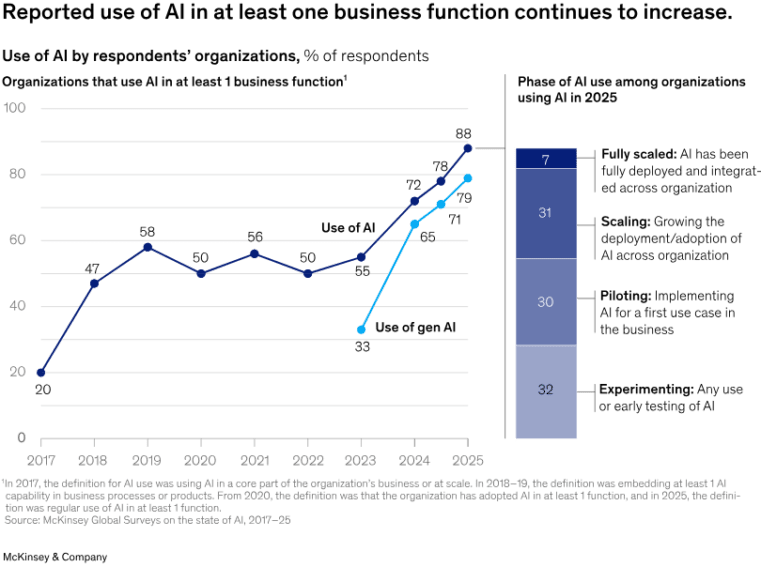
Search behavior is changing fast. People still use traditional search engines, but many now turn to AI assistants for answers, recommendations, and buying advice. Tools powered by generative AI can summarize information, compare services, and recommend businesses before a user even visits a website.
This shift is changing how companies attract leads online. Ranking on search engines still matters, but visibility inside AI-generated responses is becoming just as important. Businesses now need websites that AI systems can understand, trust, and quote correctly.
That means modern optimization is no longer only about keywords and backlinks. Your website must also provide clear answers, strong proof, structured information, and trustworthy signals. AI systems look for content that is easy to extract, accurate, and supported by evidence.
Companies that adapt early can improve visibility across AI-powered discovery platforms while still strengthening traditional SEO performance. Businesses that ignore this shift may slowly lose visibility, even if they still rank in standard search results.
AI-Assisted Discovery Is Replacing Parts of Search, Not All of It
AI-assisted discovery is not replacing search engines completely. Instead, it is changing how people move through the research and buying process.
Many users now ask AI assistants direct questions instead of typing short keyword phrases into a search bar. They ask things like:
- “What is the best accounting software for small businesses?”
- “Which local agency specializes in B2B SEO?”
- “What platform works best for email automation?”
AI systems then generate summarized answers by pulling information from multiple sources across the web. In many cases, users get enough information from the AI response without clicking a website. This behavior is often called a zero-click search experience.
Still, traditional search is not disappearing. People continue using Google and other search engines for deeper research, product comparisons, pricing, reviews, and local searches. AI-assisted discovery is simply becoming another layer on top of traditional search behavior.
This means businesses now need visibility in both environments:
- Traditional search engine rankings
- AI-generated recommendations and summaries
Modern SEO therefore requires a broader strategy. Your website should rank well, but it should also be understandable to AI systems that extract and summarize information.
This is where concepts like Generative Engine Optimization (GEO) and Answer Engine Optimization (AEO) are becoming more important. These approaches focus on making content easier for AI systems to interpret, trust, and cite inside generated answers.
The goal is not to replace SEO. The goal is to expand it.
Businesses that combine strong traditional SEO with AI-focused optimization are building stronger long-term visibility across modern discovery channels.
Why Being Recommended Now Matters as Much as Ranking
Traditional SEO focused heavily on rankings. If your page appeared near the top of search results, you had a good chance of earning traffic.
AI-driven discovery changes that model.
Today, many users never see a full list of search results. Instead, AI systems summarize information and recommend a small number of brands, services, or websites directly inside the response.
That means recommendation visibility is becoming just as important as ranking visibility.
1. Your Site May Be Evaluated Without a Visit
AI systems can analyze and summarize your website before a user ever clicks on it.
Large language models evaluate information from multiple pages, third-party mentions, reviews, structured data, and supporting content across the web. They attempt to determine:
- What your business does
- Who you help
- Whether your claims appear trustworthy
- How your services compare to competitors
This means users may form opinions about your business before landing on your site.
In some situations, AI assistants may answer the user’s question fully inside the interface itself. Your company could still influence the decision-making process even without receiving the click.
That is why content clarity now matters more than ever. If your website contains vague messaging, unclear service descriptions, or inconsistent information, AI systems may misunderstand or skip your business entirely.
2. Proof Has to Travel
AI systems do not only look for marketing language. They look for evidence.
Claims without proof are becoming weaker signals in AI-driven discovery systems. Businesses now need visible proof that can travel across the web and support credibility.
Helpful proof signals include:
- Case studies
- Testimonials
- Industry mentions
- Expert quotes
- Reviews
- Statistics
- Awards
- Certifications
- Client results
AI systems often compare information from multiple sources before generating recommendations. If your business claims expertise but lacks supporting evidence, your visibility may decrease.
Strong proof also helps AI systems feel more confident about citing your business in generated answers.
This is one reason why digital PR, reviews, branded mentions, and authority-building strategies are becoming more important in modern SEO campaigns. AI-driven systems rely heavily on trusted external signals when deciding which brands deserve visibility.
3. Conversion Performance Still Decides Return on Investment
Visibility alone does not generate revenue.
Even if AI systems recommend your business, your website still needs to convert visitors into leads, customers, or clients.
This part of digital marketing has not changed.
A slow website, weak messaging, poor calls-to-action, or confusing service pages can still hurt performance. AI-driven discovery may bring new visitors, but conversion optimization remains critical for long-term return on investment.
Businesses should therefore treat AI visibility as part of a larger lead generation system.
That system still depends on:
- Fast-loading pages
- Clear offers
- Strong user experience
- Trust signals
- Mobile optimization
- Easy navigation
- High-quality landing pages
AI may help users discover your business faster, but the website itself still closes the deal.
The companies seeing the strongest results are usually combining traditional SEO, GEO strategies, technical SEO, and conversion optimization into one connected approach instead of treating them as separate marketing tasks.
How AI Assistants Choose What to Cite and Recommend
AI assistants do not rank pages the same way traditional search engines do. Instead of showing a long list of links, they try to deliver a single clear answer. To do that, they scan, compare, and combine information from many sources.
These systems look for content that is easy to understand, reliable, and supported by proof. They break down web pages into smaller pieces and extract useful parts such as definitions, steps, examples, and data points.
Several key factors influence what gets cited or recommended:
Clarity of information
AI systems prefer content that clearly explains what a business does, who it serves, and what results it delivers. If your message is vague, it becomes harder for AI to interpret and reuse your content.
Structure and formatting
Well-structured content is easier to extract. Pages with headings, short paragraphs, bullet points, and direct answers are more likely to be used in AI responses.
Consistency across sources
AI assistants often cross-check information from different places. If your service names, descriptions, or positioning change across pages or platforms, it can reduce trust.
Evidence and supporting proof
Claims backed by real data perform better. AI systems look for case studies, reviews, statistics, and third-party mentions before deciding what to include.
Topical relevance and depth
Content that covers a topic in depth is more valuable than thin, surface-level writing. AI prefers sources that show strong understanding, not just keyword use.
Freshness and accuracy
Up-to-date content has a higher chance of being selected. Outdated or conflicting information may be ignored.
AI assistants choose content that answers questions clearly, proves its claims, and stays consistent across the web. Businesses that meet these conditions are more likely to be cited and recommended.
6 GEO Fundamentals That Improve AI Visibility
Generative Engine Optimization (GEO) focuses on making your content easy for AI systems to understand, trust, and reuse. These fundamentals build a strong base for better visibility in AI-driven discovery.
1. Content Structure for AI Extraction
AI systems do not read pages like humans. They scan and extract specific parts of content.
That is why structure plays a major role.
Use clear heading levels (H1, H2, H3) to organize ideas. Each section should focus on one topic. Add short paragraphs that explain one point at a time. Lists and bullet points help break down complex ideas into simple steps.
It also helps to include direct answers near the top of sections. For example, if a heading asks a question, the first sentence below it should answer that question clearly.
This type of formatting makes it easier for AI systems to pull exact snippets and include them in responses.
2. Topical Authority Beyond Keywords
Keywords still matter, but they are no longer enough on their own.
AI systems look for depth, not just keyword matches. They try to understand if your website truly covers a topic or only touches it briefly.
To build topical authority, create clusters of related content. Cover the main topic and then support it with detailed subtopics. For example, instead of writing one page about SEO, build content around technical SEO, content strategy, local SEO, and analytics.
Internal linking also helps connect these topics. It shows clear relationships between pages and strengthens your overall authority.
The goal is to show expertise across a subject, not just rank for one keyword.
3. Optimize for Conversational Queries
People now search using full questions instead of short phrases. AI assistants are built to respond to natural language.
This means your content should match how people speak and ask questions.
Include question-based headings like:
- “How does AI lead discovery work?”
- “What improves AI visibility for service businesses?”
Write answers in a simple and direct way. Avoid complex sentences and confusing terms. Use natural language that feels like a real conversation.
You can also add FAQ sections to cover common queries. This increases the chances of your content being used in AI-generated answers.
4. Strengthen Entity Signals Across Your Site
AI systems try to understand entities, not just words. An entity can be your business, service, product, or even a person.
Strong entity signals help AI systems clearly identify who you are and what you offer.
To improve this:
- Keep your business name, services, and descriptions consistent across all pages
- Use the same terms for your services everywhere
- Add clear “about” information
- Include location details if relevant
- Use structured data (schema markup) to define your business
When your entity signals are clear, AI systems can connect your content with the right topics and queries.
5. Publish Answer-Ready Content That Can Be Quoted
AI assistants often pull short sections of content and present them as answers. This means your content should be ready to be quoted.
Answer-ready content has a few key traits:
- It starts with a direct answer
- It avoids unnecessary filler text
- It uses simple and clear language
- It focuses on one idea at a time
For example, instead of writing a long introduction before answering a question, give the answer first. Then add details below.
This format increases the chances of your content being selected and reused inside AI responses.
6. Maintain Strong Technical SEO Foundations
Even with AI-driven discovery, technical SEO still matters.
AI systems rely on clean, accessible, and fast websites. If your site has technical issues, it becomes harder to crawl, understand, and trust.
Key areas to focus on include:
Page speed
Fast-loading pages improve both user experience and crawl efficiency.
Mobile optimization
Most users access content on mobile devices. Your site must work well on all screen sizes.
Indexability
Make sure search engines can crawl and index your pages properly. Fix broken links and avoid blocked resources.
Structured data
Schema markup helps define your content clearly. It gives extra context about your business, services, and pages.
Site architecture
A clear structure helps both users and AI systems navigate your content easily.
Technical SEO acts as the foundation. Without it, even well-written content may struggle to perform.
These GEO fundamentals work together. Structured content improves extraction. Authority builds trust. Clear entities improve understanding. Strong technical SEO supports everything behind the scenes.
A 30-Day Implementation Plan (What to Do Next)
Adapting your website for AI-driven lead discovery does not require a full rebuild. It requires a clear plan and steady improvements. The goal is to make your site easier for AI systems to understand, trust, and extract from.
This 30-day plan focuses on practical steps. Each week builds on the last. By the end, your website will be more “assistant-ready” and better positioned for modern discovery.
Week 1: Build Your “Assistant Readiness” Map
The first step is understanding how your website looks from an AI system’s point of view.
Start by reviewing your core pages. Focus on your homepage, service pages, and key blog content. Ask simple but important questions:
- Is it clear what you do within the first few seconds?
- Do you clearly state who you help?
- Are your services described in a consistent way?
- Can someone quickly find proof of your results?
Next, map your main services and topics. Create a simple list of:
- Your core services
- Supporting topics
- Common customer questions
Then compare this list with your current content. Look for gaps. Many websites miss key details or skip common questions that users ask.
You should also check how your content is structured. Look for:
- Long paragraphs with no headings
- Missing summaries or direct answers
- Pages that mix too many ideas
AI systems struggle with unstructured content. If your pages are hard to scan, they are also hard to extract.
Another key step is reviewing your messaging. Make sure your value is clear. Avoid vague phrases like “we deliver results” without explaining how or showing proof.
At the end of Week 1, you should have a clear map of:
- What content you have
- What is missing
- What needs to be clearer or more structured
This map becomes the base for all improvements in the next weeks.
Week 2: Add Extractable Answer Modules
Now that you understand your gaps, the next step is making your content easier for AI systems to use.
Focus on adding “answer-ready” sections to your key pages.
Start by identifying common questions your customers ask. These questions often come from:
- Sales calls
- Customer support
- Search queries
- Industry discussions
Then, add clear answers directly into your pages.
Each answer should follow a simple format:
- A clear question as a heading
- A direct answer in the first sentence
- Supporting details below
For example, instead of writing a long paragraph that slowly explains a topic, start with a direct statement. Then expand with examples or steps.
You can also create small content blocks such as:
- Definitions
- Step-by-step guides
- Short comparisons
- Key benefits lists
These blocks are easier for AI systems to extract and reuse.
Another helpful approach is improving your service pages. Add sections that clearly explain:
- What the service includes
- Who it is for
- What results clients can expect
- How it works step by step
Avoid hiding this information inside long text. Break it into clear sections.
Also, add proof elements near these answers. For example:
- Case study summaries
- Real numbers or results
- Client quotes
This strengthens trust and improves the chance of being cited.
By the end of Week 2, your pages should not only inform users but also provide clean, structured answers that AI systems can easily pull and present.
Week 3: Fix Entity Consistency
In this week, focus on making your business identity clear and consistent.
AI systems rely on strong entity signals. If your business information changes across pages, it creates confusion.
Start by reviewing your service names. Many websites use different terms for the same service. For example, one page may say “SEO services,” while another says “search optimization solutions.” This inconsistency can reduce clarity.
Choose one main term for each service and use it consistently across your website.
Next, review your business description. Make sure:
- Your core offering is clearly defined
- Your target audience is clearly stated
- Your positioning stays the same across pages
Also, check your “About” page. It should clearly explain:
- Who you are
- What you do
- Who you serve
- What makes you different
Then, move to supporting signals. Make sure your:
- Contact details
- Location (if relevant)
- Brand name
- Social profiles
are consistent across all platforms.
Adding structured data can also help. Schema markup gives search engines and AI systems clear information about your business, services, and content.
Another important step is aligning your internal links. Link related pages using consistent anchor text. This helps connect your topics and strengthens your overall authority.
By the end of Week 3, your website should present a clear and unified identity. This makes it easier for AI systems to understand and trust your business.
Week 4: Lock Technical Reliability and Conversions
The final week focuses on performance and results.
Start with technical SEO basics. Check your website for:
- Slow loading pages
- Broken links
- Mobile usability issues
- Indexing problems
Fix any errors that may affect crawling or user experience.
Next, review your site structure. Make sure users and search engines can easily navigate your pages. Important pages should not be buried deep inside the site.
Then, focus on conversion performance.
AI visibility can bring attention, but your website still needs to turn visitors into leads.
Review your key pages and ask:
- Is the main offer clear?
- Is there a strong call-to-action?
- Is it easy to contact you?
- Are trust signals visible?
Add or improve:
- Clear buttons (Get a quote, Book a call, Contact us)
- Simple forms
- Testimonials near decision points
- Trust badges or certifications
Also, make sure your messaging matches user intent. If someone lands on a service page, they should quickly understand:
- What you offer
- Why it matters
- What they should do next
Finally, test your pages. Try viewing them as a new visitor. If anything feels confusing, fix it.
By the end of Week 4, your website should not only be optimized for AI discovery but also ready to convert that visibility into real leads.
5 Common Mistakes That Reduce Discovery and Lead Quality
Many businesses try to adapt to AI-driven discovery but make simple mistakes that limit results. These issues often reduce both visibility and lead quality.
Understanding and fixing these mistakes can create a major advantage.
1. Publishing Content That Sounds Helpful but Avoids Specifics
Many websites use general language that sounds good but says very little.
Phrases like “we provide high-quality solutions” or “we help businesses grow” do not give clear information. AI systems struggle to extract value from vague content.
Users also find it hard to trust unclear claims.
Instead, focus on being specific. Clearly explain:
- What you do
- How you do it
- What results clients can expect
For example, instead of saying “we improve SEO,” explain the process, tools, and outcomes.
Specific content is easier to extract, easier to trust, and more useful for decision-making.
2. Making Claims Without Proof, Then Expecting Assistants to Trust Them
AI systems do not take claims at face value. They look for proof.
If your website makes strong claims but provides no evidence, it weakens your credibility.
For example, saying “we are the best agency” without showing results, reviews, or data does not build trust.
Add proof to support your claims:
- Real case studies
- Before-and-after results
- Client testimonials
- Data and metrics
Place this proof close to your claims. Do not hide it on separate pages.
AI systems often combine information from multiple sources. If your claims are not supported, your chances of being recommended decrease.
3. Inconsistent Service Naming Across Pages, Which Creates Extraction Errors
Consistency is critical for AI understanding.
When you use different names for the same service, it creates confusion. AI systems may treat them as separate services or fail to connect them.
For example:
- “Content marketing services”
- “Content strategy solutions”
- “Blog growth services”
If these all refer to the same offering, choose one main name and use it everywhere.
This includes:
- Page titles
- Headings
- Internal links
- Metadata
Consistency helps AI systems clearly identify your services and match them with relevant queries.
4. Burying the “Who We Help” and “What We Deliver” Details Under Generic Copy
Many websites hide important information inside long, generic paragraphs.
Users and AI systems both prefer clarity.
Your website should clearly state:
- Who your ideal customers are
- What problems you solve
- What results you deliver
This information should be easy to find, not buried deep in the text.
Use clear sections and headings like:
- “Who This Service Is For”
- “What You Get”
- “Expected Results”
This makes your content easier to scan and easier to extract.
When AI systems can quickly understand your target audience and outcomes, your chances of being recommended improve.
5. Treating AI Lead Generation SEO Like a Content Volume Play Instead of a Proof System
One of the biggest mistakes is focusing only on publishing more content.
More pages do not always mean better visibility.
AI-driven discovery values quality, clarity, and proof over volume.
If you publish many low-value pages, you may dilute your authority instead of improving it.
Instead, focus on building a strong proof system.
This includes:
- High-quality content
- Clear answers
- Strong evidence
- Consistent messaging
- Reliable technical performance
Each page should serve a clear purpose and provide real value.
It is better to have fewer strong pages than many weak ones.
Build for Recommendation, Then Convert the Visit
AI-assisted discovery is changing how people find businesses. Rankings still play a role, but recommendations now shape many decisions. This means your website must do more than rank. It must be clear, trustworthy, and easy for AI systems to use.
The approach is simple. Create content that gives direct answers. Keep your messaging consistent across every page. Support your claims with real proof. Make sure your website loads fast and works without errors.
When these elements come together, your chances of being recommended increase.
Once users arrive, your site must guide them to take action. Clear offers, strong trust signals, and simple next steps help turn visits into leads.
If you want a clear path from AI visibility to real business growth, Pro Real Tech can support you. Their team helps build strong content, improve technical performance, and create systems that drive better lead generation.
Connect with Pro Real Tech to move forward with smarter, AI-driven lead discovery.
Frequently Asked Questions (FAQs) on AI-Driven Lead Discovery
WHAT IS AI SEARCH OPTIMIZATION?
AI search optimization is the process of preparing your website so AI systems can understand, trust, and use your content. It focuses on how machines read and extract information, not just how pages rank.
This means your content should be clear, structured, and easy to pull into answers. It should also include strong proof and consistent messaging.
Instead of only chasing rankings, AI search optimization helps your content appear in recommendations, summaries, and assistant responses.
WHAT IS AI SEO, AND HOW IS IT DIFFERENT FROM TRADITIONAL SEO?
AI SEO builds on traditional SEO but adds new priorities.
Traditional SEO focuses on:
- Keywords
- Rankings
- Backlinks
- Search engine results pages
AI SEO focuses on:
- Clear answers
- Structured content
- Entity signals
- Trust and proof
- Extractability
In simple terms, traditional SEO helps users find your page. AI SEO helps AI systems use your content before or even without a click.
Both still matter. The best results come from combining them.
WHAT IS GENERATIVE ENGINE OPTIMIZATION, AND WHAT SHOULD WE START WITH?
Generative Engine Optimization (GEO) is the process of optimizing content for AI systems that generate answers.
These systems do not just list links. They create responses by pulling and combining information from different sources.
To get started with GEO:
- Make your content easy to scan
- Add direct answers to common questions
- Use clear headings and short sections
- Keep your messaging consistent
- Add proof to support your claims
Start small. Focus on your main service pages first. Then expand to blogs and support content.
HOW DO WE OPTIMIZE THE WEBSITE FOR AI SEARCH WITHOUT REWRITING EVERYTHING?
You do not need to rebuild your entire website.
Start by improving what you already have:
- Add clear answer sections to key pages
- Break long paragraphs into structured sections
- Clarify your services and audience
- Add proof like results and testimonials
- Fix inconsistent wording
Think of it as upgrading your content, not replacing it.
Small changes can make a big difference when they improve clarity and structure.
WHAT IS ANSWER ENGINE OPTIMIZATION (AEO)?
Answer Engine Optimization (AEO) focuses on helping your content appear in direct answers.
This includes:
- Featured snippets
- Voice search responses
- AI-generated summaries
AEO works by:
- Providing clear, direct answers
- Using simple language
- Structuring content in a question-and-answer format
The goal is to make your content the best possible answer to a specific question.
WHAT IMPROVES AI DISCOVERABILITY FOR SERVICE BUSINESSES?
Service businesses can improve AI discoverability by focusing on clarity and trust.
Key factors include:
- Clear service descriptions
- Defined target audience
- Strong proof (case studies, results, reviews)
- Consistent service naming
- Structured, easy-to-read content
- Fast and reliable website performance
It also helps to clearly explain:
- What you offer
- How it works
- What results clients can expect
When AI systems can easily understand and trust your content, they are more likely to recommend it.
Read More: How AI Is Changing Lead Generation in 2026


