

A potential client no longer has to begin the search for a lawyer or healthcare provider by typing a few keywords into Google and working through a list of blue links. Increasingly, people are asking AI systems questions that sound more like conversations: “Who is a good personal injury attorney in my city?” or “Which medical practice should I consider for this condition?” The difference is important. Traditional search primarily asks businesses to compete for rankings and clicks, while AI-assisted discovery increasingly asks whether a business can be understood, supported, and recommended as a credible option.
That creates a frustrating situation for many law firms and medical practices. You may have an established website, strong reviews, professional credentials, directory listings, years of experience, and a recognizable attorney or physician. Yet when someone asks an AI platform for a recommendation, your firm or practice may not appear at all.
This does not necessarily mean your business has poor SEO. It can mean that AI can recognize pieces of your professional identity without having enough connected evidence to confidently recommend the organization itself.
Recent research into AI visibility across 400 service businesses found that 46% of owners were not visible to AI at all, while only 2% reached the study’s highest authority tier. The same research found a particularly interesting divide in professional services: legal businesses had a very small average gap between owner and company visibility, yet 55% of law firms were still invisible at the company level. Medical businesses performed better overall, with medical professionals benefiting from the extensive editorial and directory infrastructure surrounding healthcare.
The larger lesson is that being present on the web is not the same as being recommendable by AI.
AI systems synthesize information from multiple sources. They may encounter your website, professional profiles, directories, reviews, news coverage, articles, interviews, publications, and other references independently. If those signals do not clearly connect your expertise to your firm or practice, the system may understand the individual professional without confidently understanding the organization behind them.
And this matters because search behavior itself is changing. Google reported in 2026 that AI Mode had surpassed one billion monthly users globally and that AI Mode queries had more than doubled every quarter since launch. People are increasingly asking longer, more specific questions rather than relying only on short keyword searches.
For law firms and medical practices, the question is therefore no longer simply, “Can people find us?” It is becoming, “Does AI have enough reliable evidence to understand why someone should choose us?”
The Numbers That Look Reassuring
Law firms and medical practices can appear to be in a strong position when measured using traditional visibility metrics.
A law firm may have profiles on major legal directories, attorney biographies, bar association records, review profiles, local listings, and a professionally optimized website. A medical practice may have physician profiles, healthcare directories, hospital affiliations, review platforms, insurance listings, location pages, and detailed service information.
On a conventional SEO report, that can look healthy.
But AI recommendation visibility measures something different.
The important distinction is between being indexed, being mentioned, being cited, and being recommended.
A business can be indexed by search engines without being prominently surfaced in an AI answer. It can have hundreds of reviews without being selected for a particular recommendation. Its owner can be recognized as an expert while the organization itself remains difficult for an AI system to identify. And a firm can have technically correct structured data without possessing the broader authority signals that help AI systems understand its reputation.
Research involving 400 service businesses illustrates this disconnect. Ninety-two percent of the businesses studied had schema markup, and approximately 96% had indexed websites. Yet technical infrastructure showed little relationship with AI visibility. The study instead found stronger differences around external authority and the presence of meaningful content and references beyond the company’s own website.
That is why traditional metrics can create a false sense of security.
Visibility Is Not the Same as Recommendation
Suppose your law firm ranks well for “personal injury lawyer in Denver.” That tells you something useful about traditional search visibility.
Now change the question:
“Who are the best personal injury law firms in Denver for a pedestrian accident case?”
That second query is closer to an AI recommendation request. The system may need to evaluate location, practice area, reputation, specialization, experience, available evidence, and potentially dozens of other contextual signals.
The same principle applies to healthcare.
A medical practice might appear prominently for “dermatologist near me,” yet an AI system answering “Which dermatologist is best for adult acne and offers ongoing treatment in my area?” has a more complicated decision to make.
This shift from retrieval to recommendation is one of the most important changes businesses need to understand.
AI-powered search experiences increasingly synthesize information from multiple sources rather than simply returning one ranked webpage. Google has also continued expanding AI Search features designed to surface original content, relevant sources, and firsthand perspectives.
The implication is straightforward: your website remains important, but your website alone may not provide enough evidence.
Professional Directories Can Help—and Still Leave a Gap
Directories are valuable because they provide standardized information. They can confirm that an attorney practices in a particular area or that a physician provides a particular service. They may also supply reviews, credentials, locations, specialties, and other structured information.
However, directory presence can make a business findable without making it distinctive.
If dozens of attorneys have similar directory profiles, or hundreds of physicians have comparable listings, an AI system still needs evidence that separates one professional or organization from another.
This is particularly relevant in industries where professional directories are already deeply established.
The presence of extensive third-party listings can therefore create an interesting paradox: law firms and medical practices may have more online evidence than many other local businesses, yet much of that evidence may be standardized rather than differentiated.
That distinction becomes increasingly important when an AI system is asked not merely to list providers but to recommend one.
Legal: The Owner Is Visible. The Firm Isn’t.
Legal businesses demonstrate one of the clearest examples of the difference between personal authority and organizational authority.
Attorneys naturally accumulate individual visibility.
Their names appear in bar records, court documents, legal directories, professional organizations, interviews, articles, case discussions, speaking engagements, awards, biographies, and other sources. Over time, an attorney can become a recognizable entity across the web.
The law firm may not receive the same level of recognition.
This creates a situation where an AI system can effectively understand who the lawyer is without fully understanding what the law firm represents.
The research behind the broader visibility study found that legal had the narrowest average gap between owner and company visibility—only 1.2 points—but that 55% of law firms were still invisible at the company level. In other words, the small average gap should not be interpreted as evidence that law firms have solved the problem. A substantial share of firms still lacked meaningful organizational visibility.
Why Individual Recognition Does Not Automatically Transfer to the Firm
Consider a hypothetical attorney named Sarah who has spent 15 years handling medical malpractice cases.
Sarah may have:
- A detailed attorney profile
- Bar association information
- Interviews in legal publications
- Articles discussing medical malpractice
- Speaking engagements
- Reviews mentioning her by name
- Citations from other websites
- Professional awards
- A strong LinkedIn presence
Her firm, however, might have little independent coverage beyond its own website and directory profiles.
If someone asks an AI system, “Who is an experienced medical malpractice lawyer in this city?” Sarah may have enough entity-level evidence to appear.
But if the question becomes, “Which law firm should I contact for a medical malpractice case?” the system has to connect Sarah’s expertise to the firm as an organization.
That connection is not automatic.
The firm needs its own recognizable footprint: clear practice areas, consistent descriptions, authoritative references, independent mentions, recognizable attorneys, relevant publications, and other evidence demonstrating what the organization is known for.
The Firm Needs More Than a List of Attorneys
A common weakness is treating the firm’s website as little more than a collection of attorney biographies.
Attorney pages are important, but the firm also needs a clear organizational identity.
AI systems should be able to understand:
- What cases the firm specializes in
- Which geographic markets it serves
- What makes its approach distinctive
- Which attorneys are associated with specific practice areas
- What experience the organization has
- What authoritative sources mention the firm
- What topics the firm consistently demonstrates expertise in
- Whether external sources corroborate the firm’s claims
This is where entity consistency becomes valuable.
The firm’s name, attorneys, practice areas, locations, descriptions, and professional references should make sense when viewed across the wider web. If one source describes a firm as a personal injury practice, another emphasizes employment law, and a third uses an outdated firm name or address, the overall entity becomes harder to interpret.
Legal Recommendation Is Becoming More Contextual
AI recommendations are also moving beyond simple “best lawyer” queries.
A prospective client might ask:
- “Who handles complex commercial litigation in Chicago?”
- “Which law firms specialize in construction disputes?”
- “Who should I contact after a serious motorcycle accident?”
- “What law firm has experience with this type of employment dispute?”
These prompts contain intent, context, and constraints.
The firm that wins these recommendation moments is not necessarily the firm with the highest general visibility. It is the firm whose digital footprint most clearly demonstrates relevance to the specific situation.
Independent 2026 research on legal AI search visibility similarly found that legal directories remain major sources in AI-generated answers, reinforcing how important third-party legal infrastructure remains.
The opportunity, therefore, is not to abandon directories. It is to build an authority footprint that extends beyond them.
Medical: Best Positioned, But the Ground Is Moving
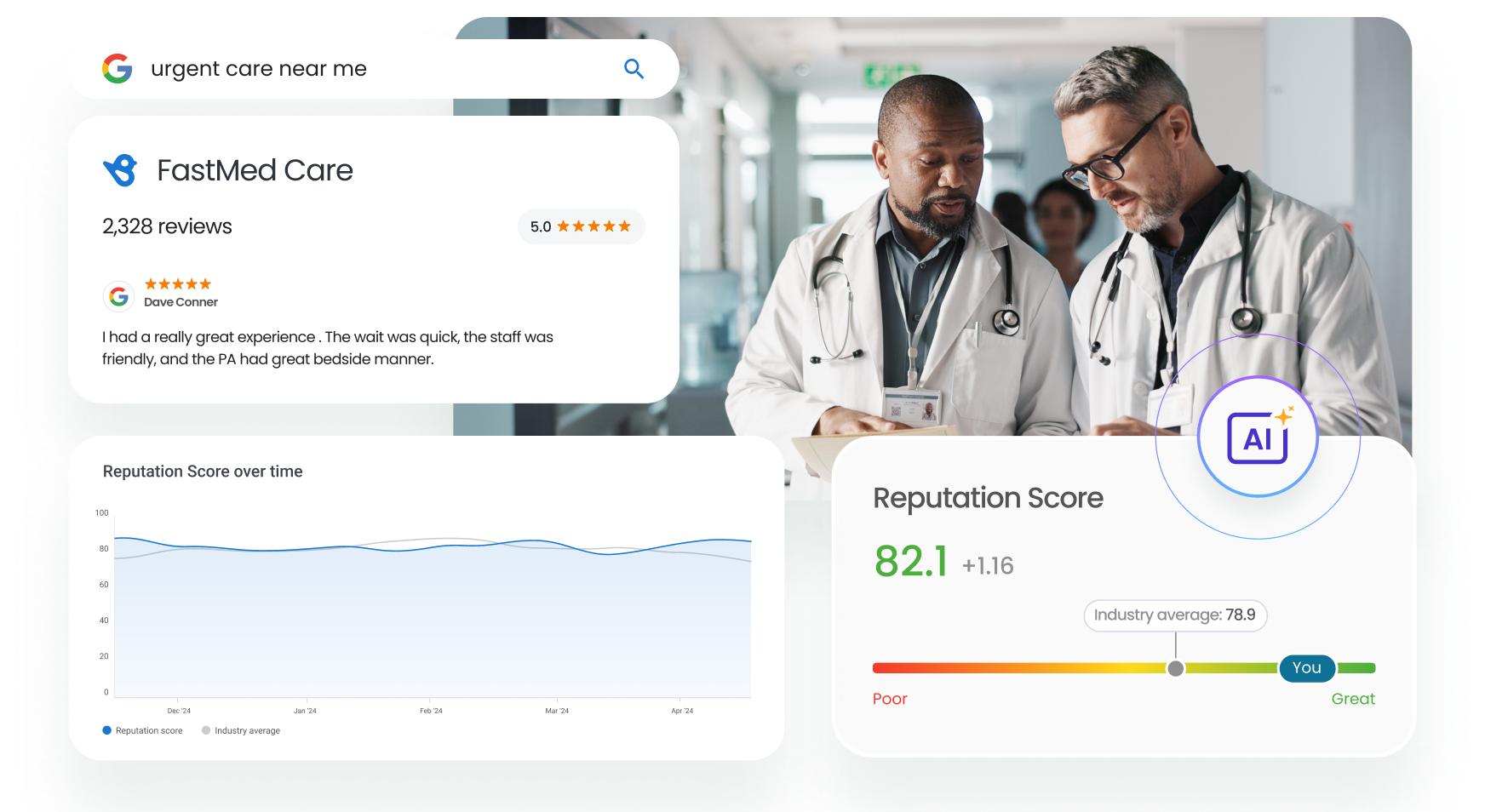
Medical practices have a structural advantage that many other local businesses do not.
Doctors and healthcare organizations are already represented across an enormous ecosystem of authoritative and editorial sources. Physician directories, healthcare organizations, hospital affiliations, medical publications, professional associations, review platforms, insurance networks, educational resources, and local listings can all contribute to an online identity.
That infrastructure helps explain why medical businesses were the best-positioned industry in the 400-business study, with the highest average owner visibility. The research found that only 38% of medical businesses were in the declining visibility group, while doctors benefited from editorial health directories that create a stronger structural presence in AI systems.
But “best positioned” does not mean “protected.”
The healthcare search environment is changing rapidly, and AI systems face a higher standard when handling medical information.
Healthcare Has More Authority Signals—but Higher Stakes
Medical recommendations are inherently sensitive.
When an AI system helps someone decide which doctor or medical practice to consider, the quality and reliability of the underlying information matter enormously. Google has historically applied additional quality protections to health-related AI Search experiences, and its AI Search products continue to evolve around source discovery and supporting information.
This means medical practices cannot rely solely on having a physician directory profile or a collection of positive reviews.
They need a digital footprint that demonstrates expertise accurately and consistently.
For example, a dermatology practice should make it easy to understand:
- Which dermatological conditions it treats
- Which physicians provide those services
- The qualifications and specialties of those physicians
- Where the practice operates
- Which treatments or procedures are offered
- What authoritative organizations or publications reference its expertise
- Whether its educational content is accurate, current, and professionally attributable
The goal is not to manufacture signals for AI. It is to make the practice’s real-world expertise easier to verify across the web.
Directory Visibility Is Not the Same as Recommendation Visibility
Healthcare directories can answer basic questions effectively:
“Is Dr. Smith a dermatologist in this city?”
But AI recommendation queries can be much more specific:
“Which dermatologist in this city is a good option for adult acne?”
Or:
“Which dermatology practice offers treatment for severe acne and has experience with adult patients?”
Those questions require contextual matching.
The practice must therefore be associated with the specific problems, treatments, specialties, and patient needs for which it wants to be considered.
This is one reason a medical practice’s content strategy should go beyond generic service pages.
A practice that consistently publishes accurate, medically reviewed educational material around its areas of expertise can create a clearer topical identity. Articles, physician-authored explanations, interviews, expert commentary, professional publications, and other credible references can provide additional context around what the practice and its clinicians actually know.
Reputation Is Becoming an Important Recommendation Signal
Recent research also suggests that reputation can materially affect AI-assisted physician selection. An August 2026 algorithm audit examining physician-choice scenarios found that reputation signals strongly influenced model selections in its experimental setup; raising a physician’s rating from 3.9 to 4.7 increased selection probability by 31.4 percentage points. The study was controlled and synthetic rather than a measurement of real-world patient recommendations, so it should not be treated as a universal ranking formula. Still, it reinforces an important strategic point: reputation information can influence how AI systems evaluate healthcare choices.
For practices, this makes the broader reputation ecosystem increasingly important.
Reviews matter. Professional credentials matter. Accurate physician profiles matter. Independent coverage matters. Educational authority matters. Consistency matters.
But none of these should be viewed as a magic ranking factor.
AI recommendation systems do not operate from one universal formula, and their outputs can vary by platform, prompt, location, available sources, and model. The strategic objective is therefore to build a strong, verifiable, and consistent body of evidence rather than chase an imagined single AI ranking signal.
The Ground Is Moving
The biggest mistake a medical practice could make is assuming that today’s visibility pattern will remain unchanged.
AI search is evolving quickly. Google has continued adding AI-driven discovery features, while conversational AI platforms are increasingly being used for research and decision support. Google’s 2026 updates indicate a broader move toward helping users discover original content, firsthand perspectives, and relevant sources within AI-assisted search experiences.
That means medical practices have an opportunity right now.
Their existing directory and professional infrastructure gives them a stronger starting point than many industries. But the next stage is to connect those existing credentials with independent authority, clear expertise, consistent entity information, and useful evidence published across the wider web.
Being listed as a doctor is one signal.
Being consistently recognized as an expert in a specific medical area is a much stronger foundation for recommendation.
And being recognized as the expert and clearly connected to the practice that patients can actually contact closes the gap between individual visibility and organizational visibility.
The Shared Vulnerability
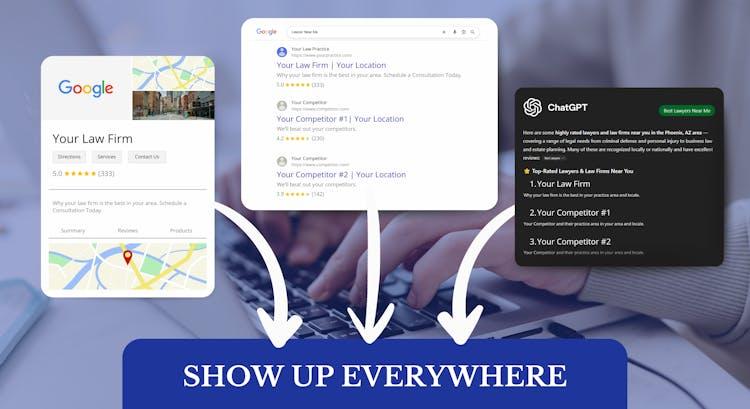
Law firms and medical practices operate in different professional environments, but they face a similar problem in AI-driven discovery: the evidence that proves a professional is credible does not always prove that the organization itself deserves a recommendation.
Both industries have strong built-in authority systems. Attorneys have bar associations, legal directories, court records, professional organizations, publications, and individual profiles. Physicians and medical practices have healthcare directories, hospital affiliations, professional associations, medical publications, insurance networks, and provider profiles.
Those systems create a substantial amount of online information. But much of it is designed to verify credentials or provide basic directory information—not necessarily to explain why one firm or practice is the best fit for a particular situation.
That distinction matters because AI recommendation queries are contextual.
A user might ask, “Who is a good lawyer?” But they are more likely to ask something closer to, “Which law firm handles complex business litigation in my area?” Similarly, a patient might ask, “Who is a dermatologist near me?” or something more specific such as, “Which dermatologist has experience treating adult acne?”
The more specific the question becomes, the more an AI system needs to connect expertise, organization, location, specialization, reputation, and supporting evidence.
This creates three shared vulnerabilities.
The First Vulnerability: Directory Presence Can Become a False Sense of Security
Professional directories remain useful and should not be ignored. They can establish basic facts about a lawyer, physician, firm, or practice.
The problem occurs when businesses assume directory coverage is equivalent to comprehensive authority.
If nearly every competitor has a comparable directory profile, the profile itself does little to distinguish one organization from another. A directory may establish that a physician is a cardiologist or that a lawyer practices family law. It does not necessarily establish which practice should be recommended for a particular patient or client scenario.
The strategic goal is therefore not to replace directories. It is to build beyond them.
The Second Vulnerability: Individual Expertise Can Become Disconnected From the Organization
Both industries have prominent individuals whose reputations may exceed the visibility of the organization they represent.
An attorney may have published articles, appeared in interviews, spoken at conferences, and accumulated professional recognition. A physician may have academic publications, hospital affiliations, professional memberships, and media appearances.
But if those signals consistently point only to the individual, an AI system may have difficulty determining how strongly that expertise represents the firm or practice.
This is why organizations should create clear connections between their people and their institutional identity.
Attorney biographies should clearly connect lawyers to the firm and their relevant practice areas. Physician profiles should clearly connect clinicians to the medical practice, its specialties, locations, and services. External mentions should use consistent organizational information whenever appropriate.
The Third Vulnerability: AI Platforms Are Not Static
There is no permanent “AI ranking.”
Different AI systems can use different models, retrieval mechanisms, sources, freshness requirements, and ranking approaches. Even within one platform, search experiences can change over time.
That makes it risky to optimize around one snapshot.
A firm might appear in one AI-generated recommendation today and disappear tomorrow. A medical practice might receive strong visibility for one type of query but not another. Changes in search interfaces, source selection, model behavior, or user prompts can alter the results.
The durable strategy is therefore not to find one trick that makes AI recommend your business.
It is to build enough genuine, consistent authority that your organization remains understandable and credible across changing discovery environments.
What to Do If You Run a Law Firm or a Medical Practice
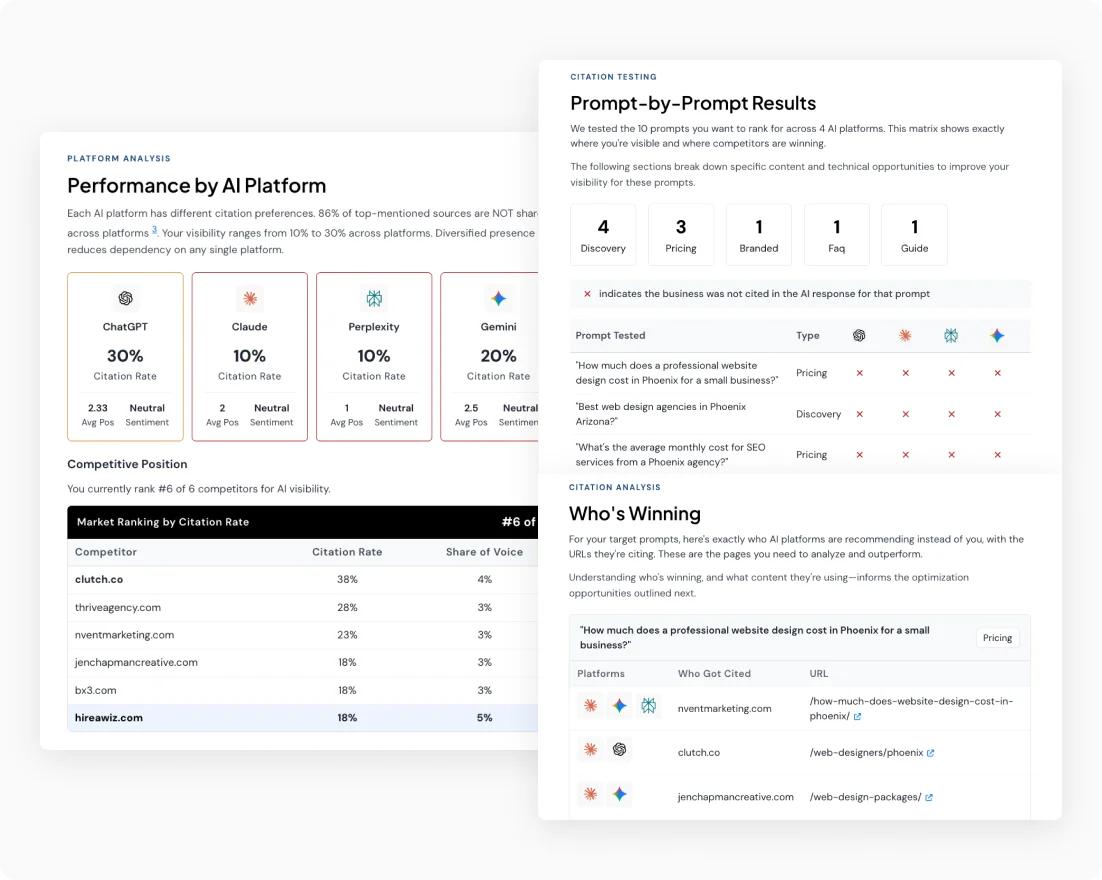
The answer is not to abandon traditional SEO, professional directories, or local search. Those channels still matter.
Instead, law firms and medical practices should expand their definition of visibility. The objective should be to create a digital footprint that allows AI systems—and prospective clients or patients—to understand who you are, what you specialize in, where you operate, and why your expertise is credible.
1. Audit the Gap Between Your Individual Visibility and Your Firm’s or Practice’s Visibility
Start by separating person-level visibility from organization-level visibility.
For a law firm, search for individual attorneys and then search for the firm itself. Test both traditional search and AI-powered discovery with realistic questions.
For example:
- “Who is [attorney name]?”
- “What does [attorney name] specialize in?”
- “Which firm does [attorney name] work for?”
- “Best law firms for [practice area] in [location]”
- “Which firms specialize in [specific legal problem]?”
For a medical practice, perform the same exercise:
- “Who is Dr. [name]?”
- “What is Dr. [name] known for?”
- “Which practice is Dr. [name] affiliated with?”
- “Best [specialty] practices in [location]”
- “Which [specialists] treat [specific condition] in [location]?”
Do not test only broad queries such as “best lawyer” or “best doctor.” Those are too generic to provide much strategic insight.
Instead, build a set of high-intent, scenario-specific questions that reflect how real prospects or patients might use AI.
Then document the results.
Look for discrepancies such as:
- The attorney appears, but the firm does not.
- The physician appears, but the practice does not.
- The firm appears for its name but not for important practice-area queries.
- The practice appears for branded searches but not for condition- or treatment-based questions.
- AI mentions the organization but provides outdated information.
- AI recommends competitors even when your business has comparable credentials.
- Different AI platforms describe your business inconsistently.
- Important services or specialties are missing from the generated answers.
This audit gives you a much more useful baseline than simply checking whether your website is indexed.
The goal is to discover where the identity chain breaks.
2. Build Earned Presence Outside the Directories Your Profession Already Provides
Once you understand the visibility gap, expand your authority footprint.
This means earning legitimate mentions and references from sources that exist independently of your own website.
For law firms, opportunities may include:
- Legal publications
- Industry publications
- Local news coverage
- Expert commentary
- Professional organizations
- Podcasts and interviews
- Conference appearances
- Educational articles
- Original legal research
- Relevant community or industry organizations
For medical practices, opportunities can include:
- Medical and healthcare publications
- Local news
- Professional associations
- Academic or research references
- Physician interviews
- Expert commentary
- Podcasts and webinars
- Conferences
- Community health initiatives
- Original educational resources
The underlying principle is simple: do not make your website the only place claiming that you are an expert.
If your firm says it specializes in a particular area, independent sources can reinforce that positioning. If your physician is known for a particular specialty, authoritative third-party references can help corroborate that expertise.
This is particularly important because AI systems can synthesize information from multiple sources. A broader evidence base gives them more context from which to understand your organization.
However, “earned presence” should not become a synonym for mass guest posting or artificial link building.
Publishing dozens of low-quality articles on unrelated websites does not create meaningful authority. Neither does manufacturing mentions simply to influence AI outputs.
The stronger approach is to create genuinely useful expertise that other people have a reason to reference.
A lawyer who regularly provides useful commentary on an emerging legal issue has a legitimate reason to be quoted. A physician who explains a complex medical topic clearly and accurately can become a useful source for journalists and publishers. Original research, data, expert commentary, and high-quality educational material give third parties something worth citing.
That creates a much stronger authority footprint than simply accumulating directory listings.
3. Treat Platform Volatility as the Strategic Variable, Not a Temporary Inconvenience
One of the biggest strategic mistakes is treating AI visibility as if it were a conventional search ranking that can be permanently secured.
It cannot.
AI search experiences are still evolving. Platforms can change how they retrieve information, which sources they prioritize, how they construct answers, and how they interpret entities and recommendations.
That means your strategy should be platform-resilient rather than platform-dependent.
Do not build your entire visibility strategy around getting mentioned by one AI platform.
Instead, strengthen the underlying assets that can support visibility across multiple discovery systems:
- A technically accessible website
- Consistent business information
- Clear service and specialty pages
- Strong individual professional profiles
- Accurate structured data
- High-quality educational content
- Positive and authentic reviews
- Professional credentials
- Independent media coverage
- Relevant third-party mentions
- Original research and insights
- Strong local presence
- Consistent entity relationships between people and organizations
You should also monitor AI visibility periodically.
The purpose of monitoring is not to obsess over every answer. AI responses can vary even when the underlying business information has not changed.
Instead, watch for patterns.
Is your organization consistently appearing for important commercial questions? Are competitors increasingly being recommended? Is the AI describing your specialties correctly? Are outdated addresses or services appearing? Does the system recognize the connection between your leading professionals and your organization?
These questions reveal strategic changes that a traditional ranking report may miss.
The most resilient organizations will be those that continue building real-world authority and digital evidence, rather than chasing temporary AI-specific tactics.
The Close
If AI does not recommend your law firm or medical practice, the answer is not necessarily that your SEO is failing.
You may already have substantial visibility.
The problem may be that your strongest signals are fragmented, standardized, individual, or concentrated in directories that do not fully communicate why your organization deserves a recommendation.
Law firms have an opportunity to connect the reputation of individual attorneys with the authority of the firm. Medical practices can build on their existing professional and healthcare infrastructure by developing stronger evidence of expertise, specialization, and reputation.
The common strategy is to move beyond being merely listed and become consistently understood.
Audit the difference between professional and organizational visibility. Build credible earned presence outside the directories your industry already provides. Strengthen the connections between your people, services, locations, expertise, and organization. And continue monitoring how AI-driven discovery changes instead of assuming that today’s visibility will remain tomorrow’s.
AI recommendation systems will continue to evolve. You cannot control exactly which sources a model retrieves or which business it recommends for every query.
You can control the quality and consistency of the evidence available about your organization.
For law firms and medical practices, that is the more durable path to AI visibility: make your expertise real, make your organization easy to understand, and make your authority visible well beyond your own website.


