


Search Engine Results Page (SERP) volatility refers to sudden and unpredictable fluctuations in search rankings. These changes can happen due to Google algorithm updates, shifting user intent, or increased competition for keywords. For businesses and website owners, SERP volatility can be both an opportunity and a challenge. While rankings may drop unexpectedly, they can also rise if SEO strategies align with search engine guidelines. Understanding SERP volatility is essential to maintaining search visibility and ensuring consistent website traffic.
Understanding SERP Volatility
SERP volatility measures how much rankings shift over a specific period. Some industries experience frequent fluctuations, while others remain relatively stable. For instance, breaking news topics or trending queries often see more volatility than evergreen content.
Search engines like Google continuously refine their algorithms to improve search quality. These updates, along with factors like technical SEO issues, keyword competitiveness, and user behavior changes, contribute to ranking instability. Monitoring SERP volatility allows businesses to adapt their SEO strategies and minimize negative impacts on traffic and conversions.
What Causes SERP Volatility?
Several factors contribute to SERP volatility, causing rankings to shift unexpectedly. Understanding these factors helps businesses develop adaptive SEO strategies to maintain search visibility.
1. Google Algorithm Updates
Google frequently updates its algorithms to enhance search quality and user experience. Core updates, spam updates, and AI-driven improvements can cause significant fluctuations in rankings. Websites that do not align with updated ranking factors may experience a sudden drop, while those that meet new criteria might gain visibility. Monitoring algorithm updates and adjusting SEO strategies accordingly is crucial for maintaining stability.
2. Vague or Mixed Search Intent
Google prioritizes search intent when ranking pages. If a keyword has multiple interpretations, Google may experiment with different types of results, leading to ranking fluctuations. For example, a keyword like “best running shoes” could show e-commerce listings, review articles, or buying guides depending on how Google perceives user intent. Adapting content to match the dominant search intent helps reduce ranking instability.
3. High Keyword Difficulty
Highly competitive keywords are more prone to ranking shifts due to continuous competition. Established websites with strong domain authority, high-quality backlinks, and optimized content often dominate these keywords. Newer or lower-authority websites may experience volatility as they compete for rankings. Targeting long-tail keywords or niche-specific queries can help reduce instability.
4. Indexing and Crawling Issues
If search engines struggle to index or crawl a website properly, rankings may become unstable. Technical issues like slow page speed, duplicate content, poor site structure, and broken links can disrupt indexing, leading to ranking drops. Regularly auditing website health using tools like Google Search Console ensures smooth crawling and indexing.
5. Penalties
Google imposes manual and algorithmic penalties on websites that violate its Webmaster Guidelines. Practices like keyword stuffing, cloaking, or using spammy backlinks can result in ranking losses. If a website experiences sudden ranking drops, reviewing Google Search Console for penalty notifications and taking corrective action is essential.
6. Keyword Cannibalization
Keyword cannibalization occurs when multiple pages from the same website compete for the same keyword, confusing search engines about which page to rank. This can lead to rankings fluctuating as Google alternates between different pages. Implementing proper internal linking, consolidating similar content, and using canonical tags can help prevent cannibalization issues.
How SERP Volatility Affects Website Traffic and Search Engine Optimization
SERP volatility can have a direct impact on a website’s traffic, visibility, and overall SEO strategy. When rankings fluctuate unpredictably, businesses may experience sudden traffic surges or drops, affecting lead generation and conversions.
1. Fluctuations in Organic Traffic
When search rankings shift due to SERP volatility, organic traffic can become inconsistent. A sudden drop in rankings for high-traffic keywords can significantly reduce website visitors, while an increase can drive more users to the site.
2. Unstable Click-Through Rates (CTR)
Search result positioning directly affects CTR. If a page moves from the first position to the second or third, it can see a sharp decline in clicks. Volatility means search engine users may not see the same results consistently, impacting engagement and user behavior.
3. Impact on SEO Performance Metrics
Frequent ranking shifts affect key SEO metrics like bounce rate, session duration, and conversion rates. If a page suddenly ranks higher but does not match search intent, users may leave quickly, signaling poor relevance to search engines.
4. Difficulty in Long-Term SEO Planning
SERP volatility makes it challenging to develop long-term SEO strategies. Businesses that rely heavily on organic search may struggle to maintain steady growth if rankings fluctuate frequently. Regular content updates and technical SEO improvements help mitigate these issues.
SERP Monitoring Tools To Assess Volatility
To track and analyze SERP fluctuations, several tools provide insights into ranking changes and algorithm updates.
1. MozCast
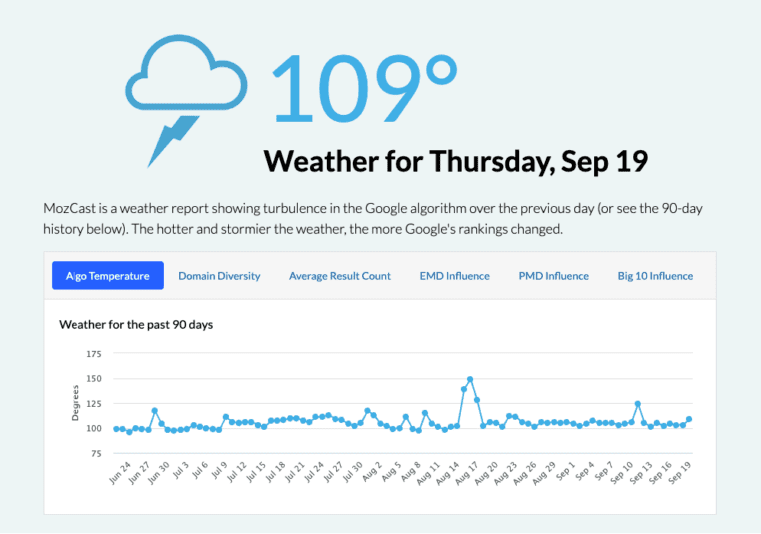
MozCast is a weather-themed SERP tracking tool that monitors daily Google ranking fluctuations. It assigns a “temperature” to indicate volatility—higher temperatures signal more ranking changes. SEO professionals use it to detect potential algorithm updates.
2. Semrush Sensor
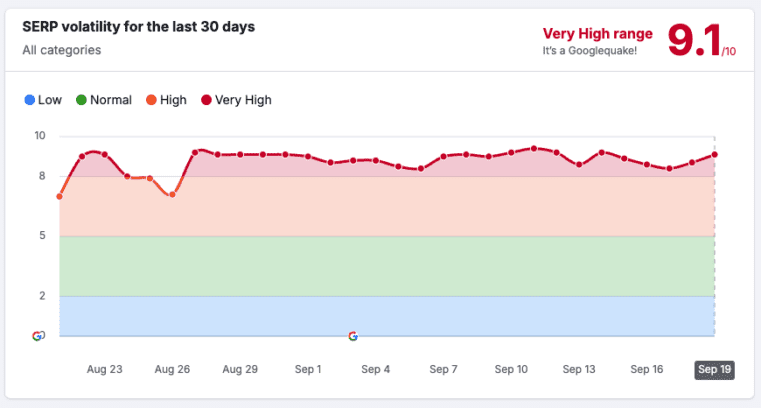
Semrush Sensor tracks SERP volatility across different industries and keyword categories. It provides a volatility score, indicating how stable or unstable rankings are. Users can monitor their own site’s fluctuations and compare them to industry-wide trends.
3. Algoroo

Algoroo is an SEO tracking tool that analyzes Google algorithm changes by monitoring ranking movements. It uses a “roo” score to indicate volatility levels—higher scores suggest increased ranking shifts. SEO specialists use it to assess the impact of updates on their websites.
5 Tips and SEO Best Practices To Better Manage SERP Volatility
Managing SERP volatility requires a proactive approach. By implementing the right SEO strategies and best practices, businesses can reduce the impact of ranking fluctuations and even leverage volatility to their advantage. Here are five detailed tips to help you better manage SERP volatility:
Tip #1: Create High-Quality Content
Content is one of the most important factors in SEO, and it’s a key driver in managing SERP volatility. High-quality, well-researched, and informative content can improve user engagement and increase the likelihood of ranking well in search results.
When creating content, consider the following:
- Answer Search Intent: Make sure your content addresses the user’s query comprehensively. Search engines like Google are constantly improving their ability to understand user intent, so your content should be tailored to meet it effectively.
- Regular Updates: Update existing content regularly to keep it fresh and relevant. Google rewards fresh content that remains accurate and up-to-date.
- Rich Media: Incorporating images, videos, infographics, and other forms of media not only enhances user experience but also increases the chances of being featured in rich snippets or other premium positions.
- Comprehensive Coverage: Create in-depth content that provides value. Long-form content that fully answers a query tends to rank better and can withstand fluctuations in ranking due to its depth and relevance.
Tip #2: Refine Your Technical SEO Strategy
A strong technical SEO foundation is crucial for managing SERP volatility. Poor website structure, slow loading speeds, and crawling issues can hurt rankings, especially during times of high volatility.
Here’s how to refine your technical SEO:
- Optimize Website Speed: Google uses page speed as a ranking factor, and slower sites can experience sudden ranking drops. Use tools like Google PageSpeed Insights or Lighthouse to identify areas for improvement.
- Mobile Optimization: With mobile-first indexing, ensuring that your website is mobile-friendly is non-negotiable. A responsive design improves both user experience and search rankings.
- Fix Broken Links and Redirects: Broken links and incorrect redirects can confuse search engines, leading to lower rankings. Regularly audit your site for such issues.
- Improve Crawlability: Use an XML sitemap to ensure search engines can easily crawl your site. Make sure no essential content is hidden behind a login or other restrictive barriers.
Tip #3: Focus on User Experience
Google increasingly prioritizes user experience (UX) in ranking decisions. A positive UX can mitigate the effects of SERP volatility by keeping visitors on your site longer and improving engagement.
Here are some ways to improve UX:
- Simplify Navigation: Ensure that your website is easy to navigate and that users can find what they’re looking for quickly.
- Improve Readability: Use clear headings, subheadings, bullet points, and concise paragraphs. Ensure your fonts are legible and your site has a clean layout.
- Engagement Features: Incorporate elements like comment sections, social media sharing buttons, or calls to action (CTAs) to boost user engagement.
- Interactive Content: Features like quizzes, polls, and calculators enhance user interaction and keep visitors on your site for longer, positively influencing engagement metrics like time on page and bounce rate.
Tip #4: Target Long-Tail Keywords
While broad keywords can be highly competitive, long-tail keywords are less saturated and often less volatile. These keywords are specific phrases that generally have lower search volume but also lower competition. They can help you capture highly targeted traffic and reduce your reliance on high-competition, volatile keywords.
Here’s how to leverage long-tail keywords effectively:
- Use Tools for Keyword Research: Use keyword research tools like Google Keyword Planner, Ubersuggest, or Ahrefs to identify relevant long-tail keywords in your niche.
- Create Content Around Specific Queries: Develop content that answers specific questions or problems. Long-tail keywords tend to align with more defined user intent, making it easier to rank for them.
- Focus on Niche Audiences: Long-tail keywords allow you to target niche audiences, which can be less affected by broader, more volatile shifts in the SERP landscape.
Tip #5: Diversify Your Marketing Platforms
Relying solely on organic search for traffic can be risky, especially when dealing with SERP volatility. Diversifying your marketing efforts across different channels helps buffer your website from fluctuations in rankings.
Here’s how to diversify your marketing platforms:
- Social Media Marketing: Use platforms like Facebook, Instagram, Twitter, and LinkedIn to drive traffic and increase brand visibility. Social signals can also have an indirect impact on your SEO.
- Paid Search Advertising: Consider running PPC campaigns on Google Ads or Bing Ads. Paid search can help fill gaps when organic rankings dip, ensuring a steady stream of traffic.
- Email Marketing: Build an email list and send regular newsletters or promotional emails. Email traffic can be more consistent, as it’s less affected by SERP changes.
- Content Marketing & PR: Invest in guest posts, media coverage, and partnerships. These efforts can generate backlinks and traffic from external sites, which can support your SEO efforts.
Pro Real Tech Amidst SERP Volatility
SERP volatility can be a challenging reality for businesses and marketers, but it’s something that can be managed. While it may not be possible to completely eliminate it, there are strategic approaches to minimize its impact. By partnering with a digital marketing agency like Pro Real Tech, you can confidently navigate these fluctuations.
Whether you’re just beginning your SEO journey with a comprehensive site audit or need assistance with SERP tracking tools to monitor your current performance, we can provide a customized strategy tailored to your business’s unique needs and goals.
Stay ahead of search engine fluctuations and stabilize your online presence—contact our SEO experts today.


