

In the world of SEO, backlinks play a crucial role in determining a website’s search engine ranking. Among the various types of links, reciprocal links have sparked debate. Some marketers swear by them, while others warn against their overuse. So, what exactly are reciprocal links, and do they benefit your SEO efforts, or could they harm your site? In this post, we will dive deep into reciprocal links, their evolution, and how they impact SEO—both positively and negatively. By the end of this article, you’ll understand when and how to use them to benefit your website.
What Is a Reciprocal Link?
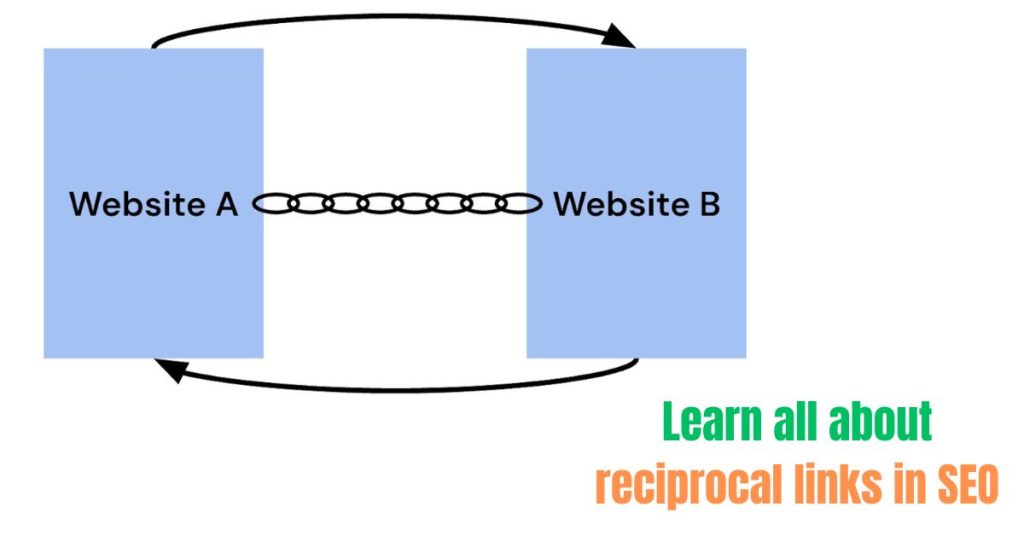
A reciprocal link occurs when two websites agree to link to each other’s content. For example, if Website A links to Website B, and in exchange, Website B links back to Website A, that’s a reciprocal link. It’s essentially a “you scratch my back, and I’ll scratch yours” approach to link building.
The practice of reciprocal linking is not new. It was once a popular tactic to quickly boost website authority and rankings. However, in today’s complex SEO landscape, it’s essential to understand the nuances of reciprocal links to avoid penalties from search engines like Google. Reciprocal links can either be beneficial or harmful to your website’s SEO depending on how they are used.
What Is a Reciprocal Link in SEO?
A reciprocal link in SEO refers to a mutual agreement between two websites to exchange hyperlinks. In this practice, one website links to another, and in return, the second website links back to the first. Essentially, it’s a “you link to me, and I’ll link to you” arrangement.
These links are often used to build relationships between websites, enhance visibility, and increase the number of backlinks each site has. Backlinks are crucial in SEO because they serve as endorsements or signals to search engines like Google that a website has valuable content.
For example, if a fitness blog links to a nutrition website, and the nutrition site links back to the fitness blog, these are reciprocal links. The goal is to benefit both websites by driving traffic and potentially improving search engine rankings.
However, while reciprocal links can be beneficial when used appropriately, excessive or manipulative reciprocal linking is frowned upon by search engines. If overused, this tactic can appear unnatural and lead to penalties. Therefore, it’s essential to only engage in reciprocal link exchanges with high-quality, relevant websites and to ensure these links occur organically.
The Evolution of Reciprocal Links in SEO
The Early Days of Reciprocal Links
In the early 2000s, reciprocal links were considered a quick and easy SEO tactic. They were commonly used to improve a site’s backlink profile and drive more search traffic. At the time, many website owners engaged in link exchanges, which were technically against Google’s guidelines but widely used because they yielded quick results.
However, the perception and use of reciprocal links have evolved significantly over the past two decades. What started as an intentional SEO strategy has now shifted into a more natural occurrence that stems from genuine connections between websites. This transformation is largely due to the rise of authentic outreach and the development of organic linking practices.
When a website links to another without expecting anything in return and then receives a link back naturally, search engines view it as more authentic and acceptable.
Google’s Efforts to Enhance Link Quality
Several Google algorithm updates have played a key role in transforming the use of reciprocal links. For example, the December 2022 Link Spam Update introduced Google’s SpamBrain technology to identify and neutralize unnatural links, including manipulative reciprocal link exchanges.
Additionally, the 2021 Page Experience Update prioritized user experience on websites, indirectly influencing the importance of natural linking over reciprocal link-building. The BERT Update in 2019 allowed Google to better understand the context behind search queries, which indirectly impacted how reciprocal links contributed to content relevance.
Another important update was the introduction of the freshness algorithm for featured snippets, which prioritized the most up-to-date and relevant information. This update emphasized the importance of content quality and currency, reducing the effectiveness of reciprocal link exchanges as a primary SEO tactic.
Overall, there has been a significant shift in SEO toward more user-centric and organic strategies, with a focus on high-quality content and natural link-building patterns.
Why Buying Links Is a Bad Idea
Many website owners, in an attempt to boost their rankings quickly, consider buying links. However, purchasing links violates Google’s guidelines and can lead to severe consequences. Let’s break down why buying links is a bad idea.
1. Violation of Google’s Guidelines
Google’s guidelines explicitly state that buying or selling links to manipulate search engine rankings is against its rules. Google strives to provide users with high-quality and relevant search results. When websites manipulate rankings through paid links, it undermines the integrity of Google’s algorithm. As a result, websites caught engaging in this practice face penalties, including being removed from search engine results altogether.
2. Risk of Detection by Google
Google’s algorithms have become highly sophisticated in detecting paid links. Whether through manual reviews or algorithmic patterns, Google is constantly improving its ability to identify unnatural linking practices. If Google detects that your website is involved in buying links, it can devalue those links or penalize your site. These penalties can significantly impact your rankings, resulting in a loss of traffic and revenue.
3. Short-Term Gains vs. Long-Term Risks
Buying links might provide a short-term boost in rankings, but the risks far outweigh the benefits in the long run. Once a website is penalized, it can take months, if not years, to recover. Moreover, the short-term gains achieved through link buying are often unsustainable. Search engines like Google focus on long-term user satisfaction, so strategies like paid links ultimately harm your website’s credibility and rankings over time.
Four Pros and Cons of Reciprocal Links
Reciprocal links have been a widely discussed topic in SEO for years, and they can provide both advantages and drawbacks for your website. Understanding these pros and cons can help you decide whether or not to include reciprocal link building as part of your SEO strategy.
Pro: Increased Website Backlinks
Backlinks are a major component of SEO, and reciprocal linking is an effective way to increase them. When you exchange links with other websites, you are essentially doubling your chances of acquiring new backlinks. Google and other search engines view backlinks as endorsements of your content. The more high-quality backlinks you have, the more likely search engines are to perceive your website as authoritative, which can improve your rankings.
Reciprocal linking is particularly useful for websites that are just starting out or for those in highly competitive niches. By exchanging links with relevant websites, you create a network of backlinks that can help to increase your website’s visibility and credibility. When done correctly and sparingly, reciprocal links can contribute positively to your overall SEO strategy.
However, it’s important to ensure that the websites you are exchanging links with are relevant to your niche and provide valuable content, as Google prioritizes the quality of backlinks over the sheer number.
Con: It’s a Time-Consuming Process
One of the biggest downsides of reciprocal link building is the amount of time it requires. Finding suitable websites to exchange links with is not a simple task. You need to identify sites that not only have a good reputation but are also relevant to your content. Once you’ve found potential partners, you’ll have to reach out to them, propose the link exchange, and often negotiate terms.
After the links are established, the work doesn’t stop there. You’ll need to monitor the links regularly to ensure they’re still live and check whether the websites you’ve linked to remain high-quality. This ongoing maintenance can be time-consuming, especially if you are managing multiple reciprocal links.
For businesses or website owners who have limited time and resources, this process can be more trouble than it’s worth, which is why many opt to focus on other SEO strategies.
Pro: Provides Helpful Resources to Readers
Reciprocal linking can provide value not only to your website but also to your readers. By exchanging links with other high-quality websites in your niche, you give your audience access to helpful, relevant resources. These links can enhance the user experience by directing them to additional information that complements the content they’re already reading on your site.
For example, if you run a blog about digital marketing and exchange links with a site that specializes in social media management tools, your readers will benefit from having quick access to relevant tools and information they might be interested in. Offering these valuable external resources can also increase trust and credibility with your audience.
When readers see that you’re linking to reputable sources, they are more likely to view your content as reliable and authoritative.
Con: Poor Quality Websites Could Link Back to You
One of the risks of reciprocal linking is the possibility of linking with poor-quality websites. Not every website that agrees to exchange links will be beneficial to your SEO. If the sites you link to are considered low-quality or spammy by Google, it can hurt your site’s credibility and rankings.
Poor-quality websites may not adhere to SEO best practices or may be penalized by Google for manipulative tactics. If Google sees your website exchanging links with these types of sites, it may view your own website as part of a manipulative link scheme and devalue your backlinks or penalize your site.
That’s why it’s crucial to thoroughly vet the websites you exchange links with. Look for websites that have high domain authority, quality content, and a clean backlink profile to avoid any potential negative impact on your site.
Pro: Greater Discoverability Potential
Reciprocal links can open up new opportunities for greater visibility. When you link to other websites and they link back to you, it increases your chances of being discovered by new audiences. Visitors from the linked site may click through to your content, which can result in increased traffic and potentially new customers or followers.
This increased discoverability is especially beneficial if you are linking with a website that has a large or engaged audience. Their readers may be curious about your content, and this can lead to organic traffic growth. Reciprocal linking essentially allows you to tap into another website’s audience, giving you more exposure and visibility.
Con: Google May Penalize You for Too Many Reciprocal Links
While reciprocal links can be beneficial when done sparingly, too many reciprocal links can raise a red flag with Google. Search engines are designed to detect unnatural link-building practices, and if your backlink profile contains an excessive number of reciprocal links, it could appear manipulative.
Google’s algorithm looks for a diverse backlink profile, meaning your site should have a variety of different types of links—natural links, guest posts, editorial mentions, etc. If reciprocal links dominate your backlink profile, Google may suspect that you’re engaging in link schemes, which could result in a penalty.
To avoid this, make sure reciprocal links make up only a small portion of your overall backlink strategy and are complemented by other types of organic backlinks.
Pro: High-Quality Links Improve Your SEO
If you’re exchanging links with high-quality, reputable websites, those reciprocal links can positively impact your SEO. High-quality backlinks signal to search engines that your content is valuable and trustworthy. When Google sees that other authoritative sites are linking to your content, it is more likely to rank your site higher in search results.
Reciprocal linking with credible websites in your industry can also help establish your own site as an authority. This type of strategic link building can lead to long-term benefits for your SEO and improve your online reputation.
Con: It’s Just Difficult
Reciprocal link building can be a challenging strategy to execute effectively. Not only do you need to find quality sites to link to, but you also need to ensure those websites are willing to exchange links. Many authoritative websites may not participate in reciprocal link exchanges, making it harder to find reliable partners.
In addition, reciprocal links require constant monitoring to ensure the links remain active and beneficial to your site. For many website owners, the difficulty of managing reciprocal links outweighs the potential benefits, which is why this strategy should be approached carefully and balanced with other SEO techniques.
6 Best Practices for Reciprocal Link Building
Reciprocal link building can be a valuable strategy for improving your SEO and enhancing your website’s authority, but it must be done correctly to avoid potential penalties from search engines. Here are six best practices to follow for successful reciprocal link building.
1. Only Choose Links You Can Trust
When engaging in reciprocal link exchanges, it’s crucial to partner with reputable, high-quality websites. Not all links are created equal; some can do more harm than good. Before agreeing to exchange links, research the website’s domain authority, relevance, and reputation. If you link to low-quality or spammy websites, search engines may penalize your site by associating you with those negative practices.
A trustworthy link should come from a site that is relevant to your niche, offers valuable content, and maintains a clean backlink profile. By only exchanging links with trusted partners, you can enhance your SEO efforts without risking penalties or lowering your website’s credibility.
2. Utilize Relevant Anchor Text
Anchor text is the clickable text that users see in a hyperlink. In reciprocal link building, it’s essential to use anchor text that is relevant to the content you’re linking to. Search engines use anchor text as a ranking factor, so descriptive and keyword-rich anchor text can improve the relevance and visibility of the linked pages.
For example, if you’re linking to an article about “best SEO practices,” using the anchor text “SEO strategies” is far more beneficial than something generic like “click here.” Make sure your anchor text accurately reflects the topic of the page you’re linking to, as this will boost the SEO value of the link for both parties involved.
3. Don’t Link to Bad Neighbors
Bad neighbors refer to websites that engage in spammy or unethical practices, such as selling links or participating in link schemes. Linking to these types of websites can harm your reputation and negatively affect your SEO. When participating in reciprocal link exchanges, you should avoid sites that appear to be part of a link farm, have questionable content, or lack proper authority.
Google’s algorithm is designed to detect associations with bad neighbors, and if you’re linked to a site with poor practices, your ranking could suffer. Always investigate the website’s backlink profile and overall content quality before agreeing to a reciprocal link exchange.
4. Monitor the Status of Links
Once you’ve established a reciprocal link, it’s essential to monitor the status of that link over time. Website owners may delete or modify links without notifying you, which can impact your link-building strategy. Regularly checking the status of reciprocal links ensures that your partners uphold their end of the agreement.
There are various tools available, such as Google Search Console or third-party SEO monitoring tools, that can help you track your backlinks and identify any broken or missing links. By staying vigilant, you ensure that your reciprocal links remain effective and continue to provide SEO value.
5. Avoid Link Farms
Link farms are websites or networks of websites that exist solely to create large numbers of backlinks, often without any genuine content or relevance. Participating in a link farm is a quick way to earn a penalty from search engines, as these links are considered manipulative and artificial.
It’s important to avoid linking to or getting involved with websites that seem to exist purely for link exchanges. These sites usually have little to no original content and focus entirely on manipulating search engine rankings. Instead, focus on building reciprocal links with websites that offer real value to their users and maintain a natural backlink profile.
6. Vary Your Linking Strategy
Relying solely on reciprocal links can appear manipulative and may raise red flags with search engines. To maintain a healthy backlink profile, it’s important to diversify your link-building strategy. Incorporate various types of links, such as editorial links, guest posts, and earned media, to make your link-building efforts look more organic and well-rounded.
A diversified link profile, with a mix of high-quality inbound and outbound links, signals to search engines that your website is authoritative and trustworthy. By varying your linking strategy, you also reduce the risk of penalties and improve the overall credibility of your SEO efforts.
Final Thoughts
Reciprocal links in SEO can be a double-edged sword. When implemented properly, they can boost your website’s authority, offer useful resources to your audience, and improve your site’s visibility. However, overusing or misusing reciprocal links may lead to penalties from Google and damage your site’s credibility.
To maximize the benefits of reciprocal link building, prioritize quality over quantity. Only exchange links with trustworthy and relevant websites, use appropriate anchor text, and consistently monitor the status of your links. By following best practices and incorporating a diverse link-building strategy, you can make reciprocal links a powerful component of your SEO without risking penalties.


