

In today’s hyper-competitive digital landscape, consumers expect more than just generic marketing messages—they want experiences tailored to their needs, preferences, and behaviors. Personalization in digital marketing has evolved from a nice-to-have strategy to a necessity for brands looking to stand out, boost engagement, and drive conversions.
By 2025, advancements in AI, machine learning, and data analytics will take personalization to new heights, allowing marketers to deliver hyper-relevant content, product recommendations, and dynamic messaging in real time. From customized email campaigns to AI-powered chatbots and predictive customer journeys, personalization is reshaping how brands connect with their audiences.
But with great power comes great responsibility—businesses must balance personalization with privacy, ensuring compliance with evolving data regulations while still delivering meaningful experiences.
In this guide, we’ll explore:
-
What personalized marketing really means
-
Real-world examples of personalization in action
-
The key benefits of personalization for brands
-
Emerging trends shaping 2025’s digital marketing landscape
-
Best practices to implement personalization effectively
Ready to future-proof your marketing strategy? Let’s dive in! 🚀
What Is Personalized Marketing?
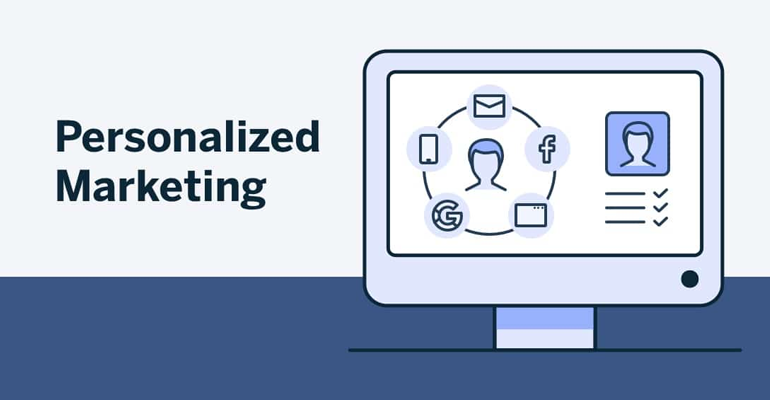
Personalized marketing is a strategy that uses customer data, behavior insights, and advanced technologies to deliver tailored experiences to individual users. Instead of sending generic messages to a broad audience, brands analyze user preferences, past interactions, demographics, and browsing habits to create relevant and engaging content.
The goal of personalized marketing is to make consumers feel valued by presenting them with offers, recommendations, and communications that align with their interests. This approach enhances customer satisfaction, increases engagement, and ultimately drives higher conversion rates.
Key elements of personalized marketing include:
-
Dynamic content – Websites, emails, and ads that change based on user behavior.
-
Behavioral targeting – Serving content based on past interactions, such as abandoned cart reminders.
-
AI-driven recommendations – Suggesting products or services based on browsing history (e.g., “Customers who viewed this also bought…”).
-
Segmented campaigns – Dividing audiences into smaller groups for more relevant messaging.
Personalization goes beyond just using a customer’s name in an email—it’s about creating a seamless, individualized experience across all digital touchpoints.
Examples of Personalization in Digital Marketing
Brands across industries are leveraging personalization to enhance customer experiences. Here are some real-world examples:
1. Amazon’s Product Recommendations
Amazon uses machine learning to analyze browsing history, purchase behavior, and even items left in the cart to suggest relevant products. Their “Recommended for You” section is a prime example of hyper-personalization in e-commerce.
2. Netflix’s Content Suggestions
Netflix personalizes user dashboards based on viewing history, ratings, and preferences. The “Because you watched…” feature keeps users engaged by recommending shows and movies tailored to their tastes.
3. Spotify’s Discover Weekly
Spotify curates a unique playlist for each user every week, combining listening habits with similar users’ preferences. This level of personalization strengthens user loyalty.
4. Starbucks’ Rewards Program
The Starbucks app tracks purchase history and sends personalized offers, such as discounts on a customer’s favorite drink. This increases repeat visits and customer retention.
5. Dynamic Email Marketing (e.g., Sephora)
Sephora sends emails with product recommendations based on past purchases and browsing behavior. They also include personalized beauty tips, making each communication feel unique.
6. Chatbots with Personalized Responses
Many brands use AI-powered chatbots that remember past interactions to provide faster, more relevant support. For example, a banking chatbot might greet a returning customer with, “Hi [Name], how can I assist you with your savings account today?”
These examples show how personalization enhances user experience, drives engagement, and fosters brand loyalty.
Why Should Brands Personalize Digital Marketing?
In an era where consumers are constantly bombarded with generic ads and promotional content, personalization has become a key differentiator for brands. The shift from mass marketing to individualized experiences is no longer optional—it’s essential for staying competitive. Here’s why brands must prioritize personalization in their digital marketing strategies:
1. Rising Consumer Expectations
Modern consumers expect brands to understand their preferences and deliver relevant content. A study by Salesforce found that 66% of customers expect companies to understand their unique needs, and 52% will switch brands if personalization is lacking. Failing to meet these expectations can result in lost customers and reduced engagement.
2. Increased Engagement and Conversions
Personalized content captures attention more effectively than generic messaging. Whether through tailored product recommendations, customized email campaigns, or dynamic website experiences, personalization leads to higher click-through rates (CTR), longer session durations, and improved conversion rates.
3. Enhanced Customer Loyalty
When customers feel that a brand truly understands them, they are more likely to remain loyal. Personalized rewards, exclusive offers, and relevant content foster long-term relationships, increasing customer lifetime value (CLV).
4. Better Use of Data and AI
With advancements in AI and machine learning, brands can analyze vast amounts of customer data to predict behaviors and preferences. This allows for real-time personalization, ensuring that marketing efforts are always aligned with customer needs.
5. Competitive Advantage
Brands that leverage personalization effectively stand out in crowded markets. Companies like Amazon, Netflix, and Spotify have set high standards, making personalization a benchmark for customer experience. Businesses that fail to adapt risk falling behind.
6. Higher Return on Investment (ROI)
Personalized marketing campaigns consistently outperform generic ones. Research from McKinsey shows that personalization can boost sales by 10% or more, making it a cost-effective strategy for maximizing marketing budgets.
How Personalization Can Benefit Your Brand
Implementing personalized digital marketing strategies offers numerous advantages that directly impact business growth and customer satisfaction. Below are some of the key benefits:
1. Improved Customer Experience
Personalization creates a seamless and enjoyable experience for users. Whether through customized product suggestions, personalized emails, or adaptive website content, customers feel valued, leading to higher satisfaction and brand affinity.
2. Higher Conversion Rates
When marketing messages align with individual preferences, customers are more likely to take action. Personalized calls-to-action (CTAs), dynamic landing pages, and targeted promotions significantly increase conversion rates compared to one-size-fits-all approaches.
3. Reduced Cart Abandonment
E-commerce brands can use personalization to recover lost sales. Reminder emails with abandoned cart items, coupled with personalized discounts, encourage customers to complete their purchases.
4. Stronger Brand-Customer Relationships
Personalized interactions build trust and emotional connections. Whether through birthday discounts, location-based offers, or tailored content, customers develop a stronger bond with brands that consistently meet their needs.
5. Optimized Advertising Spend
Instead of wasting budget on broad, untargeted ads, personalization allows brands to serve highly relevant ads to specific audience segments. This improves ad performance and reduces cost per acquisition (CPA).
6. Data-Driven Decision Making
Personalization relies on customer data, which provides valuable insights into buying behaviors, preferences, and pain points. Brands can use this information to refine marketing strategies, improve products, and enhance overall business operations.
7. Scalability with Automation
AI-powered tools enable brands to automate personalization at scale. From chatbots to recommendation engines, automation ensures consistent and timely personalized experiences without manual effort.
By integrating personalization into digital marketing efforts, brands can create meaningful interactions, foster loyalty, and drive sustainable growth.
Personalized Digital Marketing Trends to Look Out for in 2025
As technology continues to evolve, personalization in digital marketing is reaching new levels of sophistication. Here are the key trends that will dominate in 2025:
1. AI-Powered Predictive Personalization
Advanced machine learning algorithms will enable brands to anticipate customer needs before they arise. By analyzing behavioral patterns and historical data, AI systems will predict future purchases and serve hyper-relevant content in real-time.
2. Voice and Visual Search Optimization
With the growing popularity of smart speakers and visual search tools, brands will need to optimize content for conversational queries and image-based searches, creating personalized experiences across these emerging channels.
3. Augmented Reality Personalization
AR technology will allow customers to virtually try products in personalized environments. Beauty brands will offer virtual makeup trials, while furniture retailers will enable customers to visualize products in their own homes.
4. Privacy-First Personalization
As data privacy regulations tighten, brands will adopt zero-party data strategies, where customers willingly share preferences in exchange for better experiences, moving away from third-party data reliance.
5. Emotion Recognition Technology
Advanced sentiment analysis tools will interpret customer emotions through facial expressions, voice tones, and browsing behavior, enabling brands to adjust messaging in real-time for maximum impact.
6. Hyper-Localized Experiences
Geofencing and beacon technology will deliver ultra-targeted offers based on a customer’s exact location, with personalized messages triggered when they enter specific stores or neighborhoods.
7. Cross-Channel Personalization Hubs
Brands will implement centralized personalization platforms that maintain consistent customer profiles across all touchpoints, ensuring seamless experiences from website to app to physical store.
Digital Marketing Personalization Best Practices
To effectively implement personalization in your digital marketing strategy, follow these proven best practices:
1. Start with Data Collection and Analysis
-
Implement robust data tracking across all customer touchpoints
-
Use CRM systems to consolidate customer information
-
Analyze behavioral data to identify patterns and preferences
2. Segment Your Audience Strategically
-
Create micro-segments based on demographics, behavior, and preferences
-
Develop buyer personas for different customer types
-
Continuously refine segments as you gather more data
3. Implement Progressive Profiling
-
Gradually collect customer information through interactions
-
Use smart forms that adapt based on known information
-
Offer value in exchange for customer data
4. Personalize Across All Channels
-
Ensure consistent messaging across email, social media, website, and ads
-
Use dynamic content that changes based on user profiles
-
Coordinate timing and frequency of communications
5. Leverage AI and Automation
-
Implement recommendation engines for products and content
-
Use chatbots for personalized customer service
-
Automate triggered messages based on user actions
6. Test and Optimize Continuously
-
A/B test different personalization approaches
-
Measure impact on key metrics like conversion rates
-
Refine strategies based on performance data
7. Maintain Transparency and Trust
-
Be clear about data collection and usage
-
Provide easy opt-out options
-
Ensure compliance with privacy regulations
8. Focus on Value Exchange
-
Offer tangible benefits for sharing personal data
-
Make personalization feel helpful, not intrusive
-
Balance relevance with frequency of personalized messages
By staying ahead of emerging trends and implementing these best practices, brands can create meaningful, personalized experiences that drive engagement, loyalty, and revenue in 2025’s competitive digital landscape.
Elevate Your 2025 Strategy With Hyper-Personalized Digital Experiences
Today’s customers demand tailored interactions across every touchpoint. To outperform competitors, you must seamlessly blend digital and physical experiences while delivering exactly what your audience desires.
Learn how to craft the perfect level of personalization that resonates with your customers and keeps them engaged throughout their journey. At Pro Real Tech Marketing Agency, we build bespoke digital marketing solutions featuring:
• Strategic Content Marketing
• Conversion-Focused Copywriting
• Data-Driven SEO
• Targeted Social Media Campaigns
• High-Converting Web Design
• Precision PPC Advertising
• Automated Email Marketing
• UX Optimization Testing
Want campaigns that deliver exceptional ROI? Our digital marketing specialists are ready to transform your results – let’s connect today!


