

Marketing today is no longer just about promoting products—it’s about building meaningful connections, understanding customer behavior, and delivering value at every touchpoint. Whether you’re launching a startup, running a small business, or stepping into marketing for the first time, having a clear strategy is what separates random efforts from measurable success. Without a structured approach, even the best ideas can struggle to gain traction.
A well-crafted marketing strategy gives direction, helps prioritize resources, and ensures every action aligns with your business goals. It allows you to move from guesswork to informed decision-making, making your campaigns more effective and sustainable over time. In this guide, you’ll learn the core fundamentals of marketing and follow a practical, step-by-step process to build your first strategy with confidence.
Understanding the Fundamentals of Marketing
At its core, marketing is about identifying customer needs and delivering solutions that provide real value. It goes beyond advertising and sales—it starts with understanding your audience, analyzing the market, and creating offerings that genuinely solve problems. Successful marketing ensures that the right message reaches the right people at the right time through the right channels.
One of the foundational concepts in marketing is the marketing mix, often referred to as the “4 Ps”: product, price, place, and promotion. These elements help businesses define what they’re offering, how much it costs, where it’s available, and how it’s communicated to the audience. Over time, this model has expanded to include additional factors like people, process, and physical evidence, especially in service-based industries.
Equally important is understanding your target audience. Effective marketing is built on insights—knowing who your customers are, what they care about, and how they make decisions. This involves analyzing demographics, behaviors, and preferences to create more personalized and relevant experiences.
Finally, marketing fundamentals include setting clear objectives and measuring performance. Every campaign should have a purpose, whether it’s increasing brand awareness, generating leads, or driving sales. By tracking results and analyzing data, businesses can continuously refine their strategies and improve outcomes.
When you master these core principles, you create a strong foundation that supports every marketing decision you make moving forward.
Step-by-Step Breakdown: How To Create a Marketing Strategy
Building a successful marketing strategy isn’t about guesswork—it’s a structured process that connects your business goals with real customer needs and measurable outcomes. Below is a modern, practical breakdown of each step, updated with how marketing actually works today.
Step 1: Define Your Business Goals
Every marketing strategy starts with clarity. Without defined goals, your efforts become scattered and hard to measure.
Your goals should align directly with your overall business objectives—whether that’s increasing revenue, expanding into new markets, or improving customer retention.
Use the SMART framework:
- Specific – What exactly do you want to achieve?
- Measurable – How will success be tracked?
- Achievable – Is it realistic with your resources?
- Relevant – Does it align with business priorities?
- Time-bound – What’s the deadline?
Example:
“Increase website conversions by 25% in 6 months” is far more effective than “get more traffic.”
Step 2: Conduct a Market Situation Analysis
Before planning anything, you need a clear picture of your environment. This includes both internal performance and external market conditions.
A strong situation analysis typically includes:
- Industry trends and growth patterns
- Competitor analysis (strengths, weaknesses, positioning)
- Customer behavior insights
- SWOT analysis (Strengths, Weaknesses, Opportunities, Threats)
This step ensures your strategy is based on reality—not assumptions—and helps uncover gaps you can exploit.
Step 3: Know Your Audience Inside Out
You can’t market effectively if you don’t deeply understand your audience.
Go beyond basic demographics and build buyer personas:
- Age, location, income
- Interests, values, lifestyle
- Pain points and challenges
- Buying behavior and decision triggers
Segmentation allows you to tailor campaigns instead of sending generic messages that fail to convert.
Pro tip: Modern strategies rely heavily on behavioral data (website activity, engagement patterns, purchase history).
Step 4: Choose Your Marketing Channels Wisely
Not every channel is right for every business. The goal is to meet your audience where they already spend time.
Common channels include:
- Organic: SEO, content marketing, social media
- Paid: Google Ads, social ads, display advertising
- Owned: Email marketing, website, mobile apps
- Earned: PR, influencer marketing, reviews
Your choices should align with:
- Audience behavior
- Budget
- Business goals
The traditional marketing mix (Product, Price, Place, Promotion) still applies, but now extends into digital ecosystems.
Step 5: Develop Messaging and Value Propositions
Your messaging is what makes people care. Your value proposition is why they choose you.
A strong value proposition answers:
- What problem do you solve?
- Why are you different?
- What benefits do customers get?
Effective messaging:
- Speaks directly to customer pain points
- Uses clear, simple language
- Creates emotional and logical appeal
This is what turns attention into action.
Step 6: Budget and Resource Planning
Even the best strategy fails without proper resource allocation.
You need to define:
- Marketing budget (by channel and campaign)
- Team roles and responsibilities
- Tools and technology (CRM, analytics, automation)
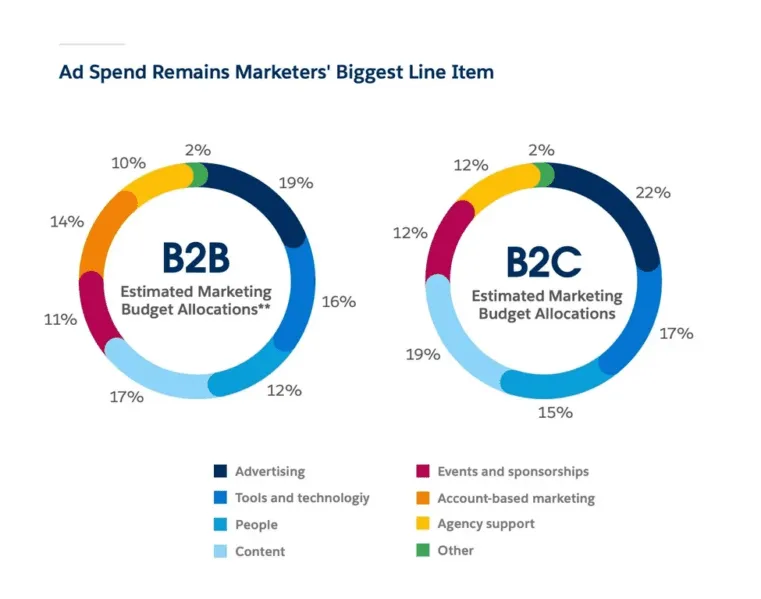
Smart marketers focus on ROI (Return on Investment)—investing more in channels that deliver results and cutting waste.
Step 7: Set Your KPIs and Measure Performance
If you can’t measure it, you can’t improve it.
Key Performance Indicators (KPIs) should directly connect to your goals. Common categories include:
- Acquisition: leads, conversion rate, CAC
- Engagement: traffic, bounce rate, time on site
- Revenue: sales, ROI, customer lifetime value
- Brand: awareness, reach, sentiment
Tracking KPIs helps you understand what’s working—and what isn’t.
Step 8: Execute, Analyze and Optimize
Execution is where strategy becomes real—but it doesn’t end there.
Modern marketing is iterative:
- Launch campaigns
- Test (A/B testing, experiments)
- Analyze performance data
- Optimize continuously
Successful brands follow a test-and-learn approach, making data-driven adjustments rather than relying on assumptions.
Key mindset:
Marketing is not a one-time plan—it’s an ongoing system of improvement.
Marketing Strategy Guide: Tools and Frameworks To Use
Creating a marketing strategy from scratch can feel overwhelming, but proven frameworks simplify the process by giving you structure, clarity, and direction. These models help you move from ideas to execution while ensuring nothing critical is overlooked. Below are some of the most widely used and practical frameworks in modern marketing.
4 Popular Strategic Frameworks
1. SOSTAC Model
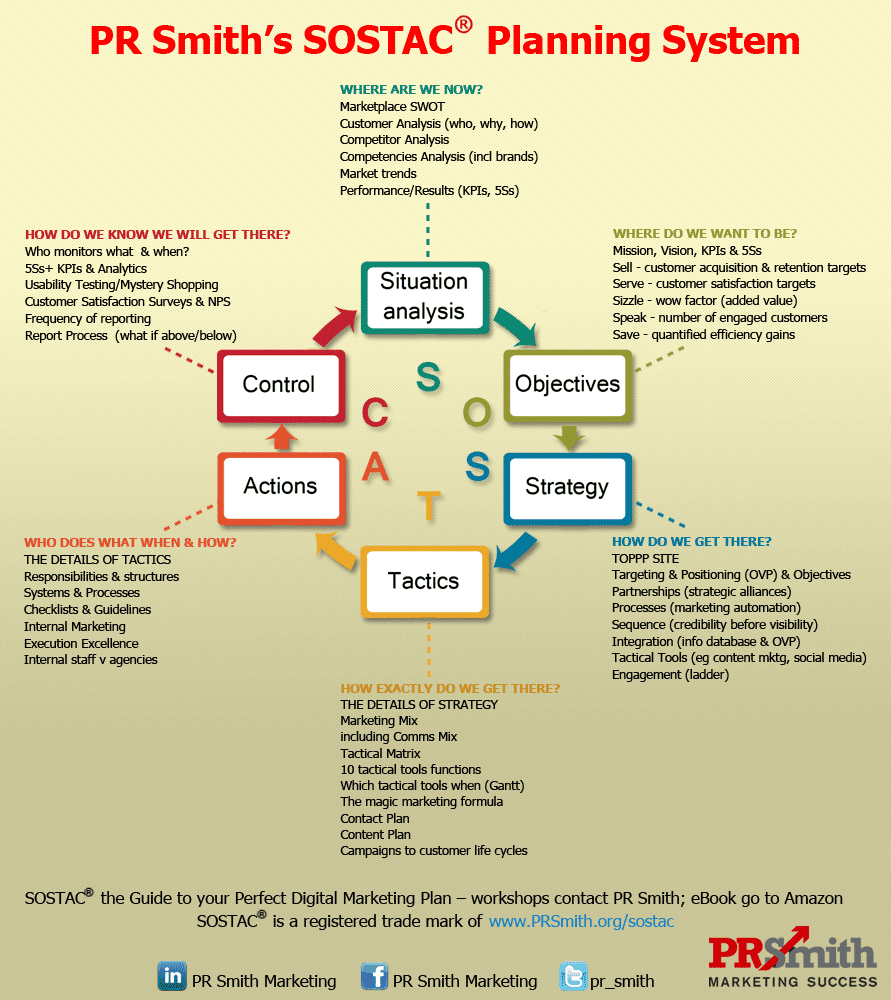
The SOSTAC model is one of the most comprehensive planning frameworks used by marketers today. It breaks strategy into six clear stages:
- Situation Analysis – Where are you now? (market, competitors, performance)
- Objectives – Where do you want to be?
- Strategy – How will you get there?
- Tactics – What specific actions will you take?
- Action – Who does what and when?
- Control – How will you measure success?
What makes SOSTAC powerful is its logical flow—it ensures that every action ties back to a clear objective. It’s especially useful for businesses that want a full-funnel, structured marketing plan.
2. RACE Planning Framework
The RACE framework focuses on the customer journey and is widely used in digital marketing strategies.
- Reach – Build awareness and attract traffic (SEO, ads, social media)
- Act – Encourage engagement (website interaction, content consumption)
- Convert – Turn visitors into leads or customers
- Engage – Build loyalty and repeat business
RACE works well in today’s environment because it aligns directly with how customers behave online. It emphasizes continuous engagement, not just one-time conversions.
3. The Extended Ps of Marketing: People, Process, and Physical Evidence
Traditional marketing revolves around the 4Ps (Product, Price, Place, Promotion), but modern service-based and digital businesses require a broader approach. That’s where the extended Ps come in:
- People (P5) – Your team, customer service, and brand interactions
Why it matters: Customer experience is now a major differentiator. - Process (P6) – The systems and workflows that deliver your product or service
Why it matters: Smooth, efficient processes improve customer satisfaction and scalability. - Physical Evidence (P7) – Tangible proof of your brand (website design, reviews, packaging, testimonials)
Why it matters: Customers rely on trust signals before making decisions.
These additional elements are critical in 2026, where customer experience and brand trust often matter more than price alone.
4. Growth Strategy Framework: Ansoff’s Matrix
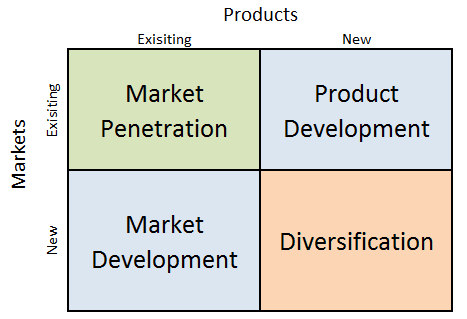
This framework helps businesses decide how to grow by analyzing products and markets. It presents four strategic options:
Market Penetration Strategy
This strategy focuses on increasing sales of existing products in existing markets.
How it works:
- Increase marketing efforts
- Improve pricing strategies
- Capture competitors’ customers
- Encourage repeat purchases
Best for: Businesses looking for low-risk growth using what they already offer.
Example: Running targeted ad campaigns to increase market share within your current audience.
Product Development Strategy
Here, businesses create new products or improve existing ones for their current market.
How it works:
- Launch new features or variations
- Innovate based on customer feedback
- Expand product lines
Best for: Companies with a strong customer base that want to increase lifetime value.
Example: A software company releasing a premium version with advanced features.
Market Development Strategy
This involves entering new markets with existing products.
How it works:
- Expand into new geographic regions
- Target new audience segments
- Adapt messaging for different demographics
Best for: Businesses ready to scale beyond their current audience.
Example: An e-commerce brand expanding internationally or targeting a new age group.
Diversification Strategy
The most advanced and risky strategy—introducing new products into new markets.
How it works:
- Enter entirely new industries
- Develop unrelated product lines
Best for: Established businesses looking for major growth opportunities.
Example: A tech company launching a completely new service in a different industry.
From Vision to Execution: The Strategic Marketing Plan Process in Action
Having a strategy is only the beginning. The real impact comes from execution—turning plans into measurable results. Below is how a modern marketing strategy unfolds in practice.
Phase 1: Operationalizing Your Strategy
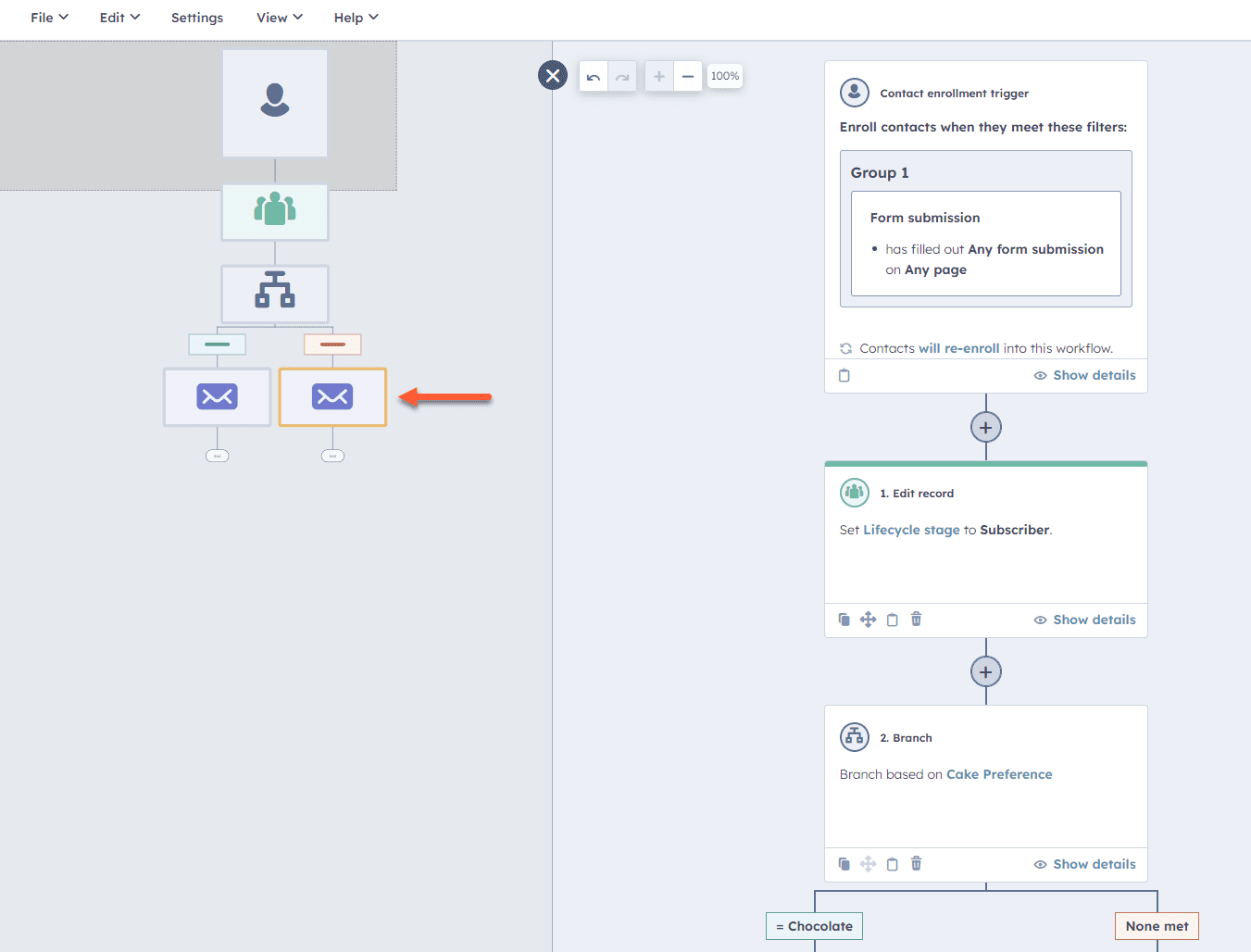
This is where strategy becomes actionable.
You take your high-level plan and break it into:
- Clear timelines and milestones
- Defined roles and responsibilities
- Campaign calendars
- Channel-specific plans
At this stage, alignment is critical. Your marketing, sales, and product teams must work toward the same goals.
Key focus:
- Translating strategy into tasks
- Setting realistic deadlines
- Ensuring resource availability
Without proper operationalization, even the best strategies remain theoretical.
Phase 2: Content and Campaign Execution
Now the strategy comes to life.
This phase includes:
- Creating content (blogs, videos, ads, emails)
- Launching campaigns across selected channels
- Managing social media and paid advertising
- Engaging with your audience in real time
Modern execution is highly dynamic. Campaigns are no longer “set and forget”—they require active monitoring and adjustments.
What matters most:
- Consistency in messaging
- Quality of content
- Timely execution
Content is the backbone here—it fuels awareness, engagement, and conversions across all channels.
Phase 3: Testing and Optimization
No strategy is perfect from the start. That’s why testing is essential.
You should continuously experiment with:
- Headlines and ad creatives
- Landing page designs
- Call-to-action (CTA) placements
- Audience targeting
Common methods:
- A/B testing
- Multivariate testing
- Funnel analysis
The goal is simple: identify what works and scale it.
In today’s data-driven environment, optimization isn’t optional—it’s what separates average campaigns from high-performing ones.
Phase 4: Reporting and Strategy Refinement
This final phase closes the loop and prepares you for the next cycle.
You analyze performance data to answer:
- Did we achieve our goals?
- Which channels performed best?
- Where did we lose potential customers?
- What should we improve next time?
Key activities include:
- KPI tracking and reporting
- ROI analysis
- Customer insights review
- Strategic adjustments
Important shift in modern marketing:
Reporting is no longer just about numbers—it’s about insights and decision-making.
Inbound, Outbound and Everything In Between
Modern marketing is no longer about choosing one approach over another—it’s about understanding how different methods work together to create a complete customer journey. Businesses that rely only on one side often miss opportunities. The real advantage comes from knowing when and how to use each.
Inbound Marketing
Inbound marketing focuses on attracting customers naturally by providing value before asking for anything in return. Instead of interrupting people, it pulls them in through relevance and usefulness.
Key components of inbound marketing:
- Content marketing (blogs, guides, videos)
- Search engine optimization (SEO)
- Social media engagement
- Email nurturing
- Lead magnets (ebooks, webinars, free tools)
The idea is simple: earn attention rather than buy it.
Why inbound works in 2026:
- Consumers are more informed and research-driven
- Trust plays a bigger role in purchasing decisions
- Search engines and platforms reward helpful, high-quality content
Strengths:
- Builds long-term brand authority
- Generates compounding results over time
- More cost-efficient in the long run
Limitations:
- Takes time to see results
- Requires consistent content creation
- Competitive in saturated niches
Inbound is especially powerful for businesses that rely on education, trust, and relationship-building, such as SaaS, consulting, and e-commerce brands with strong content strategies.
Outbound Marketing
Outbound marketing involves actively pushing your message to potential customers, often through paid or direct channels.
Common outbound tactics:
- Paid advertising (search ads, social ads, display ads)
- Cold email outreach
- TV, radio, and print ads
- Direct mail campaigns
- Sales calls
Unlike inbound, outbound aims to generate immediate visibility and response.
Why outbound still matters:
- It delivers faster results
- It allows precise targeting (especially with digital ads)
- It scales quickly when campaigns perform well
Strengths:
- Immediate traffic and lead generation
- High control over targeting and messaging
- Effective for promotions, launches, and time-sensitive campaigns
Limitations:
- Can be expensive
- Often ignored or blocked (ad fatigue, ad blockers)
- Lower trust compared to organic methods
Outbound works best when speed is critical—such as product launches, seasonal campaigns, or entering competitive markets.
What’s the Best Approach?
The real answer: a hybrid strategy.
Inbound and outbound are not opposites—they complement each other.
- Use outbound to generate quick traffic and awareness
- Use inbound to nurture, educate, and convert over time
Example of a balanced approach:
- Run paid ads (outbound) to drive traffic
- Send users to high-quality content or landing pages (inbound)
- Capture leads and nurture them via email (inbound)
This combination creates both short-term wins and long-term growth.
Tailoring Strategy to Your Business Model
Your ideal mix depends on your business type, goals, and resources.
For startups and new businesses:
- Lean more on outbound initially for quick traction
- Gradually build inbound assets (content, SEO)
For established brands:
- Invest heavily in inbound to reduce dependency on ads
- Use outbound for scaling and retargeting
For B2B businesses:
- Focus on inbound (thought leadership, case studies, whitepapers)
- Support with outbound (LinkedIn ads, targeted outreach)
For e-commerce:
- Combine paid ads (outbound) with content and email (inbound)
- Use retargeting to recover lost conversions
Key takeaway:
There’s no one-size-fits-all strategy. The best approach is the one that aligns with your audience behavior, sales cycle, and growth goals.
Measuring Success: KPIs and Analytics
A marketing strategy without measurement is just guesswork. To understand what’s working—and what isn’t—you need clear metrics, meaningful insights, and a system for continuous improvement.
Aligning KPIs With Your Strategy
Key Performance Indicators (KPIs) should directly reflect your business objectives. If your goal is growth, your KPIs must measure growth—not vanity metrics.
Examples of aligned KPIs:
| Goal | Relevant KPIs |
|---|---|
| Increase brand awareness | Reach, impressions, website traffic |
| Generate leads | Conversion rate, cost per lead (CPL) |
| Drive sales | Revenue, ROI, customer acquisition cost (CAC) |
| Improve retention | Customer lifetime value (CLV), churn rate |
Common mistake: Tracking too many metrics without purpose.
Instead, focus on a few meaningful KPIs that clearly indicate progress toward your goals.
Why Analytics Is More Than Just Reporting
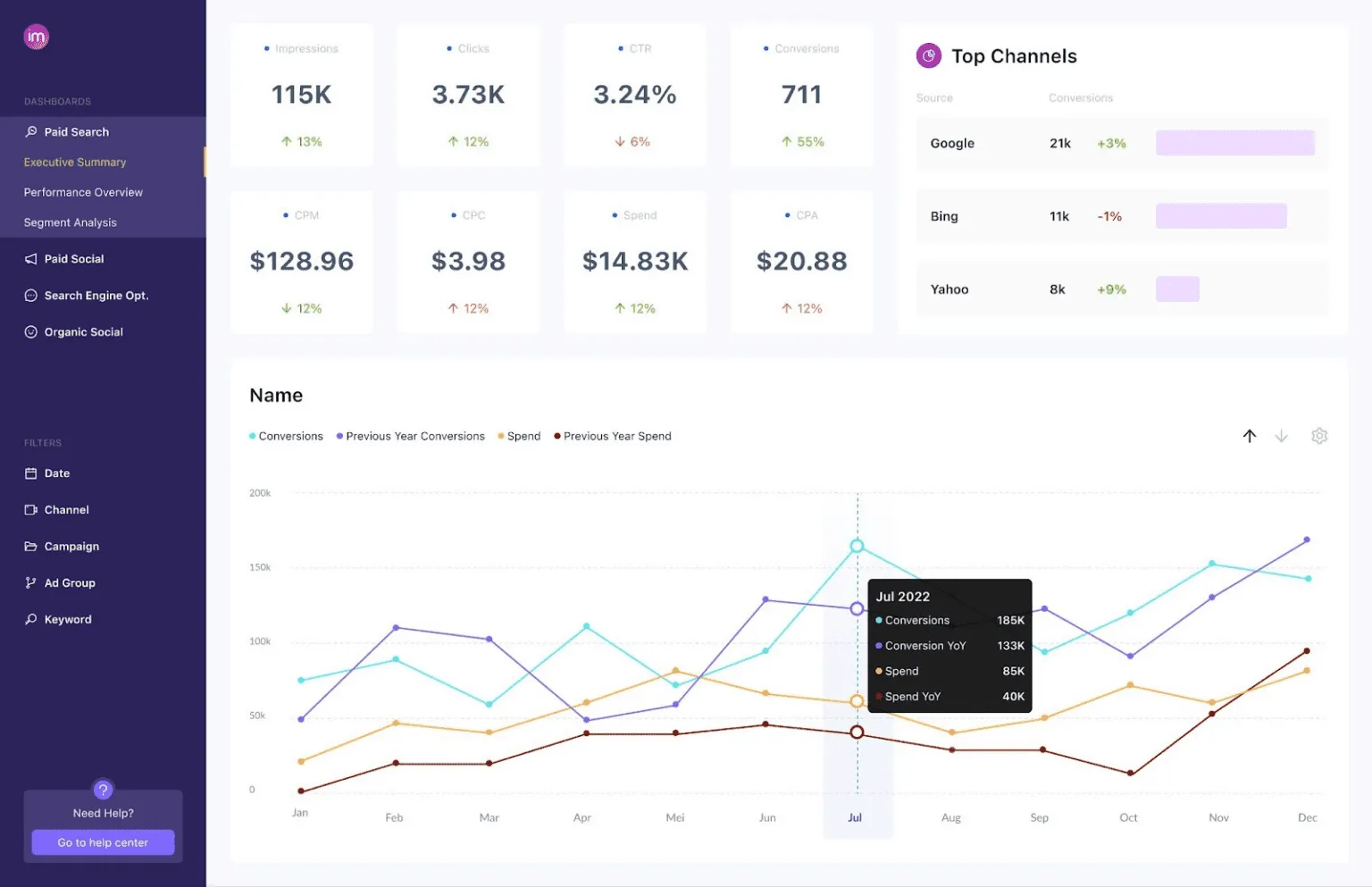
Many businesses treat analytics as a reporting tool—but it’s much more than that. Analytics is about understanding behavior and making better decisions.
Modern analytics helps you:
- Identify which channels drive the best results
- Understand customer journeys and drop-off points
- Discover high-performing content and campaigns
- Make data-driven decisions instead of relying on assumptions
Shift in mindset:
- Old approach: “What happened?”
- Modern approach: “Why did it happen and what should we do next?”
Tools like dashboards, heatmaps, and funnel analysis provide deeper insights that go beyond surface-level numbers.
The Importance of Attribution in Marketing Analytics
Attribution answers one critical question:
Which marketing efforts actually drive conversions?
In today’s multi-channel environment, customers rarely convert after a single interaction. They might:
- See an ad
- Read a blog post
- Click an email
- Then make a purchase
Attribution models help assign value to each touchpoint.
Common attribution models:
- First-click attribution – Credits the first interaction
- Last-click attribution – Credits the final interaction
- Multi-touch attribution – Distributes credit across multiple touchpoints
Why it matters:
- Prevents misallocation of budget
- Helps identify high-impact channels
- Improves overall strategy efficiency
Without proper attribution, you risk investing in channels that appear successful—but aren’t actually driving results.
Make Reporting a Habit
Consistency is key when it comes to measurement.
Best practices for reporting:
- Create weekly or monthly performance reports
- Use dashboards for real-time tracking
- Compare results against benchmarks and goals
- Share insights across teams
Reporting should not just present data—it should tell a story:
- What worked?
- What didn’t?
- What should we change?
Regular reporting ensures your strategy stays agile, responsive, and continuously improving.
Pitfalls To Avoid When Crafting Your First Strategy
Even with the best intentions, many businesses make critical mistakes when building their first marketing strategy. Avoiding these pitfalls can save time, money, and frustration.
Mistake #1: Skipping the Research Phase
Jumping straight into execution without research is one of the biggest errors.
Without proper analysis, you risk:
- Targeting the wrong audience
- Misunderstanding market demand
- Ignoring competitors
Fix:
Invest time in market research, competitor analysis, and audience insights before making decisions.
Mistake #2: Setting Vague or Unrealistic Goals
Goals like “grow the business” or “get more customers” lack clarity and direction.
On the other hand, overly ambitious goals can lead to burnout and poor decision-making.
Fix:
- Use clear, measurable goals
- Break large goals into smaller milestones
- Align expectations with available resources
A well-defined goal provides focus and accountability.
Mistake #3: Choosing Channels Without Strategy
Many businesses jump onto trending platforms without asking if they’re relevant.
Just because a channel is popular doesn’t mean it’s right for your audience.
Risks:
- Wasted budget
- Low engagement
- Inconsistent branding
Fix:
- Choose channels based on audience behavior
- Focus on quality over quantity
- Master a few channels before expanding
Strategic channel selection leads to better results with fewer resources.
Mistake #4: Underestimating Content and Creative
Content is often treated as an afterthought—but it’s central to modern marketing success.
Poor-quality content can:
- Damage brand perception
- Reduce engagement
- Lower conversion rates
Fix:
- Invest in high-quality visuals, copy, and storytelling
- Align content with your audience’s needs
- Maintain consistency across all platforms
In 2026, content is not just marketing—it is the experience.
Mistake #5: Failing To Test and Optimize
Launching campaigns and leaving them unchanged is a costly mistake.
Without testing:
- You miss opportunities for improvement
- You rely on assumptions instead of data
- Performance stagnates
Fix:
- Run regular A/B tests
- Analyze campaign performance
- Optimize based on real data
Continuous improvement is what separates successful strategies from average ones.
Master the Fundamentals and Grow with Confidence
Marketing success doesn’t come from random tactics—it comes from mastering the fundamentals and applying them consistently over time. When businesses understand how strategy, audience insight, messaging, channels, and measurement work together, they stop guessing and start growing with purpose.
At its core, modern marketing is about building systems, not isolated campaigns. A well-structured strategy ensures every action contributes to a larger goal, whether that’s brand awareness, lead generation, or revenue growth.
The real advantage of mastering fundamentals is confidence. Instead of reacting to trends or copying competitors, you develop a clear framework for decision-making. This allows you to:
- Launch campaigns with clarity
- Allocate budget more effectively
- Improve performance through data
- Scale without losing direction
In 2026 and beyond, marketing is becoming more data-driven, automated, and personalized. But even with advanced tools, success still depends on how well you understand the basics. Businesses that consistently return to fundamentals are the ones that adapt faster and grow stronger in competitive markets.
Let Pro Real Tech Help You Build Your First or Next Marketing Strategy
Building a strong marketing strategy can feel overwhelming—especially when you’re balancing goals, channels, content, analytics, and execution at the same time. That’s where expert guidance becomes valuable.
A structured, data-driven approach helps businesses avoid costly mistakes and move faster toward measurable growth. Instead of relying on trial and error, you gain a clear roadmap that connects strategy to execution.
Our Professional marketing support typically focuses on:
- Understanding your business model and goals
- Identifying the right audience and positioning
- Designing a full-funnel marketing strategy
- Selecting the most effective channels for growth
- Building campaigns that convert, not just attract traffic
- Tracking performance and optimizing continuously
Modern marketing success is not just about visibility—it’s about conversion, retention, and long-term brand value. Working with experienced strategists ensures your efforts are aligned with current trends, platforms, and customer behaviors.
If you’re starting from scratch or improving an existing system, expert support can help you:
- Reduce wasted ad spend
- Improve lead quality
- Strengthen brand messaging
- Scale faster with fewer resources
The goal is simple: turn marketing from a cost center into a predictable growth engine. Contact us today!
Frequently Asked Questions (FAQs) On Marketing Fundamentals
WHAT ARE THE FUNDAMENTALS OF MARKETING?
The fundamentals of marketing are the core principles that guide how businesses attract, engage, and retain customers. These include understanding customer needs, identifying target audiences, creating valuable offerings, positioning a brand effectively, and delivering messages through the right channels.
At a basic level, marketing fundamentals revolve around:
- Product (what you offer)
- Price (how much it costs)
- Place (where it’s available)
- Promotion (how you communicate it)
Modern marketing also includes digital elements like SEO, content marketing, analytics, and customer experience. Together, these fundamentals ensure businesses create value while meeting market demand effectively.
WHAT ARE THE FUNDAMENTALS OF DIGITAL MARKETING IN 2026?
In 2026, digital marketing fundamentals have evolved beyond basic online presence. They now focus heavily on personalization, automation, and data-driven decision-making.
Key fundamentals include:
- Search engine optimization (SEO) for visibility
- Content marketing for authority and trust
- Social media marketing for engagement
- Paid advertising for scalable reach
- Email marketing for retention and nurturing
- Analytics for performance tracking
Additionally, AI-driven tools now play a major role in targeting, personalization, and content creation. However, the core principle remains the same: delivering the right message to the right audience at the right time.
HOW DO I CREATE A MARKETING STRATEGY FOR MY BUSINESS?
Creating a marketing strategy involves a structured process:
- Define clear business goals
- Conduct market and competitor research
- Identify and understand your target audience
- Choose the right marketing channels
- Develop messaging and positioning
- Plan budget and resources
- Set KPIs for measurement
- Execute, analyze, and optimize continuously
A strong strategy connects every marketing activity to a measurable outcome, ensuring consistent growth and improved ROI over time.
WHAT IS MARKETING STRATEGY DEVELOPMENT?
Marketing strategy development is the process of designing a long-term plan that defines how a business will reach its target audience and achieve its goals.
It includes:
- Market research and analysis
- Defining customer segments
- Setting positioning and messaging
- Selecting channels and tactics
- Establishing performance metrics
The goal is to create a clear roadmap that aligns marketing activities with business objectives, ensuring every effort contributes to growth and profitability.
WHAT IS THE STRATEGIC MARKETING PLAN PROCESS?
The strategic marketing plan process is the structured approach used to turn marketing strategy into actionable steps.
It typically includes:
- Situation analysis (market, competitors, internal performance)
- Strategy formulation (goals, positioning, targeting)
- Tactical planning (campaigns, content, channels)
- Execution (launching marketing activities)
- Monitoring and control (tracking KPIs and optimizing performance)
This process ensures marketing efforts are organized, measurable, and continuously improving.
WHY IS MARKETING SITUATION ANALYSIS IMPORTANT?
Situation analysis is critical because it provides a clear understanding of where your business stands before making decisions.
It helps you:
- Identify market opportunities and threats
- Understand competitor strengths and weaknesses
- Analyze customer behavior and needs
- Evaluate internal performance
Without situation analysis, marketing strategies are based on assumptions rather than data, which often leads to ineffective campaigns and wasted resources.
WHAT IS A COMPREHENSIVE MARKETING STRATEGY?
A comprehensive marketing strategy is a fully integrated plan that covers every aspect of marketing, from research and planning to execution and optimization.
It includes:
- Clear business objectives
- Audience segmentation
- Brand positioning
- Channel strategy
- Content and campaign planning
- Budget allocation
- Performance tracking and analytics
Unlike basic strategies, a comprehensive approach ensures all marketing efforts work together to achieve long-term business growth.
WHAT MARKETING CHANNELS SHOULD BEGINNERS FOCUS ON FIRST?
Beginners should focus on channels that offer high impact with manageable complexity.
The most effective starting channels are:
- SEO and content marketing (long-term organic growth)
- Social media marketing (brand awareness and engagement)
- Email marketing (lead nurturing and retention)
- Paid ads (small budget testing) (quick validation of offers)
The key is not to use every channel, but to master a few that align with your audience and goals.
HOW DO YOU MEASURE MARKETING STRATEGY SUCCESS?
Marketing success is measured using Key Performance Indicators (KPIs) aligned with business goals.
Common KPIs include:
- Website traffic and engagement
- Conversion rates
- Cost per acquisition (CPA)
- Customer lifetime value (CLV)
- Return on investment (ROI)
- Lead quality and sales performance
Modern measurement also includes attribution analysis, which helps identify which channels and touchpoints contribute most to conversions.
WHAT ARE COMMON MISTAKES IN MARKETING STRATEGY PLANNING?
Some of the most common mistakes include:
- Skipping market research
- Setting vague or unrealistic goals
- Choosing channels without a clear strategy
- Underestimating the importance of content
- Ignoring testing and optimization
These mistakes often lead to wasted resources, inconsistent messaging, and poor performance. Successful strategies avoid these pitfalls by staying data-driven, structured, and adaptable.
Read More: Why Responsiveness Has Become a Reputation Signal


