


Social media has become an essential tool for businesses looking to attract, engage, and convert potential customers. However, simply having a presence on platforms like Facebook, Instagram, LinkedIn, or Twitter isn’t enough—you need a structured approach to guide users from awareness to conversion. This is where the social media conversion funnel comes in.
A well-optimized social media funnel helps businesses turn casual scrollers into loyal customers by strategically moving them through different stages, from initial brand exposure to advocacy. Whether you’re a small business owner, marketer, or content creator, understanding and implementing a social media funnel can significantly enhance your ability to drive traffic, generate leads, and increase sales.
In this guide, we’ll break down the five key stages of the social media funnel, explain how to build a high-converting funnel, and highlight common mistakes that could be preventing your leads from turning into paying customers.
What Is a Social Media Funnel?
A social media funnel is a strategic framework that outlines a potential customer’s journey from discovering your brand on social media to becoming a loyal advocate. It mirrors the traditional marketing funnel but is tailored specifically for social media platforms.
This funnel is divided into different stages, each representing a step in the customer’s decision-making process. Users become aware of your brand at the top of the funnel through engaging content, ads, or influencer recommendations. As they move down, they interact with your content, consider your offerings, and eventually make a purchase. The funnel doesn’t stop at conversion—businesses should continue nurturing relationships to encourage repeat purchases and advocacy.
A well-designed social media funnel helps brands:
✅ Increase brand visibility
✅ Engage potential customers effectively
✅ Convert followers into paying customers
✅ Build long-term relationships with customers
5 Stages of the Social Media Sales Funnel
A social media sales funnel is designed to guide potential customers through different stages, from discovering your brand to becoming loyal advocates. Each stage serves a distinct purpose, ensuring that users move seamlessly from awareness to action. Let’s break down the five key stages of the social media sales funnel and how businesses can optimize them for better conversions.
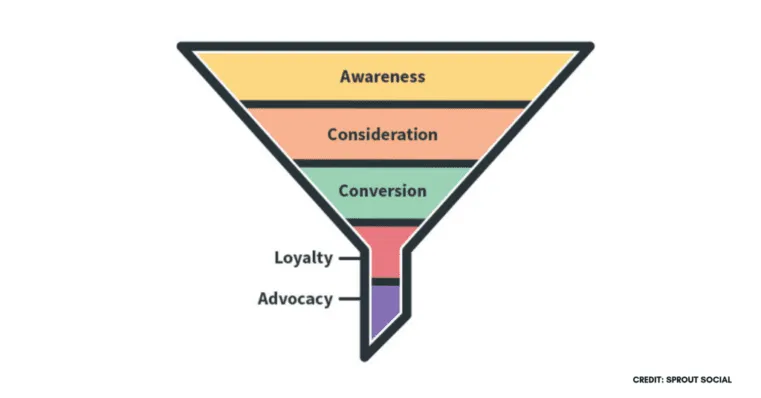
Stage 1: Awareness
The first stage of the funnel is awareness, where people are introduced to your brand for the first time. At this point, they might not know who you are or what you offer. Your goal is to capture attention and spark curiosity so they become interested in learning more.
How to create awareness on social media:
✔ Leverage social media ads: Use paid advertising on platforms like Facebook, Instagram, LinkedIn, and TikTok to reach new audiences.
✔ Share valuable and engaging content: Create eye-catching posts, videos, reels, or infographics that educate or entertain your target audience.
✔ Collaborate with influencers: Partnering with influencers in your niche can help introduce your brand to their followers.
✔ Use trending hashtags and SEO strategies: Optimize your social media content with relevant hashtags and keywords to boost visibility.
🔹 Key Metric to Track: Impressions, reach, and follower growth.
Stage 2: Consideration (or Interest)
Once users are aware of your brand, the next step is consideration—where they start evaluating whether your products or services meet their needs. At this stage, potential customers engage with your content, visit your website, or sign up for your email list.
How to build interest on social media:
✔ Provide informative content: Share blog posts, case studies, or how-to videos that showcase your expertise.
✔ Offer lead magnets: Free resources like e-books, checklists, or webinars can encourage users to provide their contact information.
✔ Engage with your audience: Respond to comments, messages, and questions promptly to establish trust.
✔ Retargeting ads: Use retargeting strategies to remind users about your brand and bring them back to your page or website.
🔹 Key Metric to Track: Engagement rate, website clicks, and video views.
Stage 3: Action (or Conversion)
This is the most crucial stage—where a lead takes action and becomes a paying customer. Your social media strategy should make it as easy as possible for them to purchase, sign up, or contact you.
How to drive conversions on social media:
✔ Create strong CTAs: Every post should have a clear call-to-action (CTA) that directs users toward the next step (e.g., “Buy Now,” “Sign Up,” “Book a Call”).
✔ Leverage social proof: Share customer testimonials, reviews, and success stories to build trust.
✔ Use limited-time offers: Discounts, exclusive deals, and urgency-based promotions encourage quick decisions.
✔ Simplify the buying process: Ensure your website or social media shop is mobile-friendly and easy to navigate.
🔹 Key Metric to Track: Conversion rate, purchases, and sign-ups.
Stage 4: Engagement
The funnel doesn’t stop after the purchase. The engagement stage is all about keeping customers interested and connected to your brand after they’ve converted. Engaged customers are more likely to make repeat purchases and recommend your brand to others.
How to engage customers post-purchase:
✔ Send personalized messages: Thank customers for their purchase and offer post-sale support.
✔ Encourage user-generated content (UGC): Ask customers to share their experience with your product on social media.
✔ Create loyalty programs: Offer exclusive perks, discounts, or points for repeat purchases.
✔ Keep them informed: Send updates, newsletters, or special promotions to keep them engaged.
🔹 Key Metric to Track: Repeat purchase rate, engagement on customer posts, and customer satisfaction scores.
Stage 5: Advocacy
The final stage of the funnel is advocacy, where satisfied customers become brand ambassadors. Loyal customers who love your product or service will promote your brand voluntarily, helping you attract more leads without extra marketing costs.
How to turn customers into advocates:
✔ Offer referral programs: Provide incentives for customers who refer friends or family.
✔ Encourage online reviews: Ask customers to leave positive reviews on platforms like Google, Yelp, or Trustpilot.
✔ Feature customer testimonials: Showcase happy customers on your social media pages.
✔ Engage with advocates: Give shoutouts, reshare their content, and make them feel valued.
🔹 Key Metric to Track: Referral rate, positive reviews, and brand mentions.
A well-structured social media conversion funnel helps businesses attract, nurture, and convert leads while building long-term relationships with customers. By understanding and optimizing each stage, brands can create a seamless journey that moves users from awareness to advocacy—ultimately driving higher engagement, better conversions, and increased customer loyalty.
Not Converting Leads? Here’s What You Could Be Doing Wrong
If your social media funnel isn’t converting leads into customers, it’s time to reassess your strategy. There are several common mistakes that businesses often make when trying to turn social media engagement into sales. Understanding and addressing these issues can help you optimize your funnel and start seeing better results.
One of the most significant errors is not fully understanding your audience. If you’re not targeting the right people or if your content doesn’t align with their needs and pain points, your efforts will be wasted. Without clear audience segmentation and personalized content, even the best ads and posts will fall flat. Make sure you’re speaking to your target demographic’s desires and challenges and crafting content that resonates with them at every stage of the funnel.
Another major problem is the lack of clear calls to action (CTAs). Many businesses make the mistake of posting content without guiding users on what to do next. Whether it’s signing up for a newsletter, downloading a free resource, or making a purchase, every post or ad should have a clear, compelling CTA. If your audience doesn’t know what action to take, they’re less likely to follow through.
The conversion process can also fail when businesses don’t focus enough on trust-building. In today’s digital age, consumers are more skeptical than ever. Without establishing credibility, showcasing social proof, or offering clear value, potential customers are likely to hesitate before making a purchase. It’s essential to include testimonials, case studies, and reviews that show your product or service has delivered real results for others. This helps build trust and move leads further down the funnel.
Sometimes, the user experience is the biggest hurdle. If your website is hard to navigate, slow to load, or not mobile-friendly, it can drive leads away. The buying process should be as simple and seamless as possible. Make sure your landing pages are optimized for conversions with easy navigation, clear information, and fast load times. A smooth, user-friendly experience encourages users to move forward in their purchase journey.
Another common issue is not nurturing leads after initial engagement. Many businesses focus all their energy on generating leads but neglect to follow up or engage with leads after the first point of contact. A lack of follow-up means lost opportunities for conversions. Engage with your audience by providing additional value, such as sending personalized emails, offering discounts, or delivering content that helps them further explore your offerings.
Lastly, failing to test and optimize your funnel can hinder conversions. Social media trends, platform algorithms, and customer preferences are constantly evolving, so what works today may not work tomorrow. Without regular testing and adjustments, your funnel can become stale. Experiment with A/B testing, analyze data, and optimize your approach based on what’s driving the most conversions. Don’t be afraid to change tactics when something isn’t working.
If your leads aren’t converting, it’s essential to evaluate every step of your funnel. Focus on understanding your audience, crafting clear CTAs, building trust, ensuring a smooth user experience, nurturing leads, and continuously optimizing your strategy. By identifying and addressing the issues holding back conversions, you can create a more effective social media funnel that drives real business results.
Ensure Your Social Media Funnel Never Runs Dry
The path to turning leads into loyal, paying customers is rarely straightforward. Often, leads can get distracted, drop off, or require multiple touchpoints before committing.
A strategically designed social media conversion funnel ensures your leads stay engaged and gently nudges them back on track, transforming their interest into long-term loyalty.
Let Pro Real Tech’s social media specialists create content that speaks to your audience at every stage of the funnel. We’ll refine your strategy, enhance targeting, and optimize your budget to deliver measurable results.
Our social media marketing services include:
- Lead Generation
- Social Media Management
- LinkedIn Marketing
- Twitter (X) Advertising
- Instagram Advertising
- SEO Copywriting
We also offer social media conversion rate optimization (CRO) services.
Choose what’s best for your business — connect with our SMM experts today.


