

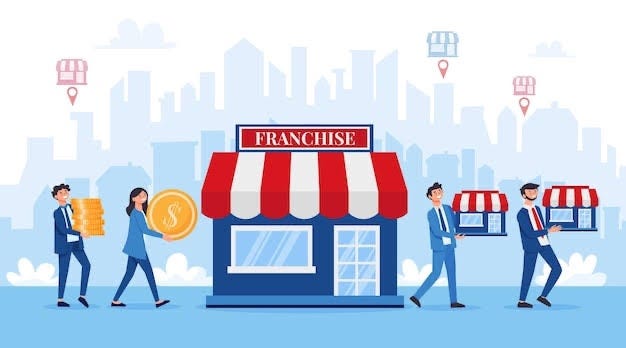
Starting a franchise can be a practical way to become a business owner without building a brand from zero. Instead of creating every part of the business yourself, you join an established business system. You typically pay the franchisor an initial fee and ongoing fees for the right to use its brand, products, systems, and support.
This model can save time. You may receive training, operating procedures, marketing materials, supplier relationships, and other resources that would take years to build independently. You also benefit from a brand that customers may already recognize.
However, a franchise is not a guaranteed path to profit. You still have to choose the right concept, study your local market, understand the franchise agreement, estimate your full startup costs, and create a plan for attracting customers.
The U.S. Federal Trade Commission (FTC) requires franchisors covered by the federal Franchise Rule to provide prospective franchisees with a Franchise Disclosure Document (FDD). The FDD contains 23 required categories of information about the franchise, its leadership, costs, legal history, and franchise network. You must receive the FDD at least 14 days before signing a franchise agreement or paying the franchisor or its affiliate.
That makes due diligence one of the most important parts of starting a franchise in 2026.
The basic process looks like this:
- Identify a franchise opportunity that fits your goals and budget.
- Research existing franchise owners and local competitors.
- Determine whether customers in your target market actually need the product or service.
- Calculate the complete startup and operating costs.
- Create a business plan with realistic financial projections.
- Form the appropriate legal business entity.
- Choose a location based on market data, not convenience alone.
Once the business is ready to launch, local marketing becomes another major priority. A well-known brand can bring recognition, but your specific location still needs to compete for attention in its market.
How Does a Franchise Business Work?
A franchise is a business arrangement between two parties: the franchisor and the franchisee.
The franchisor owns the brand, trademarks, business system, and other intellectual property. The franchisee is the independent business owner who receives permission to operate under that system.
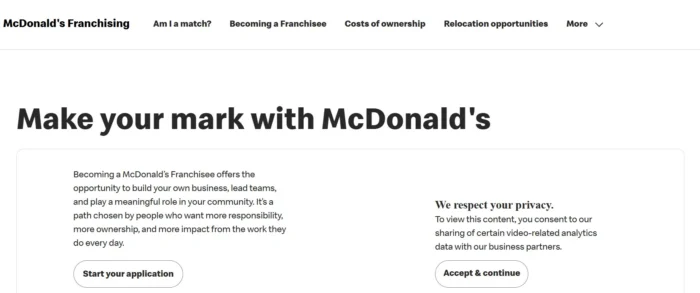
In a typical arrangement, the franchisee pays an initial franchise fee. The franchisee may also pay ongoing royalties based on sales and contribute to a marketing or advertising fund. In return, the franchisor may provide training, operational guidance, marketing resources, technology, supplier relationships, and brand assets.
The exact arrangement depends on the franchise agreement.
For example, imagine you purchase a franchise for a well-known quick-service restaurant. You do not need to create a new restaurant concept, develop a brand identity, design an entire menu, or build operating procedures from scratch. Instead, you operate a location according to the franchisor’s established system.
You still manage the local business. That can include hiring employees, managing expenses, serving customers, monitoring performance, and handling local marketing. At the same time, you must follow the franchisor’s rules.
This is one of the biggest differences between franchising and starting an independent business.
You generally get more guidance but less freedom.
The FTC’s franchise guidance is especially important here. Before investing, you should carefully review the FDD and pay attention to restrictions involving suppliers, territories, customers, online sales, advertising, and other parts of the business.
The FDD can also help you compare different franchise opportunities. For example, you can examine:
- Initial franchise fees
- Estimated initial investment
- Ongoing royalty fees
- Advertising fees
- Required equipment
- Training requirements
- Supplier restrictions
- Territory restrictions
- Financing information
- Litigation and bankruptcy history
- Franchisee turnover
- Contact information for current and former franchisees
The goal is not simply to find a recognizable brand. You want to find a franchise system whose costs, rules, support, and business model fit your financial situation and goals.
Benefits of Starting a Franchise Business
Franchise ownership has several advantages over building a completely new business. These benefits can make the model attractive to first-time entrepreneurs, although they do not remove the normal risks of business ownership.
More Support
One of the biggest benefits is access to an established support system.
A new independent business owner may need to figure out branding, operating procedures, supplier relationships, employee training, technology, marketing, and customer service from scratch.
A franchise often provides many of these systems already.
Depending on the agreement, support may include:
- Initial training
- Employee training materials
- Operations manuals
- Marketing templates
- Technology systems
- Supplier relationships
- Store design guidelines
- Product specifications
- Ongoing operational support
- Brand-level advertising
The level of support varies significantly between franchisors. That is why you should not assume that every franchise offers the same level of help.
Ask existing franchisees what support they actually receive. Their experience can be more useful than a sales presentation.
Lower Failure Rate
A franchise can reduce some of the uncertainty involved in starting a business because you are entering an established business model.
The concept may already have tested products, pricing structures, operating procedures, and marketing systems. You may also benefit from the franchisor’s experience with common operational problems.
But be careful with the phrase “lower failure rate.”
There is no guarantee that a franchise will succeed. A strong franchise can still fail because of poor management, high local competition, weak demand, excessive costs, or a bad location.
Your local market matters.
The FTC specifically warns prospective franchisees that it can take months to open a franchise, more than a year to reach break-even in some cases, and that some franchises never break even.
So think of franchising as a way to reduce certain startup risks, not eliminate business risk.
Built-In Brand Awareness
Building a new brand takes time.
An independent business must convince customers to recognize its name, understand its products, trust its quality, and choose it over established competitors.
A franchise starts with an advantage. Customers may already know the brand before your location opens.
That recognition can make customer acquisition easier. It can also give you access to existing marketing campaigns, brand assets, and customer expectations.
Still, national or regional awareness does not automatically create local sales.
Customers need to know that your location exists and that it is convenient for them. Your franchise still needs a strong Google Business Profile, positive reviews, local content, community involvement, and targeted advertising.
Better Buying Power
Franchise networks can sometimes provide stronger purchasing power than a small independent business.
A franchisor may negotiate supplier agreements for many locations at once. This can potentially produce better pricing, consistent product quality, and more reliable supply.
However, buying power comes with a trade-off.
Your franchise agreement may require you to purchase certain products or services from approved suppliers. You may not have complete freedom to shop around for the cheapest option.
That is why supplier rules deserve careful attention before you sign.
The FTC notes that franchise agreements can place restrictions on the suppliers from whom franchisees purchase goods and services.
Drawbacks of Owning a Franchise
The benefits of franchising come with important trade-offs.
First, you usually have to pay fees to the franchisor. These may include an initial franchise fee, ongoing royalties, advertising contributions, technology fees, or other charges. These expenses can reduce your profit margin.
Second, you have less control than you would have with an independent business.
You may have to follow rules covering:
- Products and services
- Pricing or promotional practices
- Store appearance
- Suppliers
- Technology
- Employee training
- Marketing
- Branding
- Operating procedures
- Territory and customer restrictions
You also need to consider the reputation of the entire franchise system. A problem at another location can sometimes affect customer perceptions of the broader brand.
For these reasons, read the FDD and franchise agreement carefully. Consider hiring a franchise attorney and an accountant before committing significant money.
How to Start a Franchise Business: 7 Steps
1. Identify a Business Opportunity
Start by deciding what type of franchise fits your interests, experience, lifestyle, and financial resources.
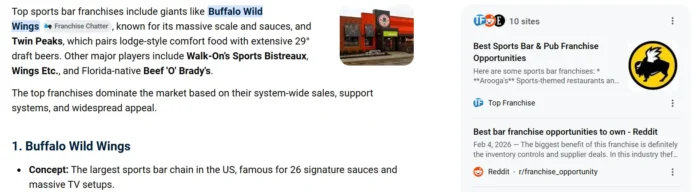
Franchises exist across many industries. Options can include restaurants, retail, home services, business services, education, health and wellness, senior care, travel, and mobile or home-based services.
Do not choose a franchise simply because the brand is famous.
Create a shortlist of several opportunities and compare them.
Look at:
- Total investment
- Initial franchise fee
- Royalty structure
- Advertising fees
- Training
- Ongoing support
- Financing options
- Territory availability
- Required working capital
- Contract length
- Renewal conditions
- Transfer and exit requirements
Then request the FDD from each serious candidate.
The FTC requires the FDD to contain 23 specific categories of information, giving prospective franchisees a structured way to evaluate the opportunity.
Your goal at this stage is to narrow the list to franchises that fit both your business goals and your financial capacity.
2. Research Current Owners and Potential Competitors
Do not make your decision based only on information provided by the franchisor.
Talk to current and former franchisees.
Ask them questions such as:
- What did it actually cost to open?
- How long did it take to become profitable?
- Were the estimated startup costs accurate?
- How helpful was the franchisor?
- Are ongoing fees reasonable?
- What problems did you face during the first year?
- Would you buy the franchise again?
- What do you wish you knew before signing?
The FDD can help you identify franchisees you can contact.
You should also study competitors in your target market. Search Google Maps and local search results for businesses offering similar products or services.
Look at:
- Number of competitors
- Customer ratings
- Review volume
- Pricing
- Locations
- Opening hours
- Services offered
- Customer complaints
- Market positioning
Do not limit your research to other franchises. Independent businesses and online competitors can also take customers from your location.
3. Determine Market Interest
A recognizable franchise does not guarantee enough local demand.
Your next task is to determine whether people in your target market actually want what the franchise sells.
Start by defining your target customer.
Consider factors such as:
- Age
- Income
- Household size
- Location
- Lifestyle
- Buying habits
- Common customer problems
- Price sensitivity
Then study the local market.
Look for population growth, income levels, traffic patterns, nearby businesses, housing developments, employment centers, and other factors that could influence demand.
You should also consider market saturation.
If several similar businesses already serve the same customers, opening another location may require a strong competitive advantage.
This is where your franchise research and local research come together. A business that performs well in one city may not produce the same results in another.
4. Research Startup Costs
Never budget only for the initial franchise fee.
The total investment can include many expenses before and after opening.
Common costs include:
- Initial franchise fee
- Lease or property costs
- Construction or renovations
- Equipment
- Inventory
- Technology
- Licenses and permits
- Insurance
- Employee wages
- Training and travel
- Professional fees
- Marketing
- Utilities
- Working capital
- Royalty payments
- Advertising contributions
The FTC advises prospective franchisees to investigate costs beyond the initial figures disclosed by the franchisor. It also recommends estimating operating expenses for the first year and considering personal living expenses while the business gets established.
The SBA similarly recommends separating one-time startup expenses from recurring monthly expenses and calculating enough capital to cover the business during its early stages.
The FDD is an important starting point. Pay particular attention to the sections covering initial investment and fees.
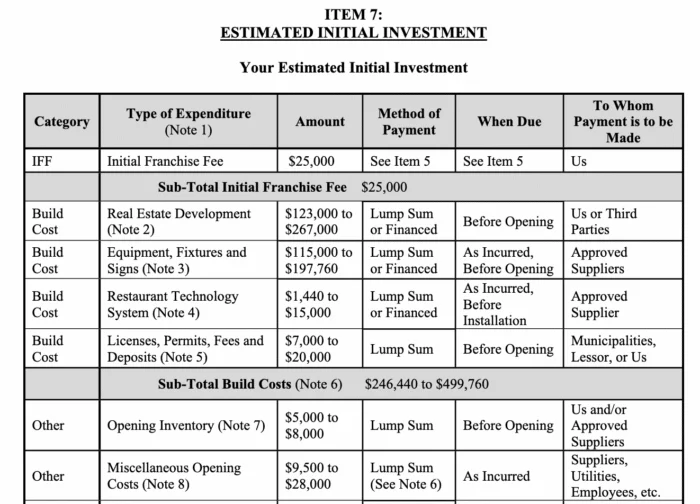
Then build your own financial model.
Estimate:
Total startup capital = one-time costs + opening expenses + working capital + emergency reserve
Your model should also include conservative revenue assumptions. Do not build your plan around the best-performing franchise locations.
5. Create a Business Plan
A franchise may already have a proven business model, but you still need a business plan.
Your plan should explain how your specific location will operate and make money.
The SBA recommends covering areas such as the company description, market analysis, organization and management, funding, financial projections, and marketing and sales.
For a franchise, your plan should also include:
- Franchise fees
- Royalty payments
- Advertising contributions
- Local competition
- Target customers
- Location strategy
- Staffing requirements
- Pricing assumptions
- Monthly operating expenses
- Revenue projections
- Break-even analysis
- Funding requirements
- Local marketing strategy
- Potential risks
Build multiple scenarios.
For example:
Conservative: Lower sales and slower customer growth.
Expected: Reasonable sales based on market research.
Optimistic: Strong customer demand and faster growth.
This approach gives you a better view of how much cash you may need if the business takes longer than expected to reach profitability.
A business plan can also help when you seek financing because lenders and investors need to understand how the business will generate enough cash to cover its expenses and debt.
6. Form an LLC or Corporation
Before opening, you will usually need to establish the legal structure for your business.
Many franchise owners choose an LLC or corporation, but the right structure depends on your situation, the franchisor’s requirements, tax considerations, and state law.
An LLC can provide liability protection between the business and its owners in many circumstances. A corporation is also a separate legal entity with its own rules and obligations.
The exact benefits and tax treatment depend on how the entity is formed and operated.
Do not choose a structure simply because another franchise owner uses it.
Talk with a qualified attorney and tax professional about:
- Liability protection
- Taxes
- Ownership
- Payroll
- State requirements
- Franchise agreement requirements
- Insurance
- Future ownership changes
You will also need to handle applicable registrations, licenses, permits, tax accounts, and other legal requirements.
The SBA notes that your business location can affect registration, taxes, licenses, permits, and operating costs.
7. Choose an Initial Location
Location can make or break a physical franchise.
A good site puts the business close to its target customers. A poor site can make customer acquisition expensive, even when the franchise brand is strong.
Do not choose a location just because it is close to your home or has cheap rent.
Study:
- Foot traffic
- Vehicle traffic
- Parking
- Visibility
- Accessibility
- Nearby businesses
- Population density
- Customer demographics
- Competitor locations
- Rent
- Local wages
- Zoning requirements
- Future development
Consider both current and future conditions.
A new road could reduce traffic near your site. A new shopping center, residential development, or office complex could increase it.
The SBA recommends considering location-specific costs such as wages, property values, rent, insurance, utilities, licenses, and fees when choosing where to operate.
Your franchisor may also have rules about territory and site approval. Some franchisors help identify or approve locations, while others leave much of the process to the franchisee.
Before signing a long-term lease, make sure the location works financially and operationally.
A strong franchise brand cannot completely overcome a location that has poor access, weak demand, excessive competition, or costs that are too high.
How to Market Your New Franchise
A franchise gives you a major marketing advantage: customers may already recognize the brand. But brand awareness does not guarantee that people will choose your specific location.
Your franchise still has to compete for local searches, reviews, clicks, calls, visits, and sales. The most effective approach is to combine the franchisor’s national marketing with campaigns built around your local market. The three areas below are a strong starting point.
Local SEO for Franchise Locations
Local SEO helps your franchise appear when people search for businesses near them. This is especially important for restaurants, retail stores, home services, fitness centers, healthcare businesses, and other location-based franchises.
Start with your Google Business Profile. Claim and verify the profile for your location, then make sure the business name, address, phone number, hours, website, category, services, and other details are accurate. Google says complete and accurate Business Profiles are more likely to appear for relevant local searches. Local rankings are mainly influenced by relevance, distance, and prominence.
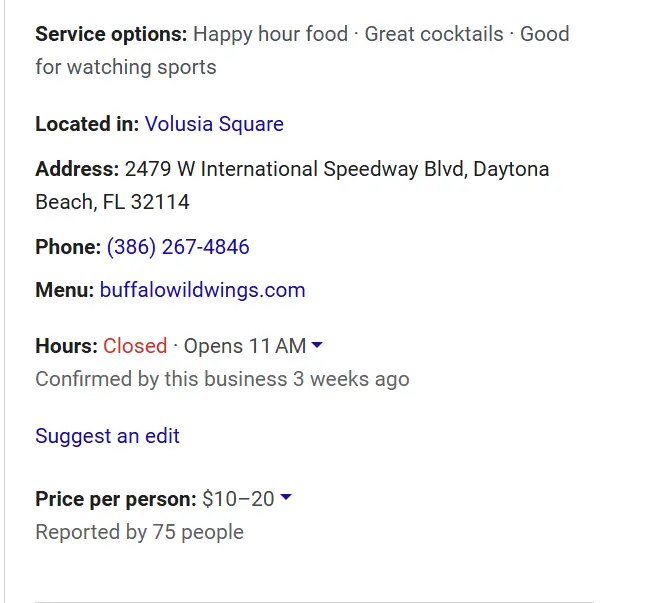
For a franchise with multiple locations, each location needs accurate local information. Google also has specific guidelines for chains and brands, including consistent names and categories across locations. Businesses with 10 or more locations can use Google’s bulk management options.
Your local SEO strategy should include:
- A separate, accurate profile for each eligible location
- Location-specific website pages
- Consistent business information across important directories
- Relevant local keywords
- High-quality photos and videos
- Accurate opening hours and holiday hours
- Regular review monitoring and responses
- Useful local content
- Location-specific links and mentions
- Clear directions, phone numbers, and calls to action
Reviews deserve special attention. Customers often compare ratings and recent reviews before choosing a local business. Respond to both positive and negative reviews professionally. Google itself recommends responding to reviews and keeping business information current.
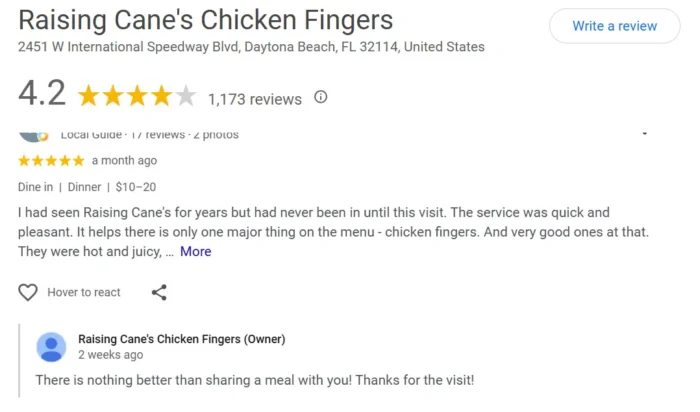
Do not create one generic location page and simply replace the city name. Give each page useful local information. Mention the services offered at that location, nearby areas served, parking information, local promotions, and other details that help customers make a decision.
The goal is simple: when someone searches for the product or service you offer in your area, your franchise location should be easy to find and easy to choose.
Paid Advertising on a Local Budget
You do not need a national advertising budget to get started with paid media.
A franchise location can use geo-targeted advertising to reach people in its service area. Google Ads, for example, allows advertisers to use location targeting so campaigns can focus on relevant geographic areas.
Start with a small budget and focus on high-intent searches.
For example, a local home-service franchise could target searches such as:
- Emergency plumber near me
- Plumbing service in [city]
- Water heater repair [city]
- Local plumbing company
A restaurant could target searches around its location, menu, services, and high-intent terms.
Paid social can also support local promotions. You can target specific geographic areas and create campaigns around opening promotions, seasonal offers, events, or lead-generation campaigns.
However, check your franchise agreement before launching campaigns. Your franchisor may have rules about approved creative, keywords, offers, landing pages, social advertising, or local ad spending. The FDD also contains information about advertising fees and the franchisor’s advertising obligations.
Track more than clicks.
For a local franchise, useful metrics include:
- Phone calls
- Direction requests
- Website leads
- Online bookings
- Coupon or offer redemptions
- Store visits
- Cost per lead
- Cost per acquisition
- Revenue from campaigns
A small campaign that generates 20 qualified calls can be more valuable than a large campaign that generates thousands of low-quality clicks.
Social Media and Brand Consistency Under a Franchisor
Social media gives franchisees a way to connect the larger brand with the local community.
The challenge is maintaining brand consistency while still creating content that feels local.
Your franchisor may provide rules covering:
- Logo use
- Colors and fonts
- Tone of voice
- Approved images
- Hashtags
- Promotional language
- Customer communications
- Crisis responses
- Content approval
Follow those rules. A franchisee represents the larger brand, so an inappropriate local post can create problems beyond one location.

At the same time, avoid making every post feel like a corporate advertisement.
Create content that highlights your location and community. You could feature local employees, customer stories, community events, partnerships, local causes, seasonal activities, or behind-the-scenes moments.
The ideal balance is national brand consistency plus local relevance.
Your franchisor may already provide a library of approved creative assets. Use those materials when appropriate, then add original local content that fits the brand guidelines.
This approach helps customers recognize the franchise while giving them a reason to connect with your particular location.
Common Mistakes to Avoid When Starting a Franchise
Buying a franchise can reduce some of the uncertainty involved in starting a business. It does not remove the need for careful research.
Many problems begin before the doors even open. Avoid these common mistakes.
Trusting franchisor-reported revenue figures at face value
A franchisor may show strong sales figures or highlight successful franchise locations. That information can be useful, but it should not be treated as a promise of what your location will earn.
Look carefully at the FDD and the information it provides about financial performance. Then speak with current and former franchisees.
Ask what their actual experience has been.
Compare businesses in markets similar to yours. A high-performing location in a major city may not provide a realistic benchmark for a smaller market.
You should also look at profitability, not just revenue. A location can generate substantial sales while still producing weak profits because of rent, payroll, supplies, royalties, advertising costs, debt, and other expenses.
Underestimating hidden startup costs
The franchise fee is only one part of the investment.
You may also need money for equipment, construction, inventory, insurance, permits, professional services, training, travel, payroll, marketing, technology, rent deposits, and working capital.
Some expenses can occur before the business generates its first dollar.
Create a detailed startup budget and include a cash reserve. Review the estimated investment in the FDD, but also ask current franchisees whether their real costs matched the franchisor’s estimates.
The FTC recommends carefully examining the costs and financial risks before buying a franchise. It also warns prospective franchisees to consider expenses that may continue until the business reaches break-even.
Skipping the business plan because the model feels “already proven”
A franchise gives you an established business model. It does not give you an established customer base for your particular location.
Your business plan should explain how your franchise will operate in its specific market.
Include:
- Target customers
- Local competitors
- Pricing
- Staffing
- Startup costs
- Monthly expenses
- Sales projections
- Break-even point
- Financing
- Marketing strategy
- Potential risks
Build conservative financial projections. If the business only works when everything goes perfectly, the model may be too risky.
Choosing a location based on convenience rather than data
The closest location to your home is not necessarily the best location for your customers.
Study traffic, visibility, parking, accessibility, demographics, nearby businesses, competitors, rent, and future development.
Think about what could change after you sign the lease.
For example, a new shopping center could increase traffic. A new road could divert traffic away. Development plans can also change or never happen, so do not base your entire investment on an uncertain future project.
Your location should be supported by evidence rather than convenience.
Treating marketing as optional because the brand is already established
Brand recognition can help people discover your business. It does not guarantee that they will visit your location.
Customers still need to find you in local search, see positive reviews, notice your promotions, and understand why they should choose your location.
Start marketing before opening day when possible.
Claim your local profiles, build location-specific pages, prepare social content, collect legitimate customer reviews after launch, and plan paid campaigns around your opening.
Marketing should be treated as an operating expense, not something you add only when sales are weak.
Franchise Marketing in Action: An NP Digital Case Study
A useful example of franchise-style local marketing comes from a campaign for Discovery Senior Living, a senior living operator with communities across the United States.
The challenge was clear. Individual communities needed stronger visibility for non-branded local searches while competing with established names in the senior living market.
The strategy focused on local SEO rather than relying only on brand recognition.
The work included optimizing Google Business Profiles, improving community-level homepage content, and building relevant backlinks to priority locations.
The reported results included:
- 146% growth in top-three keyword rankings across the portfolio within 12 months.
- Organic traffic share increased from 7% to 12% in eight months.
- Priority assisted-living pages recorded 85% month-over-month click growth after homepage content improvements.
- In May 2026, 47% of organic leads were classified as warm, hot, or move-in leads, with 84% converting through direct phone calls.
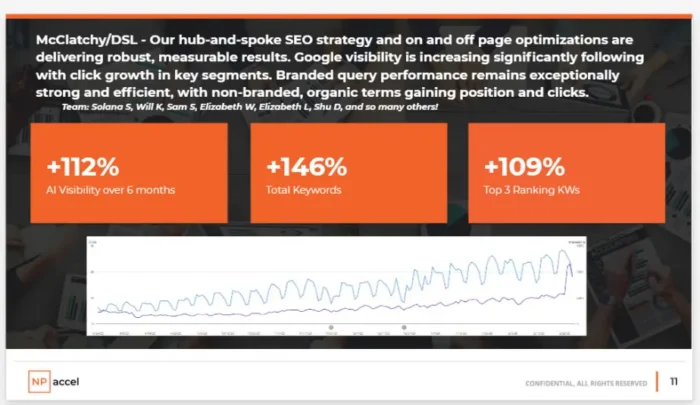
The larger lesson is more important than the individual numbers.
A recognized brand still needs strong local visibility.
For franchise owners, this means national branding should support local marketing rather than replace it. Each location needs accurate local information, useful content, strong reviews, and campaigns that target the people who can realistically become customers.
FAQs
How much money do I need to start a franchise business?
There is no single amount. Franchise investment can range from relatively low-cost home-based concepts to multimillion-dollar brick-and-mortar operations.
Your total budget may include the franchise fee, equipment, property or rent, construction, inventory, licenses, insurance, employee costs, training, marketing, professional fees, and working capital.
The FDD is the best starting point for understanding a specific franchise’s estimated investment. Compare that estimate with your own financial model before investing.
How much do franchise owners make per year?
Franchise owner income varies widely.
Revenue is not the same as personal income. A franchise may generate high sales while its owner takes home much less after payroll, rent, supplies, royalties, advertising fees, taxes, debt payments, and other expenses.
Your potential income depends on the franchise, location, operating costs, management, customer demand, and many other factors.
Do not use an industry-wide average as your personal income forecast. Review the franchise’s financial disclosures and speak with current owners instead.
Can I start a franchise business for free?
Generally, no.
A legitimate franchise normally involves some combination of an initial franchise fee, startup expenses, ongoing royalties, and operating costs.
Some low-cost franchises require much less capital than a restaurant or retail location, but “low cost” does not mean “free.”
If you have limited capital, investigate financing options, but make sure you understand the repayment obligations before taking on debt.
How do you start a franchise business?
Start by choosing a franchise that matches your budget, experience, and goals. Then review its FDD, speak with current and former franchisees, study local competition, validate market demand, calculate your full startup costs, create a business plan, establish your legal entity, and select a suitable location.
Once the business is ready, launch local SEO, paid advertising, social media, and other marketing activities that comply with the franchisor’s rules.
What is the most profitable franchise?
There is no single franchise that is guaranteed to be the most profitable for every owner.
Profitability depends on the brand, location, investment size, operating costs, demand, competition, and the owner’s ability to manage the business.
A franchise with high revenue may have high expenses. A smaller business with lower revenue may produce better margins.
Instead of asking only which franchise is most profitable, compare expected revenue, total investment, operating costs, fees, and realistic owner profit.
How do I purchase a franchise business?
Begin by researching franchise opportunities and narrowing your options.
Request and review the FDD before signing anything. Speak with current and former franchisees and investigate the franchise’s costs, support, restrictions, litigation history, turnover, and financial information.
You should also have qualified legal and financial professionals review the documents before you commit.
After selecting a franchise, secure the required financing, establish your business entity, complete the required agreements and training, and work with the franchisor on your location and opening.
Under the FTC’s Franchise Rule, covered franchisors generally must provide the FDD at least 14 days before you sign a franchise agreement or make a payment.
How do I run a franchise business successfully?
Follow the franchise system while managing your location like a real business.
Focus on:
- Customer experience
- Employee training
- Cost control
- Cash flow
- Local marketing
- Online reviews
- Local SEO
- Inventory management
- Sales performance
- Compliance with franchise standards
Do not assume the franchisor will handle everything.
Your job is to understand your local customers and make sure your location delivers a strong experience.
How do I establish a franchise business?
Establishing a franchise involves more than paying the initial fee.
First, choose the right franchise and complete your due diligence. Then review the FDD and franchise agreement, arrange funding, establish the required legal entity, complete licenses and permits, secure an approved location, complete training, hire staff, and prepare your operations.
Your marketing should also begin before or around launch.
Set up your local search presence, prepare your website and social profiles, create approved promotional material, and plan paid campaigns so potential customers can find your location when it opens.
Conclusion
Starting a franchise can give you access to an established brand, proven systems, training, supplier relationships, and ongoing support. Those advantages can make franchising appealing compared with building a business completely from scratch.
But a franchise is still a serious financial commitment.
The strongest approach is to slow down before you invest. Compare several opportunities, study the FDD, talk to existing franchisees, research your local market, calculate the complete cost, and build a realistic business plan.
Then choose your location based on data and prepare your marketing before opening.
Most importantly, do not confuse brand recognition with guaranteed customers. Your franchisor may provide the brand, but your local team still has to earn attention, trust, reviews, and sales.
A franchise gives you a starting point. Your research, management, location, and local marketing determine how well you build from it.
Read More: Mobile Marketing for Local Businesses: Best Practices for 2026


