

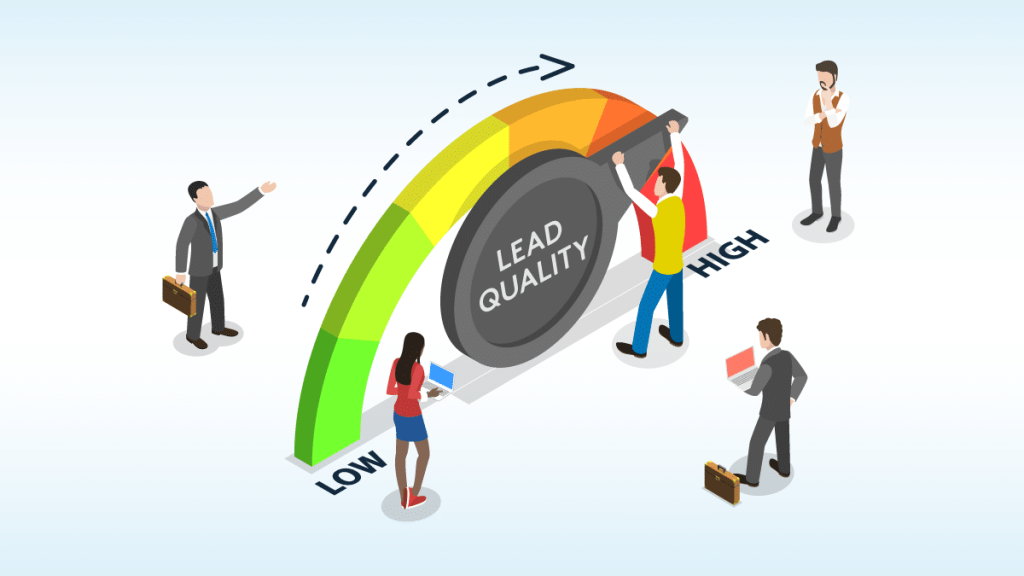
Generating leads is no longer the biggest challenge for most businesses. The real challenge is generating the right leads.
Many companies invest heavily in search engine optimization (SEO), content marketing, paid advertising, and social media campaigns only to discover that a large percentage of their website inquiries never turn into customers. Sales teams spend hours chasing prospects who have no budget, no urgency, no decision-making authority, or no genuine interest in the service being offered.
The problem has become even more noticeable in recent years. AI-powered search experiences, zero-click discovery, automated form submissions, and increasingly crowded digital channels have made it easier than ever for people to interact with websites without having strong buying intent. As a result, businesses often see rising lead volume while conversion rates and sales opportunities remain stagnant.
Low-quality leads create more than just frustration. They waste marketing budgets, consume sales resources, distort reporting metrics, and make it harder to identify genuine growth opportunities. A business may believe its lead generation efforts are performing well because form submissions are increasing, when in reality the pipeline is filled with prospects who will never become customers.
This is why modern lead generation requires a different mindset. Your website should not function as a simple lead collection tool. Instead, it should act as a lead qualification system that attracts ideal prospects, filters out poor-fit inquiries, and guides high-intent buyers toward meaningful conversations.
The goal is not to reduce the number of leads coming through your website. The goal is to increase the percentage of leads that are genuinely qualified, sales-ready, and capable of becoming profitable customers.
Why Low-Quality Leads Happen (Even With Strong Marketing)
Many businesses assume low-quality leads are the result of poor marketing. In reality, companies with strong traffic numbers, well-designed websites, and successful advertising campaigns often face the same problem.
The issue usually isn’t a lack of visibility. It’s a lack of alignment between the audience being attracted and the audience the business actually wants to serve.
Broad Messaging Attracts the Wrong Audience
One of the most common causes of low-quality leads is overly broad positioning.
Statements like “We help businesses grow” or “We provide solutions for companies of all sizes” may sound appealing, but they fail to communicate who the service is specifically designed for. When messaging lacks focus, visitors who are not a good fit may still believe the offering applies to them.
Clear positioning helps potential customers self-qualify before they ever reach a contact form. The more specific your messaging is about who you serve, the easier it becomes to attract the right prospects and discourage the wrong ones.
Generic Contact Forms Create Qualification Problems
Many websites still rely on a single “Contact Us” page for every type of visitor.
The problem is that not everyone arriving on your website has the same intent. Some visitors are ready to buy. Others are comparing vendors. Some are researching future options, while others simply have a question.
When all visitors are pushed into the same conversion path, low-intent inquiries become mixed with high-value opportunities. This creates unnecessary work for sales teams and makes it difficult to prioritize serious buyers.
Lack of Pricing Information Causes Budget Mismatches
Budget misalignment remains one of the biggest reasons leads fail to convert.
If visitors cannot understand your pricing range, project minimums, or engagement requirements, they often submit a form simply to ask basic cost-related questions. In many cases, their expectations are significantly lower than the actual investment required.
Even partial pricing transparency can help filter out inquiries that are unlikely to become viable opportunities.
Forms Collect Contact Information Instead of Qualification Data
A form that only asks for a name, email address, and phone number gathers contact information but reveals very little about lead quality.
Without information about budget, timeline, company size, project requirements, or service needs, businesses have no reliable way to distinguish serious buyers from casual researchers.
Modern lead generation strategies focus on collecting enough information to understand intent without creating unnecessary friction for qualified prospects.
Traffic Quality Doesn’t Always Match Lead Quality
More traffic does not automatically mean better leads.
Visitors may arrive from informational blog posts, AI-generated search summaries, social media content, or broad advertising campaigns without any immediate buying intent. These users may engage with the website but are not necessarily ready to purchase.
This is why businesses should evaluate traffic sources based on lead quality, pipeline contribution, and revenue impact rather than traffic volume alone.
Spam Bots and Automated Submissions Continue To Grow
Website spam remains a major issue in 2026.
Automated bots can submit forms, schedule appointments, generate fake inquiries, and distort lead generation reports. Some businesses discover that a significant percentage of their submissions are not legitimate prospects at all.
Without proper protections such as CAPTCHA, email validation, honeypot fields, server-side verification, and AI-assisted spam detection, businesses can waste substantial time following up on fake leads.
Marketing and Sales Often Define Lead Quality Differently
Another common problem occurs when marketing and sales teams use different definitions of a qualified lead.
Marketing may celebrate increasing lead volume, while sales focuses on conversion rates and closed deals. If both teams are not aligned on what constitutes a valuable lead, optimization efforts often prioritize quantity over quality.
The most successful organizations establish clear qualification criteria and measure success based on revenue contribution rather than raw lead counts.
What a High-Quality Lead Looks Like
A high-quality lead is not simply someone who fills out a form.
A high-quality lead is a prospect who closely matches your ideal customer profile and has a realistic likelihood of becoming a customer within a reasonable timeframe.
While exact qualification criteria vary by industry, most high-quality leads share several important characteristics.
They Match Your Ideal Customer Profile
Strong leads fit the types of customers your business is designed to serve.
Depending on the organization, this may include factors such as:
- Industry
- Company size
- Geographic location
- Revenue range
- Business model
- Specific use case
- Target market segment
The closer a prospect aligns with these characteristics, the higher the probability that they will become a successful customer.
They Have a Problem Your Business Solves
Good leads are not simply interested in information.
They have a genuine challenge, pain point, or objective that directly relates to your products or services. More importantly, they recognize the problem and are actively searching for a solution.
A prospect who understands their problem is typically much closer to making a purchasing decision than someone who is merely gathering information.
They Demonstrate Buying Intent
Intent is one of the strongest indicators of lead quality.
High-intent prospects often:
- Visit pricing pages
- Review case studies
- Compare service options
- Return to the website multiple times
- Download solution-focused resources
- Request consultations or proposals
These actions suggest that the prospect is evaluating potential vendors rather than casually browsing.
They Have Realistic Budget Expectations
Budget does not always need to be finalized, but high-quality leads generally understand the level of investment required.
Prospects who expect enterprise-level services at bargain prices rarely become successful customers. On the other hand, leads with realistic expectations are far more likely to progress through the sales process.
This is why many businesses now use budget ranges, project minimums, or pricing guidance as part of their qualification process.
They Have a Reasonable Timeline
Timing matters.
A prospect who plans to make a decision within the next few weeks or months is typically more valuable than someone who may revisit the project years from now.
Timeline questions help businesses prioritize follow-up efforts and identify opportunities that deserve immediate attention.
They Provide Accurate Information
A qualified lead provides legitimate contact details and responds to communication attempts.
Accurate information signals genuine interest and allows sales teams to continue meaningful conversations. Invalid phone numbers, fake email addresses, and incomplete submissions often indicate low intent or fraudulent activity.
They Are Likely To Generate Long-Term Value
The best leads are not simply those who close quickly. They are prospects who have the potential to become profitable, long-term customers.
Customer lifetime value, retention potential, expansion opportunities, and overall strategic fit should all play a role in determining lead quality.
Ultimately, the purpose of lead qualification is not to eliminate leads. It is to help businesses identify which opportunities deserve the most attention while creating a better experience for both prospects and sales teams.
10 Modern Tactics To Improve Lead Quality (Without Killing Conversions)
Improving lead quality is not about reducing leads—it’s about engineering your website so the right prospects self-select and the wrong ones naturally drop off. In modern digital funnels (especially in 2026), this is done through a combination of messaging precision, smarter UX, behavioral tracking, and structured qualification systems.
Below are 10 practical, up-to-date tactics that help businesses improve lead quality while still maintaining strong conversion rates.
1) Align Website Messaging With the Ideal Customer (And Repel the Wrong Fit)
Most lead quality issues begin at the messaging level. If your homepage and landing pages are too broad, they will attract a broad (and often irrelevant) audience.
Instead of trying to appeal to everyone, modern high-performing websites are built around a clearly defined Ideal Customer Profile (ICP). This means your messaging should:
- Speak directly to a specific industry or use case
- Highlight pain points relevant only to your best-fit customers
- Avoid vague claims like “we help businesses grow”
- Include specificity around outcomes, size, or complexity
A subtle but powerful shift is learning how to repel low-fit visitors intentionally. This is not about being exclusionary—it’s about clarity. When messaging is precise, unqualified visitors naturally disengage, while qualified prospects feel understood and continue deeper into the funnel.
2) Add Intent-Based Conversion Paths Instead of One “Contact Us” Option
A single contact form is one of the biggest contributors to poor lead quality.
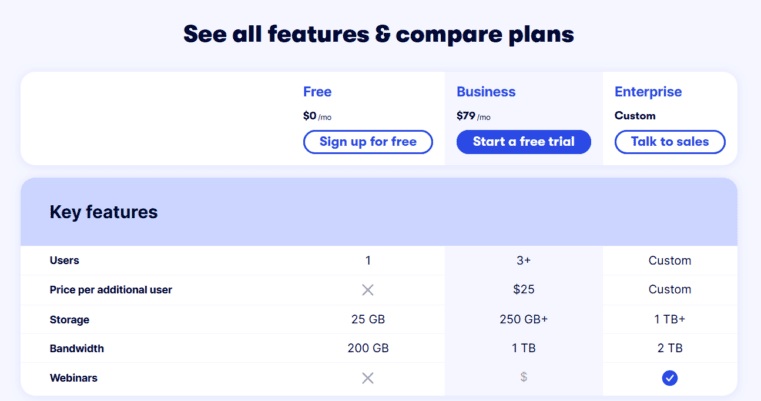
Different visitors have different intent levels:
- Some are ready to buy now
- Some want pricing
- Some need a consultation
- Some are just researching
Instead of forcing everyone into one funnel, modern websites use intent-based conversion paths, such as:
- “Book a demo” for high-intent buyers
- “Get pricing” for cost-sensitive visitors
- “Download guide” for early-stage researchers
- “Request proposal” for enterprise buyers
This segmentation allows you to separate curiosity from commercial intent, ensuring sales teams focus on the right conversations.
3) Use Smart Forms To Pre-Qualify (Without Turning Them Into Interrogations)
Forms are no longer just data collection tools—they are qualification systems.
However, there is a balance to maintain. Overly long forms reduce conversions, while overly simple forms increase low-quality leads.
Smart forms solve this by:
- Using conditional logic (questions change based on answers)
- Asking only 2–4 high-value qualifying questions
- Collecting key data like budget range, timeline, and company size
- Breaking forms into multi-step flows for better completion rates
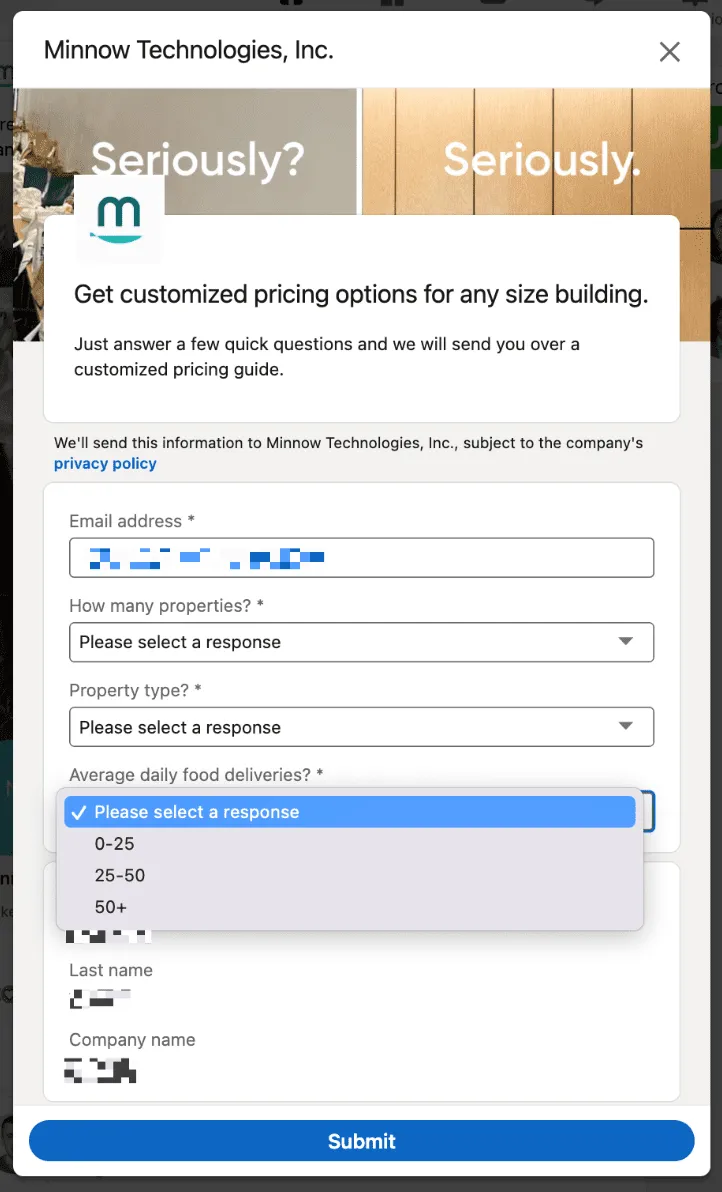
For example, instead of asking 10 questions upfront, you can start with intent-based questions like “What are you looking for?” and dynamically adjust follow-ups.
This approach improves lead quality without overwhelming users.
4) Implement AI-Assisted Lead Qualification Carefully and Transparently
AI is increasingly being used to improve lead quality in real time.
Modern systems can:
- Score leads based on behavior and form inputs
- Detect spam or low-intent patterns
- Predict conversion likelihood
- Route leads to different sales workflows
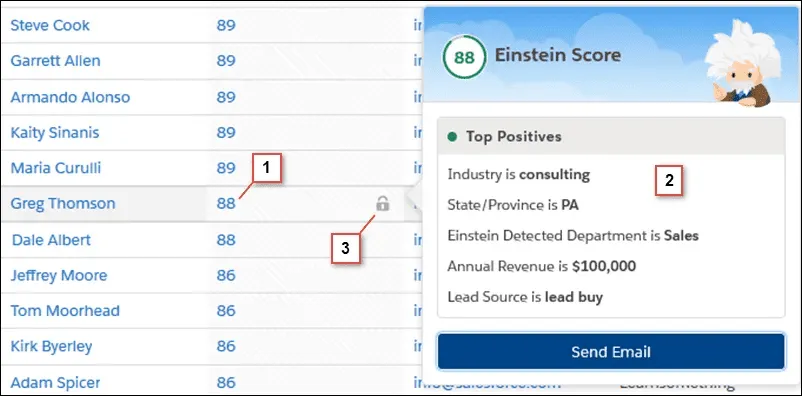
For example, a visitor who repeatedly views pricing pages and case studies may receive a higher lead score than someone who only reads a blog post.
However, transparency matters. Businesses should avoid hidden automation that feels manipulative. AI should support the user experience, not replace trust-building.
Used correctly, AI ensures sales teams focus their energy on the highest-value opportunities first.
5) Reduce Friction for Good Leads and Increase Friction for Bad Ones
One of the most effective modern CRO strategies is selective friction design.
The idea is simple:
- Good leads should convert easily
- Poor-fit leads should face additional steps
Examples include:
- Offering instant booking for qualified segments
- Adding extra qualification questions for high-risk inquiry types
- Requiring email verification for certain actions
- Using multi-step flows that naturally filter casual visitors
The goal is not to block conversions—it is to guide behavior so that serious buyers move faster while casual users self-filter.
6) Improve Pricing Transparency To Stop Budget-Mismatch Inquiries
One of the most preventable sources of low-quality leads is budget mismatch.
When pricing is completely hidden, users are more likely to submit generic inquiries just to “find out the cost,” even if they are not a fit.
Modern approaches include:
- Displaying starting prices or ranges
- Explaining minimum project requirements
- Providing pricing calculators or estimators
- Clarifying what affects cost (scope, complexity, scale)
This doesn’t mean exposing every detail. Instead, it means giving enough context so unqualified leads can self-disqualify early.
Transparent pricing reduces wasted sales effort while improving trust with serious buyers.
7) Filter Leads With More Specific CTAs (Ask for Commitment, Not Curiosity)
Generic CTAs like “Contact Us” attract low-intent traffic.
Stronger CTAs are more specific and expectation-setting, such as:
- “Book a 30-minute strategy call”
- “Get a custom quote”
- “Check eligibility”
- “See if we’re a fit”
These CTAs psychologically filter out casual browsers because they require a clearer level of intent.
A strong CTA acts as a pre-qualification statement, not just a button.
When users click a commitment-based CTA, they are already signaling higher purchase intent.
8) Use Behavioral Signals To Route Leads (Not Just Form Fields)
Modern lead qualification goes beyond what users type into forms.
Behavioral signals are now equally important, such as:
- Pages visited (pricing, services, case studies)
- Time spent on site
- Return visits
- Scroll depth and engagement
- Click patterns on key conversion pages
These signals can be used to:
- Route leads to different sales reps
- Trigger faster follow-ups for high-intent users
- Prioritize CRM pipelines automatically
- Personalize outreach messaging
For example, a lead who visits pricing pages three times in one week should be treated very differently from someone who only reads a blog article.
This shift transforms lead management from static to behavior-driven.
9) Block Spam and Bot Submissions (Treat It as Revenue Protection)
Lead spam is no longer a minor inconvenience—it is a measurable revenue problem.
Automated bots can distort performance metrics, waste sales time, and pollute CRM systems.
Modern protection methods include:
- Advanced CAPTCHA alternatives (less intrusive UX-based checks)
- Honeypot fields (invisible traps for bots)
- Email domain validation (blocking suspicious domains)
- IP and velocity tracking (detecting repeated submissions)
- AI-driven anomaly detection in form behavior
The key is balancing security with usability. Overly aggressive filters can block real users, so systems should be continuously monitored and refined.
10) Align Marketing and Sales Definitions of Lead Quality (And Measure the Right Thing)
Even the best technical systems fail if marketing and sales are not aligned.
A common issue is that:
- Marketing optimizes for lead volume
- Sales optimizes for close rate and revenue
Without shared definitions, both teams measure success differently, leading to misaligned strategies.
To fix this, businesses should define:
- What qualifies as a Marketing Qualified Lead (MQL)
- What qualifies as a Sales Qualified Lead (SQL)
- What signals indicate readiness to buy
- Which lead sources generate actual revenue
Instead of focusing on total submissions, companies should prioritize:
- Conversion-to-customer rate
- Revenue per lead
- Sales acceptance rate
- Lead-to-opportunity ratio
When both teams align on what “good” looks like, optimization becomes significantly more effective.
Putting It All Together: A Simple Lead-Quality Framework
Improving lead quality becomes much easier when you stop thinking in isolated tactics and start thinking in systems. Most businesses don’t struggle because they lack traffic or leads—they struggle because their website treats every visitor the same way, regardless of intent, fit, or buying readiness.
A simple, modern lead-quality framework can be broken into four layers:
1. Attract the Right Audience (Input Layer)
Everything starts with traffic quality. SEO, ads, and content should be tightly aligned with your Ideal Customer Profile (ICP). Instead of chasing broad keywords or generic audiences, focus on:
- High-intent search terms tied to specific problems
- Industry-specific landing pages
- Content that reflects real buyer pain points
- Channels that historically produce customers (not just clicks)
The goal is not maximum traffic—it is relevant traffic with commercial intent.
2. Qualify Through Messaging and UX (Pre-Conversion Layer)
Before a user even reaches a form, your website should be silently filtering them.
This happens through:
- Clear positioning that defines who the service is for
- Intent-based pages (pricing, demos, consultations)
- Specific calls-to-action that signal seriousness
- Transparent expectations around outcomes and pricing
At this stage, low-fit visitors should naturally disengage, while high-fit users continue deeper.
3. Capture and Score Leads (Conversion Layer)
Once a user converts, the system should immediately evaluate lead quality using:
- Smart form inputs (budget, timeline, company size)
- Behavioral signals (pages visited, engagement depth)
- AI-assisted scoring models
- Spam detection and validation systems
This is where raw inquiries become structured data that sales teams can prioritize effectively.
4. Route and Optimize (Post-Conversion Layer)
Not all leads should be treated equally after submission. High-intent leads should receive fast, personalized responses, while lower-intent leads can be nurtured over time.
Key actions include:
- Automated CRM routing based on lead score
- Fast response times for high-value prospects
- Nurture sequences for early-stage leads
- Continuous feedback loops between sales and marketing
When these four layers work together, lead quality improves without reducing overall conversion volume.
The result is a system where your website doesn’t just generate leads—it generates predictable, prioritized, and revenue-ready opportunities.
Your Strongest Next Step: Request a Proposal or CRO Audit
If your sales team is spending too much time on unqualified inquiries or your pipeline is being distorted by inconsistent lead quality, the issue is rarely random—it’s usually structural. A focused conversion audit can pinpoint exactly where high-intent visitors are dropping off and where low-intent users are slipping through your forms and funnels.
A structured conversion rate optimization (CRO) review helps identify gaps in messaging alignment, weak qualification signals, and friction points that unintentionally attract the wrong prospects. It also highlights opportunities to improve intent-based routing, refine form logic, and strengthen the overall lead filtering system—without sacrificing genuine conversions.
To move toward more predictable, high-quality inbound leads, consider working with Pro Real Tech to request a proposal or schedule a CRO audit. Our team can assess how effectively your website aligns messaging with buyer intent, redesign conversion paths around real purchase behavior, and implement smarter qualification systems across forms and lead routing. The result is a more reliable pipeline where sales teams engage with real opportunities—not noise.
Frequently Asked Questions (FAQs) About Improving Lead Quality
WHAT ARE THE MOST COMMON CAUSES OF LOW-QUALITY WEBSITE LEADS?
Low-quality leads usually come from unclear messaging, overly broad targeting, and lack of qualification on the website. Generic contact forms, hidden pricing, and high-volume traffic from low-intent sources also contribute significantly. In many cases, businesses simply attract the wrong audience rather than filtering effectively.
SHOULD PRICING ALWAYS BE PUBLISHED TO REDUCE UNQUALIFIED INQUIRIES?
Not always, but some level of pricing transparency is highly recommended. Even “starting from” ranges or project minimums help reduce budget mismatches. Full transparency is not required, but complete opacity often increases low-intent inquiries and wastes sales time.
DO MULTI-STEP FORMS LOWER CONVERSION RATES?
Not necessarily. While multi-step forms introduce slight friction, they often increase completion rates when designed well. They also improve lead quality by gradually collecting key qualification data instead of overwhelming users upfront.
WHAT FORM FIELDS HELP DISQUALIFY THE WRONG PROSPECTS WITHOUT BEING TOO INVASIVE?
The most effective fields include budget range, timeline, company size, and project type. These provide strong qualification signals without feeling intrusive. The key is to only ask what directly impacts service fit or delivery.
HOW CAN A BUSINESS STOP BOTS FROM SUBMITTING CONTACT FORMS?
Effective methods include CAPTCHA alternatives, honeypot fields, email validation, IP filtering, and AI-based anomaly detection. Combining multiple layers of protection is more effective than relying on a single tool.
IS LIVE CHAT GOOD OR BAD FOR LEAD QUALITY?
Live chat can improve lead quality if it includes qualification prompts or routing logic. However, unstructured chat systems often generate low-intent inquiries. The effectiveness depends on how well it filters and guides conversations.
WHAT’S A GOOD WAY TO HANDLE “JUST RESEARCHING” INQUIRIES?
These leads should not be dismissed. Instead, they should be routed into nurture campaigns, educational content flows, or retargeting sequences. The goal is to stay present until their intent increases over time.
HOW FAST SHOULD SOMEONE FOLLOW UP ON A NEW INQUIRY?
High-intent leads should be contacted within minutes whenever possible, as response time strongly affects conversion rates. Lower-intent leads can be followed up within a structured sequence, but speed still matters for engagement.
HOW DO YOU KNOW IF A LEAD IS ACTUALLY A GOOD FIT BEFORE A CALL?
You can evaluate fit using a combination of form responses, behavioral data, and CRM scoring. Indicators like budget alignment, relevant use case, and repeated engagement with key pages are strong signals of lead quality.
WHAT METRICS MATTER MOST WHEN TRYING TO IMPROVE LEAD QUALITY?
The most important metrics go beyond volume and include:
- Lead-to-customer conversion rate
- Sales-qualified lead (SQL) rate
- Revenue per lead
- Cost per qualified lead
- Sales acceptance rate
These metrics provide a more accurate view of performance than raw lead counts alone.
Reda More: What Is the Agentic Web and Why Does It Matter Now?


