


Modern marketing operates in an environment where customer behavior, digital platforms, and market trends change faster than traditional planning cycles can keep up with. As a result, businesses increasingly rely on flexible marketing approaches that prioritize speed, data, and responsiveness.
Two of the most widely discussed approaches are Agile Marketing and Adaptive Marketing. While they are often used interchangeably, they are not the same concept.
Both focus on improving responsiveness and performance, but they differ in how they operate, what they optimize for, and where they are applied within an organization.
Understanding the difference is important because many teams mistakenly adopt “agile practices” without becoming truly adaptive—or become reactive without structured agility.
What Is Agile Marketing?
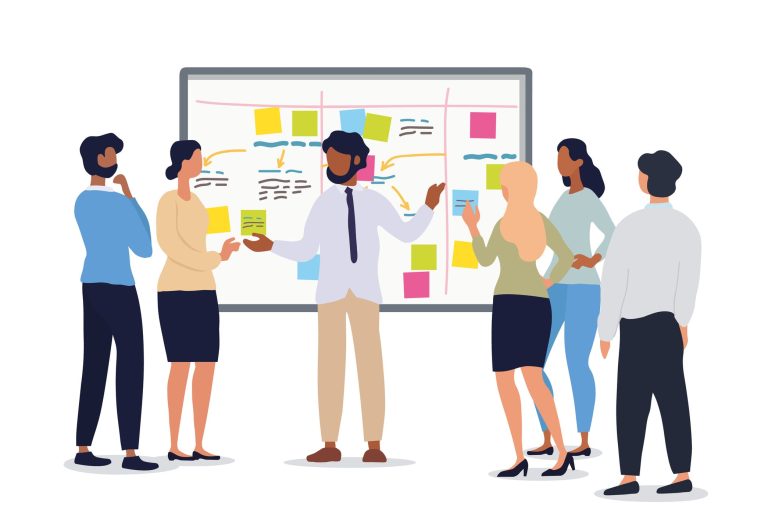
Agile marketing is a structured, iterative approach to planning and executing marketing work using short cycles, collaboration, and continuous improvement.
It is inspired by Agile principles from software development and focuses on breaking large marketing plans into smaller, manageable units called sprints. Each sprint typically runs for a short period (often 1–4 weeks), during which teams complete prioritized tasks, test campaigns, and measure results.
At its core, agile marketing emphasizes:
- Short execution cycles (sprints) that replace long, rigid campaign timelines
- Cross-functional teamwork, where designers, analysts, and marketers collaborate closely
- Continuous testing and experimentation instead of relying on one large campaign launch
- Data-driven decision-making, where performance metrics guide the next step
- Ongoing iteration, meaning strategies evolve based on real-time feedback
Instead of planning a campaign months in advance and waiting until the end to evaluate success, agile marketing teams continuously adjust while campaigns are still running.
Agile marketing helps teams move faster, reduce wasted effort, and improve alignment with customer needs through constant feedback loops.
What Is Adaptive Marketing?

Adaptive marketing is a real-time, data-responsive marketing approach that focuses on continuously adjusting strategy, messaging, and execution based on live market conditions and customer behavior.
While agile marketing improves how marketing teams work internally, adaptive marketing focuses more on how marketing responds externally to the market in real time.
Adaptive marketing relies heavily on live performance signals such as:
- Customer engagement patterns
- Conversion behavior
- Channel performance shifts
- Market trends and external changes
- Real-time analytics and behavioral data
Rather than following a fixed campaign roadmap, adaptive marketing allows strategies to continuously evolve while they are being executed. If a message, channel, or audience segment is underperforming, it is adjusted immediately instead of waiting for the next sprint or campaign cycle.
Key characteristics of adaptive marketing include:
- Real-time responsiveness to customer behavior and market signals
- Dynamic campaign optimization, where messaging and targeting shift continuously
- Always-on performance monitoring, not periodic reporting
- Flexible strategy execution, where plans are not rigid but continuously refined
- Customer-centric adjustment, ensuring relevance at every touchpoint
Adaptive marketing ensures that marketing is not just planned and executed—it is constantly reshaped while it runs to stay aligned with what is happening in the market right now.
How They Differ and How They Complement Each Other

Although Agile Marketing and Adaptive Marketing are closely related and often used in the same conversations, they operate at different levels of marketing execution. A useful way to understand them is this: Agile marketing is about how teams work, while adaptive marketing is about how strategies respond.
In modern digital environments, high-performing organizations don’t choose between them—they combine both. Agile creates the system for execution, while adaptive creates the system for responsiveness. Together, they enable marketing teams to move quickly and adjust intelligently based on real-time data and customer behavior.
Below is a detailed breakdown of how they differ and where they complement each other across five key dimensions.
1. Focus and Purpose
The core difference begins with intent.
Agile marketing focuses on execution efficiency and workflow improvement. Its purpose is to help marketing teams deliver campaigns faster, reduce bottlenecks, and improve collaboration through structured sprint cycles. It is rooted in process optimization—ensuring marketing tasks are completed in small, iterative steps rather than large, rigid campaigns.
Agile teams prioritize:
- Faster delivery of marketing outputs
- Continuous internal collaboration
- Iterative testing and learning within campaigns
- Breaking large strategies into manageable tasks
By contrast, adaptive marketing focuses on external responsiveness—how marketing reacts to changing market signals in real time.
Its purpose is to:
- Adjust messaging based on live customer behavior
- React to market shifts, trends, or disruptions
- Optimize campaigns while they are running
- Ensure relevance at every customer touchpoint
In simple terms:
- Agile = improving how marketing is produced
- Adaptive = improving how marketing reacts and evolves
This distinction is important because a team can be agile in execution but still run campaigns that are not adaptive to real-world changes.
2. Scope
The scope of each approach also differs significantly.
Agile marketing has an internal scope. It is primarily concerned with how marketing teams operate within an organization. It structures workflows, assigns responsibilities, and organizes work into sprints or cycles. Agile typically applies to:
- Content production
- Campaign planning
- Creative development
- Internal project management
- Cross-functional collaboration
Research on agile practices shows that teams often work in short cycles (commonly 1–4 weeks) with defined goals and iterative delivery processes, enabling better alignment and efficiency across departments.
Adaptive marketing has an external and market-facing scope. It focuses on how campaigns perform in the real world and how they should change based on external signals. This includes:
- Customer behavior tracking
- Real-time campaign optimization
- Audience segmentation updates
- Channel and budget adjustments
- Personalization based on live data
Adaptive marketing extends beyond the marketing team itself and integrates with data systems, analytics platforms, and customer experience tools.
In short:
- Agile scope = internal workflow system
- Adaptive scope = external market responsiveness system
3. Implementation
The way each approach is implemented also highlights their differences.
Agile marketing is implemented through structured frameworks, typically involving:
- Sprint planning sessions
- Backlogs of prioritized tasks
- Daily or weekly stand-ups
- Retrospectives for continuous improvement
- Cross-functional teams working in parallel
The emphasis is on discipline and rhythm. Work is broken into small increments, tested, and refined within a controlled cycle.
For example, a team might plan a 2-week sprint to produce landing pages, email sequences, and social media content for a campaign, then review performance and adjust the next sprint accordingly.
Adaptive marketing, on the other hand, is implemented through real-time systems and feedback loops. It depends heavily on:
- Live analytics dashboards
- Behavioral tracking tools
- AI-driven insights and automation
- Dynamic content personalization systems
- Trigger-based campaign adjustments
Instead of waiting for sprint reviews, adaptive marketing changes can happen continuously. For example, if a campaign’s conversion rate drops mid-week, messaging, targeting, or budget allocation may be adjusted immediately.
Modern adaptive systems often operate as a continuous loop of:
data → insight → decision → action → new data
This creates a constantly evolving marketing engine rather than a fixed delivery cycle.
4. Metrics of Success
Because the two approaches serve different purposes, they also measure success differently.
Agile marketing success is measured through execution and delivery metrics, such as:
- Sprint completion rate
- Time to deliver campaigns or assets
- Team velocity (how much work is completed per cycle)
- Collaboration efficiency
- Reduction in bottlenecks or delays
- Quality of output within deadlines
These metrics reflect how effectively a team is operating under an agile system.
Adaptive marketing success is measured through performance and impact metrics, such as:
- Conversion rate improvements in real time
- Engagement rate changes across channels
- Customer acquisition cost (CAC) optimization
- Return on ad spend (ROAS) adjustments
- Personalization effectiveness
- Revenue impact from real-time campaign changes
The key difference is:
- Agile measures how well work is delivered
- Adaptive measures how well marketing performs in the market
A marketing team may execute perfectly in agile sprints but still fail if campaigns are not adapting to customer behavior quickly enough.
5. Organizational Impact
The organizational changes required for each approach also differ.
Agile marketing reshapes team structure and culture internally. It typically leads to:
- Breakdown of departmental silos
- Formation of cross-functional teams
- Greater transparency in workflows
- Shared ownership of marketing outcomes
- Improved collaboration between marketing, design, and analytics
It fundamentally changes how people work together inside the organization.
Adaptive marketing reshapes the organization’s relationship with data and decision-making. It requires:
- Strong data infrastructure (analytics, CRM, CDPs)
- Real-time decision-making capabilities
- Automation and AI-driven optimization tools
- A culture that embraces continuous change
- Faster approval processes to enable real-time adjustments
This shift is less about team structure and more about building a responsive marketing ecosystem.
How They Complement Each Other
Rather than competing frameworks, agile and adaptive marketing work best when combined.
- Agile marketing ensures teams can produce and iterate quickly
- Adaptive marketing ensures campaigns can evolve based on real-world performance
Together, they create a powerful loop:
- Agile teams build and launch campaigns in structured cycles
- Adaptive systems monitor performance in real time
- Insights feed back into agile planning for the next sprint
- Marketing continuously improves in both execution and relevance
Companies like Netflix-style digital platforms rely heavily on this combination. They use structured internal workflows (agile thinking) while continuously adjusting user experiences and recommendations based on behavioral data (adaptive execution). For example, what users see on a homepage or which content is promoted is constantly evolving based on real-time engagement signals and algorithmic learning systems.
Real World Example of Adaptive Marketing at Netflix: Deciding What to Show and Why
A strong real-world example of adaptive marketing can be seen in how Netflix decides what content to show each user and why certain titles are promoted more heavily than others.
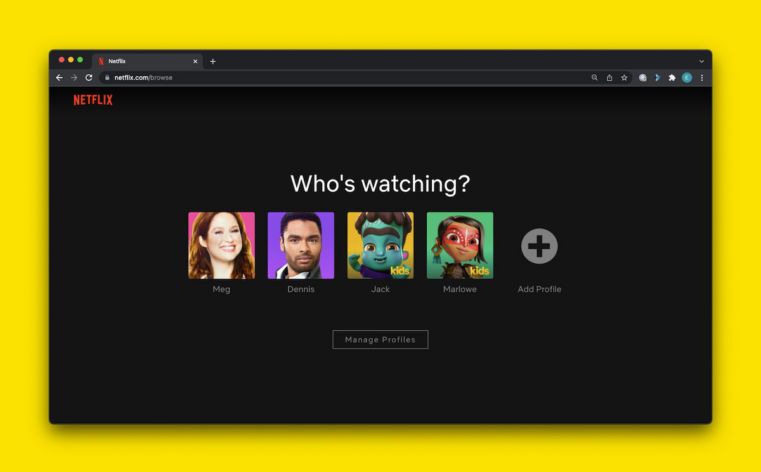
Netflix does not rely on a static homepage or universal content ordering. Instead, it continuously adapts what users see based on behavioral signals such as:
- Viewing history
- Watch time and completion rates
- Genre preferences
- Time of day usage patterns
- Interaction with thumbnails and trailers
- Similar user behavior patterns
This creates a highly personalized experience where no two users see the same interface in the same order.
At the core of this system is adaptive decision-making. For example:
- If a user consistently watches crime dramas to completion, Netflix increases the visibility of similar titles on their homepage.
- If a user abandons a show within the first few minutes, similar content may be deprioritized.
- Even thumbnails can change dynamically depending on what visual style has historically driven engagement for that user segment.
This is adaptive marketing in action because the platform is not just promoting content—it is continuously adjusting what content is shown, how it is presented, and why it is prioritized based on real-time and historical user data.
From a business perspective, this approach serves multiple goals:
- Increases watch time and retention
- Reduces content discovery friction
- Maximizes content engagement across diverse audiences
- Improves subscriber satisfaction through personalization
Importantly, this system is not static. It evolves continuously as new viewing data is collected, meaning the marketing logic behind content recommendations is always being refined.
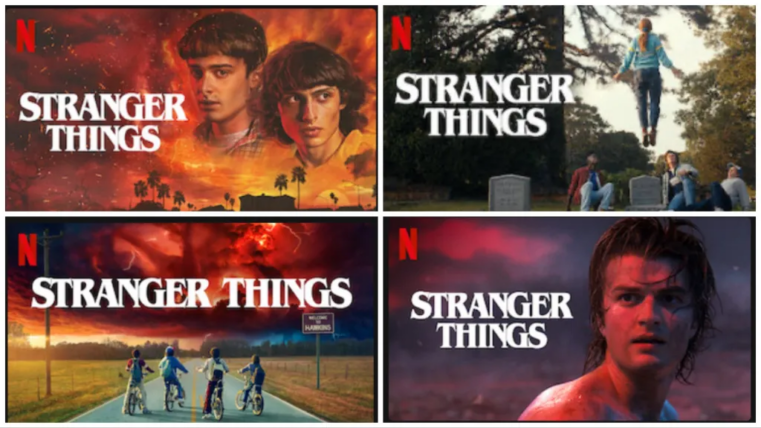
What makes Netflix especially relevant to adaptive marketing is that its strategy operates as a continuous feedback loop:
- User behavior generates data
- Algorithms interpret preferences and patterns
- Content recommendations are adjusted instantly
- New interactions generate updated data
This loop ensures that marketing decisions are never final—they are always being optimized in real time.
In this way, Netflix demonstrates the essence of adaptive marketing: not just responding to the market occasionally, but continuously reshaping the customer experience based on live behavior signals.
Why the Confusion Happens and a Practical Way to Align Stakeholders

The confusion between agile marketing and adaptive marketing is extremely common because both approaches emphasize flexibility, speed, and data-driven decision-making. In many organizations, they are even used interchangeably, which leads to unclear expectations and misaligned execution.
However, the confusion is not just semantic—it is structural. It comes from how modern marketing evolved.
Traditionally, marketing followed long, linear campaign planning cycles. As digital transformation accelerated, organizations introduced agile practices to make teams faster and more collaborative. At the same time, the explosion of real-time data, AI tools, and customer analytics pushed marketing toward adaptive systems that could respond instantly to market behavior.
These two evolutions happened in parallel, not sequentially. As a result, many teams adopted agile frameworks without fully adopting adaptive capabilities—or implemented adaptive tools without changing their internal workflows.
Why the Confusion Happens
There are several key reasons why agile and adaptive marketing are often misunderstood as the same thing:
1. Both emphasize flexibility
Agile marketing focuses on flexible work execution, while adaptive marketing focuses on flexible strategy execution. Since both reject rigid, long-term planning, they appear similar at surface level.
2. Both rely on data
Agile uses data to evaluate sprint performance and improve processes. Adaptive marketing uses data continuously to change live campaigns. Because both are data-driven, they are often grouped together.
3. Both involve iteration
Agile iterates through structured sprints, while adaptive marketing iterates continuously in real time. The shared idea of “iteration” leads to conceptual overlap.
4. Tool overlap in modern marketing stacks
Many platforms now support both agile workflows (project management tools) and adaptive capabilities (real-time analytics, automation, personalization). This technological overlap blurs the distinction further.
5. Organizational mislabeling
Companies often label themselves “agile” when they are actually only using agile project management practices, not true adaptive decision-making systems.
A Practical Way to Align Stakeholders
To remove confusion and align teams effectively, organizations should clearly separate execution systems from response systems.
A practical framework looks like this:
Step 1: Define Agile as the internal operating system
Stakeholders should agree that agile marketing governs:
- Campaign planning cycles
- Team workflows and collaboration
- Sprint-based execution
- Task prioritization and delivery
This ensures everyone understands agile is about how work gets done internally.
Step 2: Define Adaptive as the external performance system
Adaptive marketing should be positioned as:
- Real-time campaign optimization
- Customer behavior response mechanisms
- Dynamic content and targeting systems
- Continuous performance adjustment
This clarifies that adaptive marketing governs how marketing reacts externally.
Step 3: Connect both through a feedback loop
Instead of treating them as separate models, organizations should connect them:
- Agile teams build and launch campaigns
- Adaptive systems monitor performance in real time
- Insights from adaptive systems feed into agile sprint planning
This creates a continuous improvement loop between execution and optimization.
Step 4: Assign ownership clearly
One of the biggest causes of confusion is unclear ownership:
- Agile processes are typically owned by marketing operations or delivery teams
- Adaptive systems are often owned by analytics, growth, or performance marketing teams
Clarifying ownership ensures accountability at each layer.
Step 5: Use shared KPIs with layered measurement
Instead of mixing metrics, organizations should separate:
- Agile KPIs (speed, delivery, sprint completion)
- Adaptive KPIs (conversion, engagement, ROI, retention)
Then align them under shared business outcomes like revenue growth or customer lifetime value.
When stakeholders understand that agile governs production systems and adaptive governs response systems, alignment becomes significantly easier and execution becomes more consistent.
Adaptive Marketing and Agile Marketing Are Not Interchangeable
Agile marketing is primarily operational—it shapes how teams plan, execute, and continuously improve their work through structured, iterative cycles.
Adaptive marketing, on the other hand, is more strategic and customer-facing. It defines how brands respond in real time to behavioral signals, market shifts, and performance data to enhance customer experience and business outcomes.
When used together, they reduce the lag between insight and action—turning real-time signals into coordinated, measurable improvements.
If you want to align your internal agile processes with real-time adaptive responsiveness, so both your marketing execution and customer experience work in sync, get in touch to explore how this framework can be applied to your business.
Frequently Asked Questions (FAQs) On Adaptive and Agile Marketing
WHAT IS THE DIFFERENCE BETWEEN AGILE MARKETING AND ADAPTIVE MARKETING?
The key difference is focus. Agile marketing is centered on improving how marketing teams plan, collaborate, and execute work in short, iterative cycles. Adaptive marketing, on the other hand, focuses on continuously adjusting marketing strategies and campaigns in real time based on customer behavior and market data.
In simple terms:
- Agile = faster and more efficient marketing execution
- Adaptive = smarter and more responsive marketing strategy
Agile improves internal workflows, while adaptive improves external performance and responsiveness.
WHAT IS AGILE MARKETING IN SIMPLE TERMS?
Agile marketing is a way of working where marketing teams break large campaigns into smaller tasks and complete them in short cycles called sprints. Instead of planning everything months in advance, teams continuously test, learn, and improve as they go.
It focuses on:
- Short planning cycles
- Team collaboration
- Continuous testing
- Fast iteration based on feedback
Agile marketing helps teams “move faster and improve as they go” instead of waiting until the end of a campaign to make changes.
WHAT ARE THE BENEFITS OF AGILE MARKETING?
Agile marketing offers several key benefits for modern teams:
- Faster execution: Campaigns and assets are delivered more quickly through sprint-based workflows
- Improved collaboration: Cross-functional teams work together more effectively
- Better adaptability: Teams can adjust priorities based on performance data
- Higher efficiency: Reduces wasted time on low-impact tasks
- Continuous improvement: Each sprint improves the next one based on feedback
Agile marketing helps organizations become more organized, responsive, and efficient in how they execute marketing work.
WHAT IS ADAPTIVE MARKETING IN SIMPLE TERMS?
Adaptive marketing is a marketing approach where strategies, campaigns, and messaging continuously change based on real-time customer behavior and market conditions.
Instead of following a fixed plan, adaptive marketing adjusts dynamically using live data such as:
- Customer engagement
- Conversion behavior
- Channel performance
- Market trends
Adaptive marketing ensures that marketing always “adjusts itself” to what is happening right now in the market.
CAN A TEAM BE AGILE WITHOUT BEING ADAPTIVE?
Yes, a team can be agile without being fully adaptive.
A marketing team may use agile frameworks like sprints, stand-ups, and iterative planning, but still rely on fixed campaign strategies that are not adjusted in real time. In this case, the team is efficient in execution but not fully responsive to live market changes.
For best performance, however, modern marketing organizations aim to combine both:
- Agile for structured execution
- Adaptive for real-time optimization
When both are used together, marketing becomes both fast and highly responsive to customer behavior.
Read More: How Behavior Shapes Your Reputation More Than Brand Messaging


