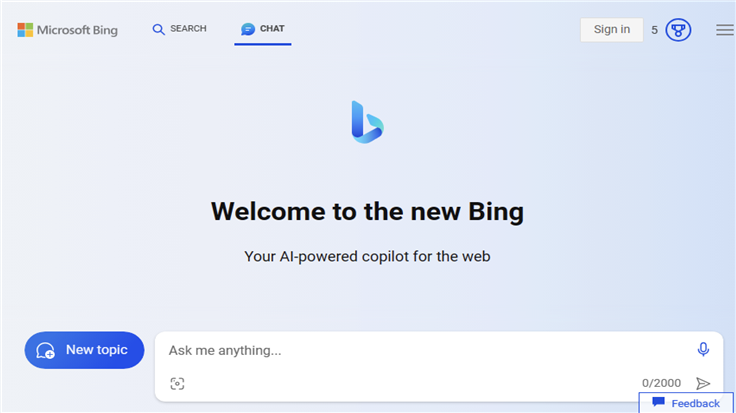
Search is no longer just about ranking blue links—it’s about being selected, summarized, and cited by AI systems. With the rise of AI-powered search experiences in Bing and tools like Microsoft Copilot, content visibility has shifted from traditional rankings to AI-generated answers that pull from multiple sources.
In this new environment, your content doesn’t just compete for clicks—it competes to become a trusted source inside an AI response. That means Bing is actively scanning, evaluating, and extracting information from web pages to present concise, helpful answers to users.
This shift has introduced a new layer of optimization often referred to as AI search optimization, where the goal is to increase the likelihood that your content is surfaced and cited by AI systems rather than just indexed and ranked .
As a result, the rules of content strategy are evolving. It’s no longer enough to write long, keyword-heavy articles. To succeed, your content must be:
- Easy for AI to understand
- Structured for extraction
- Backed by credible information
- Written to directly answer user intent
Understanding how Bing selects and surfaces content is the first step toward building a strategy that works in this AI-first search landscape.
What Changed in the Age of AI Search
The biggest change in modern search is simple but profound: search engines are no longer just directories—they are answer engines.
In traditional SEO, users would:
- Search a query
- Browse a list of links
- Click through to find answers
Now, with AI-powered search:
- Users ask a question
- AI generates a direct answer
- Only a few sources are cited within that response
This fundamentally changes how visibility works.
From Rankings to Citations
Instead of competing for the #1 spot, content now competes to be included in AI-generated summaries. If your content isn’t cited, it may not be seen at all—even if it ranks well organically.
This is why many experts now say:
Citations are becoming more important than rankings.
From Keywords to Intent and Clarity
AI systems don’t rely on keywords the same way traditional search engines do. Instead, they focus on:
- Context
- Meaning
- Relevance to the query
Content that clearly answers a question in a concise and structured way is far more likely to be selected.
From Long-Form to Extractable Content
Length alone no longer guarantees success. AI prefers content that is:
- Broken into logical sections
- Easy to scan
- Written in clear, digestible chunks
In fact, AI often extracts specific passages or short summaries, rather than relying on entire pages.
From Traffic to Visibility
Another major shift is how success is measured. Instead of just tracking clicks, brands must now consider:
- How often their content is cited
- Whether they appear in AI answers
- Their overall presence in AI-driven experiences
This reflects a broader transformation where visibility inside AI systems becomes just as important as website traffic.
Content Types That Bing Is Likely To Cite in Its AI Experiences

Not all content is equally likely to be cited by Bing’s AI. Certain formats are far more “AI-friendly” because they align with how these systems extract and present information.
1. Direct Answer Content
Content that clearly answers a specific question—especially early in the page—is highly favored.
Examples include:
- Definitions
- Step-by-step explanations
- Quick summaries
AI systems prioritize content that can be easily lifted and inserted into an answer without heavy rewriting.
2. Structured and Well-Organized Content
Pages that use clear formatting are significantly easier for AI to process.
High-performing structures include:
- H2 and H3 headings
- Bullet points and numbered lists
- Short paragraphs
- FAQ sections
When content is logically organized, AI can quickly identify relevant sections and extract them efficiently.
3. Authoritative and Evidence-Backed Content
Bing’s AI tends to favor content that demonstrates credibility and trustworthiness.
This includes:
- Data-backed insights
- Expert opinions
- Cited statistics
- Real-world examples
Content that shows clear evidence is more likely to be considered reliable and therefore cited in AI responses.
4. Fresh and Updated Content
AI systems prioritize information that reflects the most current understanding of a topic.
Regularly updated content:
- Signals accuracy
- Improves trust
- Increases the chances of being surfaced
Outdated information, even if well-written, is less likely to be selected.
5. Topic-Focused, In-Depth Pages
Rather than thin or scattered content, Bing’s AI prefers pages that:
- Cover a topic comprehensively
- Stay focused on a single subject
- Provide clear value to the reader
This helps AI systems confidently use the page as a reliable source.
6. FAQ and Question-Based Content
Content that mirrors how users naturally ask questions performs especially well.
FAQ sections are powerful because they:
- Align with conversational search queries
- Provide clear, standalone answers
- Make extraction easy for AI systems
Bing’s AI doesn’t just look for content—it looks for usable content. Pages that are clear, structured, credible, and directly aligned with user intent are far more likely to be cited and surfaced.
In the AI era, the goal isn’t just to rank—it’s to become the source AI trusts enough to quote.
4 Main Qualities Your Content Needs To Get Cited
Getting cited in Bing’s AI-powered search isn’t random—it’s the result of specific, repeatable content patterns. With the introduction of AI citation reporting inside Bing Webmaster Tools, it’s now clear that only a small set of pages earn the majority of citations, and those pages consistently share the same core qualities.
If you want your content to be surfaced and referenced in AI answers, you need to align with how AI systems retrieve, evaluate, and extract information.
Below are the four essential qualities your content must have.
1. Direct Answers That Appear Early
One of the most important shifts in AI search is the “answer-first” expectation.
AI systems like Bing don’t read content the way humans do. They scan pages to quickly identify:
- A clear answer
- A concise explanation
- A section that directly matches the user’s query
If your content delays the answer or buries it deep within the page, it is far less likely to be cited.
Why this matters
AI-generated answers are built using extractable snippets. These snippets are often pulled from:
- The first few paragraphs
- The beginning of sections
- Clearly defined statements
Research and observed patterns show that a large portion of AI citations come from the top portion of a page, meaning early clarity significantly increases visibility.
Content that directly answers questions in the opening lines performs far better in AI citation environments.
What this looks like in practice
High-performing content typically follows a structure like:
- A direct definition or answer in the first 1–2 sentences
- Supporting explanation afterward
- Examples or context below
For example:
- “Bing AI content strategy refers to…”
- “The main reason content gets cited is…”
This “bottom line up front” approach mirrors how journalists and analysts write—and it aligns perfectly with how AI extracts information.
How to implement it
- Start every section with a clear, standalone answer
- Avoid long introductions before getting to the point
- Use question-based headings followed by immediate answers
- Treat each section like a mini featured snippet
If your content doesn’t answer fast, it won’t get cited.
2. Clear Structure That Is Easy to Parse
Structure is one of the strongest signals for AI visibility.
AI systems don’t just evaluate what you say—they evaluate how your content is organized. Well-structured content makes it easier for AI to:
- Understand context
- Identify relevant sections
- Extract precise information
Why structure matters for AI
Bing’s AI relies on retrieval systems that break content into smaller parts and match them to queries. Content with clear formatting is significantly easier to process and reuse.
Common traits of highly cited content include:
- Logical heading hierarchy (H2, H3, etc.)
- Bullet points and numbered lists
- Short, scannable paragraphs
- Clearly separated sections
Structured content allows AI to quickly answer questions like:
- “What is this?”
- “How does it work?”
- “Why does it matter?”
Evidence from citation patterns
Analysis of AI-cited content shows that pages with strong heading structures and organized sections are far more likely to be referenced.
Additionally, structured comparison pages and detailed breakdowns often dominate citations because they provide specific, extractable data points.
What this looks like in practice
Instead of writing long, dense paragraphs, high-performing content uses:
- Clear section headings
- Lists for key points
- Defined subsections for each idea
For example:
- “What Is Bing AI Content Strategy?”
- “Key Factors That Influence Citations”
- “Step-by-Step Optimization Process”
Each section becomes a modular unit of information that AI can easily reuse.
How to implement it
- Use a logical hierarchy (H1 → H2 → H3)
- Break down complex ideas into lists
- Keep paragraphs short and focused
- Add FAQ sections for question-based queries
Think of your content not as a single article, but as a collection of structured answers.
3. Evidence That Strengthens Credibility
AI systems prioritize trustworthy, verifiable information.
Unlike traditional SEO—where optimization tactics could sometimes outweigh substance—AI search heavily favors content that demonstrates credibility and authority.
Why credibility matters
When Bing’s AI generates an answer, it must ensure that the information is reliable. This is why it prefers content that includes:
- Data and statistics
- Expert insights
- Real-world examples
- Clear explanations backed by evidence
AI is essentially asking:
“Can I trust this source enough to show it to users?”
If the answer is unclear, your content is unlikely to be cited.
What the data shows
Studies of AI citations reveal that informational, educational content with clear explanations is far more likely to be selected than promotional or opinion-heavy content.
Additionally, AI systems tend to favor pages that provide specific details rather than vague claims, as these are easier to verify and summarize.
What this looks like in practice
High-credibility content often includes:
- Specific numbers (e.g., “X% increase”)
- Referenced insights
- Real examples or case studies
- Clear explanations of how something works
For example:
- Instead of: “AI improves efficiency”
- Use: “Companies using AI reported a 40% efficiency increase”
Specificity builds trust—and trust increases citation likelihood.
How to implement it
- Add supporting data wherever possible
- Use real examples to illustrate points
- Avoid vague or generic statements
- Focus on explaining, not just claiming
In the AI era, proof beats opinion every time.
4. Accuracy and Freshness, Not Just Volume
Publishing more content does not guarantee more citations. In fact, AI systems often favor a smaller number of high-quality, up-to-date pages over large volumes of content.
Why freshness matters
AI search operates in a constantly evolving information environment. Outdated content:
- Reduces trust
- Risks spreading incorrect information
- Is less likely to be selected
This is why Bing introduced tools that track which pages are being cited and how often, emphasizing the importance of maintaining relevant content.
The shift from quantity to quality
Traditional SEO often encouraged publishing at scale. But AI systems behave differently:
- They cluster similar pages together
- Select a small number of representative sources
- Ignore redundant or lower-quality content
This means:
One strong, well-maintained page can outperform dozens of weaker ones.
What this looks like in practice
High-performing pages are:
- Regularly updated
- Factually accurate
- Focused on a specific topic
- Continuously improved over time
Rather than creating new content constantly, successful strategies focus on:
- Updating existing articles
- Improving clarity and structure
- Adding new insights and data
How to implement it
- Refresh content with updated statistics and examples
- Add a “last updated” date where relevant
- Consolidate overlapping or duplicate content
- Focus on depth rather than volume
In AI search, quality + freshness = visibility.