5 Tips for Building Brand Authority in the AI Search Era

As AI-powered search engines increasingly generate answers instead of simply listing links, brands must adapt their strategies to remain visible and credible. Modern AI systems evaluate authority signals, real-world expertise and cross-platform credibility when deciding which sources to reference in generated responses.
The following five strategies help ensure your brand becomes a trusted source that AI search engines recognize and cite.
1. Make Your Brand Easy for AI to Identify and Trust
Before an AI system can cite your content, it must first clearly understand who your brand is and what expertise it represents. Ambiguity in brand identity can prevent AI models from connecting your content with relevant queries.
Start by creating a clear and consistent digital identity across your website and external platforms. This includes:
-
Clearly defined brand descriptions on your homepage and “About” page
-
Consistent brand messaging across titles, metadata and content
-
Structured data such as Organization and Brand schema markup
-
Unified brand profiles across social media, directories and publications
Research shows that websites with complete schema markup and consistent metadata are cited significantly more often in AI search results because structured information helps models correctly identify the entity behind the content.
Consistency also helps AI engines associate your brand with a specific niche. When your messaging repeatedly connects your brand with a particular topic—such as cybersecurity, digital marketing or healthcare analytics—AI systems begin to treat your organization as an authoritative entity within that category.
The easier it is for AI systems to recognize and categorize your brand, the more likely it is to appear in AI-generated answers.
2. Shift From Publishing Advice to Demonstrating Experience
AI search systems increasingly prioritize evidence-based expertise rather than generic advice. In an era where AI-generated content is widespread, engines look for signals that prove real-world experience and subject matter authority.
One effective way to build credibility is by producing content that demonstrates practical knowledge, such as:
-
Case studies showing measurable results
-
Original research, surveys or data reports
-
Detailed tutorials or implementation guides
-
Expert commentary and thought leadership pieces
Content that includes data, statistics and clear explanations is more likely to be cited because AI systems rely on factual, verifiable information when constructing responses.
For example, publishing a case study that explains a problem, your approach and the results achieved provides a clear narrative that AI models can easily interpret and reference. Real-world insights also reinforce Experience, Expertise, Authoritativeness and Trustworthiness (E-E-A-T) signals, which remain central to modern search visibility.
Real-world example: Thrive Internet Marketing Agency

Image: Thrive Internet Marketing Agency’s case study section (Source)
By moving beyond surface-level advice and sharing authentic expertise, your brand becomes a source AI engines trust when answering complex questions.
3. Treat Content as a Connected Ecosystem, Not Isolated Assets
In traditional SEO, many brands focused on publishing individual articles optimized for specific keywords. AI search, however, rewards deep topical authority rather than scattered pieces of content.
Instead of treating each blog post as a standalone asset, build a connected ecosystem of knowledge that covers an entire subject area. This can include:
-
Comprehensive pillar pages that explain core topics
-
Supporting articles that explore subtopics in depth
-
Internal links connecting related content
-
Consistent terminology and frameworks across pages
Creating topical hubs helps AI engines understand the breadth and depth of your expertise. When multiple pieces of content reinforce the same theme, the system gains stronger signals that your brand truly specializes in that subject.
Research on AI search visibility shows that brands that build extensive topic hubs—rather than isolated articles—are more likely to be recognized as primary sources for AI-generated answers.
This interconnected structure not only improves discoverability but also increases the chances that AI engines will extract information from your content when synthesizing responses.
Real-world example: Airbnb
Airbnb maintains a highly consistent branding approach across all platforms by presenting itself as a single, recognizable entity everywhere it appears.
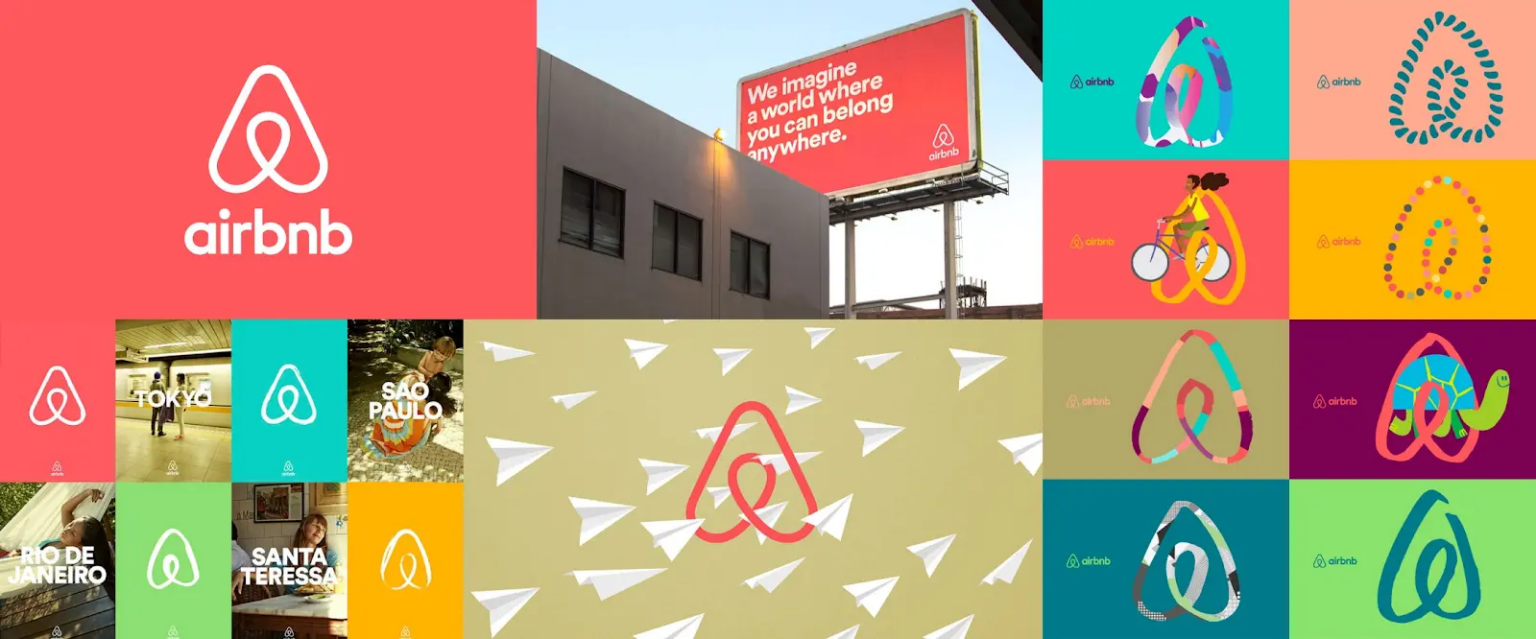
Image: Airbnb uses its logo shape in various ways to create a cohesive and recognizable brand identity (Source)
4. Build Authority Beyond Your Own Platforms
Brand authority in AI search is not built solely on your website. In fact, many AI models place strong emphasis on third-party validation and independent mentions.
Studies indicate that external sources drive the majority of brand discovery in AI search, with brands far more likely to be cited when they are referenced across trusted third-party platforms.
To strengthen your authority signals, focus on expanding your presence beyond your own site by:
-
Publishing guest articles on reputable industry publications
-
Participating in expert roundups and interviews
-
Contributing insights to podcasts or webinars
-
Conducting research that other sites reference
-
Engaging in relevant professional communities and discussions
When AI systems repeatedly encounter your brand across credible sources, they interpret this as independent validation of expertise. These external mentions reinforce your authority and help position your brand alongside established leaders in your industry.
Real-world example: Moz

Image: Moz is frequently cited by major publications, industry research reports and marketing studies. (Source)
Over time, consistent third-party recognition can significantly increase the likelihood that AI engines will reference your brand when generating answers.
5. Measure and Refine How AI Represents Your Brand
AI search visibility is constantly evolving. New data sources, updated models and shifting algorithms can change how your brand appears in generated answers. Because of this, building authority requires continuous monitoring and refinement.
Instead of focusing only on keyword rankings, brands should track how AI systems actually describe and cite them. This involves:
-
Running prompts related to your industry in AI search tools
-
Monitoring whether your brand is mentioned or cited
-
Analyzing how AI describes your products, services or expertise
-
Identifying competitors that appear in responses instead of your brand
This process reveals how AI models interpret your authority signals and where improvements are needed. If competitors appear more frequently, it may indicate gaps in your content, external mentions or topical coverage.
Tracking AI visibility also helps ensure that your brand narrative remains accurate and aligned with your positioning as models evolve. Continuous optimization—similar to traditional SEO auditing—allows businesses to maintain strong authority signals as the AI search ecosystem grows.
What Strong AI Brand Authority Looks Like in Action
Building brand authority for AI search engines is not just about publishing more content or earning a few backlinks. In practice, strong AI brand authority means your brand becomes a recognized and trusted entity within the AI knowledge ecosystem. When AI models consistently encounter reliable information, credible mentions and clear expertise tied to your brand, they begin to reference it more frequently in generated answers.
Your Brand Gets Mentioned or Cited in AI-Generated Answers
One of the clearest signs of strong AI authority is when AI systems directly reference your brand or your content when answering user questions.
AI-generated responses often include different types of brand visibility:
-
Explicit mentions – The AI directly names your brand as a source.
-
Linked citations – Your website appears as a referenced source or citation.
-
Contextual mentions – Your brand is listed among recommended tools, services or solutions.
-
Implicit influence – The AI uses frameworks, definitions or data from your content even without mentioning your brand.
When these mentions occur frequently across different AI platforms, it indicates that your brand has developed strong semantic authority within that topic area.
AI Consistently Associates Your Brand With a Specific Expertise
Another sign of strong AI brand authority is clear topical association. AI systems begin linking your brand with a specific category or expertise because the web repeatedly presents it that way.
For example, a cybersecurity company that regularly publishes threat research, industry analysis and technical insights becomes strongly associated with cybersecurity in AI search systems. These types of brands often appear in AI-generated answers because they provide unique insights and original data that other sources reference.
When this happens, AI models start to treat the brand as a go-to authority in that field rather than just another website.
Your Brand Is Mentioned Across Multiple Trusted Platforms
AI systems rarely rely on a single source when generating answers. Instead, they evaluate information from a wide range of websites, publications and platforms.
Brands with strong AI authority typically appear across:
-
Industry publications and news websites
-
Research reports and case studies
-
Professional communities and forums
-
Podcasts, interviews or expert roundups
-
Social platforms and professional networks
When a brand appears consistently across these trusted sources, it signals to AI systems that the company has broad recognition and credibility in its industry.
This widespread presence helps AI models confirm that the brand is not only self-promoting but also acknowledged by the wider digital ecosystem.
AI Systems Prefer Your Content as a Reliable Source
Strong AI brand authority also becomes visible when your content is frequently used to support AI-generated answers. This happens when your content is:
-
Factually accurate and well-researched
-
Structured with clear headings, lists and definitions
-
Easy for machines to extract and interpret
-
Updated regularly with relevant insights
Content that is concise, structured and supported by verifiable data is easier for AI models to interpret and reference. As a result, it has a much higher chance of being used in generated answers.
Over time, consistently publishing this type of content strengthens your reputation as a trusted knowledge source.
Your Brand Maintains Visibility Across Multiple AI Platforms
AI search visibility is not limited to a single platform. Brands with strong authority often appear across several AI-driven systems such as conversational assistants, generative search engines and AI-powered research tools.
Because AI responses are generated dynamically, companies increasingly monitor thousands of prompts across multiple models to measure how often their brand is recommended or cited. This type of analysis helps organizations understand how AI systems interpret and represent their brand across the broader ecosystem.
When a brand consistently appears across different AI platforms and prompts, it signals that its authority signals are strong, clear and widely recognized.
Authority Translates Into Visibility, Trust and Business Impact
Ultimately, strong AI brand authority leads to measurable outcomes. Brands that optimize their presence for AI search often experience:
-
Higher visibility in AI-generated answers
-
Increased brand recognition within their industry
-
More trust from users who see their brand cited by AI systems
-
Improved conversions from AI-driven discovery
In real-world case studies, companies that optimized their content structure and authority signals saw significant increases in AI-driven impressions, engagement and conversions within months.
This demonstrates that brand authority in the AI era is not just about visibility—it directly influences how customers discover, trust and choose your brand.
AI Search Rewards Brands That Prove Their Authority
AI search engines prioritize brands they can clearly identify, verify and trust. In this evolving search landscape, AI brand authority is built through consistent credibility signals, proven expertise and repeated demonstrations of real-world experience.
Developing strong AI brand authority requires more than simply publishing articles. It involves establishing clear brand messaging, showcasing genuine expertise, earning recognition from credible external sources and continuously improving how your brand appears across the digital ecosystem. Companies that actively strengthen these signals are more likely to gain visibility and become trusted sources referenced in AI-generated answers.
As AI-driven search continues to reshape how people discover information, authority has become the key differentiator between brands that are frequently cited and those that remain unnoticed. Businesses that invest in building credible expertise today will be better positioned to earn long-term visibility in the AI search era.
If you’re ready to expand your AI search presence and establish authority that AI systems recognize and reference, contact Pro Real Tech to learn how to get started.
Frequently Asked Questions (FAQs) On Tips To Strengthen Brand Authority for AI Search Engines
What Is AI Brand Authority?
AI brand authority refers to the level of trust and expertise AI-powered search systems associate with a brand when generating answers. Instead of simply ranking web pages, modern AI search engines analyze the overall credibility of the organization behind the content.
When a brand consistently publishes reliable information, receives mentions from trusted sources and demonstrates clear expertise in a specific topic, AI models begin to recognize it as an authoritative entity. As a result, the brand is more likely to be cited, referenced or recommended in AI-generated responses.
In simple terms, AI brand authority means your brand is seen by AI systems as a trusted expert source within a particular industry or subject area.
Why Is Building Brand Authority Important for AI Search Visibility?
AI search engines prioritize sources they consider trustworthy and knowledgeable. If your brand lacks strong authority signals, AI systems may avoid referencing your content—even if your pages rank well in traditional search results.
Building brand authority improves AI visibility because it helps engines:
-
Identify your brand as a credible information source
-
Associate your brand with a specific topic or industry
-
Trust your content when generating answers
-
Reference your insights across AI-powered search platforms
Strong brand authority also increases user trust, since people are more likely to trust information that AI assistants attribute to recognized experts or reputable companies.
How Does Building Brand Authority SEO Help With AI Search Engines?
Brand authority SEO focuses on strengthening signals that prove expertise, credibility and trustworthiness across the web. These signals help AI systems understand that your brand is a reliable source of information.
Key elements of brand authority SEO include:
-
Publishing in-depth, expert-driven content
-
Creating topic clusters that demonstrate subject expertise
-
Earning mentions and citations from authoritative websites
-
Maintaining consistent brand information across platforms
-
Sharing original insights, research or data
When these signals accumulate, AI search engines become more confident in using your brand’s information when generating answers, which increases your visibility in AI search results.
Do Backlinks Still Matter for Brand Authority SEO?
Yes, backlinks still play an important role in building brand authority, but their function is evolving in the AI search era.
Instead of focusing solely on the number of links, AI systems pay closer attention to:
-
The credibility of the linking website
-
Contextual mentions of your brand within content
-
Citations from authoritative publications
-
The overall reputation of your brand across the web
A single mention in a respected industry publication may carry more weight than multiple low-quality backlinks. In many cases, brand mentions and authoritative citations can be just as valuable as traditional backlinks.
How Do You Measure Whether Your Brand Is Appearing in AI Search Results?
Measuring AI search visibility requires a different approach than traditional SEO analytics. Instead of tracking only keyword rankings, brands must monitor how AI systems respond to relevant prompts.
You can evaluate your AI search presence by:
-
Running industry-related prompts in AI search tools
-
Checking whether your brand is mentioned or cited in responses
-
Monitoring how AI describes your products or services
-
Comparing your visibility with competitors in AI answers
-
Using AI monitoring tools that track generative search mentions
This process helps businesses understand how AI models interpret their brand authority and identify areas where stronger signals may be needed.
What Industries Benefit Most From AI Search Visibility?
Nearly every industry can benefit from AI search visibility, but some sectors see particularly strong impact due to high research-driven search behavior.
Industries that benefit the most include:
-
Technology and software
-
Healthcare and medical services
-
Finance and investment
-
Digital marketing and business services
-
E-commerce and product reviews
-
Education and online learning
These industries rely heavily on informational searches, which makes them ideal for AI-generated answers that summarize expert insights from multiple sources.
Should You Hire the Best AI Brand Authority Experts to Improve AI Search Visibility?
Hiring experienced professionals can be beneficial if your organization wants to accelerate its AI search visibility strategy. Specialists in AI search optimization understand how to align content, brand signals and digital reputation with the factors that AI systems evaluate.
An experienced team can help with:
-
Developing authority-focused content strategies
-
Structuring content for AI readability
-
Building high-quality industry mentions
-
Monitoring AI search visibility and performance
-
Identifying opportunities for stronger brand recognition
However, even without external experts, businesses can start building authority by focusing on credible content, industry engagement and consistent brand messaging.
How Do AI Search Engines Choose Which Brands to Cite?
AI search engines evaluate multiple credibility signals when deciding which brands to reference in generated answers. These signals help determine whether the information comes from a trustworthy and authoritative source.
Common factors include:
-
Topical expertise demonstrated through consistent content
-
Citations or mentions across reputable websites
-
High-quality, fact-based information
-
Clear authorship and expert credentials
-
Consistent brand presence across multiple platforms
When a brand consistently meets these criteria, AI systems are more likely to select it as a source when generating responses to user queries.
Is Brand Authority More Important Than Backlinks?
In the AI search era, brand authority is becoming increasingly important compared to traditional backlink-focused SEO strategies.
While backlinks still matter, AI systems look beyond links to evaluate overall brand credibility. Signals such as industry recognition, expert contributions, brand mentions and consistent topic expertise often carry significant weight.
In many cases, a well-recognized brand with strong authority signals may appear in AI-generated answers even if it does not have the largest backlink profile.
How Long Does It Take to Build AI Search Authority?
Building strong AI search authority is a long-term process. Unlike short-term ranking tactics, authority develops gradually as your brand accumulates trust signals across the web.
Depending on your industry and competition, it may take several months to a year or more to establish strong authority signals.
Factors that influence the timeline include:
-
Content quality and publishing consistency
-
Industry reputation and recognition
-
Number of credible mentions or citations
-
Depth of topical expertise demonstrated online
Brands that consistently publish expert insights and earn recognition from trusted sources typically build authority more quickly.
What Is the Difference Between SEO and AI SEO?
Traditional SEO focuses primarily on optimizing web pages to rank in search engine results pages (SERPs). This often involves keyword optimization, technical SEO improvements and backlink acquisition.
AI SEO, on the other hand, focuses on optimizing your brand and content so that AI systems can understand, trust and reference it in generated answers.
Key differences include:
| Traditional SEO |
AI SEO |
| Focuses on ranking individual pages |
Focuses on overall brand authority |
| Relies heavily on keywords and backlinks |
Emphasizes expertise, credibility and mentions |
| Targets search engine results pages |
Targets AI-generated answers and summaries |
| Measures keyword rankings |
Measures AI citations and brand mentions |
Both strategies are still important, but as AI search continues to evolve, businesses must increasingly focus on building trusted brand authority across the digital ecosystem.
Read More: Why Google Reviews Are Suddenly Disappearing (and What the Updated Review Policies Mean for Your Local SEO)