


In today’s digital landscape, franchises face a unique challenge when it comes to SEO and online visibility. A common question that arises is whether franchises need multiple websites to rank effectively on Google. The answer isn’t straightforward, as it depends on various factors, such as the franchise’s size, the target market, and the specific SEO strategy in place.
Some franchises opt for individual websites for each location, while others prefer a single domain with subsites or subdirectories. Each approach has its pros and cons, impacting SEO rankings, user experience, and overall brand cohesion. Understanding which model is best suited for your franchise can significantly influence your online success.
This article explores the benefits and drawbacks of both strategies, helping you determine the best approach for your franchise’s SEO efforts.
What Is a Subsite/Subdirectory Structure?
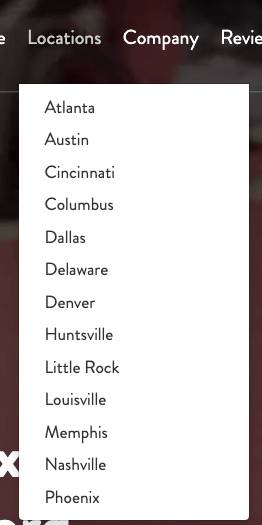
Subdomains and multi-site structures face a disadvantage because search engines like Google view them as separate entities, leading to individual rankings. On the other hand, a website with a “subfolder” or “subdirectory” structure is considered part of the same domain.
For instance, Black Tie Moving uses a subdirectory structure for its locations. The main domain is https://www.blacktiemoving.com/, and the Dallas location’s subsite is https://www.blacktiemoving.com/dallas/. This subsite contains unique content tailored to rank well in that specific area for targeted keywords.
Other companies using the subsite/subdirectory model include:
- Rotorooter
- One Hour Air Conditioning & Heating®
- Next Day Dumpsters
What Are the Advantages of the Single Domain & Subsite Model?
No Competition for Branded Keywords Between Locations
One significant advantage of using a single domain with subsites is that it eliminates internal competition for branded keywords. When all franchise locations operate under the same domain, Google can easily attribute branded searches to the primary site without splitting traffic between multiple websites. This leads to a stronger overall SEO presence and prevents different franchise locations from competing with each other for the same branded search terms.
Prevents Shared Content & Site Templates
Another benefit is the ability to avoid duplicate content issues. When each location is managed under a single domain, it’s easier to create unique content tailored to each region without using the same templates or content across multiple sites. Google penalizes duplicate content, so this method helps ensure that each location has original, SEO-friendly material, improving the overall ranking potential.
Creating Sites for New Locations is Simpler
Adding new franchise locations is much simpler and faster with a subsite structure. Instead of building an entirely new website, you can create a new subdirectory for the new location under the existing domain. This saves time, reduces costs, and allows the new location to immediately benefit from the primary domain’s authority and SEO performance. It also ensures consistent branding and user experience across all locations.
Shared Backlink Benefits
One of the key advantages of using a single domain with subsites is the ability to share backlink authority across all franchise locations. When backlinks point to the main domain, all subdirectories benefit from the accumulated domain authority. This means that even new franchise locations can gain SEO traction faster by leveraging the existing link profile of the parent domain. It’s a more efficient way to build SEO value, as every link to the main site strengthens the overall authority of the entire franchise.
Easier Tracking Capabilities
Managing SEO and tracking performance becomes significantly easier with a single domain structure. Analytics tools like Google Analytics can seamlessly track traffic, user behavior, and conversions across all franchise locations without the need for multiple tracking codes or separate analytics accounts. This consolidated approach provides a clear overview of the entire franchise’s online performance, making it easier to monitor individual location success, identify trends, and adjust strategies as needed.
Higher Ranking Potential With Less Effort
A single-domain structure allows franchises to concentrate their SEO efforts on one website rather than splitting resources across multiple domains. This unified approach helps boost the overall domain’s authority, improving search rankings for all franchise locations. With less need to build and manage separate SEO strategies, franchisees can focus on optimizing one site, making it easier to rank higher for both branded and local search terms. This results in better visibility on Google with less effort, ultimately benefiting the entire franchise network.
When Are Multiple Websites Appropriate?
While a single domain and subsite model offers many advantages, there are scenarios where using multiple websites for a franchise may be the better approach. This is particularly relevant when different franchise locations or branches serve unique markets or offer distinct services that require tailored messaging, content, or branding. For instance, if each location has its own identity, operates in different industries, or targets vastly different customer bases, separate websites can provide more flexibility to create specialized content and marketing strategies. This reiteration of the flexibility that multiple websites offer can make franchise owners and managers feel that they have options.
Multiple websites may also be appropriate when each franchise location has its dedicated team managing local SEO and the brand wishes to target specific regional search terms without diluting the local SEO focus. In some cases, franchises with international operations may opt for separate websites to cater to the nuances of local languages, currencies, and regulations.
The Verdict
Deciding whether a franchise should use a single domain or multiple websites depends on the specific goals and structure of the business. For franchises seeking to maintain a unified brand identity and maximize SEO efficiency, the single domain and subsite model is often the best choice. It provides shared backlink authority, simplifies site management, and offers easier tracking capabilities, all while avoiding internal competition for branded keywords.
However, for franchises with diverse services, markets, or international operations, multiple websites might provide the flexibility needed to cater to specific audiences. Ultimately, a careful analysis of the franchise’s objectives and target markets will help determine the best approach for improving SEO performance and ranking on Google. This emphasis on careful analysis can empower franchise owners and managers in their decision-making process.
Final Thoughts
When it comes to SEO strategy, franchises need to carefully consider whether a single domain with subsites or multiple websites is the best approach. The single domain and subsite model offers several advantages, including shared backlink benefits, simplified tracking, and higher ranking potential with less effort. It’s ideal for maintaining brand consistency while improving SEO efficiency.
However, multiple websites may be appropriate for franchises serving diverse markets, offering unique services, or operating internationally. This approach allows for more localized SEO strategies and personalized customer experiences but requires greater effort in managing and optimizing each site.
Ultimately, the decision should align with the franchise’s long-term goals, target audience, and market strategy. Both models can be effective, but the key is choosing the one that maximizes your franchise’s visibility and growth on Google. As a franchise owner, marketing manager, or SEO professional, your role in this decision is crucial.


