

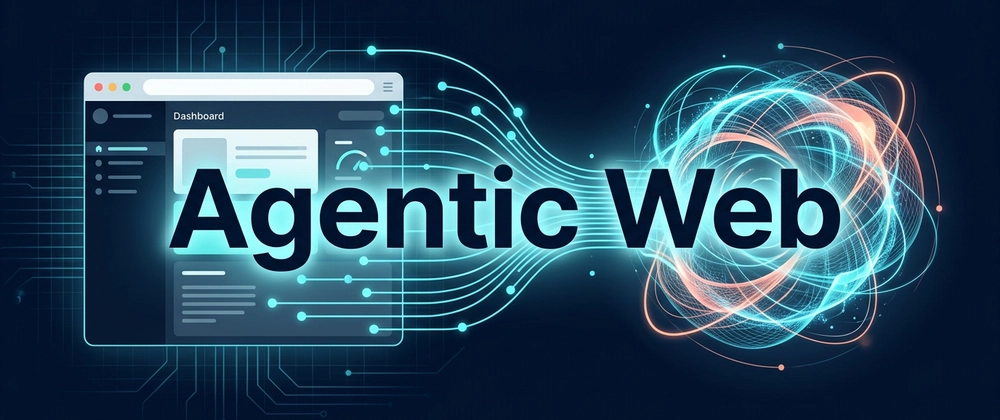
For decades, the internet has been built around one simple behavior: people search, click, browse and decide.
You type a query into a search engine, open multiple links, compare information and eventually take action. That model shaped everything from website design and digital marketing to ecommerce and online customer journeys.
Now that behavior is beginning to change.
Instead of manually visiting dozens of websites, people are increasingly asking AI-powered assistants to research topics, compare options, summarize information and recommend next steps. More importantly, these systems are moving beyond answering questions. They are starting to perform tasks on behalf of users.
This shift is driving the rise of what many experts call the Agentic Web — a new phase of the internet where AI agents can understand goals, gather information, make decisions and execute actions with limited human involvement. Rather than simply helping users find information, these systems are being designed to complete outcomes.
The impact reaches far beyond technology companies.
Search behavior is changing. Website traffic patterns are changing. Customer discovery journeys are changing. Brands that once depended on clicks and page views are beginning to compete for visibility inside AI-generated answers and agent-driven recommendations.
The internet is gradually evolving from a place where people navigate information themselves into a place where intelligent systems navigate it for them.
Understanding this transition is becoming increasingly important for marketers, business owners, content creators and digital teams because the way people discover products, services and information may look very different over the next few years. AI agents are becoming a new layer between users and the web itself.
What Agentic Really Means
The word agentic comes from the concept of agency — the ability to act independently toward a goal.
Traditional AI systems are mostly reactive. You ask a question and they provide an answer. You give an instruction and they generate a response. Once the interaction ends, the task is finished.
Agentic systems work differently.
Instead of responding to a single prompt, they can plan multiple steps, use tools, evaluate progress, adjust strategies and continue working toward a desired outcome. Their purpose is not simply to provide information but to achieve objectives.
Think of the difference this way:
- A traditional AI chatbot answers, “What are the best CRM platforms?”
- An AI agent researches CRM platforms, compares pricing, evaluates reviews, creates a shortlist and presents recommendations based on your business needs.
One system generates information.
The other pursues a goal.
This distinction is becoming the foundation of the Agentic Web. AI is moving from being a content generator to becoming an active participant in digital workflows.
Modern agentic systems can already:
- Break large tasks into smaller actions
- Search and analyze information from multiple sources
- Use external tools and APIs
- Remember context across tasks
- Make decisions based on changing information
- Coordinate multiple actions to reach an objective
The result is a more autonomous form of AI that behaves less like a search engine and more like a digital assistant capable of taking initiative.
What AI Agents Can Do Today (And What They’re Learning Fast)

The capabilities of AI agents have advanced dramatically over the last two years.
Many people still think of AI as a chatbot that answers questions. In reality, modern AI agents are becoming capable of handling increasingly complex workflows that previously required multiple applications and significant human effort.
Today, AI agents can already:
Research and Summarize Information
Agents can search multiple sources, compare viewpoints, identify patterns and generate concise summaries.
Instead of opening ten browser tabs to understand a topic, users can ask an AI agent to gather the most relevant information and present a synthesized overview.
Compare Products and Services
AI agents can evaluate features, pricing, reviews and specifications across multiple vendors.
Rather than manually reviewing dozens of websites, users can receive recommendations tailored to specific requirements and preferences.
Automate Repetitive Tasks
Many organizations now use AI agents to:
- Draft emails
- Create reports
- Organize data
- Schedule meetings
- Manage workflows
- Handle customer support requests
These systems can often perform work across multiple software tools without requiring constant supervision.
Execute Actions Across Platforms
The biggest shift is that AI agents are increasingly able to do more than generate content.
They can:
- Book reservations
- Complete purchases
- Submit forms
- Monitor prices
- Trigger workflows
- Interact with connected software systems
This is where the internet begins moving from information retrieval toward action execution.
Learn Through Context and Feedback
Emerging agent systems are becoming better at retaining context, adapting to user preferences and improving performance over time.
Rather than starting from zero during every interaction, future agents will increasingly build persistent knowledge about tasks, workflows and objectives. Researchers are actively developing systems that allow agents to collaborate, remember past experiences and coordinate with other agents across digital environments.
While today’s agents are not fully autonomous in every scenario, the pace of improvement is accelerating. Many experts believe the next stage of internet interaction will involve users delegating more routine decisions and tasks to intelligent systems that can operate on their behalf.
The Three Web Eras: Links, Answers and Actions
The evolution of the web can be understood through three major stages.
Era One: The Web of Links
The first era was built around websites and search engines.
Users searched for information, received a list of links and visited websites to find answers themselves. Success depended heavily on rankings, backlinks and the ability to attract clicks.
The internet functioned primarily as a directory of information connected through hyperlinks.
Era Two: The Web of Answers
The second era emerged as AI-powered search and generative AI became mainstream.
Instead of providing only links, systems began generating direct answers.
Users increasingly received summaries, explanations and recommendations without needing to visit multiple websites. Search engines started incorporating AI-generated overviews, while conversational AI platforms became alternative discovery channels.
Information became more accessible, but websites began competing not only for rankings but also for inclusion inside AI-generated responses.
Era Three: The Web of Actions
The next phase is the Agentic Web.
In this model, users focus less on finding information and more on expressing goals.
Instead of asking:
“Which flight should I book?”
Users may simply say:
“Find the best flight for my budget and book it.”
The AI agent researches options, evaluates trade-offs, completes the booking process and reports back with the result.
The interaction shifts from browsing to delegation.
In this environment, websites are no longer just destinations for human visitors. They become systems that AI agents interact with, analyze and use to complete tasks. Information, decision-making and execution begin merging into a single experience.
This is why the Agentic Web matters now. It represents a fundamental change in how people access information, make decisions and interact with the internet itself.
Why This Matters Right Now: Discovery Is Moving Upstream Into Assistants

The Agentic Web is not a distant future concept. The shift is already happening.
Millions of people now begin their information journey inside AI assistants instead of traditional search engines. Whether they’re researching software, comparing products, learning a new skill or planning a purchase, users increasingly expect AI to gather information and simplify decision-making for them.
This changes one of the most fundamental assumptions of the internet.
For years, businesses optimized websites around attracting clicks. The goal was simple: appear in search results, earn a visit and convert the visitor.
Today, discovery is starting to happen before a user ever reaches a website.
AI assistants can summarize information, evaluate options and recommend solutions directly within the conversation. As these systems become more capable, they are increasingly acting as intermediaries between users and the web.
The result is a new competitive landscape where visibility depends not only on being found by humans but also on being understood, trusted and referenced by AI systems.
1) Fewer Clicks, More Synthesis
Traditional search behavior often involved opening multiple pages to compare information.
For example, someone researching project management software might visit ten websites, read reviews, compare pricing pages and evaluate feature lists before making a decision.
Today, an AI assistant can perform much of that research in seconds.
Instead of presenting a list of links, the assistant gathers information from multiple sources and delivers a synthesized answer. The user receives a recommendation, summary or shortlist without needing to visit every source individually.
This trend is reducing the number of clicks required to reach a decision.
For businesses, that means website traffic may no longer be the only measure of visibility. A company can influence a buying decision even if the user never visits its website directly. If AI systems consistently reference, cite or recommend a brand, that brand remains visible throughout the decision-making process.
The challenge is that businesses can no longer assume users will consume their content exactly as published. Increasingly, AI systems will interpret, summarize and present information on their behalf.
2) More Delegation, Less Browsing
The next shift is even more significant.
People are beginning to delegate tasks instead of simply gathering information.
Historically, users searched the web, reviewed options and manually completed actions. The internet served as a tool for exploration.
Agentic systems are transforming the internet into a tool for execution.
A user may ask an AI assistant to:
- Research software options
- Find the best travel itinerary
- Compare insurance providers
- Schedule appointments
- Monitor product prices
- Generate purchasing recommendations
The user provides the goal, and the agent handles much of the process.
As AI agents gain access to more tools, platforms and workflows, browsing becomes less important than outcome completion. Users spend less time navigating websites and more time directing intelligent systems.
This is why businesses must rethink how they present information online. The future customer journey may involve AI agents evaluating content, products and services long before a human interacts with the brand directly.
How To Stay Visible When Fewer People Click
The rise of AI assistants does not mean websites become irrelevant.
In fact, authoritative websites remain one of the primary sources AI systems use to understand companies, products, expertise and solutions.
What changes is how content is discovered and consumed.
Businesses that create content specifically for human readers and AI systems simultaneously will have a stronger chance of remaining visible as search behavior evolves.
Write for Clarity Over Cleverness
Creative writing has value, but AI systems prioritize understanding.
When content relies heavily on vague language, marketing buzzwords or clever phrasing, it becomes harder for machines to accurately interpret.
Clear language helps both humans and AI systems understand:
- What the page is about
- Who it serves
- What problem it solves
- Why it matters
For example, a headline such as “Reinvent Your Workflow With Next-Generation Productivity Innovation” sounds impressive but provides little concrete meaning.
A headline like “Project Management Software for Marketing Teams” immediately communicates purpose.
The more clearly content communicates information, the easier it becomes for AI systems to extract, summarize and reference it accurately.
Write for Direct Answers Over Long Intros
Many traditional SEO articles begin with lengthy introductions before addressing the actual topic.
AI-driven discovery favors content that provides answers quickly.
Users asking AI assistants a question are looking for immediate clarity. As a result, content that clearly answers common questions early in the page often performs better in AI-generated summaries and recommendations.
Effective content should:
- Define concepts clearly
- Answer questions directly
- Present key information near the top
- Support claims with evidence and examples
- Expand into deeper explanations afterward
This approach benefits both readers and AI systems because important information is easier to identify and understand.
How To Format Content So Agents Can Reuse It
Structure matters more than ever.
AI systems work best when information is organized logically and consistently.
Content that is easy to scan is also easier for agents to process.
Best practices include:
- Using descriptive headings and subheadings
- Creating question-and-answer sections
- Breaking complex topics into smaller sections
- Including bullet points and numbered lists
- Defining terms clearly
- Organizing information hierarchically
- Keeping important facts close to relevant headings
Well-structured content allows AI systems to identify context, extract relevant details and present accurate information to users.
The goal is not to write for machines alone. The goal is to create content that is useful, understandable and accessible regardless of whether it is consumed by a human visitor, a search engine or an AI assistant.
Make Conversion Paths Easy for Agents

Visibility is only one part of the equation.
Once an AI assistant recommends a business, product or service, the next challenge is enabling action.
In the Agentic Web, AI systems may increasingly help users complete transactions, schedule meetings, request demos, submit inquiries and compare solutions.
That means conversion paths must be simple, transparent and easy to understand.
Businesses should focus on creating:
- Clear product descriptions
- Transparent pricing information
- Easy-to-find contact details
- Accessible service information
- Structured FAQs
- Straightforward signup processes
- Consistent information across channels
The easier it is for an AI system to understand what a company offers and how a customer can take the next step, the more likely that business is to remain competitive in agent-driven discovery environments.
Think of it this way: if AI agents become the new digital gatekeepers, they need a clear path from recommendation to action.
Companies that remove friction, clarify their offerings and simplify conversion journeys will be better positioned for a web where intelligent agents increasingly influence how decisions are made and how transactions happen.
Why AI SEO Is Becoming Its Own Discipline
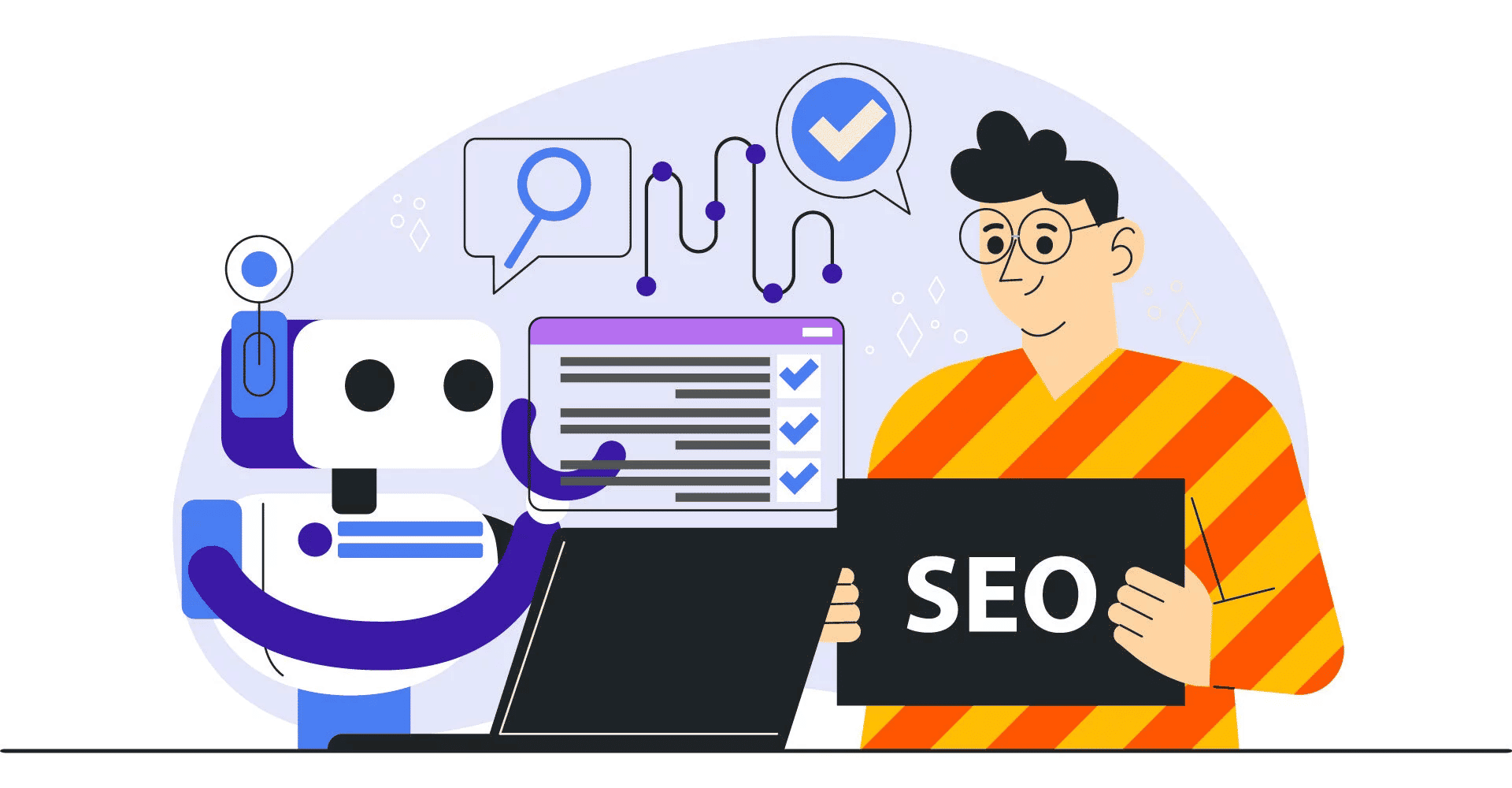
For years, search engine optimization focused on helping websites rank higher in search results.
The core objective was straightforward: attract clicks from users searching for information, products or services. Success was measured through rankings, impressions, organic traffic and conversions.
While those metrics still matter, the rise of AI assistants and agent-driven discovery is changing how people find information online.
Today, users increasingly receive answers without clicking through to multiple websites. AI-powered search experiences summarize information, compare options and provide recommendations directly within conversations. At the same time, AI agents are becoming capable of researching, evaluating and acting on behalf of users.
This shift has created new optimization challenges.
Businesses now need to consider not only how search engines understand their content but also how AI systems interpret, summarize and reference it.
That is why AI SEO is emerging as its own discipline.
AI SEO focuses on making content easier for AI systems to understand, trust and reuse while still delivering value to human audiences. It combines traditional SEO fundamentals with new considerations such as:
- Answer-focused content creation
- Structured information architecture
- Entity-based optimization
- Topic authority development
- Content clarity and accuracy
- Machine-readable formatting
- AI-friendly content organization
- Brand visibility within AI-generated responses
Unlike traditional search rankings, AI visibility often depends on whether a system considers a source trustworthy, relevant and easy to interpret.
As AI assistants become a larger part of the discovery process, businesses that understand how AI systems evaluate information will have a significant advantage.
The future of search may involve fewer clicks, but visibility will remain essential. The difference is that brands will increasingly compete to become the sources AI systems rely on when generating answers, recommendations and actions.
The Future Belongs to Brands That Enable Action
The traditional web rewarded brands that earned clicks. The AI-powered web rewards brands that become trusted sources within AI-generated answers and recommendations.
The next phase—the Agentic Web—will reward brands that help users achieve outcomes. As AI agents become more involved in researching, evaluating and completing tasks, success will depend less on attracting visitors to a webpage and more on providing information that intelligent systems can confidently understand, verify and act upon.
In this environment, websites are no longer just destinations. They are part of a broader ecosystem where AI assistants determine which information to surface, which sources to trust and, increasingly, which actions to take on a user’s behalf.
The good news is that businesses do not need to predict exactly how every AI platform or agent framework will evolve. The fundamentals remain clear: create content that is accurate, transparent and easy to interpret. Make your products, services and conversion paths straightforward to understand. Reduce friction wherever possible and support your claims with evidence that both people and AI systems can validate.
Brands that thrive in the years ahead will be those that minimize ambiguity, demonstrate expertise and optimize their digital presence for both human audiences and AI-driven interactions. This includes content strategy, website structure, user experience and conversion optimization.
The Agentic Web is more than another technology trend. It represents a fundamental shift in how information is discovered, evaluated and acted upon online. Organizations that adapt early will be better positioned to remain visible, trusted and competitive as AI becomes an increasingly influential part of the customer journey.
If you’re looking to make your website and content more agent-ready while maintaining a strong brand voice and persuasive customer experience, Pro Real Tech can help. From SEO and AI visibility strategies to content marketing and conversion optimization, the focus is on building digital experiences that perform effectively in both traditional search environments and the emerging agent-driven web.
Frequently Asked Questions (FAQs) About Agentic Web
WHAT IS THE AGENTIC WEB?
The Agentic Web refers to a new stage of internet evolution where AI agents can do more than retrieve information. These systems can understand goals, gather data, evaluate options, make decisions and perform actions on behalf of users. Instead of simply helping people find information, agentic systems aim to help complete outcomes.
HOW IS THE AGENTIC WEB DIFFERENT FROM THE AI-POWERED WEB?
The AI-powered web generally refers to websites, applications and search experiences enhanced by artificial intelligence features.
The Agentic Web goes further by introducing autonomous or semi-autonomous AI agents that can plan tasks, interact with digital systems and take action toward achieving user goals. The focus shifts from generating information to executing workflows.
WHAT IS AGENTIC AI IN SIMPLE TERMS?
Agentic AI is artificial intelligence designed to pursue objectives rather than only respond to prompts.
Instead of answering a single question and stopping, agentic AI can break a task into steps, use tools, evaluate progress and continue working toward a desired result with limited human guidance.
WHAT DO AI AGENTS DO ON THE AI AGENT WEB?
AI agents can perform a wide variety of tasks, including:
- Researching information
- Comparing products and services
- Monitoring updates
- Scheduling appointments
- Automating workflows
- Generating reports
- Managing routine business tasks
- Recommending solutions based on user goals
As technology advances, agents are expected to handle increasingly complex workflows across multiple platforms.
WHAT IS THE AGENTIC INTERNET AND WHY ARE PEOPLE TALKING ABOUT IT?
The term “Agentic Internet” describes an internet where intelligent software agents become active participants in online interactions.
People are discussing it because AI capabilities are advancing rapidly, and many experts believe future internet experiences will involve more delegation and automation. Instead of manually navigating websites, users may increasingly rely on AI agents to complete tasks on their behalf.
WHY DOES AI SEARCH OPTIMIZATION MATTER MORE NOW?
AI search optimization matters because discovery is increasingly happening inside AI-generated answers and conversational interfaces.
If AI systems cannot easily understand or trust a brand’s content, that brand may become less visible in future search experiences. Optimizing for AI helps improve the likelihood that content will be referenced, cited or recommended.
WHAT IS GENERATIVE ENGINE OPTIMIZATION?
Generative Engine Optimization (GEO) is the practice of creating and structuring content so that AI-powered search engines and generative AI systems can accurately understand, summarize and reference it.
The goal is to increase visibility within AI-generated responses, not just traditional search rankings.
GEO VS. SEO: WHAT IS THE DIFFERENCE?
SEO primarily focuses on improving visibility within search engine results pages.
GEO focuses on improving visibility within AI-generated answers and conversational experiences.
While both disciplines share foundations such as quality content, authority and relevance, GEO places additional emphasis on content clarity, answerability, structured information and machine interpretability.
Many businesses will ultimately need both SEO and GEO strategies working together.
HOW DO YOU OPTIMIZE FOR AI AGENTS WITHOUT LOSING BRAND VOICE?
The key is balancing clarity with personality.
Brands should continue using their unique voice, perspective and expertise while ensuring information is easy to understand and accurately interpret.
Practical approaches include:
- Using clear language
- Defining important concepts
- Maintaining consistent messaging
- Supporting claims with evidence
- Organizing content logically
- Avoiding unnecessary jargon
Strong brand identity and AI readability are not mutually exclusive. The best content achieves both.
HOW SHOULD BRANDS PREPARE FOR THE FUTURE OF THE INTERNET WITH AI?
Brands should focus on becoming reliable, authoritative and easily understandable sources of information.
Key preparation steps include:
- Creating high-quality content
- Building topical expertise
- Improving content structure
- Publishing clear answers to customer questions
- Maintaining accurate business information
- Simplifying conversion paths
- Monitoring AI search visibility
- Investing in AI SEO and GEO strategies
The organizations most likely to succeed in the Agentic Web are those that prioritize usefulness, trustworthiness and accessibility. As AI agents play a larger role in discovery and decision-making, businesses that make their information easy to understand and act upon will be better positioned for long-term success.
Read More: PPC Stats You Should Know in 2026


