

For years, websites delivered the same message to every visitor. That approach worked when user expectations were lower—but in 2026, it creates friction instead of engagement. Today’s users arrive with specific intent, shaped by where they came from, what they’re searching for, and how ready they are to act.
Adaptive content is the response to that shift. Instead of presenting a one-size-fits-all experience, modern websites now interpret real-time signals—such as behavior, context, and intent—and adjust content instantly.
This evolution is driven by two major forces:
- The rise of intent-driven search and AI-powered discovery
- Increasing demand for highly relevant, frictionless user experiences
As a result, businesses are moving from static messaging to dynamic, context-aware content systems that adapt to each user moment-by-moment. The goal is simple: deliver the right message, to the right user, at the exact time they need it.
What Is Adaptive Content?
Adaptive content is content that automatically changes based on user data, behavior, and context—rather than showing the same version to everyone.
Unlike traditional content strategies, adaptive content doesn’t rely on assumptions. It responds to live signals, including:
- Traffic source (search, ads, email, social)
- Device, location, and language
- Pages viewed and on-site behavior
- New vs. returning visitor status
- Engagement signals like clicks, scroll depth, or time on page
- Funnel stage (researching vs. ready to convert)
What makes adaptive content powerful is that it doesn’t just tweak small elements—it can change entire sections of messaging, structure, or offers to better match user intent.
At its core, adaptive content is about aligning content with what the user is trying to accomplish right now, not just who they are.
How Adaptive Content Functions on a Website
Adaptive content works as a real-time system, not a single feature. It follows a continuous cycle of data collection, analysis, and delivery.
Here’s how it functions step by step:
1. Real-Time Signal Collection
Every user interaction generates data—device type, location, browsing behavior, and engagement patterns. These signals form the foundation of understanding user intent.
2. Behavioral Analysis
The system analyzes patterns such as:
- Are users exploring or comparing?
- Are they new or returning?
- Are they stuck or progressing?
This transforms raw data into actionable insights instead of guesses.
3. Content Selection
Content is structured into modular blocks (headlines, CTAs, sections). Based on rules or AI logic, the system selects the most relevant variation for that user’s situation.
4. Instant Delivery
The selected content is delivered in real time, often within milliseconds—without disrupting the user experience.
5. Continuous Optimization
Performance metrics like clicks, conversions, and engagement feed back into the system, allowing it to improve over time.
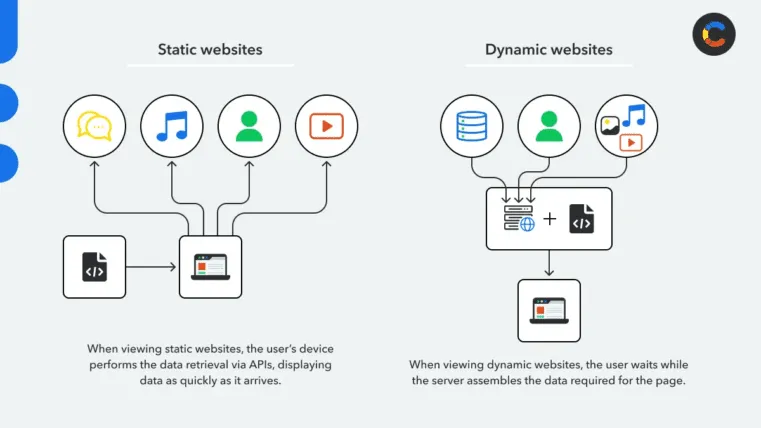
From a technical standpoint, this happens in two main ways:
- Dynamic websites: The server assembles a personalized page before it loads
- Modern static sites: APIs inject personalized elements after the page loads
Either way, the result is the same: a tailored experience that feels intentional rather than generic.
Adaptive Content vs. Static Content vs. Basic Personalization
Many businesses believe they are personalizing content—but in reality, they’re only scratching the surface. Understanding the differences is critical.
1. Static Content
- One version for all users
- No adaptation based on context or behavior
- Simple, but often irrelevant
2. Basic Personalization
- Uses simple rules (e.g., name insertion, location-based banners)
- Limited to predefined segments
- Helpful, but shallow
3. Adaptive Content
- Responds to multiple real-time signals simultaneously
- Adjusts continuously as user behavior evolves
- Focuses on intent, not just identity
- Delivers a dynamic, context-aware experience
The key distinction:
Static = same message
Personalization = slightly adjusted message
Adaptive = continuously evolving message based on real-time intent
This shift moves content from being audience-based to moment-based.
The Infrastructure of Adaptation
Adaptive content doesn’t happen by accident—it requires the right technical and strategic foundation.
1. Headless or Decoupled Architecture
Modern adaptive systems separate content from presentation, allowing individual elements (like headlines or CTAs) to be swapped dynamically without breaking the page layout.
2. APIs and Data Integration
APIs connect different systems (CMS, analytics, CRM, personalization tools), enabling real-time data flow and content updates.
3. Structured Content Model
Content is broken into reusable, modular components instead of fixed pages. This makes it easier to adapt specific sections without rebuilding everything.
4. Real-Time Decision Engines
These systems analyze incoming user data and decide which content variation to show, often using rules, machine learning, or AI.
5. Continuous Measurement Layer
Analytics tools track engagement, conversions, and behavior—feeding insights back into the system for ongoing optimization.
Why This Infrastructure Matters
Without this foundation, adaptive content becomes either:
- Too complex to manage
- Too limited to deliver real impact
With the right setup, however, it enables a powerful shift:
➡️ From static pages → dynamic content ecosystems
➡️ From guessing user needs → responding to real intent in real time
Simple Examples of Adaptive Content
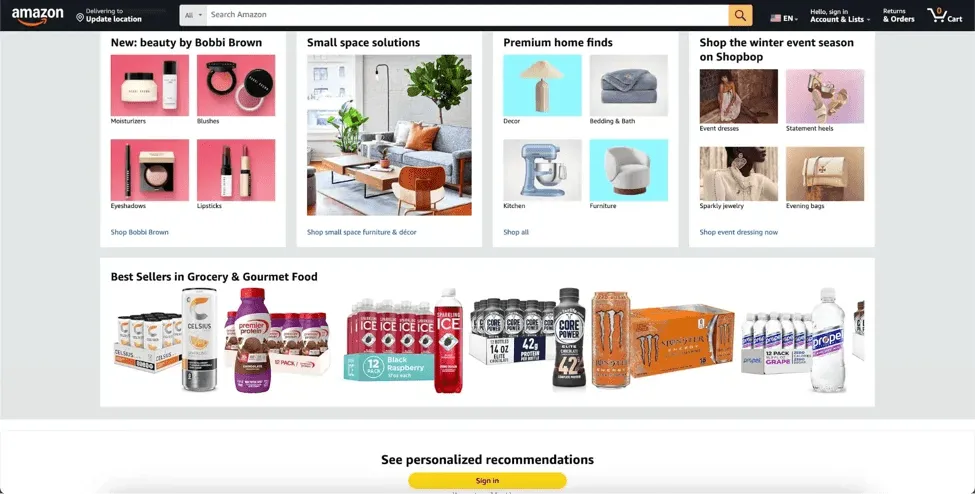
Adaptive content doesn’t require a complete system overhaul to start delivering value. In fact, the most effective implementations begin with simple, high-impact adjustments that respond directly to user intent in real time.
Here are three practical examples that show how adaptive content works in action:
1. Website Messaging Changes Based on Intent
One of the clearest signals of user intent is how someone arrives on your website. Adaptive systems use this to adjust messaging instantly.
- A visitor coming from an informational blog post is likely still researching → show educational CTAs like “Download the guide” or “Learn more”
- A visitor arriving via a high-intent search or paid ad is closer to action → show conversion-focused CTAs like “Book a consultation” or “Get a quote”
This approach reduces friction because it aligns with the user’s mindset. Instead of forcing every visitor through the same journey, the page adapts to what they’re trying to accomplish right now.
In 2026, this kind of intent matching is critical because users expect immediate relevance within seconds, not generic messaging.
2. Location-Based Content Changes
Geographic context is another powerful signal—and one of the easiest to implement.
Adaptive content can dynamically adjust elements like:
- Office locations or nearest service areas
- Local testimonials or case studies
- Region-specific offers, language, or contact details
For example:
- A user in one city sees a local branch address and phone number
- A user in another region sees different imagery, seasonal products, or services relevant to their climate
This works because it removes the mental effort required to “translate” generic content into a local context. Studies show that contextual relevance directly improves engagement and click-through rates
3. Return Visitor Changes
Not all visitors should be treated the same—and one of the biggest missed opportunities is ignoring returning users.
Adaptive content distinguishes between:
- First-time visitors → show explanations, trust signals, and brand introduction
- Returning visitors → show deeper content like pricing, case studies, or direct CTAs
This reflects a fundamental shift:
The second visit is not the same journey—it’s a continuation.
Modern systems can even go further by:
- Highlighting previously viewed products
- Suggesting next steps based on past behavior
- Reducing unnecessary information to speed decision-making
This type of adaptation minimizes repetition and helps users move forward faster—something that directly impacts conversion rates.
Why Adaptive Content Matters in 2026
Adaptive content isn’t just a tactic anymore—it’s a response to how digital behavior, search, and expectations have fundamentally changed.
Here’s why it has become essential:
1. Meeting the High Bar of Modern Expectations
Today’s users don’t “browse” the way they used to—they scan, evaluate, and decide quickly.
- Attention spans are shorter
- Choices are abundant
- AI-powered tools often pre-filter information before users even click
When users land on a page, they’re subconsciously asking:
👉 “Am I in the right place?”
If the content doesn’t immediately match their intent, they leave. Adaptive content solves this by creating a clear relevance signal instantly, reducing cognitive load and improving engagement
Additionally, research shows that over 70% of users expect personalized experiences, and frustration increases when content feels generic
2. Maximizing Value in a High-Competition Landscape
Traffic is no longer cheap or easy to acquire.
- Paid ads are more expensive
- Organic competition is intense
- Every click carries higher stakes
Adaptive content acts as a force multiplier for your marketing efforts:
- It increases conversion rates without increasing traffic
- It ensures each visitor sees the most relevant version of your page
- It reduces wasted spend on mismatched landing experiences
Instead of driving more traffic, adaptive strategies focus on extracting more value from the traffic you already have.
3. Solving for AI-Driven Discovery and “Passage Optimization”
Search behavior has changed dramatically with AI-driven discovery.
- AI systems now surface specific answers or page sections, not just entire pages
- Users often land on highly specific content fragments
- The window to prove relevance is smaller than ever
Adaptive content helps by:
- Dynamically adjusting surrounding content to match the query context
- Reinforcing relevance beyond the initial entry point
- Guiding users from “answer consumption” to “next action”
In this environment, content must do more than rank—it must adapt instantly to the micro-intent that brought the user in.
4. Moving from Campaigns to Conversations
Traditional marketing was campaign-driven:
- Launch a message
- Push traffic
- Measure results
But user journeys today are non-linear and unpredictable.
Adaptive content shifts the model from campaigns to ongoing conversations:
- Each interaction informs the next
- Content evolves as behavior changes
- The experience feels continuous, not fragmented
Instead of asking:
👉 “What message do we want to push?”
Adaptive strategies ask:
👉 “What does this user need right now?”
This is a fundamental shift—from broadcasting messages to responding in real time.
5 Practical Use Cases for Adaptive Content (What to Implement First)
Adaptive content becomes powerful when it’s applied to high-intent moments—places where small changes in relevance can significantly impact engagement and conversions. Below are five practical, proven use cases you can implement first without overcomplicating your system.
1) Landing Pages That Change Headlines Based on Traffic Source
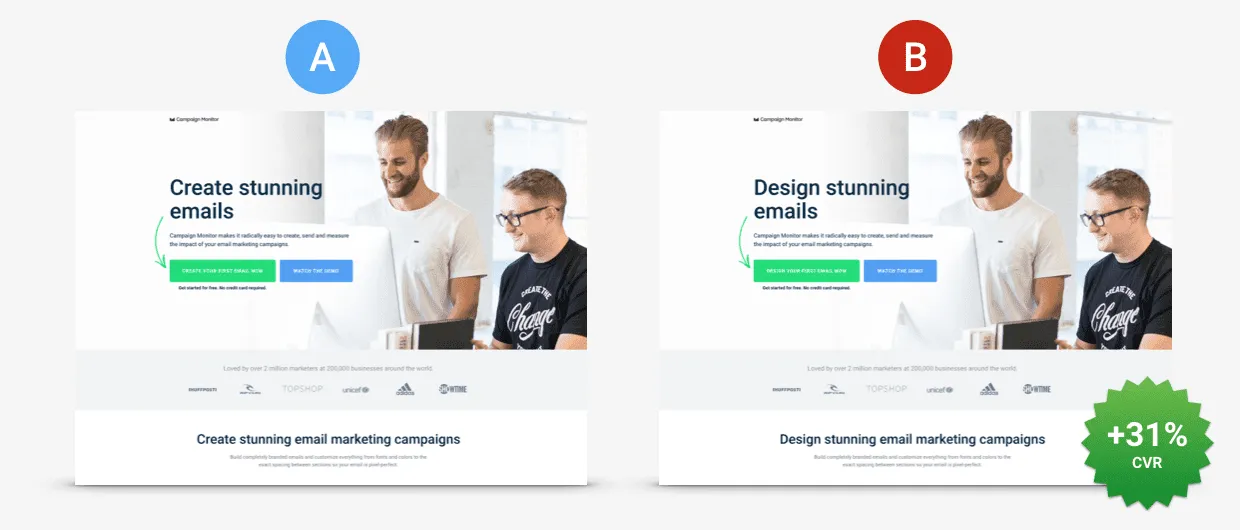
Traffic source is one of the clearest indicators of intent. Adaptive landing pages use this signal to instantly align messaging with expectations.
For example:
- Visitors from paid ads see urgency-driven headlines like “Get a Quote Today”
- Visitors from organic search see informational headlines like “Compare Solutions”
- Visitors from social media see proof-driven messaging like “See Real Results”
This eliminates the mismatch between user expectations and page content—a major cause of bounce. Instead of building dozens of pages, you create smart variations within one page, improving ROI without increasing complexity.
2) Product Recommendations That Adjust Based on Browsing Behavior
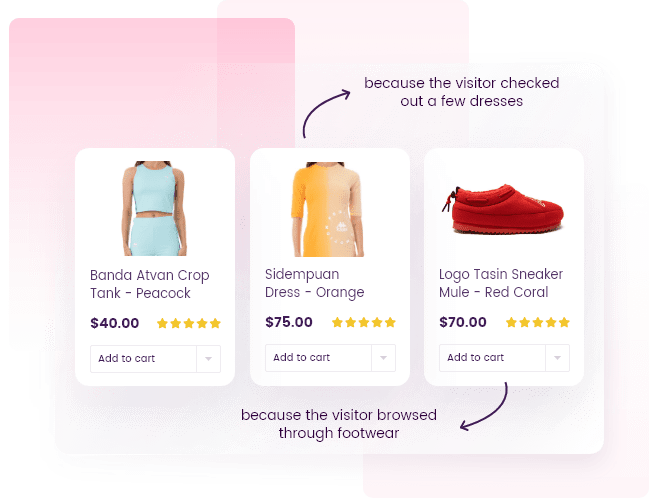
Behavior is one of the strongest real-time intent signals. Adaptive systems analyze what users view, compare, or engage with—and adjust recommendations instantly.
Common implementations include:
- Showing similar or complementary products after a user views a category
- Highlighting top sellers after repeated browsing within a segment
- Displaying comparison tools or pricing breakdowns when users explore pricing pages
This reduces decision fatigue and keeps users engaged by narrowing choices to what actually matters. In practice, behavior-driven recommendations significantly improve both time on site and conversions by making discovery feel effortless
3) CTAs That Change Depending on Funnel Stage
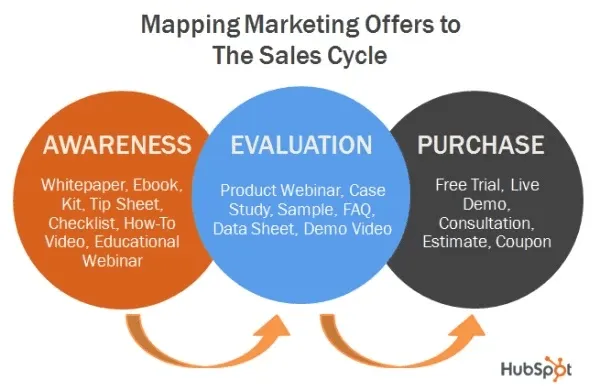
A single CTA cannot effectively serve every visitor. Adaptive content solves this by aligning calls-to-action with where the user is in their journey.
Typical mapping looks like:
- Top-of-funnel (early research): “Download Guide,” “Learn More”
- Mid-funnel (evaluation): “Compare Options,” “See Case Studies”
- Bottom-of-funnel (ready to act): “Request Pricing,” “Book Consultation”
This approach improves lead quality, not just quantity. Instead of pushing premature conversions, it guides users naturally toward the next step—resulting in more qualified and conversion-ready leads.
4) Email Content That Adapts in Real Time
Email remains one of the most effective channels for adaptive content because user behavior is highly trackable.
Adaptive email workflows respond to actions like:
- Clicking on pricing → next email focuses on ROI and FAQs
- Exploring features → next email highlights use cases and integrations
- Inactivity → triggers re-engagement offers or reminders
This transforms email from a static sequence into a behavior-driven communication loop. Personalized emails can significantly boost engagement, with higher open and interaction rates compared to generic campaigns
5) Chatbots and On-Site Assistants That Shift Responses Based on Context
Modern chatbots are no longer script-based—they are context-aware systems that adapt in real time.
They can adjust responses based on:
- Page type (blog vs. pricing vs. product)
- Visitor type (new vs. returning)
- Time spent and engagement signals
- Previous interactions or questions
For example:
- On a blog page → offer educational help
- On a pricing page → offer sales assistance or demos
This reduces friction at critical moments and helps users move forward faster, directly impacting conversions and user satisfaction.
What Are the Benefits of Adaptive Content for Businesses?
Adaptive content isn’t just about personalization—it’s about performance, efficiency, and alignment with user intent. When implemented correctly, it drives measurable improvements across key business metrics.
Higher Engagement and Lower Bounce Rates
When users see content that matches their intent, they’re far more likely to stay and interact.
- Personalized experiences can increase engagement significantly (up to ~20%)
- Relevant content reduces frustration and encourages deeper exploration
- Adaptive experiences minimize “wrong page” signals that cause users to leave immediately
Relevance keeps users from bouncing and encourages them to keep moving forward.
More Relevant User Experiences
Adaptive content removes unnecessary noise and delivers context-aware experiences.
Instead of forcing users to filter information themselves, the system:
- Highlights what matters most
- Adjusts messaging based on behavior and context
- Simplifies decision-making
This creates a smoother, more intuitive journey—one that feels tailored rather than generic. Over time, this level of relevance builds trust and brand affinity
Improved Lead Quality and Conversions
Adaptive content doesn’t just increase conversions—it improves the quality of those conversions.
- Personalized landing pages can convert significantly better than generic ones
- Behavior-driven recommendations reduce decision friction
- Funnel-aligned CTAs guide users toward the right action at the right time
The result: fewer unqualified leads and more high-intent, conversion-ready users.
Better Alignment with User Intent
This is the core advantage—and the reason adaptive content matters.
Traditional content strategies rely on assumptions. Adaptive content relies on real-time signals.
- It aligns messaging with what users are actively trying to do
- It adapts as user behavior evolves within a session
- It creates continuity across touchpoints (website, email, chatbot)
This alignment leads to more efficient marketing, better user experiences, and stronger business outcomes.
How to Build an Adaptive Content Strategy Without Overcomplicating It
One of the biggest mistakes businesses make is assuming adaptive content requires a complete transformation from day one. In reality, the most effective strategies start small, focused, and intentional—then scale over time.
The goal isn’t to build a complex system. It’s to create targeted improvements where intent and impact are highest.
Here’s a step-by-step framework to do exactly that:
Step 1: Identify Your Highest-Impact Pages
Not every page needs adaptation. Start with the pages that directly influence business outcomes.
Focus on:
- Landing pages tied to paid campaigns
- High-traffic blog posts with conversion potential
- Product or service pages
- Pricing or demo request pages
These are “decision-stage” environments where even small improvements in relevance can lead to measurable gains in conversions.
A practical way to prioritize:
- Look at pages with high traffic but low conversion rates
- Identify pages with high bounce rates
- Analyze where users drop off in the funnel
Adaptive content works best where there’s already intent—your job is to match it more precisely.
Step 2: Map Intent Clusters
Instead of thinking in terms of audiences, think in terms of intent groups.
Most websites serve a mix of users who fall into a few key categories:
- Explorers → early-stage, learning and researching
- Evaluators → comparing options and looking for proof
- Buyers → ready to take action
Your job is to map these intent clusters to your key pages.
For example:
- A service page may receive both researchers and ready-to-buy users
- A blog post may attract early-stage readers and mid-funnel evaluators
Once identified, you can begin aligning content variations with each intent type—turning one page into a multi-intent experience.
Step 3: Choose 2–4 Variations Per Page
Overcomplication usually starts here. The goal is not to create endless variations—it’s to create just enough to cover meaningful differences in intent.
For each page, define 2–4 variations of key elements such as:
- Headlines
- Subheadings
- CTAs
- Supporting proof (testimonials, stats, case studies)
Example:
- Version A → Educational focus (for early-stage users)
- Version B → Proof-driven (for evaluators)
- Version C → Conversion-focused (for high-intent users)
This keeps your system manageable while still delivering noticeable improvements in relevance.
Step 4: Use Real-Time Content Analysis to Decide Triggers
Adaptive content depends on when and why content changes—this is where triggers come in.
Triggers are based on real-time signals such as:
- Traffic source (organic, paid, email)
- On-page behavior (scroll depth, clicks, time spent)
- Device type or location
- Visitor status (new vs. returning)
For example:
- A user from a paid ad → show a conversion-focused headline
- A user spending more time reading → introduce deeper content or case studies
- A returning visitor → highlight next-step CTAs instead of introductory content
The key is to use clear, simple rules first, rather than jumping straight into complex AI systems. Even rule-based adaptation can significantly improve performance when aligned with intent.
Step 5: Measure and Iterate
Adaptive content is not a one-time setup—it’s an ongoing optimization process.
Track metrics such as:
- Engagement rate (time on page, scroll depth)
- Click-through rates (CTAs, internal links)
- Conversion rates
- Bounce rates
Then ask:
- Which variation performs best for each intent group?
- Where are users still dropping off?
- What signals might be missing or misinterpreted?
Use these insights to refine:
- Your content variations
- Your trigger logic
- Your intent mapping
Over time, this creates a system that doesn’t just adapt—it learns and improves continuously.
The Practical Mindset to Keep
To avoid overcomplication, follow three principles:
- Start small: One or two pages, not your entire site
- Focus on intent: Not demographics, but user goals
- Iterate fast: Improve based on real data, not assumptions
How Can an Agency Help You Implement Smarter Adaptive Content
While the concept of adaptive content is straightforward, execution can quickly become complex without the right expertise. This is where a specialized agency can make a measurable difference—by turning strategy into a scalable, high-performing system instead of a fragmented set of experiments.
1. Turning Strategy Into a Clear Execution Plan
An agency helps translate your goals into a structured adaptive content roadmap. Instead of guessing what to personalize, they:
- Identify high-impact pages and opportunities
- Define intent clusters based on real user data
- Map content variations to specific user journeys
This ensures your efforts are focused on what actually drives results, not just theoretical improvements.
2. Setting Up the Right Technology Stack
Adaptive content depends on multiple systems working together. Agencies help you select and integrate tools such as:
- CMS or headless CMS platforms
- Personalization engines
- Analytics and behavior tracking tools
- CRM and marketing automation systems
More importantly, they ensure these tools communicate in real time, which is essential for delivering seamless adaptive experiences.
3. Building Structured, Modular Content
One of the most overlooked challenges is content structure. Agencies help you move from static pages to modular content systems, where elements like headlines, CTAs, and sections can be dynamically swapped.
This allows you to:
- Create variations without duplicating entire pages
- Scale personalization efficiently
- Maintain consistency across all experiences
4. Defining Smart Triggers and Logic
Knowing what to change is only half the equation—knowing when to change it is where real performance gains happen.
Agencies design trigger systems based on:
- Traffic source and acquisition channel
- On-site behavior and engagement patterns
- Funnel stage and intent signals
- Returning vs. new visitor data
They also refine these triggers over time, ensuring your content becomes more accurate and effective as data accumulates.
5. Continuous Testing and Optimization
Adaptive content is not static—it evolves. Agencies run ongoing tests to improve performance, including:
- A/B and multivariate testing of content variations
- Behavioral analysis to identify friction points
- Conversion tracking and funnel optimization
This creates a feedback loop where your content continuously improves based on real user interactions.
6. Aligning Teams and Channels
Adaptive content works best when it’s not siloed. Agencies help align:
- SEO strategy
- Paid media campaigns
- Email marketing
- On-site experiences
This ensures users get a consistent, intent-aligned experience across every touchpoint, not just on a single page.
The Real Value of an Agency
An agency doesn’t just implement tools—they help you build a system that:
- Understands user intent more accurately
- Responds in real time
- Scales without becoming unmanageable
This turns adaptive content from a tactic into a long-term competitive advantage.
Adaptive Content Wins by Matching the Moment
At its core, adaptive content succeeds because it aligns with a simple truth:
👉 User intent is not static—it changes moment by moment.
Traditional content strategies treat users as fixed segments. Adaptive content treats them as dynamic individuals with evolving needs.
- A first-time visitor needs clarity
- A returning visitor needs reassurance
- A high-intent user needs a clear path to act
Adaptive content responds to each of these moments in real time—without forcing users through a rigid journey.
Why This Matters More Than Ever
In 2026, digital experiences are shaped by:
- AI-driven search and discovery
- Shorter attention spans
- Higher expectations for relevance
Users no longer tolerate generic content. They expect experiences that feel:
- Immediate
- Context-aware
- Effortless
Adaptive content meets this expectation by ensuring every interaction answers the question:
👉 “Is this exactly what I need right now?”
The Competitive Advantage
Businesses that adopt adaptive content don’t just improve metrics—they fundamentally change how they engage users.
They move from:
- Static messaging → Responsive communication
- Linear funnels → Dynamic journeys
- Assumptions → Real-time understanding
And that’s why adaptive content wins—it doesn’t just deliver information. It delivers the right experience at the right moment.
Contact Pro Real Tech to turn your site into a conversion-ready experience powered by real-time relevance.
Frequently Asked Questions (FAQs) About Adaptive Content
WHAT IS ADAPTIVE CONTENT?
Adaptive content is content that changes dynamically based on user behavior, context, and real-time data. Instead of showing the same message to everyone, it adjusts elements like headlines, CTAs, and recommendations to match individual user intent.
HOW DOES PERSONALIZED CONTENT CREATION SUPPORT ADAPTIVE EXPERIENCES?
Personalized content provides the foundation for adaptive experiences. It creates different content variations (e.g., for different audiences or intent stages), while adaptive systems decide which version to show and when based on real-time signals.
In short:
- Personalization = creating variations
- Adaptation = delivering the right variation at the right time
WHAT IS PERSONALIZED WEBSITE CONTENT AND HOW DOES IT WORK?
Personalized website content uses data such as:
- User location
- Browsing behavior
- Traffic source
- Past interactions
…to tailor what users see on a website. This can include customized headlines, product recommendations, or CTAs.
It works through a combination of:
- Data collection (analytics, cookies, user profiles)
- Decision engines (rules or AI models)
- Dynamic content delivery systems
WHAT IS A REAL-TIME CONTENT UPDATE ON A LANDING PAGE?
A real-time content update occurs when a landing page changes instantly based on user signals.
For example:
- A visitor from a paid ad sees a conversion-focused headline
- A returning visitor sees a different CTA than a new user
These updates happen within milliseconds, creating a seamless experience where the page feels tailored to the user’s context.
WHAT ARE EASY WAYS TO START WITH ADAPTIVE CONTENT WITHOUT OVERCOMPLICATING IT?
You don’t need a complex system to get started. Begin with:
- One or two high-impact pages
- Simple variations (2–3 versions of headlines or CTAs)
- Basic triggers like traffic source or new vs. returning users
Focus on clear intent signals and measurable outcomes. Once you see results, you can gradually expand your strategy without adding unnecessary complexity.
Read More: Adaptive Marketing vs. Agile Marketing: What’s the Difference?


