


In 2026, responsiveness has moved far beyond customer service etiquette and become a measurable component of brand reputation. Every public interaction—whether a review reply, a social comment, or a complaint resolution—contributes to how both customers and algorithms interpret trustworthiness. Modern consumers no longer evaluate businesses only on ratings or pricing; they also assess how actively a brand participates in its own feedback ecosystem.
This shift is driven by the increasing visibility of engagement data across platforms. Response times, reply quality, and consistency are now publicly observable signals that influence perception at scale. At the same time, search engines and AI systems analyze these behavioral patterns to determine which businesses appear more reliable, relevant, and active in local search results and recommendation systems. In this environment, responsiveness is no longer reactive—it is strategic, structured, and reputation-defining.
What Makes Responsiveness a Reputation Signal?
Responsiveness becomes a reputation signal because it reflects how a business behaves in public, especially under scrutiny. It provides real-time evidence of operational quality, customer care, and accountability. Instead of relying solely on what a business claims, audiences and algorithms evaluate what a business does after feedback is received.
This transforms responsiveness into a visible trust indicator across multiple digital touchpoints.
Review Responses
Review responses are one of the clearest indicators of brand engagement. Customers frequently read not just reviews, but how businesses respond to them before making decisions. A consistent pattern of thoughtful replies signals that the business is active and customer-focused.
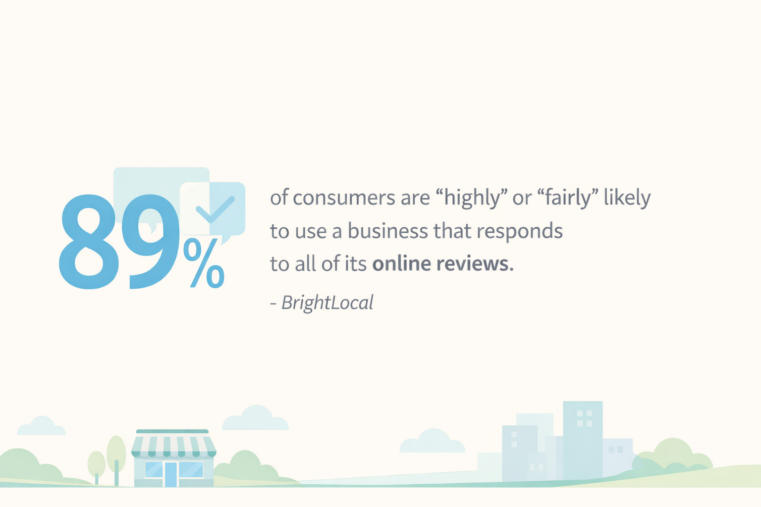
From a platform perspective, review responses also strengthen engagement signals that contribute to local visibility. Research shows that responding to reviews is recognized as a positive local ranking factor, reinforcing relevance and activity in search systems.
More importantly, the quality of responses matters as much as the act itself. Personalized replies that acknowledge specific issues are interpreted as stronger trust signals than generic or automated messages.
Social Comment Engagement
Social platforms operate on immediacy. Users expect timely replies, often within hours rather than days. This expectation has made responsiveness a baseline requirement rather than a competitive advantage.
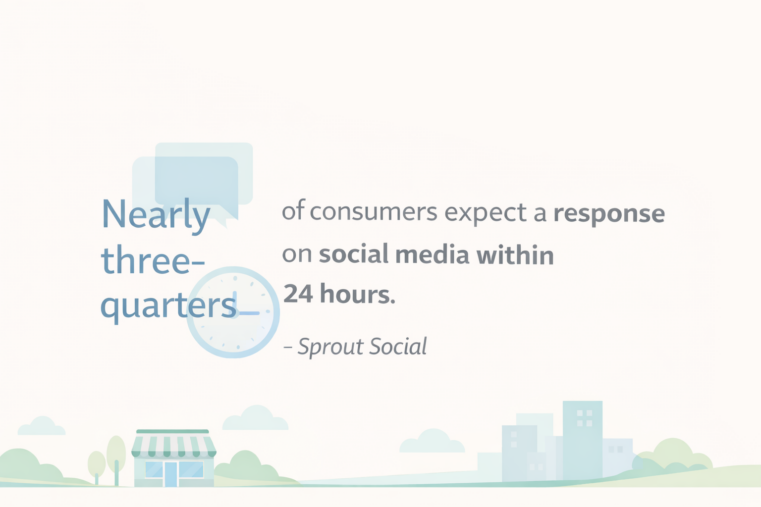
Fast engagement signals that a brand is attentive and operationally active. Delayed or absent responses, on the other hand, create perception gaps where users assume neglect or poor service. Over time, consistent engagement patterns contribute to stronger audience trust and higher perceived reliability.
Visibility in Complaint Resolution
Public complaint resolution has become a highly influential trust factor because it demonstrates follow-through, not just acknowledgment. When businesses visibly resolve issues in comment threads or review platforms, they reduce uncertainty for future customers.
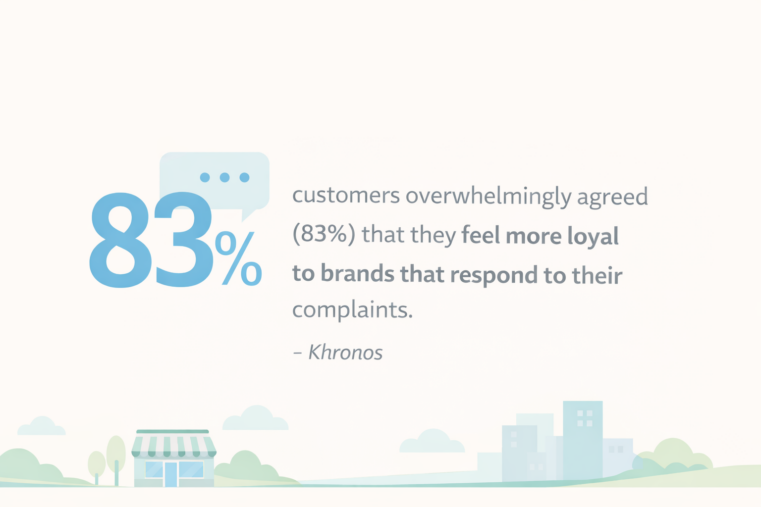
This visibility matters because potential buyers often read complaint exchanges to understand how problems are handled in real scenarios. A resolved issue signals control, accountability, and operational maturity—key attributes of brand credibility.
Public Accountability
Responsiveness also functions as public accountability. When businesses reply to criticism in a transparent and constructive manner, they demonstrate ownership of outcomes rather than avoidance.
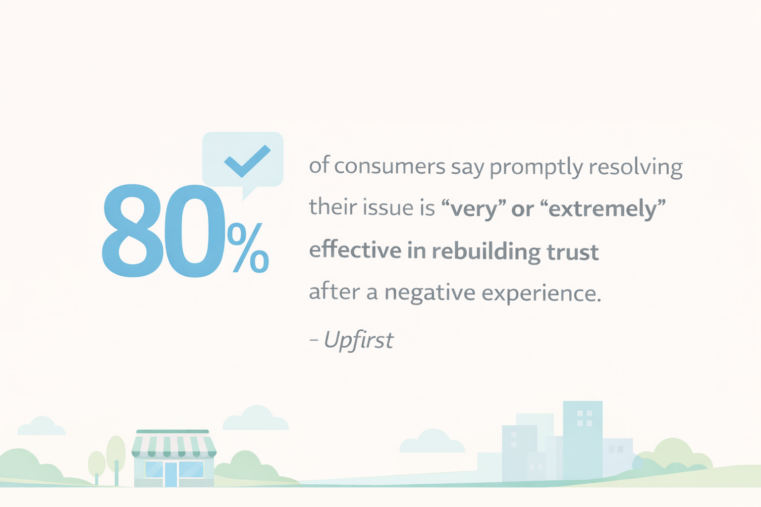
This accountability directly impacts trust formation. Consumers are more likely to trust brands that acknowledge shortcomings and explain corrective actions, rather than those that remain silent. Over time, these visible interactions shape a reputation narrative that is continuously reinforced across platforms.
How Platforms and AI Evaluate Responsiveness
Modern digital ecosystems no longer treat responsiveness as a soft metric. Instead, it is integrated into how platforms, search engines, and AI systems assess business credibility and relevance. These systems analyze engagement behavior at scale to determine which brands deserve higher visibility in recommendations and local search results.
Platform-Level Signals
Platforms like Google and review ecosystems track engagement patterns such as response rate, frequency, and timeliness. These behaviors contribute to what is often referred to as “prominence” in local ranking systems.
Review engagement is now widely recognized as a local ranking factor because it signals that a business is actively managed and responsive to customers.
In addition, broader review signals—including recency, sentiment, and response behavior—are increasingly used to evaluate credibility and relevance in local search rankings.
From a system perspective, consistent responsiveness creates a pattern of activity that strengthens perceived business legitimacy. This can improve visibility in map results, local packs, and discovery surfaces.
AI-Generated Recommendations
AI-driven recommendation systems analyze large volumes of structured and unstructured feedback, including review text and business responses. These systems evaluate not just sentiment, but also tone, resolution language, and engagement consistency.
A business that responds with clarity, empathy, and resolution-oriented language is more likely to be interpreted as trustworthy in AI-generated summaries. Conversely, unresolved complaints or lack of engagement can reduce confidence signals, affecting whether a business is included or highlighted in AI-generated recommendations.
In this context, responsiveness becomes part of a broader “entity trust profile” used by AI systems to determine reliability.
Local Search Implications
In local search environments, responsiveness contributes to entity-level authority. Search systems interpret engagement behavior as a sign of operational activity, which reinforces relevance for location-based queries.
Businesses that consistently respond to reviews and maintain active engagement signals are more likely to be interpreted as current, reliable, and customer-centric. Over time, this strengthens their position in competitive local markets where multiple businesses may have similar ratings or services.
Responsiveness does not just influence perception—it feeds directly into how platforms and AI systems decide which businesses deserve visibility in high-intent search moments.
Why Ignoring Reviews Damages Brand Credibility
Ignoring reviews is no longer a neutral action—it actively shapes how audiences and platforms interpret brand reliability. In a digital environment where feedback is permanently visible and continuously indexed, silence becomes a signal in itself. It often communicates indifference, lack of accountability, or operational disorganization, even when that is not the intention.
Modern consumers expect acknowledgment. They do not assume perfection from businesses, but they do expect engagement when issues arise. When reviews—especially negative ones—are left unanswered, it creates a perception gap between customer experience and brand responsibility. Over time, this gap weakens trust and reduces confidence in future purchasing decisions.
From an algorithmic perspective, unaddressed feedback also represents missed engagement signals. Platforms increasingly interpret interaction patterns as indicators of business activity and credibility. A lack of response activity can therefore reduce perceived relevance, especially in competitive local markets where multiple businesses offer similar services.
The damage caused by ignoring reviews is rarely immediate. Instead, it accumulates gradually through repeated exposure to unanswered criticism, creating a reputational drag that affects both customer perception and search visibility.
No Response to Negative Reviews
Failing to respond to negative reviews is one of the most damaging credibility signals a business can send. Negative feedback is not only a complaint—it is a public test of accountability. When businesses do not engage, they effectively allow the customer narrative to stand unchallenged.
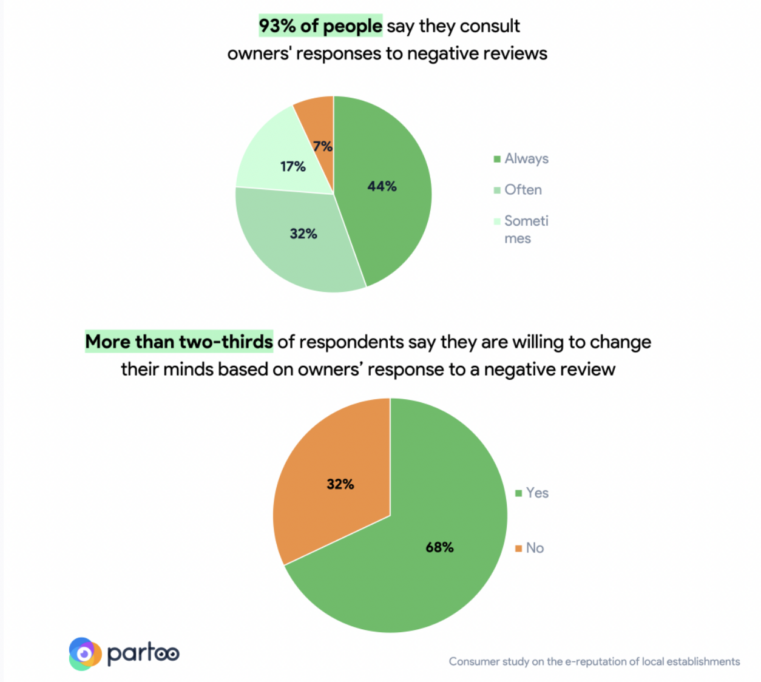
For potential customers, unanswered criticism raises uncertainty. They begin to question whether the issue is common, whether the business cares, or whether similar experiences will be repeated. This uncertainty has a direct influence on conversion behavior, especially in high-trust industries such as healthcare, home services, hospitality, and professional consulting.
In many cases, customers do not expect perfection; they expect resolution. A thoughtful response that acknowledges the issue and outlines corrective action can significantly reduce reputational harm. Without that response, however, the review remains a static negative signal that continues to influence perception indefinitely.
Search and AI systems also interpret unresolved negative feedback as a weaker trust profile. When aggregated across multiple reviews, this can lower perceived quality and reduce visibility in recommendation layers where trust scoring plays a role.
Generic Replies
Generic responses are often treated as a substitute for engagement, but in practice they frequently weaken credibility rather than strengthen it. Phrases like “We appreciate your feedback” or “Sorry for the inconvenience” without contextual detail signal automation rather than attentiveness.
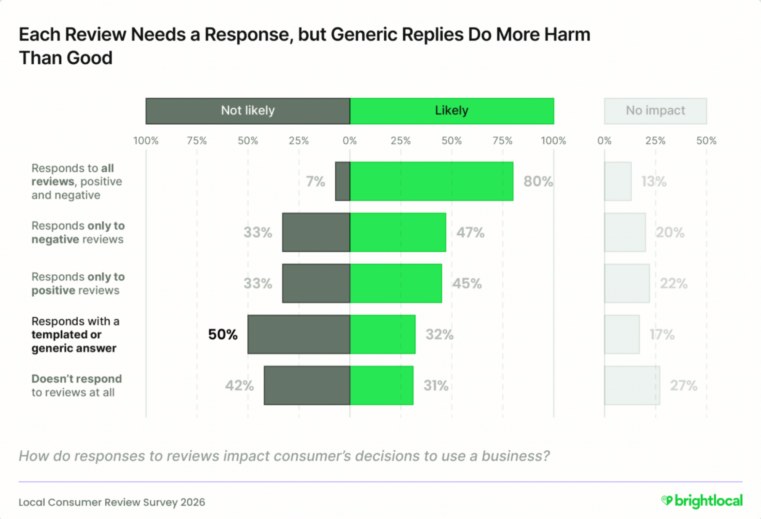
Customers can easily distinguish between meaningful engagement and templated replies. When responses lack specificity, they fail to address the actual concern raised in the review. This creates the impression that the business is responding for appearance rather than resolution.
From a reputation standpoint, generic replies dilute the value of responsiveness itself. If every response looks identical, the signal of attentiveness becomes meaningless. Over time, this can be interpreted similarly to non-responsiveness because it does not contribute to genuine accountability.
Platform systems that evaluate engagement quality also consider linguistic variation and relevance. Repetitive or low-context responses provide weaker engagement signals compared to personalized replies that reference specific customer experiences.
Defensive Tone
A defensive tone in review responses is one of the fastest ways to erode trust. When businesses respond by arguing, deflecting responsibility, or challenging the reviewer’s perspective, it shifts the interaction from resolution to conflict.

Public responses are not only directed at the reviewer—they are primarily read by future customers. A defensive tone signals that the business may not handle criticism constructively, which raises concerns about customer experience management.
Even when a review feels unfair or inaccurate, the response environment requires restraint and professionalism. Acknowledging the customer’s experience without escalating tension is critical. Defensive language often amplifies the visibility of the issue rather than resolving it.
In terms of brand perception, defensiveness can create long-term reputational friction. Users may interpret it as a sign of poor internal culture or lack of customer-centric processes. This perception can persist even if the underlying issue is resolved privately.
Delayed Engagement
Delayed engagement weakens the effectiveness of review responses, even when the reply itself is well-written. Timing plays a critical role in how responsiveness is interpreted. A response delivered weeks after a review is posted often fails to influence the original perception that formed in the customer’s mind.
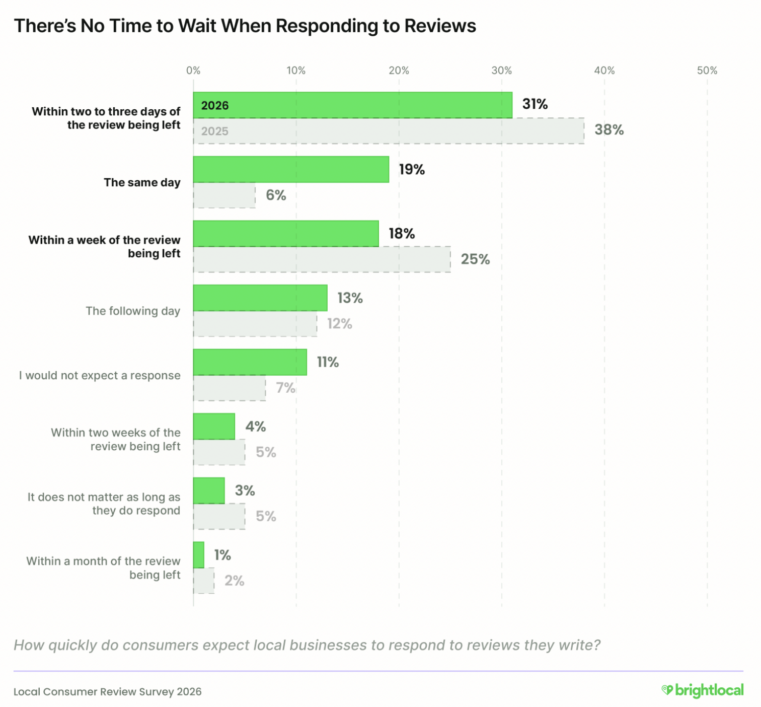
From a user behavior standpoint, most customers evaluate reviews during active decision-making phases. If a response does not appear during that window, it loses much of its persuasive value.
Delayed responses also signal operational inefficiency. Even if a business eventually responds, the delay can be interpreted as low prioritization of customer feedback. This perception can be especially damaging in industries where responsiveness is directly tied to service quality.
Search and platform systems also consider engagement timing as part of activity signals. Consistently slow response patterns may reduce the perceived freshness of customer interaction, weakening overall engagement metrics.
How to Build a Reputation-Driven Response Strategy
A reputation-driven response strategy treats customer feedback as a structured operational system rather than an occasional customer service task. The goal is to ensure that every public interaction reinforces trust, consistency, and accountability while also aligning with platform and AI evaluation systems.
This requires a combination of process design, communication standards, and governance rather than ad-hoc replies from individual team members.
1. Establish Internal SLAs
Service Level Agreements (SLAs) for review responses define how quickly a business commits to acknowledging and addressing customer feedback. Without SLAs, response times vary widely, creating inconsistency in public engagement signals.
A structured SLA framework typically categorizes feedback by urgency. For example, critical complaints may require same-day responses, while general feedback may be addressed within 24–48 hours. The key objective is not only speed but predictability.
Consistent response timing strengthens reputation signals across platforms. It demonstrates that the organization treats feedback as a priority rather than an afterthought. Over time, this consistency contributes to stronger trust perception and improved engagement metrics in platform evaluation systems.
SLAs also help distribute workload across teams, ensuring that no review is overlooked. This reduces the risk of silent reputational damage caused by unaddressed feedback accumulating over time.
2. Create Response Guidelines
Response guidelines ensure that communication remains consistent, professional, and aligned with brand values across all channels. Without guidelines, responses may vary significantly depending on who is replying, leading to inconsistent tone and messaging.
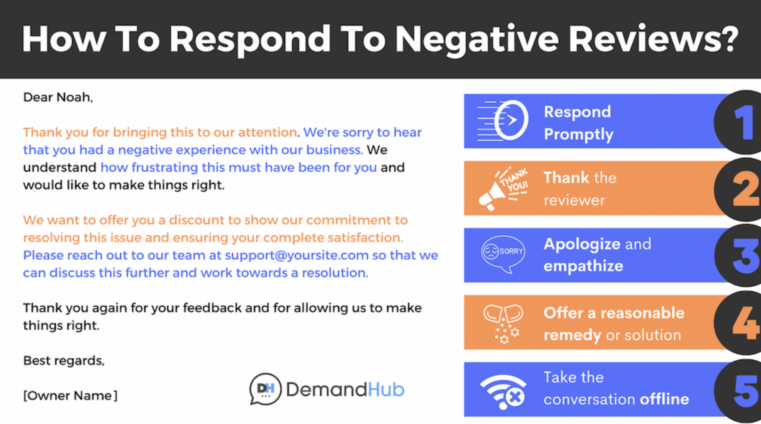
Effective guidelines define tone boundaries, structural templates, escalation rules, and personalization standards. For example, they may specify that all responses should acknowledge the issue, validate the customer experience, and offer a resolution path where applicable.
However, guidelines should avoid over-standardization. The goal is not to create identical responses, but to ensure that every reply contains meaningful acknowledgment and context-specific engagement.
Well-designed response frameworks help teams avoid common pitfalls such as defensiveness, vagueness, or overuse of templates. They also improve scalability, allowing larger organizations to maintain consistent reputation quality across multiple locations or departments.
3. Prioritize Transparency
Transparency is a core component of reputation-driven responsiveness. Customers respond positively to honesty, especially when issues are acknowledged openly and without evasion.
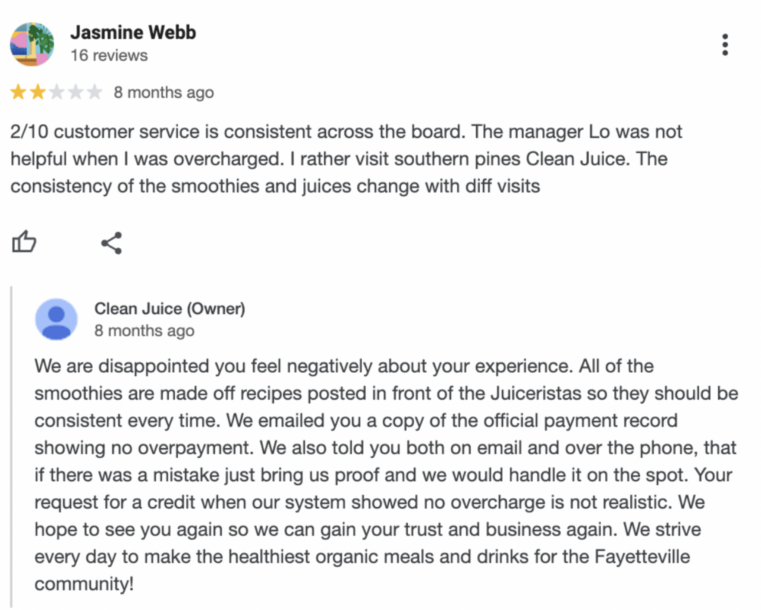
In practice, transparency means clearly stating what went wrong when appropriate, what steps are being taken to resolve the issue, and how the business plans to prevent recurrence. This does not require revealing sensitive operational details, but it does require clarity and ownership.
Transparent responses help reduce speculation. When businesses remain vague, customers often assume the worst. Clear communication prevents misinformation from filling that gap.
From a long-term perspective, transparency strengthens brand equity by building credibility through consistency. Customers are more likely to trust businesses that openly address shortcomings than those that attempt to minimize or ignore them.
4. Use AI as an Assistant, Not a Substitute
AI tools are increasingly used to support review response workflows, but they must be carefully governed to maintain authenticity. When used correctly, AI can assist with drafting responses, suggesting tone adjustments, and improving response speed.
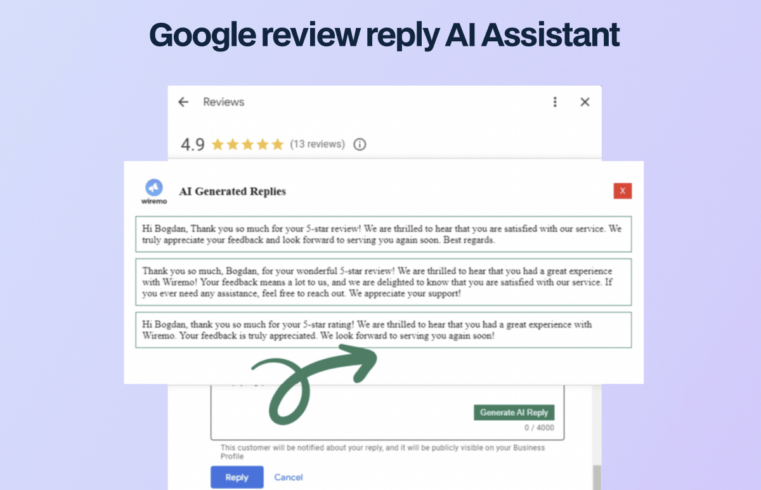
However, over-reliance on automation can lead to generic, repetitive, or emotionally disconnected replies. This reduces the effectiveness of responsiveness as a reputation signal.
The most effective approach is a hybrid model where AI supports human decision-making rather than replacing it. Teams can use AI to generate initial drafts, but final responses should be reviewed and adjusted for context, specificity, and tone.
This ensures scalability without sacrificing credibility. It also allows organizations to maintain consistency while preserving the human element that customers expect in public-facing communication.
5. Close the Loop Publicly
Closing the loop publicly means demonstrating that issues raised in reviews have been resolved or addressed in a visible way. This step is often overlooked, but it plays a critical role in reinforcing trust.
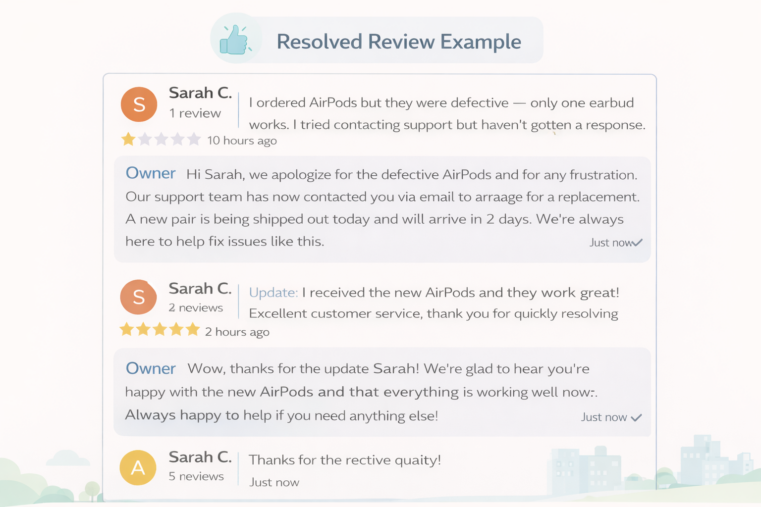
When businesses follow up on complaints and confirm resolution within the same public thread, it signals accountability and completion. It shows that feedback leads to action, not just acknowledgment.
This practice also benefits future customers who read the review thread. They are not only seeing the problem but also seeing how it was handled and resolved. This transforms negative feedback into a demonstration of service recovery capability.
Closing the loop strengthens both human perception and platform-level trust signals. It contributes to a reputation narrative where responsiveness is not just reactive but outcome-driven.
Strengthen Your Digital Authority With Pro Real Tech
Building digital authority in today’s environment is no longer limited to publishing content or running campaigns. It is deeply connected to how consistently a brand manages visibility, engagement, and trust across digital touchpoints. A modern digital presence is shaped by how audiences perceive responsiveness, reliability, and accountability in real time.
Pro Real Tech positions itself as a full-stack digital agency that supports this evolution by helping businesses strengthen their online authority through integrated services such as SEO, digital marketing, web development, graphic design, video production, and online reputation management. These capabilities work together to ensure that brands are not only visible online but also perceived as active and trustworthy entities in competitive digital spaces.
A key part of strengthening digital authority today is managing how brands respond to customer interactions across platforms. Through services like online reputation management, SEO optimization, and social media marketing, Pro Real Tech helps businesses build structured systems for handling reviews, improving search visibility, and maintaining consistent brand communication.
In the context of review responsiveness, this becomes especially important. Digital authority is no longer just about ranking on search engines—it is about how a brand behaves when it is publicly evaluated. A structured approach to engagement ensures that every customer interaction contributes positively to long-term reputation signals, rather than weakening trust through silence or inconsistency.
By combining technical SEO strategies, reputation management practices, and content-driven engagement systems, Pro Real Tech enables businesses to align their operational responsiveness with their digital visibility. This alignment strengthens not only search performance but also perceived credibility in the eyes of customers and AI-driven discovery systems. Contact us today!
Frequently Asked Questions About Review Responsiveness
HOW DOES CUSTOMER RESPONSIVENESS INFLUENCE LONG-TERM BRAND EQUITY?
Customer responsiveness directly shapes brand equity by influencing how trust accumulates over time. Each response to a review or complaint becomes part of the public record that defines brand behavior. When businesses consistently acknowledge feedback, they reinforce reliability and accountability, which gradually strengthens emotional trust.
Over time, this consistent engagement reduces perceived risk for new customers. A brand that is known for responding constructively to feedback builds stronger loyalty and higher lifetime customer value. In contrast, inconsistent or absent responsiveness creates uncertainty, which weakens long-term equity even if product quality remains strong.
WHAT FRAMEWORKS IMPROVE RESPONDING TO REVIEWS ACROSS MULTIPLE LOCATIONS?
Multi-location responsiveness requires a structured framework that ensures consistency while allowing local flexibility. The most effective systems include centralized guidelines combined with localized execution.
A strong framework typically includes:
Standardized tone and messaging rules
Location-specific escalation paths
Unified SLA timelines across branches
Central monitoring dashboards for review activity
This structure ensures that customers receive consistent brand communication regardless of location. It also prevents fragmentation, where some branches respond effectively while others lag behind, which can dilute overall brand perception.
HOW TO RESPOND TO REVIEWS IN REGULATED INDUSTRIES WITHOUT RISK?
In regulated industries such as healthcare, finance, or legal services, review responses must balance transparency with compliance. The safest approach is to acknowledge feedback without disclosing sensitive or private information.
Best practices include:
Avoid confirming personal or case-specific details
Use general language when addressing concerns
Focus on process improvement rather than individual cases
Offer private channels for detailed resolution
This ensures that the business remains responsive while avoiding regulatory or privacy violations. Structured response templates reviewed by compliance teams are often essential in these industries.
WHAT OPERATIONAL RISKS ARISE FROM POOR CUSTOMER RESPONSIVENESS?
Poor responsiveness creates both reputational and operational risks. On the reputational side, unanswered reviews signal neglect and reduce customer trust. On the operational side, it can lead to repeated complaints, increased churn, and escalated service issues.
There is also a compounding effect: unresolved issues often generate additional negative reviews, increasing the volume of reputation damage over time. Internally, lack of structured response systems can create inefficiencies, miscommunication between teams, and inconsistent customer handling practices.
WHY DOES RESPONDING TO REVIEWS MATTER IN COMPETITIVE MARKETS?
In competitive markets, products and services often appear similar, making trust a key differentiator. Review responsiveness becomes a visible signal that helps customers choose between comparable options.
Businesses that respond actively appear more engaged, reliable, and customer-centric. This perceived attentiveness often influences final purchasing decisions, especially when customers are comparing multiple providers with similar ratings and pricing.
HOW CAN TEAMS STREAMLINE RESPONDING TO ONLINE REVIEWS WITHOUT LOSING AUTHENTICITY?
Efficiency and authenticity can coexist when systems are designed correctly. Teams can streamline response processes by using structured workflows while maintaining personalization.
Effective methods include:
Using AI-assisted drafts reviewed by human editors
Creating modular response components (acknowledgment, resolution, apology)
Training staff on tone and empathy guidelines
Categorizing reviews by urgency and sentiment
The key is ensuring that automation supports clarity and speed, but humans preserve emotional relevance and context.
WHAT ROLE DOES CULTURE PLAY IN RESPONDING TO REVIEWS?
Organizational culture is one of the strongest determinants of response quality. If customer-centricity is embedded in company values, responsiveness becomes consistent and proactive rather than reactive.
A strong service culture encourages employees to view feedback as an opportunity for improvement rather than criticism. This mindset leads to more empathetic, constructive responses that enhance long-term brand perception.
HOW DOES BRAND PERCEPTION SHIFT WHEN COMPANIES NEGLECT REPLYING TO CUSTOMER REVIEWS?
When companies ignore reviews, perception shifts toward disengagement and lack of accountability. Even if the product or service is strong, silence creates doubt in the minds of potential customers.
Over time, this absence of communication can lead to reputational decline, as unanswered feedback accumulates publicly. Customers may assume that issues are systemic or unresolved, which reduces trust and conversion rates.
WHAT STRATEGIC FACTORS INFLUENCE LONG-TERM BRAND TRUST?
Long-term brand trust is influenced by a combination of responsiveness, consistency, transparency, and operational reliability. Among these, responsiveness plays a central role because it is the most visible indicator of how a business handles real-world feedback.
Other key factors include:
Consistency in service delivery
Clarity in communication
Speed of issue resolution
Accountability in public interactions
When these elements are aligned, they create a strong trust ecosystem that supports both customer loyalty and digital authority across platforms and AI-driven discovery systems.
Read More: Modern Review Regulation: What Businesses Must Disclose in 2026


