

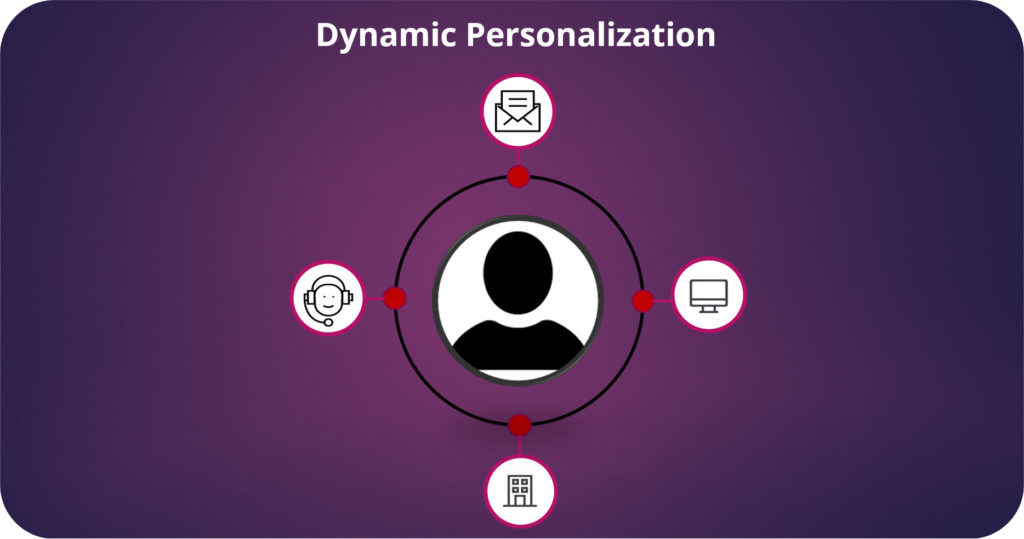
In today’s saturated digital marketplace, visitors don’t just arrive at your website—they arrive with expectations. They expect relevance. They expect speed. They expect a journey that reflects their unique needs, past behavior, and immediate context. In such an environment, traditional static homepages—the one-size-fits-all “front door” of a website—are increasingly under pressure. A new paradigm is emerging: dynamic, personalized entry points that adapt to each visitor’s context, intent, and preferences.
Below we explore why this shift is happening, how to think about personalization, what obstacles static entry points create, how personalized landing experiences work, and concrete practices to implement them effectively.
What is “Personalization” in Marketing?
Personalization in the marketing context refers to tailoring messages, content, offers and user-experiences to individual visitors based on their behaviors, preferences, history, and real-time signals. Rather than presenting the same generic homepage and navigation to every user, personalization allows brands to create customized experiences that feel uniquely relevant to each visitor.
This is not just nice to have—it’s fast becoming table stakes. In many sectors, consumer expectations for relevancy and seamlessness have moved up considerably. A tailored experience helps brands create deeper engagement, build trust, and ultimately drive higher conversions.
Why the Traditional Homepage Can Be a Liability
Though the homepage concept has been ingrained in web-design thinking for decades, it has significant limitations in a personalization-first world:
-
Lack of Relevance for Many Visitors
When every visitor sees the same static content, the experience may feel generic or irrelevant for many. Research shows that a large majority of consumers only engage when content is relevant to their interests. A generic homepage may fail to meet that bar. -
Elevated Bounce Rates
Visitors typically arrive with a specific goal or need. If the entry point fails to immediately reflect or anticipate that need, they’re prone to bounce—or leave the site before engaging significantly. One analysis found personalized content can reduce bounce by nearly half. -
Missed Conversion Opportunities
A homepage designed for broad appeal often struggles to guide visitors optimally through a conversion funnel. Generic CTAs (calls to action) or mis-matched messaging can dilute the effectiveness of the site. Studies show personalized CTAs convert much better than default ones. -
Limited Learning & Optimization
When everyone sees the same content, brands have less opportunity to segment and understand different segments’ behavior. Personalization opens up richer data collection and insight opportunities—enabling smarter optimization.
Given these challenges, many organizations are shifting focus from a single homepage to dynamic, personalized entry points—pages or experiences that adjust based on visitor context, behavior, and profile.
What Are Personalized Landing Pages / Entry Points?
A personalized landing page is a web page designed to reflect a visitor’s prior actions, preferences or immediate context—so that from the moment they arrive, the content, offers and navigation feel tailored.
Here are some common dimensions used to personalize entry points:
-
Traffic Source: Visitors coming from different channels have differing expectations. For example, someone arriving via a social media ad may expect visually rich content and sharing options, whereas someone arriving from an email perhaps expects a specific offer or message aligned with the email.
-
User Behavior / History: A visitor who has browsed products but not purchased may benefit from a page that acknowledges that history (e.g., “You looked at X — here’s a special offer”). Conversely, first-time visitors may receive broader introductory content.
-
Geolocation: Location can influence what offers or content make sense. For example, visitors in colder climates may see coats or winter-gear featured, while warmer-region visitors may see summer-apparel.
-
Demographic / Persona: Knowing whether the visitor is a business decision-maker, SME owner, or casual consumer allows tailoring of tone, value proposition, and navigation pathways.
When done well, personalized entry points:
-
Make the visitor feel recognized and understood
-
Reduce friction in the user journey
-
Improve engagement, drive lower bounce and higher conversion
-
Enable more efficient and effective marketing spend
Why Brands Are Prioritizing Dynamic Personalized Entry Points
Several forces drive this shift:
-
Elevated User Expectations
As digital experiences across platforms become more sophisticated and personalized (think Netflix, Amazon, Spotify), users come to expect similar levels of relevance from brand websites. If a site feels generic, they’ll quickly judge and leave. -
Increased Competition for Attention
Because attention is fragmented and there is abundant choice, the time you have to connect with a visitor is limited. A tailored landing experience helps you make a strong impression—and fast. -
Better Tools & Data
Modern marketing stacks, AI-driven engines, real-time analytics and automation platforms make personalization more accessible and cost-effective. This technological progress lowers the barrier to entry for more brands. -
Measurable ROI
Per performance data, personalization can meaningfully reduce acquisition costs, increase conversion rates, and improve overall marketing efficiency. -
Evolving Web Architecture
Web architectures are shifting: rather than static HTML pages, modern experiences are modular, dynamic, and data-driven. This architecture supports personalization more naturally than older, monolithic designs.

Five Practical Strategies to Create Personalized Landing Experiences
Putting theory into practice means taking concrete steps. Here are five evidence-based tactics:
1. Segment Your Audience
Segmentation is the foundation of effective personalization. Key steps:
-
Gather behavioral data: pages visited, time on site, past purchases, engagement.
-
Leverage CRM and demographic data to build richer personas.
-
Segment by traffic source: email vs. social vs. organic search.
-
Make segmentation dynamic: revisit and refine segments over time as behaviors shift.
By properly segmenting, you can produce entry points tailored to each audience—rather than hoping one page fits all.
2. Leverage AI & Automation
With the right technology you can deliver dynamic content at scale:
-
Choose an AI-powered personalization engine or experimentation platform (like Adobe Target, Optimizely, Dynamic Yield) to deliver content in real-time.
-
Use predictive analytics: anticipate what a visitor might need next based on signals and offer that proactively.
-
Automate follow-up communications (email, retargeting) based on what you know about the user.
-
Regularly refine your algorithms and content logic (“did the personalization work? what needs improvement?”) rather than set it and forget it.
3. Use Dynamic Content
Dynamic content means that portions of the page change depending on the user’s profile or context. Some best practices:
-
Swap out headlines, hero imagery and CTAs based on segment.
-
Show recommendation modules: e.g., “Based on your interest in X, you may like Y.”
-
Use content swapping or conditional logic to show different messaging depending on behavior or source.
-
Track how users respond to different content versions, and continuously optimize.
Dynamic content ensures the entry experience is aligned with the visitor’s mind-set, increasing the likelihood of meaningful engagement.
4. Optimize for Mobile & Performance
Because the best personalized content means very little if the site experience is slow or clunky:
-
Prioritize fast page-loads and responsive design—especially on mobile.
-
Use techniques like lazy-loading images, minimizing scripts and reducing redirects.
-
Adopt mobile-first design thinking: many users arrive via mobile devices, and the entry point must work seamlessly.
-
Monitor real-world performance (page speed, user-perceived load times) and optimize accordingly.
Without a performant base, even the most personalized experience will falter.
5. Monitor, A/B Test & Refine
Personalization isn’t static. It requires ongoing measurement and iteration:
-
Use A/B testing (or multivariate testing) to compare personalized vs. non-personalized versions, or different personalization strategies.
-
Utilize heatmaps, session recordings and user journey analytics to see how visitors are interacting.
-
Track key metrics: engagement rate, bounce rate, conversion rate, average session duration, CTA click-through, ROI.
-
Update personalization logic routinely (e.g., quarterly) or whenever there’s a shift in customer behavior or campaign.
Continuous optimization helps ensure the personalization stays fresh, relevant and effective.
Overcoming Common Challenges
While the benefits of dynamic, personalized entry points are significant, many brands face hurdles when trying to implement them. Here are some common obstacles and how to overcome them:
-
Data Silos: When CRM, web analytics, email systems and advertising tools are disconnected, you lack a unified view of the visitor. Solution: invest in integrating data sources, or select platforms that are built for cross-channel data aggregation.
-
Balancing Speed vs. Personalization: Introducing personalization logic, dynamic loading and conditional content can add complexity and potentially slow down the site. The trick is to optimize performance (see tip #4) and ensure personalization doesn’t come at the cost of user experience.
-
Over-Personalization / Privacy Concerns: If personalization is too aggressive—especially when based on sensitive data—it can feel intrusive or creepy to users. Transparency about what data is used, offering opt-out options, and avoiding overly intimate assumptions can maintain trust.
-
SEO Impact Concerns: Some worry that dynamically changing content might harm search-engine optimization (SEO). However, when done correctly (ensuring core content remains crawlable and dynamic elements change post-load), SEO performance need not suffer.
-
Resource Constraints: Smaller businesses may believe personalization is only for enterprise-scale websites. In reality, many tools now offer entry-level solutions. Ecommerce platforms and marketing suites support basic personalization without huge budgets.
By recognizing and planning for these issues early, brands can avoid common pitfalls and make personalization a competitive advantage rather than a burden.
The Business Impact—Why It Matters
The move toward dynamic, personalized entry points is not just a trend—it’s a strategic shift. Here’s why it matters:
-
Higher Conversion and Revenue: Personalized CTAs and dynamic landing experiences significantly outperform generic versions. This translates into higher conversion rates and better return on marketing spend.
-
Lower Customer Acquisition Costs: When your site aligns more closely with what each visitor needs, you reduce friction and waste. Data shows that effective web personalization can reduce acquisition costs by up to 50%.
-
Better Customer Experience and Loyalty: Visitors who feel recognized and catered to are more likely to engage, stick around and return. That strengthens customer lifetime value and brand loyalty.
-
Smarter Marketing Investment: With segmentation, dynamic content and measurement in place, marketing spend becomes more efficient. Rather than chasing broad audiences, you tailor and invest where it matters.
-
Competitive Differentiation: Many brands still rely on static homepages and generic user journeys. By offering customized entry points, you stand out in the mind of the visitor, which can lead to stronger brand recall and preference.
Personalization of entry points aligns with both user expectations and business goals.
Practical Implementation Roadmap
For brands seeking to transition from static homepages to dynamic, personalized entry points, here’s a step-by-step roadmap:
-
Audit Current Entry Paths
-
Map out how visitors currently arrive (organic search, paid ads, email, social, direct)
-
Identify drop-off points, bounce rates and conversion paths.
-
Evaluate whether your homepage is doing heavy lifting for all visitors versus tailoring for segments.
-
-
Define Audience Segments & Entry Scenarios
-
Use behavioral and demographic data to define core visitor segments (e.g., new vs returning; product-browsers vs first-time visitors; mobile vs desktop).
-
Define typical entry scenarios: e.g., “Visitor from email campaign opened X offer”, “User returned after browsing product Y but didn’t purchase”, “Guest from region Z”.
-
-
Select Personalization Tools/Platform
-
Choose software that supports dynamic content, segmentation, and automation.
-
Consider factors like integration with CRM/data sources, ease of implementation, cost, scalability.
-
Ensure performance optimization capability (page-speed, mobile readiness).
-
-
Design Personalized Entry Points
-
For each segment/scenario, design landing page/entry experience: tailored headline, hero image, CTA, recommended offers.
-
Ensure messaging aligns with user intent and traffic source.
-
Incorporate dynamic modules such as product recommendations, geolocation-specific offers, behavioral follow-ups.
-
-
Implement & Optimize for Device/Speed
-
Ensure pages load fast, especially on mobile.
-
Use responsive design, lazy loading, minimal scripts, avoid heavy redirects.
-
Test across browsers/devices to ensure consistent experience.
-
-
Measure & Iterate
-
Establish baseline metrics (bounce rate, conversion rate, session duration) for new vs old experiences.
-
Run A/B tests to compare personalized vs control versions.
-
Use heatmaps/session recordings to understand visitor behavior.
-
Continuously iterate: refine segments, messaging, offers, content rules.
-
-
Scale and Expand
-
Once initial personalization proves effective, expand to more segments, deeper behavioral triggers (e.g., cart abandonment, subscription renewals).
-
Explore cross-channel personalization (email follow-up, ads retargeting, mobile apps) for consistent experience beyond the web page.
-
Maintain periodic reviews of personalization logic to avoid stale experiences.
-
Key Metrics to Track
To evaluate the success of personalized entry point strategies, track the following metrics:
-
Bounce Rate (particularly for landing pages)
-
Conversion Rate (for CTAs, offers)
-
Average Session Duration
-
Click-through rate on personalization modules (e.g., recommended products)
-
Customer Acquisition Cost (CAC)
-
Return on Investment (ROI) of personalization efforts
-
Segmented performance comparisons (e.g., segment A with personalization vs segment B without)
-
Technical performance metrics (page load time, mobile device performance)
-
Engagement depth (pages per session, repeat visits)
Monitoring these metrics provides visibility into both the effectiveness of the personalization and any unintended side-effects (e.g., slower page load causing drop-off).
FAQs & Considerations
Here are some common questions and considerations regarding personalization of entry points:
Is personalization only for eCommerce sites?
No — while it is very prominent in eCommerce, personalization applies across industries (B2B, services, content sites). Any business with varied audiences or visitor pathways can benefit.
Does personalization hurt SEO?
If done incorrectly, yes—but when implemented properly, no. Core, crawlable content and metadata should remain static whereas dynamic personalization can happen post-load via scripts. This preserves SEO while enabling tailored experiences.
Do users find personalization invasive?
Some do—especially if personalization is overt, based on sensitive data, or felt “creepy.” Transparency helps: explain data usage, offer opt-out options and avoid making assumptions that feel overly intimate.
Do small businesses need large budgets for personalization?
Not necessarily. Many tools offer basic personalization features at relatively modest budget levels. Even simple personalization (e.g., swapping CTAs based on traffic source) can move the needle without heavy investment.
How often should personalization logic be updated?
Regularly. Customer behavior and market conditions evolve. Many recommend reviewing or updating personalization rules quarterly—or whenever you detect a significant shift in engagement or campaign strategy.
Trends in Personalized Entry Experiences
As personalization matures, still more sophisticated tactics are emerging:
-
Real-Time Adaptive Experiences: Beyond segment-based swaps, pages that adapt in real-time to user scrolling, interaction, dwell time cues and predictive signals.
-
Omnichannel Consistency: Entry point personalization is increasingly aligned across web, mobile apps, in-store kiosks, email and physical channels—forming a coherent experience.
-
Privacy Forward Personalization: With evolving data-privacy regulations, tags like “first-party data only” and privacy-preserving personalization methods (e.g., cohort models) are gaining focus.
-
AI-Driven Predictive & Prescriptive Personalization: Tools that can not only show what content a user should see, but predict what they will need next and prescribe the next best action.
-
Humanised Experience Layers: Personalization that goes beyond “you looked at X” to show genuine value and empathy (“We know you care about X, here’s how we can help”). When done right, that builds trust and deeper connection.
Brands that adopt these forward-looking tactics will be better placed to deliver experiences that feel relevant, human and meaningful—rather than just algorithmically tailored.
Final Thoughts
In an era where attention is scarce and expectations are high, creating entry points that feel personal, dynamic and context-aware is no longer optional—it’s strategic. The traditional static homepage is increasingly a relic of a bygone era when one-size-fits-all made sense. Today’s visitor expects more: they expect relevancy from the very first moment.
By segmenting visitors, leveraging AI and automation, deploying dynamic content, optimizing for mobile and speed, and continuously testing and refining, brands can deliver entry experiences that engage, convert and build loyalty. The business payoff is clear: lower bounce rates, higher conversion, better acquisition economics and stronger customer relationships.
If you’re still treating your website’s homepage as the universal entry point for every visitor, now is the time to think differently. Start mapping your visitor journeys, define meaningful segments, and begin creating tailored entry points that meet your audience where they are. The shift to dynamic personalization isn’t just a trend—it’s the future of meaningful digital engagement.
At Pro Real Tech, we specialize in creating data-driven landing pages that transform how businesses connect with their audience. Our team stays ahead of personalization trends, using cutting-edge personalization marketing techniques to maximize return on investment (ROI). We combine expert conversion rate optimization (CRO) services, innovative web design solutions, and high-quality content writing strategies to craft seamless, results-driven user experiences.
Contact Pro Real Tech today, and let’s build a website that delivers truly personalized web experiences.


