


Getting your product to rank on the first page of Amazon is not just about uploading a listing and hoping for sales. It takes a structured approach rooted in understanding Amazon’s A9 algorithm and how shoppers interact with listings. The goal of Amazon SEO is simple: increase your product’s visibility in search results to drive more clicks and conversions.
Unlike Google SEO, Amazon is a buying platform. Every optimization effort is geared toward helping your product appear when someone is ready to purchase. If your product is not ranking in the top five spots for your main keywords, chances are you’re losing sales to your competitors. That’s why following a clear Amazon SEO framework is critical for long-term success.
What Is Amazon SEO?
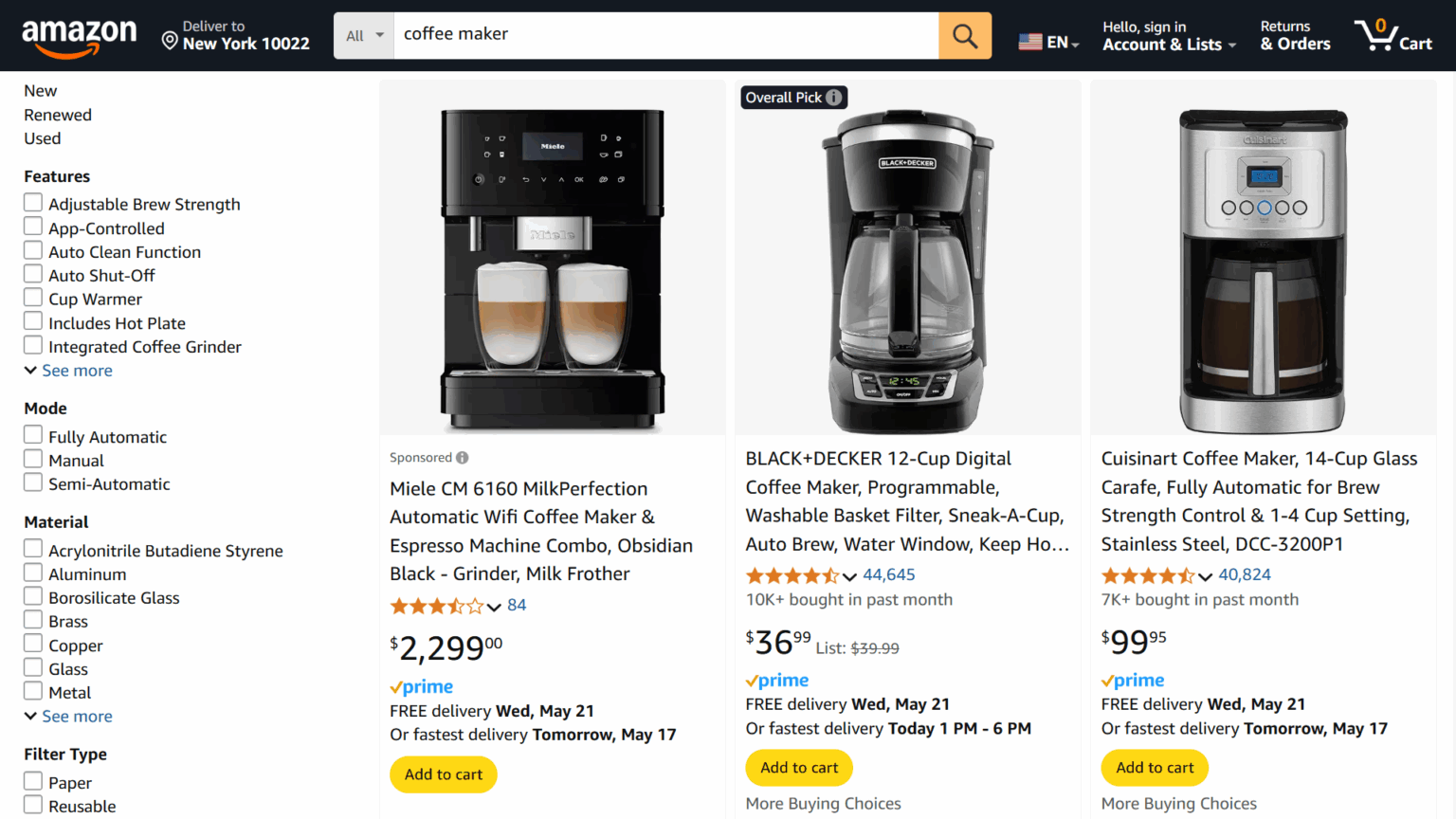
Amazon SEO (Search Engine Optimization) is the process of optimizing product listings to improve their visibility and rankings within Amazon’s internal search engine. When a customer types a keyword into the Amazon search bar, Amazon uses its A9 algorithm to decide which products appear and in what order. Your goal as a seller is to make your product listings align with what the algorithm and customers are looking for.
Amazon SEO focuses heavily on conversions. The platform is designed to favor products that sell well. This means that beyond using the right keywords, your listing must be structured to encourage clicks and drive purchases.
Key components of Amazon SEO include:
-
Keyword optimization: Using relevant keywords in your product title, bullet points, description, and backend fields.
-
Conversion rate signals: Factors like click-through rate (CTR), time on page, and bounce rate influence your listing’s performance.
-
Sales velocity: How quickly and consistently your product sells.
-
Customer reviews and ratings: Higher ratings and more reviews improve trust and ranking.
-
Listing quality: Clear images, compelling copy, and accurate product information enhance both user experience and algorithm favorability.
Understanding Amazon SEO means recognizing that you’re not just optimizing for machines, but for people ready to buy. Each element you improve—from pricing and images to ad strategy—works together to make your product more discoverable and desirable on the world’s biggest marketplace.
Amazon Ranking Factors: An Overview
Amazon’s A9 algorithm decides which products show up in search results and in what order. To rank well, you must understand the key factors that influence visibility. Below is a comprehensive breakdown of the most important Amazon ranking factors and how they impact your product listings:
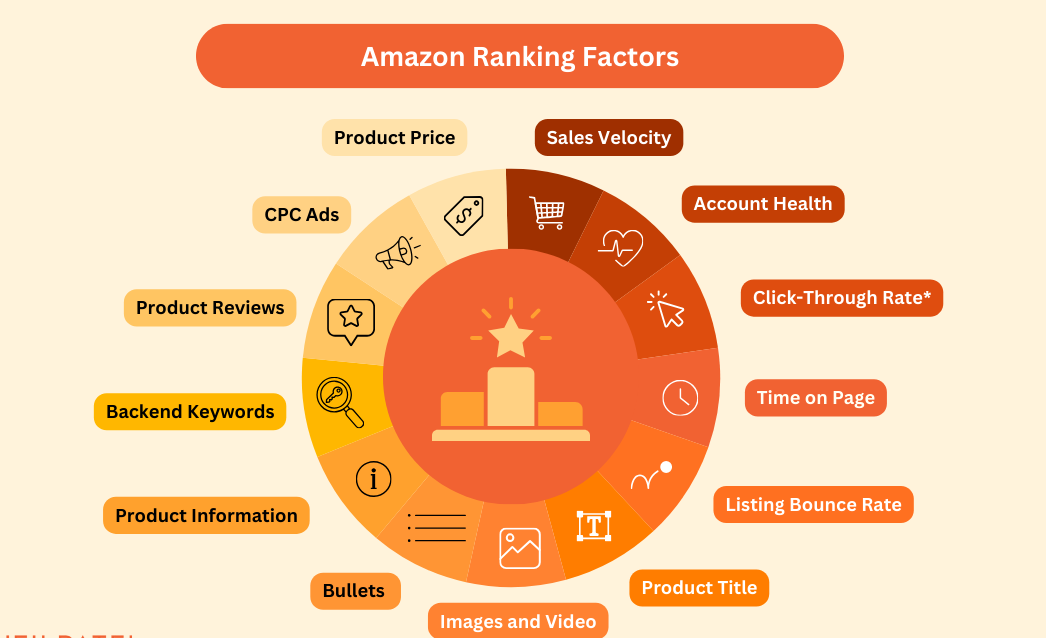
1. Sales Velocity (Number and Value of Product Sales)
Sales velocity refers to how quickly your product sells over time. Amazon rewards listings that convert consistently and at scale. The more units you sell and the higher the total sales value, the more likely Amazon is to push your product higher in search rankings.
2. Overall Account Health
Amazon monitors your seller performance closely. Metrics like order defect rate, late shipment rate, and customer service responsiveness affect your account health. A poor account rating can harm your rankings across all listings.
3. Click-Through Rate (CTR)
CTR is the percentage of users who click on your product after seeing it in search results. A high CTR tells Amazon that your listing is relevant and appealing, which helps improve rankings.
4. Time on Page
This measures how long a customer spends on your product listing. Longer time typically means they are reading details, checking reviews, and considering a purchase—positive indicators for the algorithm.
5. Listing Bounce Rate
If a user lands on your product page but leaves quickly without interacting, that’s a bounce. High bounce rates signal to Amazon that your listing may not be relevant or engaging, which can lower your search ranking.
6. Product Title
Your product title must include key search terms while staying readable. Amazon favors clear, keyword-rich titles that accurately describe the product. A strong title improves discoverability and CTR.
7. Images and Videos
High-quality images and videos improve engagement and buyer confidence. Amazon prefers listings that offer a complete visual presentation of the product, including lifestyle images and demonstration videos when applicable.
8. Bullets (Key Product Features)
Bullet points should highlight your product’s main features and benefits using relevant keywords. This section directly influences conversions and gives Amazon context about your product’s relevance.
9. Product Information and Details
Complete and accurate product data, including size, weight, materials, and usage instructions, improves customer trust and listing quality. It also helps Amazon correctly categorize your product.
10. Backend Keywords
These are hidden keywords in your Seller Central backend. They don’t appear on the live listing but help Amazon understand what your product is about. Proper use of backend keywords can improve search visibility without keyword stuffing your visible content.
11. Product Reviews and Overall Rating
Positive reviews and a high star rating build social proof and improve conversion rates. Amazon prioritizes listings with more verified, positive feedback, as these are seen as more trustworthy.
12. Sales from Cost-Per-Click (CPC) Ads
Running Amazon PPC ads doesn’t just bring in paid traffic—it also boosts organic rankings. The algorithm favors listings that sell through both paid and organic channels, especially if ad-driven sales increase overall velocity.
13. Product Price
Competitive pricing is a crucial factor. If your product is overpriced compared to similar listings, it can hurt both conversions and rankings. Amazon wants to offer the best value to shoppers.
Each of these elements plays a role in how Amazon determines where your product shows up in search results. To climb into the top five rankings, sellers must optimize every factor strategically and consistently.
7 Amazon SEO Step Framework for Top-Five Rankings
Achieving top-five rankings on Amazon requires more than just listing a product—it demands a strategic, multi-step approach. This framework lays out seven essential steps to help you consistently improve your visibility, drive more traffic, and increase conversions.
1. Build Your Tech Stack
Your Amazon success depends heavily on the tools you use. A reliable tech stack gives you access to data, automation, and insights that manual processes simply can’t match. Start by integrating essential tools that cover these areas:
-
Keyword Research Tools (e.g., Helium 10, Jungle Scout, AMZScout): These help you uncover high-volume and low-competition keywords.
-
Listing Optimization Tools: Tools like Listing Analyzer or SellerApp provide feedback on your current listings and suggest improvements.
-
Ad Management Platforms: Platforms such as Sellics or Perpetua can help you manage your Amazon PPC campaigns more effectively.
-
Review Management Software: Tools like FeedbackWhiz or Jungle Scout Review Automation allow you to request and track reviews with ease.
-
Analytics Dashboards: Real-time data monitoring is crucial. Use Amazon’s Business Reports and integrate third-party dashboards for deeper insights.
Building your tech stack early provides a foundation that supports every other SEO action on this list.
2. Identify Top Long-Tail Keywords
Generic keywords are saturated. To stand out, focus on long-tail keywords—specific phrases that buyers are more likely to use when they’re closer to making a purchase. These keywords typically have:
-
Lower competition
-
Higher conversion rates
-
Better alignment with buyer intent
Here’s how to find the right long-tail keywords:
-
Use keyword research tools to pull in real search data.
-
Analyze competitors’ listings for terms they rank for.
-
Leverage autocomplete suggestions in Amazon’s search bar.
-
Focus on buyer-intent terms like “best,” “durable,” “for kids,” “under $50,” etc.
Once you have a strong keyword list, organize it by relevance and intent, and map it to your product’s features and benefits.
3. Optimize Your Listing
This step is the heart of Amazon SEO. Your product listing must be optimized not just for Amazon’s algorithm but also for real people ready to buy. Every element should be tailored to boost visibility, engagement, and conversion.
Here’s what to focus on:
-
Product Title: Use primary keywords at the beginning. Keep it readable and informative.
-
Bullet Points: Highlight top features and benefits using relevant long-tail keywords. Keep them scannable.
-
Product Description: Write clear, compelling copy that expands on your product’s use case and value.
-
Images: Use high-resolution images that show multiple angles, size references, and usage scenarios. Add infographics and videos if possible.
-
Backend Keywords: Use all available space in the backend fields. Avoid repetition and include alternate spellings or synonyms.
Your goal is to create a listing that answers every question a customer might have—before they ask it. This builds trust and reduces hesitation during the purchase process.
4. Run Amazon Ads & Drive Traffic From Outside Amazon
Organic rankings don’t happen overnight. One of the most effective ways to gain traction and improve visibility is by running Amazon PPC (Pay-Per-Click) campaigns. These help you appear on top of search results even before organic SEO efforts take full effect.
But don’t stop there—external traffic also plays a vital role. Amazon rewards listings that attract high-converting traffic from sources outside the platform. You can drive this traffic through:
-
Google Ads
-
Facebook and Instagram Ads
-
Influencer marketing
-
Email marketing to your own list
-
Content marketing and blog posts
When external traffic converts well, it signals Amazon that your listing is relevant and trustworthy. This can help push your organic rankings higher over time.
5. Encourage Positive Reviews
Reviews are one of the strongest trust signals for buyers—and the Amazon algorithm. Products with higher ratings and more verified reviews often outperform competitors, even in saturated niches.
Here’s how to encourage genuine, positive reviews:
-
Follow up with customers through automated tools like FeedbackWhiz or Jungle Scout’s Review Automation.
-
Deliver on your promises. Make sure your product matches the listing and quality expectations.
-
Provide exceptional customer service, especially in cases of delivery issues or defective units.
-
Include inserts in your packaging asking for a review (without offering incentives, which is against Amazon’s policies).
A consistent stream of authentic, positive reviews boosts your product credibility and conversion rate—both key ranking factors.
6. Look After Your Account Health
Many sellers underestimate the impact of account health on Amazon SEO. Amazon tracks your performance metrics across all products, and any violations or poor service indicators can reduce visibility or even lead to account suspension.
To maintain a healthy account:
-
Keep your Order Defect Rate below 1%.
-
Maintain a Late Shipment Rate under 4%.
-
Respond promptly to customer messages and resolve complaints.
-
Avoid policy violations such as misclassified listings or prohibited items.
A well-managed account with clean metrics gets rewarded by Amazon, not just with better visibility, but also with more Buy Box wins and fewer restrictions.
7. Keep an Eye on Price
Your pricing strategy can make or break your sales performance. Amazon wants to provide customers with the best value. If your product is priced too high compared to similar items, your listing may get suppressed or fall in rankings.
To stay competitive:
-
Use automated repricing tools to adjust your prices based on market conditions.
-
Monitor your competitors regularly.
-
Factor in shipping costs, profit margins, and Amazon fees to avoid pricing yourself out of the market.
The goal isn’t to be the cheapest—it’s to offer the best perceived value. If you can justify a higher price with better features, stronger branding, or superior customer support, you’ll still win sales—and rankings.
Amazon SEO Is All About the Long Game
Amazon SEO isn’t a one-time fix—it’s a continuous process that demands patience, consistent action, and a long-term mindset. While some quick wins may happen through sponsored ads or listing tweaks, sustained top-five rankings come from building a solid foundation and staying committed to optimization over time.
Here’s why playing the long game matters:
-
Amazon’s algorithm (A9) rewards historical performance. This means products that steadily grow in sales, collect positive reviews, and maintain listing quality are more likely to climb and stay at the top.
-
Customer trust builds over time. As more buyers purchase, review, and share feedback, your product gains credibility that newer listings can’t match.
-
Seasonal trends and competition fluctuate. A consistent SEO strategy allows you to adapt and stay competitive, even when new products enter the market.
The key is consistency—regularly updating keywords, improving content, responding to customer feedback, and monitoring performance. By thinking long-term, you not only improve your rankings but also build a sustainable, profitable Amazon business.
How Pro Real Tech Help to Boost Your Amazon SEO Rankings
At Pro Real Tech, we specialize in helping sellers like you dominate the Amazon marketplace with proven, data-driven SEO strategies. Our approach combines expert-level optimization with hands-on support, ensuring your listings are always ahead of the curve.
Here’s how we support your growth:
-
Comprehensive Keyword Research: We dig deep to uncover high-converting, low-competition long-tail keywords specific to your product niche.
-
Listing Optimization: From compelling titles and bullet points to backend keyword placement, we craft listings that are both algorithm-friendly and shopper-focused.
-
Advanced Tech Stack Integration: We use top-tier tools and analytics platforms to track performance, adjust strategies, and maximize ROI.
-
Ad Campaign Management: Our team sets up, manages, and optimizes your Amazon PPC campaigns to drive targeted traffic and boost visibility.
-
Account Health Monitoring: We actively monitor your account metrics to keep your seller health in top shape, reducing the risk of suspensions or penalties.
-
Review Strategy Support: We help implement compliant systems to increase genuine product reviews and build trust.
With Pro Real Tech, you’re not just getting an agency—you’re gaining a long-term partner dedicated to your success on Amazon. Our goal is simple: help you rank higher, convert better, and scale faster. Contact us today!
Amazon SEO FAQs
How do Amazon SEO keywords work?
Amazon SEO keywords help your product listings appear in relevant search results. When customers type queries into the Amazon search bar, the algorithm scans your listing for matching or related keywords. These keywords should be included in critical areas such as your product title, bullet points, description, and backend keyword fields. The more relevant and strategically placed your keywords are, the higher your chances of ranking for those terms—especially if your product performs well in sales and reviews.
Are there any SEO strategies to avoid when optimizing my Amazon shop?
Yes, several strategies can hurt your performance or even violate Amazon’s policies:
-
Keyword stuffing: Repeating keywords unnecessarily can make your content unreadable and may trigger penalties.
-
Using prohibited keywords: Terms like “best seller,” “Amazon’s choice,” or claims such as “cures” are often restricted.
-
Click manipulation tactics: Avoid fake clicks, review manipulation, or using bots to game the algorithm.
-
Inaccurate listing details: Misleading titles or descriptions can lead to high return rates, negative reviews, and lower rankings.
Always prioritize clarity, accuracy, and user experience over shortcuts.
What should my product titles include for the best Amazon SEO?
A well-optimized product title should include the most relevant and high-volume keywords without being overly long or stuffed. Follow this structure:
-
Brand name
-
Main keyword/product type
-
Key feature (size, color, material)
-
Use or benefit (optional)
Example: BrandName Stainless Steel Water Bottle – 32 oz, Leak-Proof, BPA-Free – Ideal for Hiking & Gym
Amazon recommends keeping titles under 200 characters and making them readable for users.
What should I include in my product listing description for my Amazon products?
Your product description should clearly communicate the benefits, features, and use cases of your product. Here’s what to include:
-
A strong opening paragraph that highlights what makes your product unique.
-
Key features and benefits written in an easy-to-read format.
-
Any care instructions, compatibility information, or technical specs.
-
A clear call to action, encouraging customers to make a purchase.
For better conversion, use persuasive language, clean formatting, and strategic keyword placement—especially in the description and bullet points.


